Decentralized Exchange: What It Is, How It Works, and What to Avoid
When you trade crypto on a decentralized exchange, a platform that lets users trade directly with each other without a central company holding their money. Also known as DEX, it removes banks, brokers, and middlemen from the process—giving you full control over your funds. That sounds great, right? But not every platform calling itself a DEX actually is one. Some are fake, unregulated, and designed to steal your crypto. The real ones run on smart contracts, let you connect your own wallet, and don’t ask for your ID. The fake ones? They look like real DEXs but lock your funds behind login pages, fake trading volumes, and ghost teams.
That’s why knowing the difference matters. A true decentralized exchange, a platform that lets users trade directly with each other without a central company holding their money. Also known as DEX, it removes banks, brokers, and middlemen from the process—giving you full control over your funds. runs on blockchain code you can verify. It doesn’t need KYC, the process of verifying your identity before using a financial service. Also known as identity verification, it’s often required by centralized platforms to follow anti-fraud rules. to start trading. But look closer at platforms like LocalTrade or Decoin—they claim to be DEXs, but they’re just websites asking for your wallet password or private keys. Real DEXs like Uniswap or PancakeSwap don’t ask for that. They use wallet connectors like MetaMask. If a site asks you to sign in with an email or upload a photo of your ID, it’s not a DEX—it’s a trap.
And it’s not just about safety. Many fake DEXs are tied to dead tokens with zero supply, like Margaritis (MARGA), or abandoned projects like Carrieverse (CVTX). These tokens show up on price trackers but can’t be bought, sold, or used. They’re just numbers on a screen—designed to trick people into thinking something’s valuable when it’s not. Meanwhile, real DEXs support live tokens with actual utility, like Flux (FLUX) for decentralized cloud computing or AlphBanX (ABX) for lending on Alephium. The difference? One lets you earn or use crypto. The other just takes your money.
What you’ll find below isn’t a list of the best DEXs. It’s a list of what to avoid—and why. We’ve dug into platforms that pretend to be decentralized but are built on lies. We’ve tracked down tokens that vanished overnight. We’ve checked the truth behind airdrops, IDOs, and "free crypto" offers that turn out to be scams. You’ll see how KYC rules are changing crypto access, how privacy coins are being kicked off exchanges, and why wrapping crypto can be useful—or dangerous. This isn’t theory. These are real cases. Real losses. Real lessons.
Read our honest DubiEx crypto exchange review. We analyze its zero-fee trading model, trustless custody system, and security risks. Learn if this niche DEX fits your trading needs.
View More
Discover what SpookySwap (BOO) is, the leading decentralized exchange on the Fantom network. Learn about BOO tokenomics, staking rewards, security audits, and how it compares to Uniswap.
View More
Reviewing ApeSwap on Polygon: Is it a good DEX? We analyze fees, liquidity, and security to help you decide if it beats Uniswap for your trades.
View More
Discover what Hydranet (HDN) is, how its Layer 3 trading network bridges Bitcoin and EVM chains, and whether this DAO-governed crypto coin is worth your attention.
View More
Understand the true cost of DEX trading in 2026. Learn how protocol fees, gas, and slippage impact your trades, and discover strategies to minimize costs on Ethereum and Layer-2 networks.
View More
A deep dive into Uniswap v2, exploring its AMM model, direct ERC-20 swaps, and whether this foundational DEX is still viable for traders in 2026.
View More
Wondering about Chainge (XCHNG)? Discover how this cross-chain DEX uses Fusion DCRM to bridge 55+ blockchains and whether the token is still a viable investment in 2026.
View More
A detailed review of Splash crypto exchange. Explore its DEX model, limited coin selection, security pros and cons, and how it compares to industry giants.
View More
Paybswap is a silent cross-chain DeFi protocol that swaps crypto between Binance Smart Chain, Ethereum, and Polkadot without bridges. No app, no team, no support-just code. Here’s what you really need to know in 2026.
View More
Merchant Moe is a zero-fee decentralized exchange built on the Mantle Network. It's fast and cheap, but only supports 9 coins and has very low liquidity. Perfect for Mantle users, not for beginners.
View More
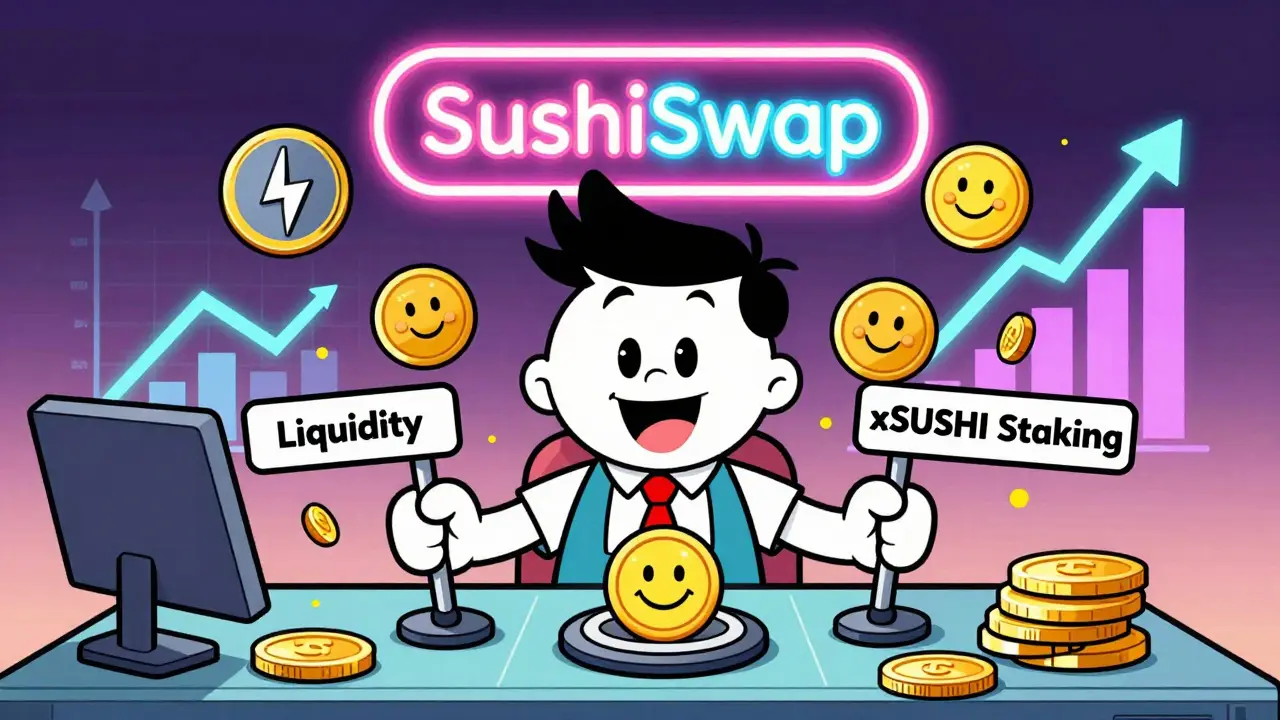
SushiSwap V3 (Core) is a decentralized crypto exchange that rewards users twice-through liquidity provision and SUSHI token staking. With new tools like Limit Orders and DCA, it's one of the most user-friendly DeFi platforms for earning passive income.
View More
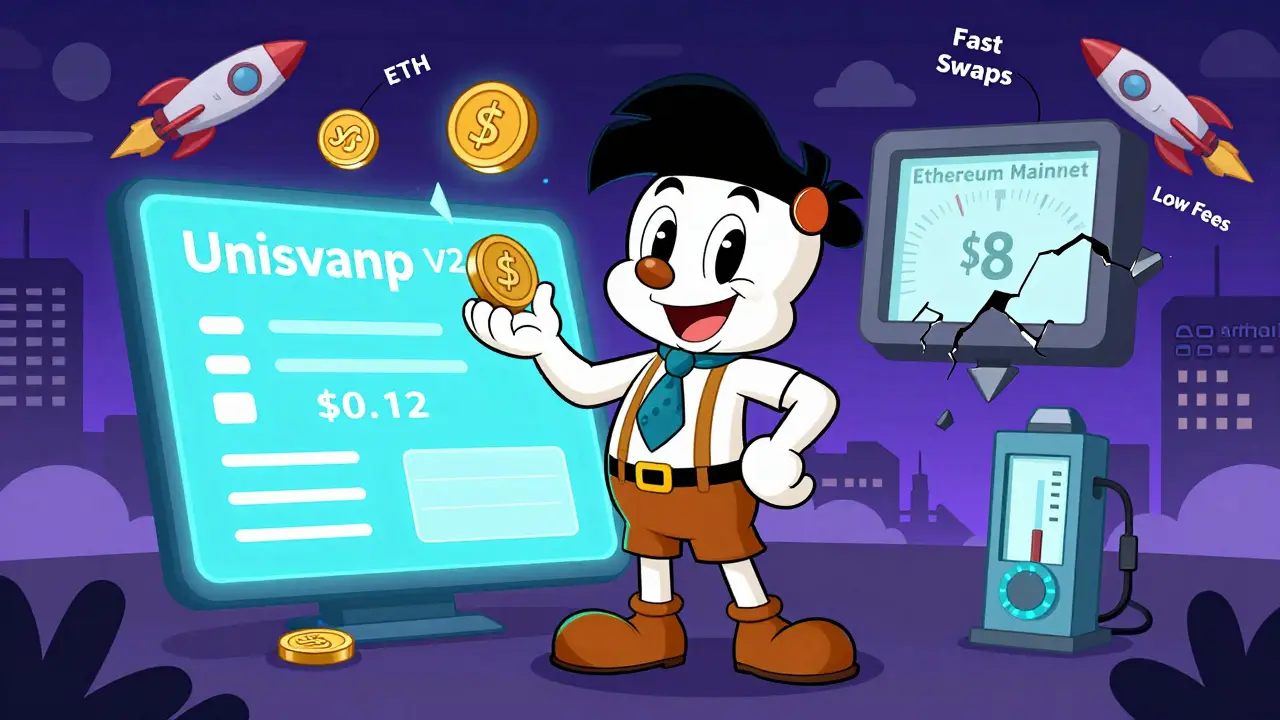
Uniswap v2 on Arbitrum offers fast, low-cost crypto trading with deep liquidity and proven security. Perfect for daily swaps, it cuts gas fees by 98% compared to Ethereum. Here’s what you need to know in 2026.
View More