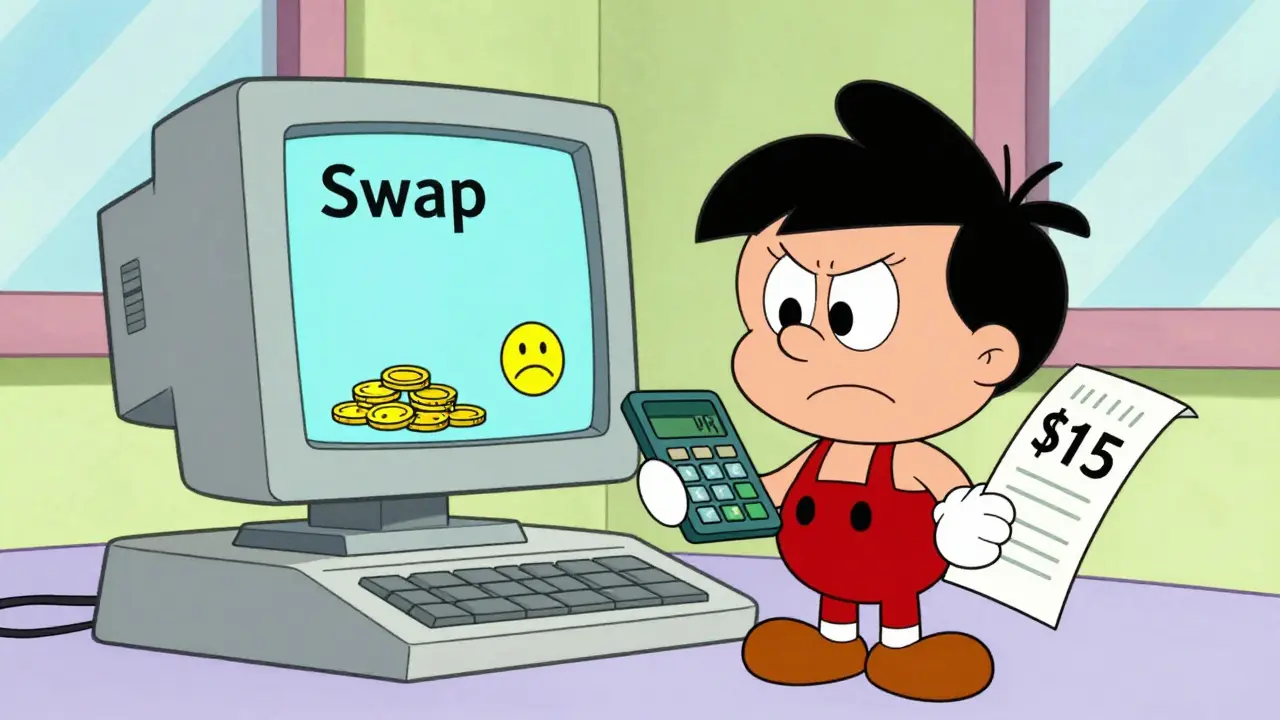
You click 'Swap' on your favorite decentralized exchange, expecting to trade $1,000 worth of Ethereum for USDC. Instead, you receive $985. Where did the other $15 go? It wasn't stolen, but it was certainly spent. In the world of Decentralized Exchanges (DEXs), the price tag is rarely just the headline fee. It’s a complex mix of protocol charges, network congestion costs, and something called slippage-the difference between the expected price of a trade and the executed price.
Understanding these hidden costs is the difference between profitable trading and slowly bleeding your portfolio dry. As we move through 2026, the landscape has shifted dramatically from the early days of high Ethereum gas wars. Today, with Layer-2 solutions like Arbitrum and Base dominating volume, the math changes completely depending on where you trade. Let’s break down exactly what you are paying, why prices slip, and how to keep more of your crypto.
The Anatomy of a DEX Fee Structure
When you look at a centralized exchange like Binance or Coinbase, the fee structure is simple: usually around 0.1% per trade. On a DEX, however, you are dealing with multiple layers of cost. Think of it like buying coffee. The centralized exchange is a chain store with a fixed menu price. The DEX is a local cafe where the price depends on how busy the barista is (gas), who owns the beans (liquidity providers), and whether they have your specific blend in stock (liquidity depth).
There are three main components to every DEX transaction:
- Protocol Fee: This is the standard charge for using the platform. Most major protocols, including Uniswap, charge a flat rate, typically between 0.05% and 0.30%. For example, Uniswap v3 allows pools to set different fees based on volatility; stablecoin pairs might charge 0.05%, while volatile token pairs charge 0.30%.
- Gas Fees: This is the payment to the blockchain network miners or validators to process your transaction. This is the most variable cost. On Ethereum mainnet, this can range from $2 to $100+ depending on network congestion. On Layer-2 networks like Polygon or Arbitrum, this often drops to pennies.
- Slippage: This isn't a fee paid to anyone directly, but it is a real cost. It represents the price impact of your trade size relative to the available liquidity in the pool.
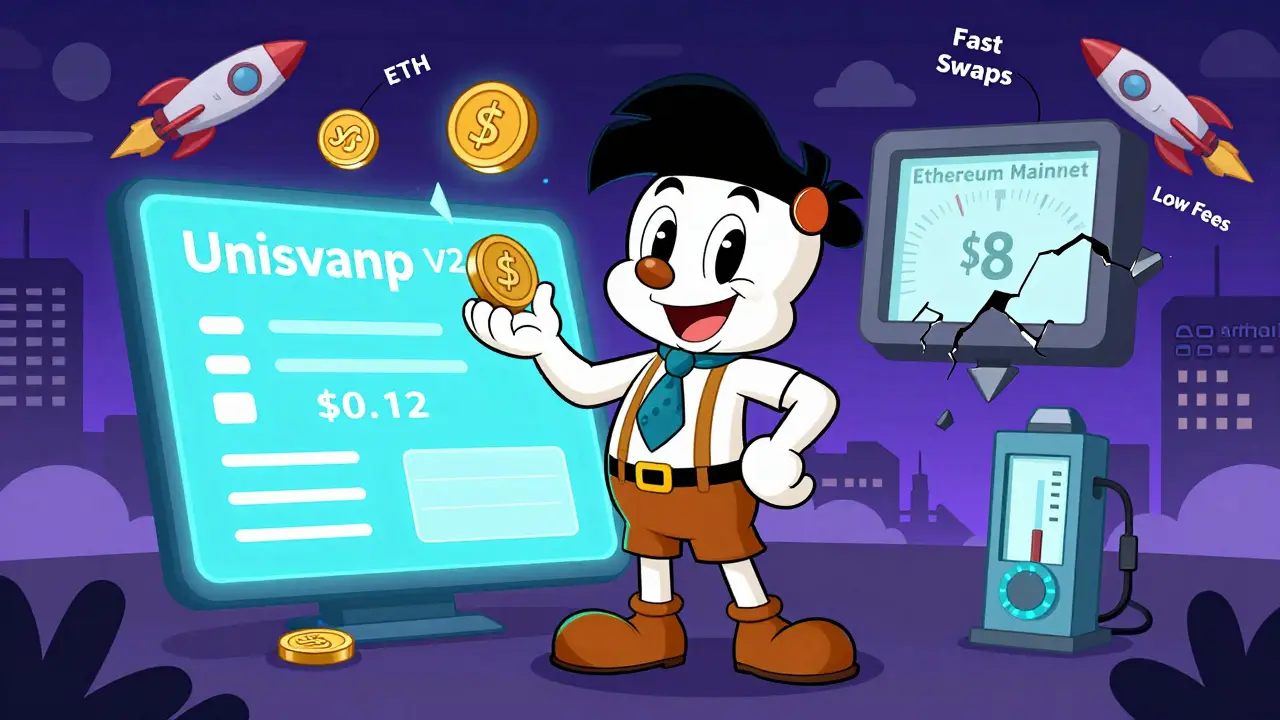
If you trade $100 on Ethereum mainnet during peak hours, your gas fee might be $10. That’s a 10% effective fee, even if the protocol only charges 0.3%. If you trade that same $100 on Arbitrum, the gas might be $0.05. Suddenly, the 0.3% protocol fee is the dominant cost, which is much closer to centralized exchange pricing.
What Is Slippage and Why Does It Happen?
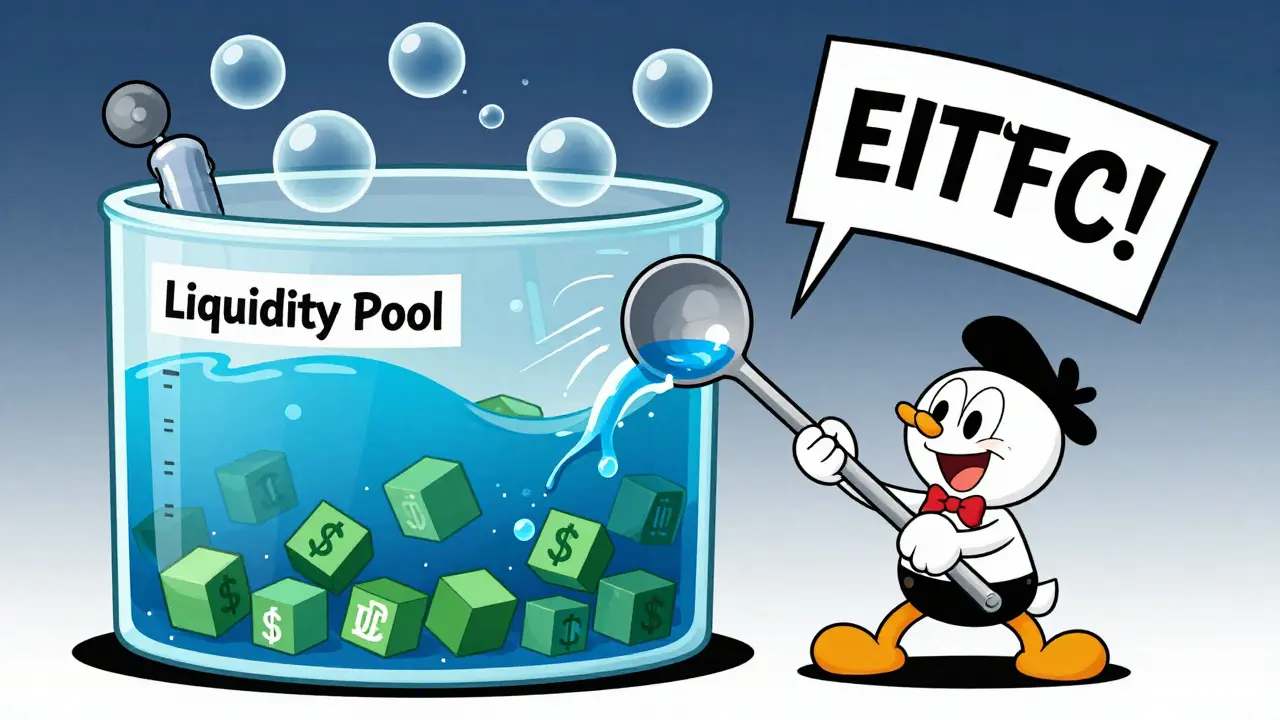
Slippage occurs because DEXs don’t use an order book like traditional stock markets. Instead, they use Automated Market Makers (AMMs). Imagine a giant tank filled with two assets, say ETH and USDC. When you want to buy ETH, you pull some out of the tank and put USDC in. As you pull more ETH, the ratio changes, making each subsequent unit of ETH more expensive.
This mechanism ensures there is always liquidity, but it means large trades move the market price against you. If a pool has only $10,000 total value locked (TVL) and you try to swap $1,000, you will likely experience significant slippage-perhaps 1% to 5% or more. You end up getting less ETH than the current market price suggests because your single trade drained a significant portion of the available liquidity.
For small trades on deep pools (like ETH/USDC on Uniswap), slippage is negligible, often less than 0.01%. But for smaller altcoins or new tokens, slippage can be the largest part of your cost. During high volatility, slippage spikes further because liquidity providers may pull funds, or arbitrage bots may front-run your transaction to capture profit, a phenomenon known as Maximal Extractable Value (MEV).
Layer-1 vs. Layer-2: The Cost Reality Check
In 2026, the debate over where to trade is less about ideology and more about economics. Ethereum remains the settlement layer for most DeFi, but its base layer fees are prohibitive for retail traders making frequent small swaps. This has driven massive adoption of Layer-2 scaling solutions.
| Network Type | Example Chains | Avg Gas Fee | Protocol Fee Range | Best For |
|---|---|---|---|---|
| Ethereum Mainnet | Ethereum | $10 - $100+ | 0.05% - 0.30% | Large institutional trades ($10k+) |
| Layer-2 Optimistic | Arbitrum, Optimism | $0.10 - $1.00 | 0.05% - 0.30% | Daily active trading, DeFi interactions |
| Layer-2 ZK-Rollup | Base, zkSync | $0.05 - $0.50 | 0.02% - 0.20% | High-frequency micro-trades |
| Solana (L1 Alternative) | Solana | $0.001 - $0.01 | 0.05% - 0.30% | Speed-focused trading, meme coins |
Notice the dramatic drop in gas fees. On Solana, gas is virtually free. However, Solana faces different challenges regarding network stability and centralization concerns compared to Ethereum-based L2s. For most users seeking a balance of security and low cost, Arbitrum and Base have become the default choices in 2026.
How to Minimize Your Trading Costs
You cannot eliminate fees entirely, but you can optimize them. Here are practical strategies used by experienced DeFi traders:
- Use Aggregators: Platforms like 1inch or Matcha split your order across multiple DEXs to find the best price. They automatically calculate which combination of routes minimizes slippage and gas. For example, instead of swapping all your ETH on Uniswap, an aggregator might do 50% on Uniswap and 50% on SushiSwap to reduce price impact.
- Set Slippage Tolerance Wisely: Most interfaces allow you to set a maximum slippage tolerance (e.g., 0.5%). If the price moves beyond this limit before your transaction confirms, the trade fails. Setting it too low causes failed transactions (wasting gas); setting it too high exposes you to bad prices. For stablecoin pairs, 0.1% is often sufficient. For volatile tokens, 0.5% to 1% is safer.
- Trade on Off-Peak Hours: While L2s have low fees, Ethereum mainnet gas fluctuates wildly. Trading during weekends or late-night UTC hours can save significant money if you must use mainnet.
- Choose the Right Pool: On Uniswap v3 and similar concentrated liquidity protocols, ensure you are trading in a pool with enough depth. Check the TVL of the pair. If the pool is thin, consider using an aggregator that routes through deeper pools on other chains via bridges.
The Hidden Risk: MEV and Sandwich Attacks
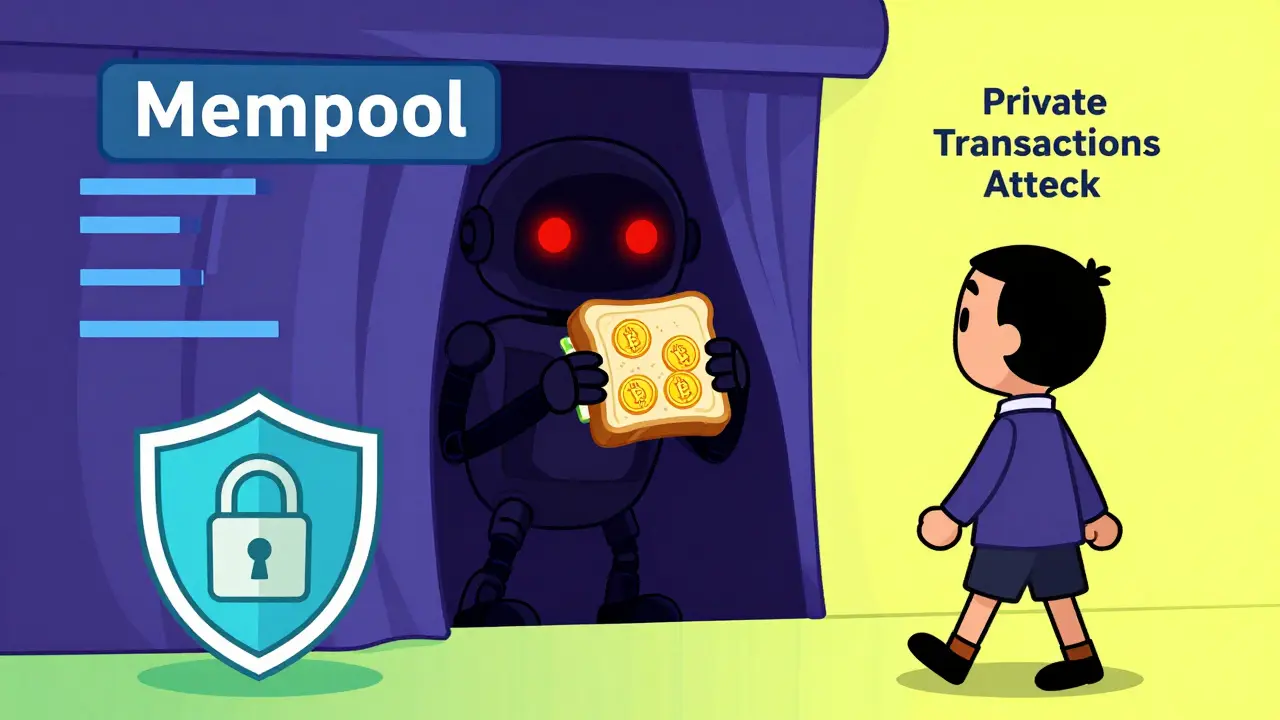
Even with low fees, you might notice you’re getting worse prices than expected. This could be due to Maximal Extractable Value (MEV). Bots monitor the mempool (the waiting area for unconfirmed transactions) and see your large pending trade. They quickly buy the asset right before your trade executes, driving the price up, and then sell it immediately after your trade pushes the price higher. This "sandwich attack" captures profit at your expense.
To mitigate this, many modern wallets and aggregators now offer private RPC endpoints or "anti-MEV" routing options. These services send your transaction directly to validators without exposing it to the public mempool first, reducing the chance of being front-run. Always check if your DEX interface offers a "Private Transaction" toggle.
Conclusion: Calculating the True Cost
Before hitting swap, ask yourself: What is the total cost? Add the protocol fee, estimate the gas, and anticipate slippage. If you are trading small amounts ($10-$50), stick to Layer-2s or Solana to avoid gas eating your profits. If you are trading large sums ($10,000+), use aggregators and consider splitting trades to minimize slippage. The DEX ecosystem is powerful, but it rewards those who understand the mechanics behind the buttons.
What is the average slippage on a DEX?
For major pairs like ETH/USDC on deep liquidity pools, slippage is typically less than 0.05%. For smaller altcoins or volatile tokens, slippage can range from 0.5% to 2% or higher, depending on the trade size relative to the pool's liquidity.
Are DEX fees cheaper than centralized exchanges?
It depends on the network. On Ethereum mainnet, DEX fees are often higher due to gas costs. However, on Layer-2 networks like Arbitrum or Base, DEX fees can be comparable to or lower than centralized exchanges, especially when considering withdrawal fees on CEXs.
How can I reduce slippage when trading?
Use DEX aggregators like 1inch or Matcha to split orders across multiple pools. Trade during times of high liquidity, choose pools with higher Total Value Locked (TVL), and set appropriate slippage tolerance settings in your wallet interface.
What is a sandwich attack in DEX trading?
A sandwich attack is a form of MEV exploitation where bots place a buy order before your large trade and a sell order after it, profiting from the price change your trade creates. This results in you receiving a worse execution price. Using private transaction routes can help prevent this.
Which Layer-2 network has the lowest fees in 2026?
Base and zkSync often offer some of the lowest gas fees, frequently under $0.10 per transaction. Solana also provides extremely low fees (fractions of a cent) but operates on a different architecture than Ethereum-compatible Layer-2s.