You see the headline: DubiEx. It promises zero fees. It promises you don't need to deposit money. It sounds too good to be true, right? In a market where every other platform is slicing your profits with maker-taker fees and withdrawal charges, DubiEx claims to change the game. But here’s the catch: information about this specific platform is scarce. If you are thinking about swapping your tokens on DubiEx, you need to know exactly what you are signing up for before you connect your wallet.
This isn’t just another generic review of a giant like Binance or Coinbase. This is a deep dive into a niche player that operates differently. We are looking at whether "trustless" really means safe, if zero fees come with hidden costs, and why you might struggle to find user reviews online. Let’s break down the reality of using DubiEx in 2026.
What Exactly Is DubiEx?
DubiEx is a cryptocurrency exchange that positions itself as a trustless, zero-fee trading platform. Unlike traditional centralized exchanges (CEXs) where you send your funds to their custody, DubiEx appears to operate closer to a decentralized exchange model. The core promise is simple: no deposits, no withdrawals, and no trading fees. You trade directly from your own wallet.
The term "trustless" gets thrown around a lot in crypto, but it has a specific meaning here. It means you don't have to trust DubiEx to hold your money safely because they aren't holding it at all. Your assets stay in your non-custodial wallet (like MetaMask or Phantom) until the moment of the swap. This removes the risk of the exchange going bankrupt or getting hacked and losing your balance, provided the smart contracts themselves are secure.
However, there is a significant gap in public data. As of September 2026, DubiEx does not appear in major industry rankings or comparative analyses. It lacks the massive user base of platforms like Bybit or Phemex. This obscurity is both its biggest weakness and, potentially, its niche strength. It suggests a smaller, possibly newer community-driven project rather than a corporate giant backed by venture capital.
The Zero-Fee Model: Real Savings or Hidden Costs?
Let’s talk money. Traditional exchanges charge you twice: once when you place an order (maker/taker fees) and again when you move money out (withdrawal fees). For example, Bybit charges spot trading fees around 0.1%, and derivative fees can go higher. If you trade frequently, those fractions of a percent eat into your returns fast.
DubiEx claims zero-fee trading is a standard feature. No spreads added on top of the market rate? No gas fees passed entirely to the user? That’s the pitch. If this holds true, it is a massive competitive advantage for high-frequency traders or anyone moving small amounts of stablecoins where fees usually make up 50% of the transaction value.
But be careful. In crypto, "free" often means the cost is shifted elsewhere. Here is how you need to verify this claim:
- Gas Fees: Even if DubiEx doesn't charge a commission, you still pay network gas fees (ETH, SOL, etc.) to process the transaction on the blockchain. Does DubiEx subsidize these, or do you pay them directly?
- Slippage: With lower liquidity, the price you see might not be the price you get. A 2% slippage loss is worse than a 0.1% fee.
- Token Creation: The platform mentions free token creation. This could be a revenue stream where they monetize new projects listing on their DEX, rather than charging traders directly.
If you are used to paying $10 to withdraw Bitcoin, avoiding that cost is real money saved. But always calculate the total cost of ownership, including gas and slippage, before assuming you are trading for free.
Security and Custody: Who Holds Your Keys?
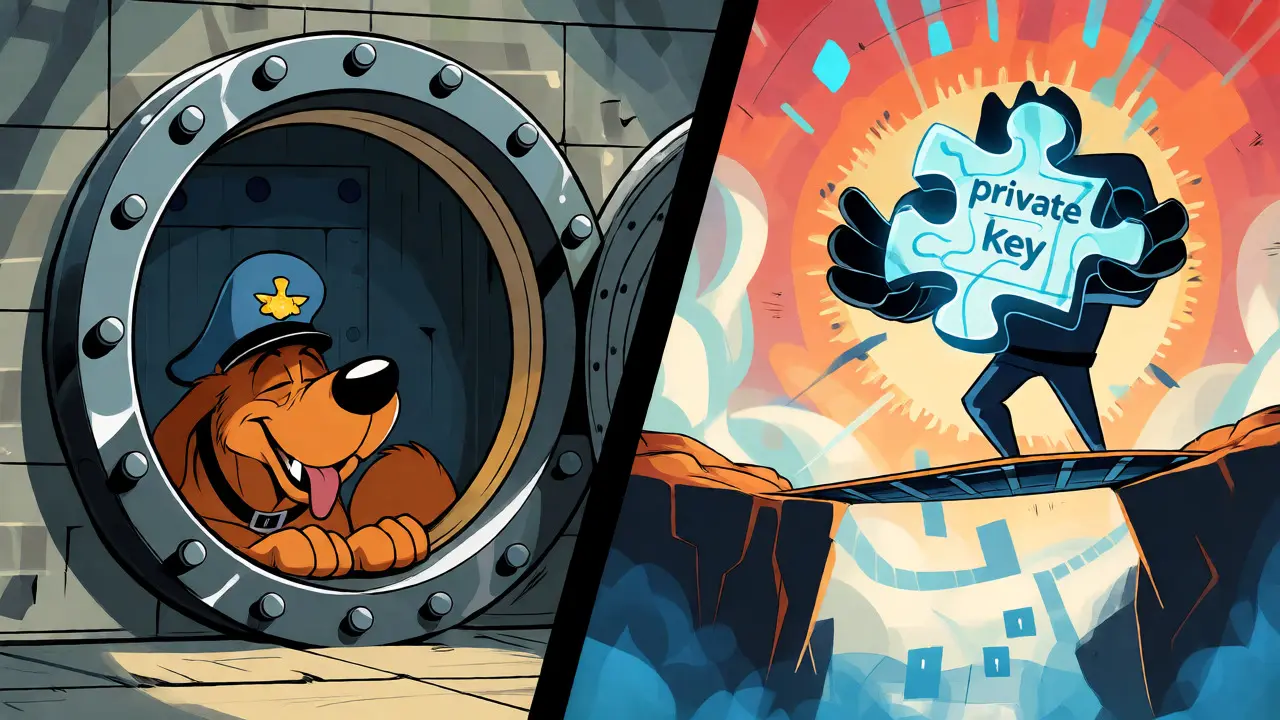
In January 2025, we saw a major hack hit Phemex, resulting in $70 million stolen. These incidents remind us why custody matters. When you use a centralized exchange, you are trusting their security team, their insurance, and their honesty. When you use DubiEx, you are trusting code.
Since DubiEx promotes a "no deposit" workflow, it implies a non-custodial architecture. This is generally safer for long-term holders because you control your private keys. However, it shifts the risk profile. You are now vulnerable to smart contract bugs. Has DubiEx undergone third-party audits? Are the contracts verified on block explorers like Etherscan or Solscan?
| Feature | Centralized Exchange (e.g., Bybit) | DubiEx (Trustless Model) |
|---|---|---|
| Fund Custody | Exchange holds funds | User holds funds in wallet |
| Hack Risk | Exchange hot/cold wallets targeted | Smart contract vulnerabilities |
| Recovery | KYC support tickets | None (lost key = lost funds) |
| Regulatory Compliance | KYC/AML required | Often permissionless |
The lack of public security reports for DubiEx is a red flag. Established DEXs like Uniswap publish detailed audit trails. Without independent verification, you are essentially beta-testing their security protocols with your capital. Start with small amounts to test the waters.
User Experience and Liquidity Concerns
A smooth interface is nice, but liquidity is king. If you try to sell $10,000 worth of a minor altcoin on DubiEx, will there be enough buyers on the other side? Low liquidity leads to high slippage. You might list a token at $1.00, but due to thin order books, you actually sell it at $0.98. That 2% loss wipes out any savings from zero fees.
Because DubiEx lacks widespread recognition, its liquidity pools may be shallow compared to giants like Uniswap or Raydium. Check the depth charts before executing large trades. If the spread between buy and sell orders is wide, walk away.
Onboarding also differs. Since there are no deposits, you don't wait for bank transfers. You simply connect a Web3 wallet. This is faster, but it requires technical comfort. If you don't know how to approve a token spend or revoke allowances, you might feel overwhelmed. It’s not for everyone.

Why Choose DubiEx Over Competitors?
So, who is this actually for? It’s not for beginners who want a customer service phone number. It’s not for institutional investors needing regulatory receipts. DubiEx appeals to privacy-focused traders and crypto natives who hate KYC processes.
Consider these scenarios where DubiEx shines:
- Micro-Trading: You are trading small amounts where fixed withdrawal fees would eat 10% of your profit.
- Privacy Seekers: You want to swap tokens without uploading your passport and selfie.
- Token Launches: You want to create or trade new tokens quickly without waiting for centralized exchange listings.
Conversely, avoid DubiEx if you need fiat on-ramps (buying crypto with credit cards) or if you require advanced charting tools and margin trading features that larger platforms offer.
Final Verdict: Proceed with Caution
DubiEx offers an intriguing proposition: frictionless, fee-free trading with self-custody. In a world where regulations are tightening on centralized exchanges, this model has appeal. However, the lack of transparency regarding its team, audits, and liquidity makes it a high-risk play.
Treat it as a tool for specific tasks, not your primary vault. Use it for quick swaps of liquid assets, keep your long-term holdings in hardware wallets, and never invest more than you can afford to lose while the platform builds its reputation. Verify every smart contract interaction yourself, and don’t assume "trustless" means "risk-free." It just means the risk is yours to manage.
Is DubiEx safe to use?
Safety depends on your definition. Since it is likely non-custodial, you avoid exchange bankruptcy risks. However, you face smart contract risks. Always check for third-party audits and start with small transactions to test reliability.
Does DubiEx require KYC verification?
Most trustless exchanges do not require KYC (Know Your Customer) checks. DubiEx's emphasis on a "trustless" and "no deposit" model strongly suggests it is permissionless, meaning you can trade without submitting personal ID documents.
How does DubiEx make money if trading is free?
Common models include charging gas fees, taking a cut from newly created tokens, or earning yield on liquidity provider incentives. Some platforms also generate revenue through premium features or future staking mechanisms.
Can I withdraw fiat currency from DubiEx?
Typically, no. Trustless exchanges operate purely on crypto-to-crypto pairs. To get cash, you must swap your crypto to a stablecoin (like USDC), transfer it to a centralized exchange, and then withdraw to your bank.
What happens if I lose my private key?
You lose access to your funds permanently. Since DubiEx does not hold your keys, there is no "forgot password" link or customer support recovery option. Secure your seed phrase offline.