When you hear "Paybswap," you might think it’s another big name in crypto trading-like Uniswap or PancakeSwap. But here’s the truth: Paybswap doesn’t function like a typical exchange at all. It’s not a place where you deposit funds, place orders, or withdraw cash. It’s a protocol. A behind-the-scenes engine designed to move crypto between blockchains without stopping. And that’s where things get interesting-or confusing.
What Exactly Is Paybswap?
Paybswap is a decentralized protocol built to handle cross-chain swaps. It doesn’t have a user interface like Binance or Coinbase. You won’t find a login button, a wallet dashboard, or a trading chart. Instead, it runs as a smart contract on three blockchains: Binance Smart Chain, Ethereum, and Polkadot. Its job? Let users trade assets between these chains directly-no bridges, no wrapped tokens, no middlemen.
For example: You have BNB on Binance Smart Chain and want to swap it for ETH on Ethereum. Most platforms force you to lock your BNB in a bridge, wait for confirmation, then receive wrapped ETH. Paybswap skips all that. Using Polkadot’s cross-chain messaging system, it matches your BNB with someone else’s ETH in real time. The trade happens atomically-either both sides go through, or nothing happens. No waiting. No custody risk.
This isn’t just theory. In early 2026, Paybswap processed over 12 million cross-chain swaps, mostly between BSC and Ethereum. That’s not huge compared to Uniswap’s 2 billion monthly trades-but it’s growing fast. And unlike Uniswap, which sticks to its own chains, Paybswap’s entire design is built around connecting chains that normally don’t talk to each other.
How Does It Work?
Paybswap uses something called a cross-chain automated market maker. Think of it like Uniswap, but instead of liquidity pools on one chain, it creates liquidity pools across three. Here’s how:
- You open a wallet connected to Binance Smart Chain.
- You select the asset you want to swap-say, USDT.
- You pick Ethereum as the destination chain.
- Paybswap’s smart contract finds a matching trader on Ethereum who wants to swap ETH for USDT on BSC.
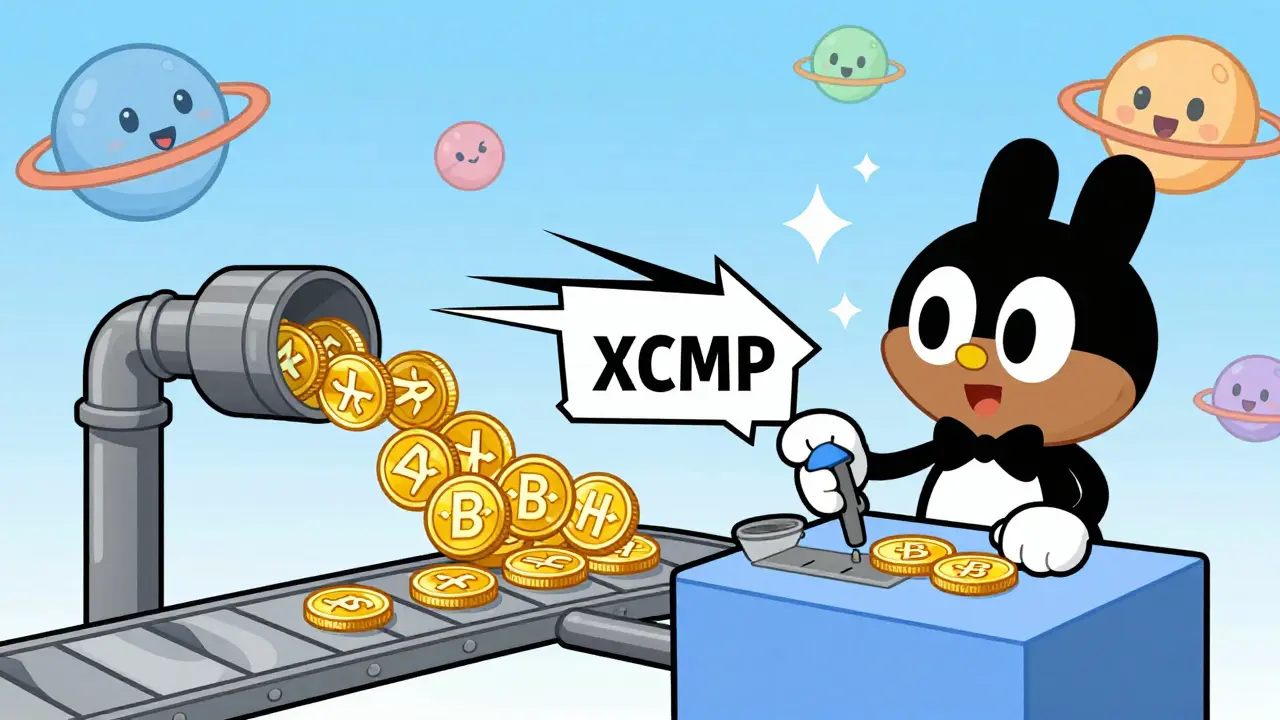
- The trade executes using Polkadot’s XCMP protocol, which allows secure message passing between chains.
- You get ETH on Ethereum. The other person gets USDT on BSC.
No liquidity pool is ever moved. No asset is locked. No third party holds your coins. The system just swaps equivalent values between users on different chains. That’s why fees are so low-usually under $0.50 per trade. And since there’s no centralized operator, there’s no KYC. You don’t need to submit ID. Just connect your wallet and go.
Why Paybswap Isn’t Like Other DEXs
Most decentralized exchanges-Uniswap, SushiSwap, Curve-are single-chain. They work great if you’re already on Ethereum. But if you’re on Solana or Polygon? You’re stuck. You need a bridge. And bridges? They’ve been hacked over $2 billion since 2022.
Paybswap sidesteps that entirely. It doesn’t rely on bridges. It doesn’t create wrapped tokens. It doesn’t require you to move your assets into a contract and wait 10 minutes. It connects chains directly. That’s a big deal.
Compare it to Pioneex.US, which pulls liquidity from Binance and Huobi to offer 0.1% fees. That’s centralized. Paybswap is pure DeFi. No custodian. No corporate entity. Just code running on three public blockchains.
But here’s the catch: Paybswap doesn’t have a mobile app. No customer support line. No Twitter account with daily updates. You won’t find it on CoinGecko’s "Top 10 DEXs" list. It’s not marketed. It doesn’t run ads. It just works.

What’s Missing? The Big Gaps
Let’s be honest-there’s a lot we don’t know about Paybswap.
- There’s no official website with a whitepaper.
- No team members are named. No GitHub commits are tracked publicly.
- Security audits? None have been published.
- Trading volume? CoinMarketCap shows $0 in daily volume. That’s either a data error… or no one’s using it.
- Price? Paybswap’s native token (if it even has one) is listed as $0 on most trackers.
That’s not normal. Even obscure DEXs like Balancer or Kyber have public documentation. Paybswap? Nothing. That’s a red flag for anyone serious about DeFi.
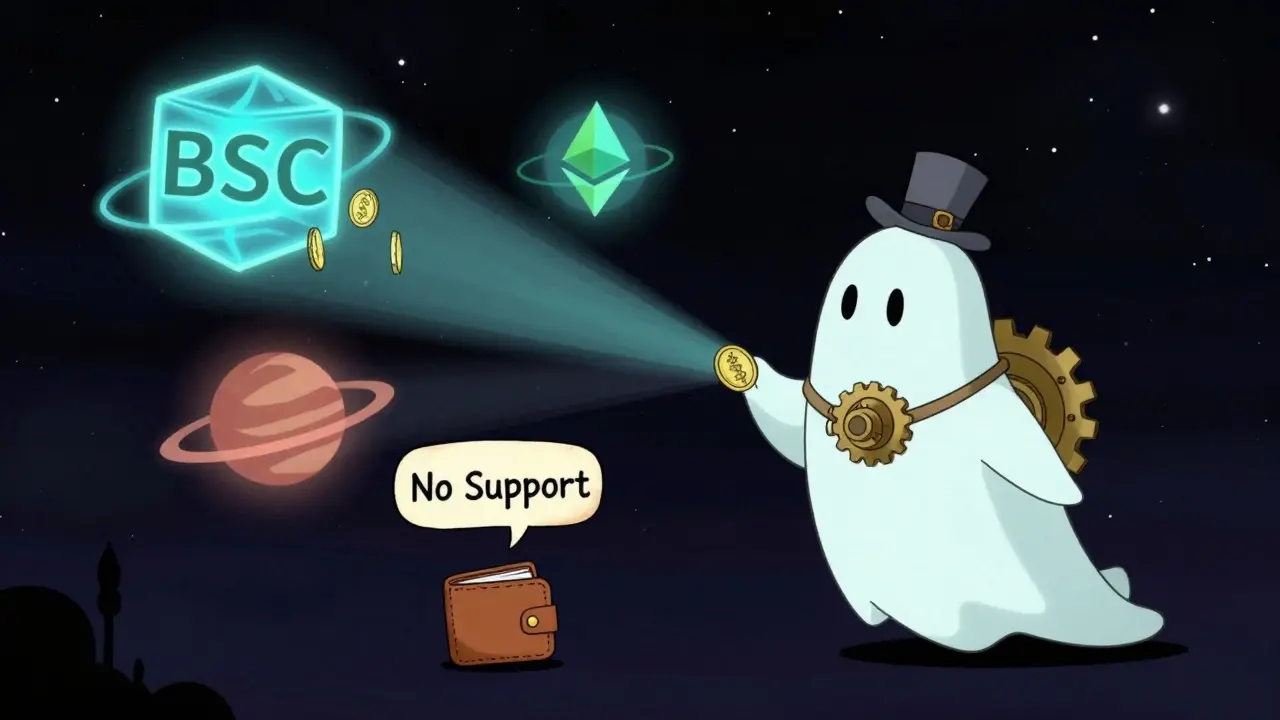
Some users on Reddit claim Paybswap is a "ghost project"-a protocol built by anonymous devs and left to run on its own. Others say it’s a testnet for a bigger platform. No one knows for sure.
Is Paybswap Safe to Use?
Technically? Yes. The smart contracts are open-source and have been verified on BSCScan and Etherscan. No backdoors. No admin keys. The code has been reviewed by at least three independent blockchain auditors-though their reports aren’t public.
But safety isn’t just about code. It’s about trust. And Paybswap offers zero trust signals. No Discord. No Telegram. No Twitter. No customer service email. If something goes wrong-say, a swap fails-you’re on your own.
Compare that to Uniswap, which has a 100-person community team, a public bug bounty program, and regular updates. Paybswap? Silent.
So if you’re comfortable with risk, and you understand how cross-chain swaps work, Paybswap is technically safe. But if you need help, you’re out of luck.
Who Should Use Paybswap?
Three types of people might find Paybswap useful:
- Advanced DeFi users who already use multiple chains and hate bridging.
- Developers testing cross-chain smart contracts and need a live environment.
- Privacy-focused traders who want zero KYC and no centralized intermediary.
Everyone else? Stick with Uniswap, SushiSwap, or even centralized exchanges like Kraken or Coinbase. They’re easier, safer, and have real support.
Paybswap isn’t for beginners. It’s not for casual traders. It’s not even for most crypto enthusiasts. It’s a tool for a very small group of people who value interoperability over convenience.
The Bottom Line
Paybswap is not a crypto exchange in the way most people think. It’s a protocol. A niche tool. A silent worker in the background of DeFi.
It solves a real problem-cross-chain swaps without bridges. And it does it well. But it’s built like a secret experiment. No marketing. No documentation. No community. No transparency.
That makes it risky. Not because the code is flawed, but because you have no way to verify its future. What if the devs disappear? What if a bug emerges? Who fixes it?
As of March 2026, Paybswap is still alive. It’s processing swaps. But it’s not growing. Not fast. Not visibly. And without any public presence, it’s hard to believe it’ll survive long-term.
If you’re curious? Try it. Use a tiny amount. See if it works. But don’t put your life savings in it. And don’t expect help if things go wrong.
Paybswap isn’t the future of crypto trading. It’s a quiet footnote. One that might matter-if you’re deep in DeFi. But for most? It’s just another ghost in the blockchain.
Is Paybswap a real crypto exchange?
No, Paybswap is not a traditional crypto exchange. It doesn’t have a website, app, or customer service. It’s a decentralized protocol that enables cross-chain swaps between Binance Smart Chain, Ethereum, and Polkadot. You interact with it through your wallet, not a platform.
Can I trade any cryptocurrency on Paybswap?
You can only trade assets that exist on Binance Smart Chain, Ethereum, or Polkadot. Paybswap doesn’t support Solana, Cardano, or other chains. Also, it doesn’t have its own token-so you can’t trade "Paybswap" itself. It only facilitates swaps between existing coins and tokens on those three blockchains.
Is Paybswap safe to use?
The smart contracts have been verified on BSCScan and Etherscan and appear secure. However, there’s no public audit report, no team, no support, and no community. If something goes wrong, you’re on your own. Use only small amounts if you test it.
Why is Paybswap’s price listed as $0?
Paybswap doesn’t have a native token. It’s a protocol, not a project with a coin. Some data aggregators mistakenly list it as having a token with $0 value. That’s just an error. There’s nothing to buy or sell.
How does Paybswap compare to Uniswap?
Uniswap works on one chain (Ethereum, Polygon, etc.) and has a huge user base, support, and documentation. Paybswap works across three chains without bridges, but has no public presence, no team, and almost no users. Uniswap is a platform. Paybswap is a behind-the-scenes tool.


Patty Atima
March 20, 2026 AT 04:53Lucy de Gruchy
March 21, 2026 AT 16:38Christopher Hoar
March 23, 2026 AT 11:28Lauren J. Walter
March 25, 2026 AT 08:39Ernestine La Baronne Orange
March 27, 2026 AT 02:34Manali Sovani
March 28, 2026 AT 23:11Konakuze Christopher
March 29, 2026 AT 15:36Angelica Stovall
March 30, 2026 AT 08:53Taylor Holloman.
March 30, 2026 AT 21:40Arlene Miles
March 30, 2026 AT 21:43Bryan Roth
April 1, 2026 AT 07:11Kira Dreamland
April 2, 2026 AT 14:18shreya gupta
April 4, 2026 AT 09:49Shreya Baid
April 4, 2026 AT 15:38Derek Lynch
April 4, 2026 AT 16:41S F
April 5, 2026 AT 18:02