
Imagine casting your vote from your phone, watching it get recorded instantly, and knowing for a fact that no one-not a hacker, not a government official, not even the system administrator-can change it later. For years, this sounded like science fiction. Today, thanks to Blockchain, a decentralized digital ledger technology originally created for cryptocurrencies like Bitcoin, it’s becoming a tangible reality for securing democratic processes.
Traditional elections rely on trust. You trust the ballot box is secure. You trust the people counting the votes. You trust the computers tallying the results. But what happens when that trust breaks down? Whether it’s allegations of tampered machines or lost paper ballots, doubts about election integrity can shake the foundation of democracy. Blockchain offers a different approach: don’t just trust the system; verify it.
The Core Problem with Traditional Voting Systems
To understand why blockchain matters, we first need to look at where current systems fail. Most modern elections use a mix of paper ballots and electronic tabulation. While paper provides a physical record, it’s slow to count and prone to human error. Electronic voting machines are faster but introduce new risks. They often operate as "black boxes." Once you cast your vote, you have no way to confirm it was recorded correctly, nor can you prove it wasn’t altered before being sent to the central server.
Centralized servers are single points of failure. If a hacker breaches the main database, they could theoretically alter thousands of votes without leaving a trace. In contrast, blockchain distributes data across a network of computers, known as nodes. There is no single master copy to hack. This shift from centralized control to distributed consensus is the heart of how blockchain ensures election integrity.
How Blockchain Secures the Vote
Blockchain doesn’t just store data; it locks it in place using cryptography. Here is how the process works in a secure voting scenario:
- Voter Authentication: Before voting begins, identities are verified. This might involve biometric data (like fingerprints or facial recognition) linked to a unique digital ID on the blockchain. This prevents duplicate voting while keeping personal details private.
- Casting the Vote: When you select your candidate, your choice isn’t sent to a single server. Instead, it’s encrypted and broadcast to the network.
- Immutable Recording: The encrypted vote becomes a transaction on the blockchain. It gets grouped with other transactions into a "block." Each block contains a cryptographic hash-a unique digital fingerprint-of the previous block. This creates a chain. If someone tries to change a vote in Block 10, the hash changes, breaking the link to Block 11, 12, and so on. The entire network would immediately reject the alteration because it doesn’t match the majority record.
- Smart Contracts: These are self-executing codes stored on the blockchain. They can automatically enforce rules, such as ensuring a voter has only voted once or closing the polls exactly at midnight. No human intervention is needed to trigger these actions, reducing the risk of insider manipulation.
This structure means that every vote is transparent yet anonymous. Anyone can audit the total number of votes cast and verify the mathematical integrity of the tally, but no one can link a specific vote back to an individual person.
| Feature | Traditional Electronic Voting | Blockchain-Based Voting |
|---|---|---|
| Data Storage | Centralized Server | Distributed Network (Nodes) |
| Auditability | Limited, requires manual recount | Real-time, public verification possible |
| Tamper Resistance | Low (vulnerable to server hacks) | High (requires compromising majority of nodes) |
| Transparency | Opaque "black box" process | Transparent ledger visible to all stakeholders |
| Cost Efficiency | High logistics costs (printing, transport) | Lower long-term operational costs |

Addressing Privacy and Anonymity Concerns
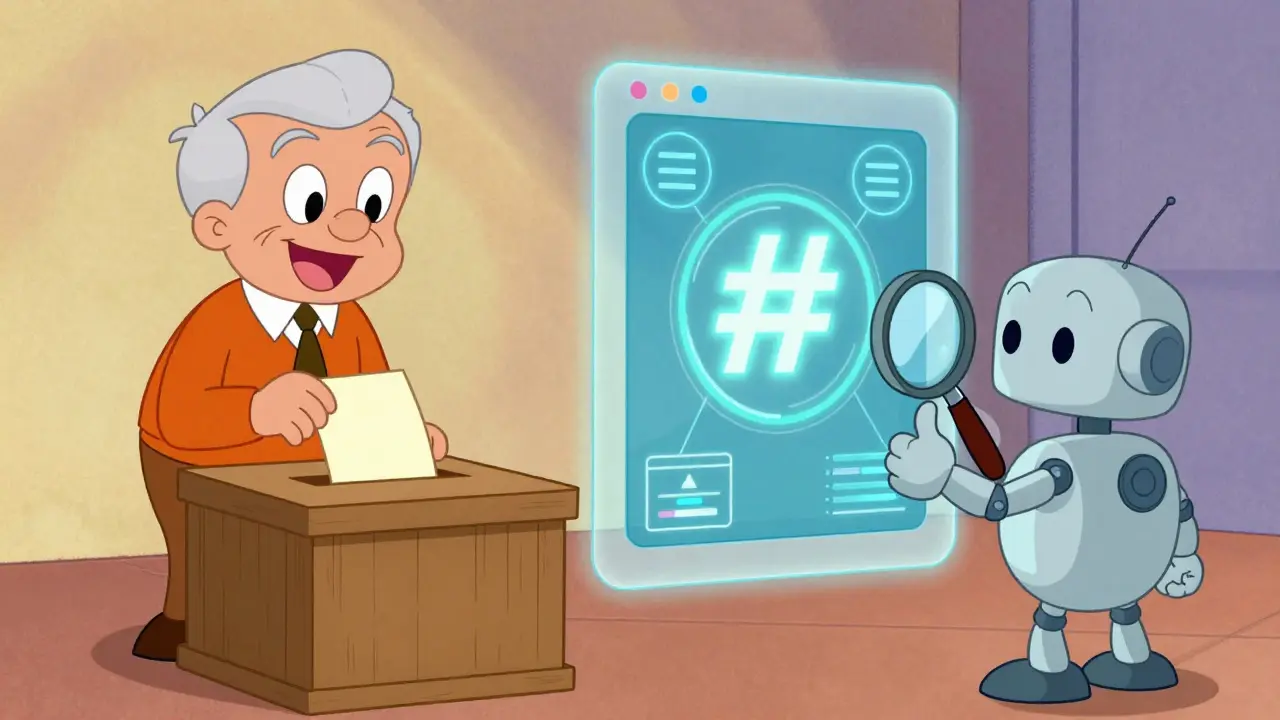
A common question is: "If the ledger is public, won’t everyone see who I voted for?" This is a valid concern, but blockchain solves it through advanced cryptography. Your identity is separated from your vote. Think of it like sending cash in a sealed envelope. The bank knows you deposited money (the transaction happened), but they don’t know what’s inside the envelope (your specific choice) unless you tell them. In blockchain terms, zero-knowledge proofs allow the system to verify that you are eligible to vote and that you haven’t voted twice, without revealing your actual selection to the public ledger.
Furthermore, voter IDs are often hashed. A hash turns your name and birthdate into a random string of characters. Even if someone sees the hash, they cannot reverse-engineer it to find your name. This ensures that while the *process* is transparent, the *individual* remains anonymous.
Real-World Implementation and Pilot Projects
While large-scale national elections on blockchain are still rare, several countries and organizations have tested the waters. Estonia, a global leader in e-governance, has experimented with blockchain components for its digital infrastructure, though not yet for full parliamentary elections. In the United States, cities like West Virginia and Moscow have piloted mobile voting apps backed by blockchain technology for military and overseas voters. These pilots aimed to increase accessibility while maintaining security.
The results were mixed but informative. Technically, the systems worked. Votes were recorded immutably, and users could verify their participation. However, challenges emerged regarding user experience and internet connectivity. Not every citizen has a high-speed smartphone or reliable internet access. Relying solely on digital platforms risks disenfranchising those without tech access, creating a new kind of inequality in voting rights.
Challenges and Risks to Consider
Blockchain is not a magic bullet. It secures the data once it’s on the chain, but it doesn’t fix problems that happen *before* the vote is cast. This is known as the "garbage in, garbage out" problem. If a hacker compromises your computer and forces you to click a certain candidate before you submit the vote, the blockchain will faithfully record that coerced choice. It cannot detect coercion or malware on the user’s device.
Other significant hurdles include:
- Scalability: Processing millions of votes simultaneously requires immense computational power. Early blockchain networks struggled with transaction speeds, leading to delays. Newer solutions like Layer 2 protocols aim to fix this, but they add complexity.
- Key Management: In a decentralized system, users often hold their own private keys. If a voter loses their key, they lose access to their vote forever. Recovering lost keys in a secure, non-centralized way is technically difficult.
- Public Trust: Many citizens are skeptical of digital voting. Building trust requires extensive education campaigns. People need to understand how the technology works to believe in its fairness.
- Regulatory Frameworks: Laws lag behind technology. Most countries lack clear legal standards for accepting blockchain-based votes. Without legal backing, technical success doesn’t matter.
The Future of Electoral Integrity
The future likely isn’t a complete replacement of paper ballots with blockchain overnight. Instead, we’re seeing a hybrid model emerge. Paper ballots provide a physical backup and a psychological comfort factor for voters. Blockchain serves as the backend verification layer. After the paper ballots are scanned, the digital records are hashed and stored on a blockchain. This allows independent auditors to compare the physical count with the immutable digital record instantly. If there’s a discrepancy, the issue is flagged immediately.
As technology matures, we may see broader adoption for lower-stakes elections, such as corporate shareholder meetings, union votes, or local community decisions. These environments offer controlled settings to refine the technology before scaling up to national levels.
Ultimately, blockchain ensures election integrity by shifting the paradigm from blind trust to verifiable proof. It doesn’t eliminate all risks, but it raises the cost of cheating so high that it becomes practically impossible. For democracy to thrive in the digital age, tools like blockchain offer a promising path forward-one where transparency is built into the code, not just promised by politicians.
Can blockchain voting be hacked?
While the blockchain ledger itself is extremely resistant to hacking due to its decentralized nature, the surrounding infrastructure can be vulnerable. Hackers might target voter devices, authentication portals, or the software interfaces used to cast votes. However, altering the recorded votes on the blockchain would require compromising more than 51% of the network's nodes simultaneously, which is computationally impractical for most systems.
Is my vote anonymous on a blockchain?
Yes, if designed correctly. Blockchain voting systems use cryptographic techniques like zero-knowledge proofs and hashing to separate your identity from your vote. Your eligibility is verified, but your specific choice remains encrypted and unlinked to your personal information on the public ledger.
What happens if I lose my private key?
In many decentralized systems, losing your private key means you cannot access your account or vote. This is a major usability challenge. Some pilot programs implement recovery mechanisms managed by trusted third parties or use multi-signature wallets to mitigate this risk, but it remains a critical area of development.
Why aren't all countries using blockchain for elections?
Several factors hold back widespread adoption: lack of clear legal frameworks, concerns about digital divide (not everyone has internet access), scalability issues during peak voting times, and general public skepticism. Additionally, traditional paper trails are deeply ingrained in many legal systems, making transition difficult.
How does blockchain prevent double voting?
Smart contracts on the blockchain can be programmed to check a voter's status against a registered list. Once a vote is cast and confirmed, the system marks that voter as "used." Any subsequent attempt to vote from the same authenticated identity is automatically rejected by the network.

Kwon Bill
June 11, 2026 AT 10:42The paradigm shift towards decentralized consensus mechanisms in electoral infrastructure is not merely a technological upgrade but a fundamental restructuring of epistemic trust within democratic frameworks. By leveraging immutable ledger architectures, we effectively mitigate the systemic vulnerabilities inherent in centralized data silos, thereby enhancing the auditability and cryptographic integrity of the voting process. However, one must critically analyze the interoperability challenges between legacy authentication protocols and emerging blockchain-based identity verification systems, as these friction points often dictate the scalability limits of such implementations.
ravi mahla
June 12, 2026 AT 12:35Oh wow, another tech bro thinks he can fix democracy with some magic internet money code lol. Like, seriously? You guys are so excited about 'immutability' that you forget humans are still holding the phones. If I get hacked before I click vote, your fancy chain just records my mistake forever. It's cute how you think cryptography solves coercion though. Keep dreaming while the rest of us wait for actual paper trails to be respected.
Mark Brunschwiler
June 14, 2026 AT 06:21I feel like people are missing the soul of this whole thing because they are too busy looking at the code instead of the human heart behind it. When we talk about trust we are really talking about love and connection and if you do not have that then no amount of hashing will save you from the darkness inside. My grandmother used to say that a vote is a promise to your neighbor and now we want to put that promise on a server farm in Iceland? It makes me sad really. We are losing the warmth of the ballot box for the cold light of a screen. Why do we rush when we should pause and breathe and think about what it means to be free? The silence of the digital void is louder than any shout. I just want everyone to hold hands and sing together but instead we argue about nodes. It breaks my heart every single day.
Sonya O'Brien
June 15, 2026 AT 03:22I completely agree with the sentiment that we need to balance technological advancement with human-centric design principles, especially when considering the diverse needs of our global electorate, which includes individuals who may not have access to high-speed internet or sophisticated mobile devices, thereby creating a potential digital divide that could inadvertently disenfranchise vulnerable populations who rely on traditional methods of participation. Furthermore, the implementation of such systems requires extensive educational outreach programs to ensure that all citizens understand the mechanics of blockchain technology and its implications for privacy and security, which is a monumental task given the current state of digital literacy across different demographic groups. It is also crucial to consider the environmental impact of certain blockchain consensus mechanisms, although newer proof-of-stake models offer more sustainable alternatives, yet the transition period remains fraught with uncertainty and potential resistance from stakeholders who are accustomed to established procedures. Ultimately, the success of any hybrid model depends on rigorous independent auditing and transparent communication channels that allow for real-time feedback and adjustment, ensuring that the system evolves in response to user experience and emerging security threats rather than remaining static in the face of dynamic challenges.
Filbert Reeves
June 15, 2026 AT 10:35you guys are all asleep at the wheel here. the deep state knows exactly what they are doing by pushing this blockchain narrative. it is not about security it is about control. they want to track every single move you make through your phone fingerprint and facial recognition data. once they have that biometric info linked to your vote they own you. i have seen the documents leaked from the cia servers back in 2012 that show they were testing similar tech in guantanamo bay. the hashes are not random they are encoded messages to the alien overlords who run the grid. dont let them trick you into giving up your privacy for convenience. the paper trail is the only way to stay free. wake up sheeple before it is too late. they are coming for your keys next. trust no one. especially not the politicians who claim they support transparency. it is a trap. a big fat trap. and you are walking right into it with your eyes closed. typical american stupidity. why cant we see the strings pulling us around?
Nick Rice
June 16, 2026 AT 03:35Let’s cut through the noise and look at the facts here. While the theoretical framework of blockchain offers robust solutions for data integrity, the practical application in election systems is currently plagued by significant usability hurdles that cannot be ignored. We need to address the key management issue head-on because expecting average citizens to safeguard private keys without losing them is unrealistic and dangerous. Until we develop secure, user-friendly recovery mechanisms that do not compromise decentralization, large-scale adoption is premature. Stop hyping the tech and start fixing the UX. That is the only way we move forward.
Amit Thakur
June 17, 2026 AT 22:55The architectural synergy between zero-knowledge proofs and distributed ledger technology presents a compelling vector for enhancing electoral transparency while preserving voter anonymity, yet we must aggressively tackle the latency issues inherent in current consensus algorithms to ensure real-time processing capabilities during peak voting hours. Without optimizing the throughput of smart contract execution, we risk introducing bottlenecks that could undermine the very efficiency gains promised by decentralized systems, thus necessitating a rigorous evaluation of Layer-2 scaling solutions before any widespread deployment can be considered viable for national-level elections.
Eric Scheinberg
June 19, 2026 AT 15:51It is imperative to recognize that the legal ramifications of adopting blockchain for electoral processes remain largely uncharted territory in most jurisdictions. The absence of standardized regulatory frameworks creates a vacuum where technical success does not equate to legal validity. Therefore, legislative bodies must prioritize the establishment of clear statutory guidelines that define the admissibility of blockchain-generated evidence in judicial reviews of election outcomes. Without such foundational legal structures, the integration of this technology will continue to face insurmountable institutional resistance regardless of its cryptographic merits.
pankaj chawla
June 21, 2026 AT 15:33I think we should focus on pilot projects first. Let us test this in local municipal elections where the stakes are lower and the volume is manageable. This allows us to gather data on user behavior and identify technical glitches without risking national stability. Collaboration between tech developers and civic leaders is essential here. We need a phased approach that builds trust gradually. Rushing into full-scale implementation is reckless. Let us iterate and improve based on real-world feedback before expanding further.
Jessica Lane
June 23, 2026 AT 01:17I am deeply concerned about the accessibility implications of moving towards a fully digital voting infrastructure. How do we ensure that elderly voters or those in rural areas with poor connectivity are not left behind? The digital divide is a real barrier that threatens the inclusivity of our democratic process. We must invest heavily in public Wi-Fi initiatives and provide alternative verification methods for those who cannot use smartphones. Education is key here. We need community workshops to teach people how to navigate these new systems safely. Otherwise, we are creating a two-tiered citizenship based on tech access.
Charles Pawlikowski
June 23, 2026 AT 13:17this is american innovation at its finest!! we are leading the world in tech and democracy both! :D why listen to haters from other countries who dont know how to build proper software? we got the best chips and the best code. anyone who says otherwise is jealous of our freedom. lets go team usa!!! blockhain is the future and we are owning it. no more foreign interference because our servers are secure and patriotic. #MAGA #TechFreedom
Andrea Burd
June 24, 2026 AT 21:33please stop pretending this is complicated. it is just a glorified spreadsheet with extra steps. the elites already decided the outcome long before you even downloaded the app. your little crypto keys mean nothing when the power grid goes down. i read the fine print and its all gibberish designed to confuse you. typical corporate scam. waste of time. boring.