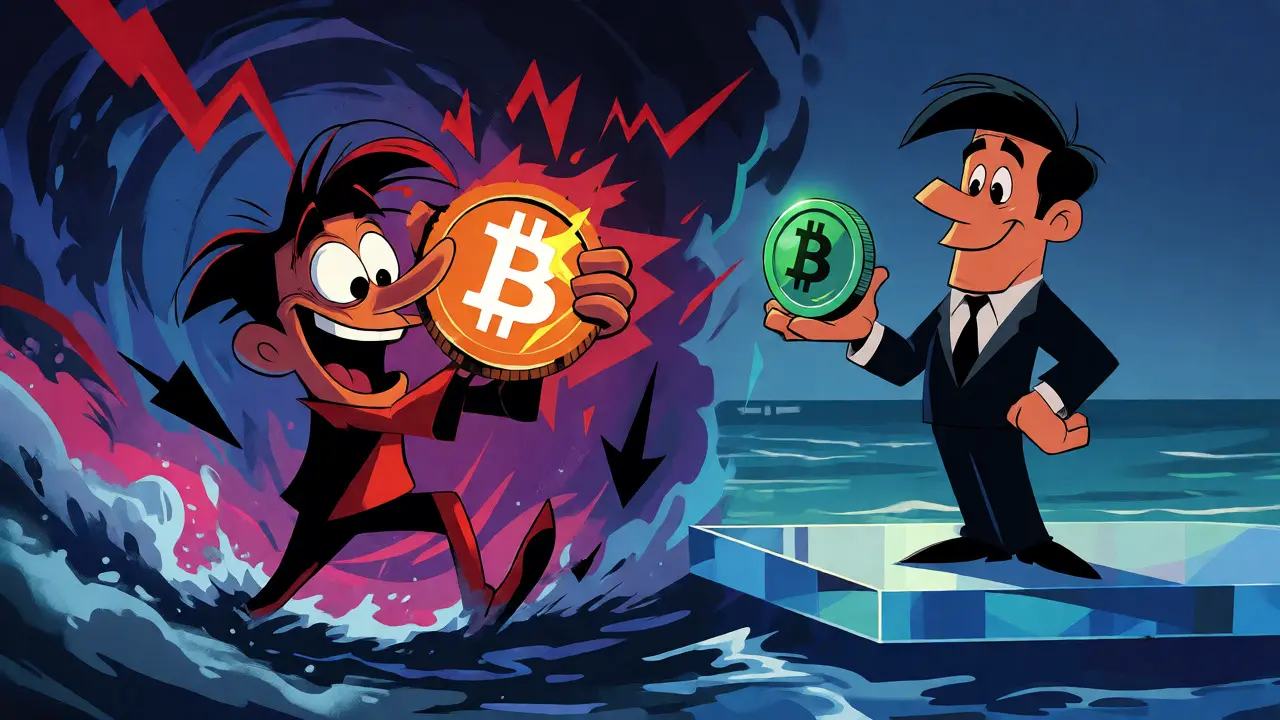
You probably heard the horror stories. You bought Bitcoin on Monday, checked your portfolio on Tuesday, and realized you lost half your money while you were sleeping. That wild ride is exactly why Stablecoins exist. They are cryptocurrencies designed to keep their price steady, usually pegged one-to-one with a stable asset like the US dollar or gold. Think of them as the calm in the stormy sea of digital assets.
If you are new to this space, you might wonder why anyone would want a crypto that doesn't go up in value. The answer is simple: utility. Traders need a safe place to park cash between trades without converting back to fiat currency, which takes days and costs fees. Developers use them for smart contracts. And people in countries with high inflation use them to protect their savings from local currency collapse. Let's break down how they work, why they matter, and what risks you should actually care about.
The Core Problem Stablecoins Solve
Bitcoin is great for long-term holding, but it is terrible for buying coffee. Imagine trying to pay for a $5 latte when the price of your coin fluctuates by 10% every hour. Merchants can't handle that uncertainty. Stablecoins solve this volatility problem by tying their value to external references, creating a bridge between traditional finance and blockchain technology.
This stability allows for things that volatile coins simply can't do efficiently. For instance, sending money across borders used to take three to five business days through banks. With stablecoins, it happens in seconds, 24/7, regardless of weekends or holidays. In 2024 alone, adjusted transaction volume for these assets hit $5.6 trillion. That is not just hype; it is real economic activity moving on rails that don't sleep.
How Do They Stay Stable?
Not all stablecoins are created equal. They stay pegged using different mechanisms, each with its own set of pros and cons. Understanding these types helps you decide which one fits your needs.
| Type | Mechanism | Examples | Risk Profile |
|---|---|---|---|
| Fiat-Backed | Holds cash or equivalents (like T-bills) in reserve | USDC, USDT | Low technical risk, high counterparty/regulatory risk |
| Crypto-Backed | Over-collateralized with other cryptocurrencies | DAI | Medium risk; liquidation possible if collateral drops sharply |
| Algorithmic | Smart contracts adjust supply based on demand | FRAX, UST (failed) | High risk; prone to "death spirals" during panic |
| Commodity-Backed | Pegged to physical assets like gold or oil | PAXG | Low volatility, but storage/logistics issues apply |
Fiat-backed stablecoins are the most common. Companies like Circle issue USDC, claiming that every token is backed by a real dollar held in a bank account or short-term government bonds. You trust the company to be honest and audited. If they hold enough reserves, the peg holds. If they mess up, you have a problem.
Crypto-backed stablecoins work differently. Take DAI, issued by MakerDAO. Instead of dollars, it is backed by Ethereum and other cryptos. Because those assets are volatile, the system requires over-collateralization. You might lock up $150 worth of ETH to mint $100 worth of DAI. This buffer protects the stablecoin if the backing asset crashes.
Then there are algorithmic stablecoins. These don't hold reserves. Instead, they use code to expand or shrink the supply. If the price goes above $1, the protocol creates more tokens to lower the price. If it drops below $1, it burns tokens to raise the price. Sounds clever, right? It often fails under pressure. Remember TerraUSD? It collapsed because the algorithm couldn't handle a massive sell-off, wiping out billions in value.

Why People Actually Use Them
It is easy to dismiss stablecoins as boring. But look at who uses them. Institutional investors use them for treasury management. Retail traders use them to exit positions quickly without triggering taxable events in some jurisdictions. Remittance users send funds to family abroad without paying 7% wire fees.
Consider a freelancer working with clients in Europe. Traditional bank wires are slow and expensive. By accepting USDC, the freelancer gets paid instantly. They can then convert to their local currency when the exchange rate is favorable. This flexibility saves time and money.
DeFi (Decentralized Finance) relies heavily on these assets. Lending platforms like Aave allow users to borrow against their crypto holdings using stablecoins. If you think Bitcoin will drop, you can borrow USDC against your BTC, wait for the dip, buy back cheaper, and repay the loan. This strategy wouldn't work if the borrowed asset was also volatile.
The Risks You Cannot Ignore
Here is the catch: stablecoins are not risk-free. Just because they are called "stable" doesn't mean they are safe. The biggest risk is de-pegging. This happens when the market price diverges significantly from the target value, say $1.00. During market stress, liquidity dries up, and buyers vanish. If confidence in the issuer wavers, everyone rushes for the exit at once.
Counterparty risk is another major factor. With fiat-backed coins, you are trusting a centralized entity. Did they really buy the Treasury bills? Are the audits accurate? What if the government freezes their bank accounts? These are real questions. Regulatory crackdowns can freeze assets overnight. The recent push for clearer rules, like the GENIUS Act in the US, aims to fix this by mandating strict reserve requirements and regular audits. But until laws are settled globally, uncertainty remains.
Smart contract bugs pose a threat to decentralized options. If the code governing a crypto-backed stablecoin has a flaw, hackers can drain the reserves. Unlike a bank error, blockchain exploits are often irreversible. Always check if the protocol has been audited by reputable security firms before depositing large sums.

Regulation and the Future
Governments are waking up to the power of stablecoins. The European Union implemented MiCA (Markets in Crypto-Assets), which sets strict standards for issuers. In the US, discussions continue on federal frameworks. These regulations generally favor fiat-backed models with transparent reserves, potentially squeezing out opaque algorithmic players.
We are also seeing the rise of CBDCs (Central Bank Digital Currencies). Some worry these will replace private stablecoins. However, many experts believe they will coexist. Private stablecoins offer speed and innovation that government projects often lack due to bureaucratic hurdles. Meanwhile, traditional banks are starting to integrate stablecoin rails into their payment systems, blurring the line between old and new finance.
Practical Tips for Beginners
If you are looking to start using stablecoins, keep it simple. Stick to the big names like USDC or USDT for now. They have the deepest liquidity and the most established track records. Store them in a hardware wallet if you hold significant amounts, or use a reputable exchange if you trade frequently.
- Check the Peg: Before making a large trade, glance at the current price. If it is trading at $0.98 or $1.02, proceed with caution. Extreme deviations signal trouble.
- Diversify Issuers: Don't put all your eggs in one basket. Holding both USDC and USDT spreads your counterparty risk.
- Understand Fees: Network fees vary. Sending USDC on Ethereum can cost $10-$50 during congestion. On Solana or Polygon, it might cost pennies. Choose the network wisely.
Remember, stablecoins are tools, not investments. You don't buy them expecting them to double in value. You buy them for stability and speed. Treat them like digital cash, not digital gold.
Are stablecoins completely safe?
No asset is completely safe. While they avoid price volatility, stablecoins face risks like issuer insolvency, regulatory changes, and smart contract bugs. Fiat-backed coins depend on the honesty of the issuer, while algorithmic ones depend on complex code that can fail under stress.
Can I earn interest on stablecoins?
Yes, many platforms offer yield on stablecoins through lending protocols or staking programs. Rates can range from 2% to 10% depending on market conditions and platform risk. However, higher yields often come with higher risks, such as platform hacks or illiquidity.
What happens if a stablecoin loses its peg?
If a stablecoin de-pegs, its price may drop significantly below $1.00. In severe cases, like TerraUSD, it can lose nearly all value. Users may struggle to redeem their tokens for the underlying asset if liquidity evaporates or if the issuer suspends redemptions.
Is USDT better than USDC?
Both are major fiat-backed stablecoins. USDT (Tether) has larger market cap and wider adoption, especially in Asia. USDC (Circle) is often viewed as having stronger regulatory compliance and transparency in the US. Your choice depends on where you live and which exchanges you use.
Do I need a crypto wallet to hold stablecoins?
Technically, yes, because they exist on blockchains. However, most beginners start by holding them on an exchange. For better security and control, moving them to a self-custody wallet like MetaMask or a hardware wallet is recommended for larger balances.