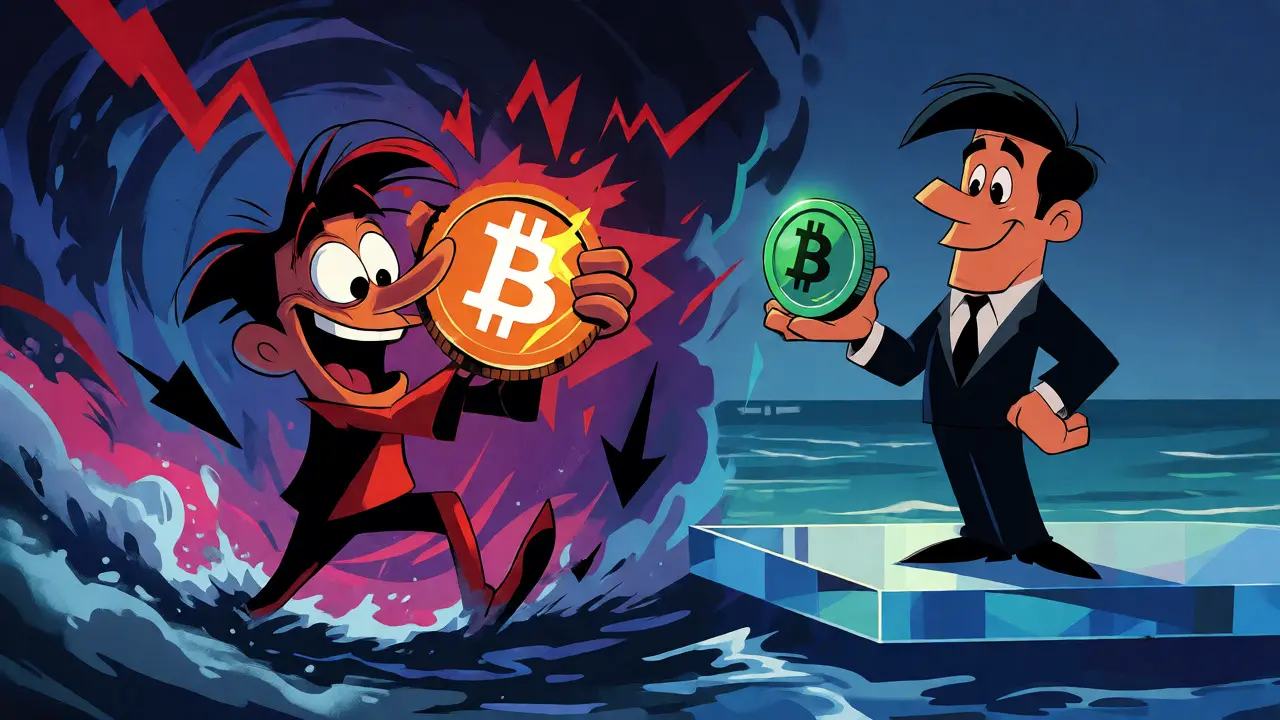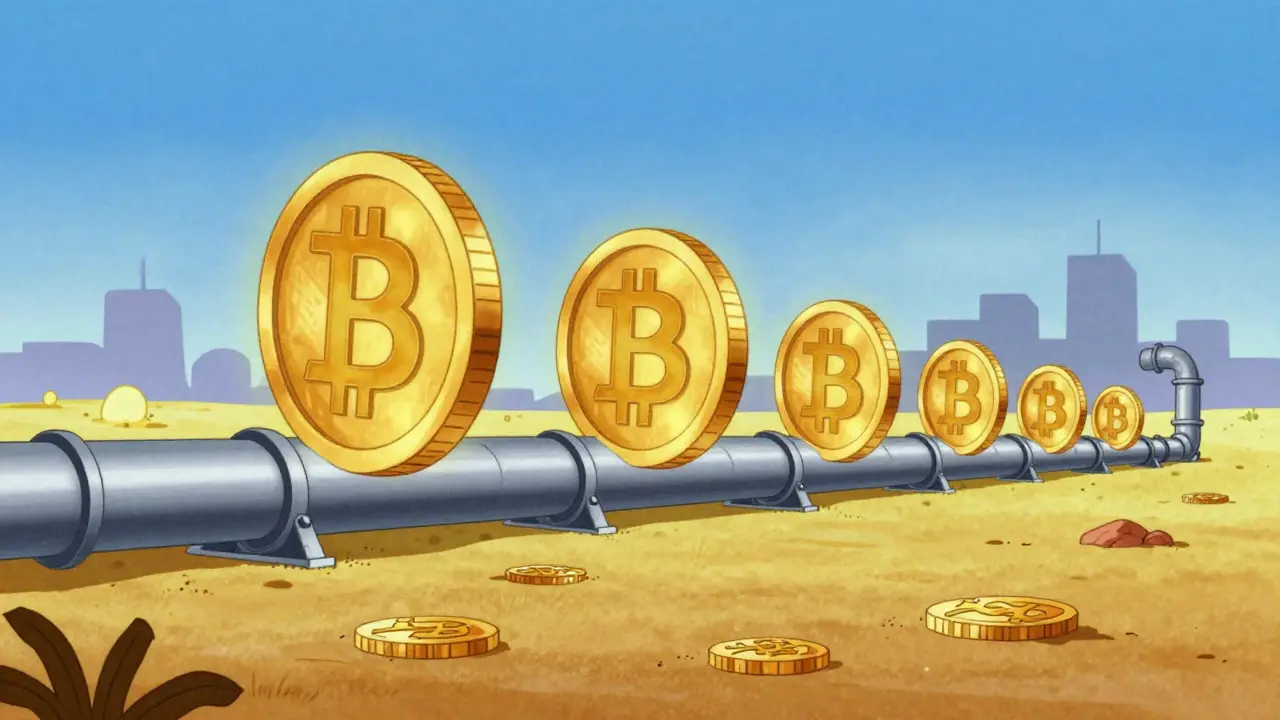
Imagine holding a $10 bill. You can swap it with another person's $10 bill, and nothing changes in value or function. Now imagine holding the only signed copy of a painting by a famous artist. If you try to swap it for another "signed copy," you realize there is no other copy-it’s unique. This simple distinction captures the core difference between Cryptocurrency and Non-Fungible Tokens (NFTs). While both live on the same technological foundation-blockchain, they serve completely different purposes. One acts like money, interchangeable and divisible. The other acts like a certificate of ownership for something one-of-a-kind.
Confusion often arises because people see both as "crypto" or "digital tokens." But if you’re trying to decide which one fits your investment strategy or creative project, understanding their structural differences is critical. We’ll break down how they work, why they exist, and what that means for you whether you’re a collector, an investor, or just curious about the tech.
The Core Distinction: Fungibility vs. Uniqueness
The single most important concept here is fungibility, which refers to whether two units of an asset are identical and interchangeable. In the world of finance, this determines how an asset is valued and traded.
- Cryptocurrencies are fungible. One Bitcoin is exactly the same as any other Bitcoin. It doesn’t matter who owned it before or where it came from. If you pay someone with a Bitcoin you bought in 2015, and they receive a Bitcoin bought yesterday, the result is identical. This makes cryptocurrencies ideal for payments, savings, and transfers.
- NFTs are non-fungible. Each NFT has a unique identifier. Think of it like a serial number on a car. Even if two cars look similar, their VINs make them distinct. An NFT represents a specific digital item-a piece of art, a ticket, a virtual land plot-that cannot be swapped for another NFT without changing the value or nature of the asset.
This technical difference drives everything else. Because cryptocurrencies are interchangeable, they follow standard token protocols like ERC-20 on Ethereum. NFTs use different standards, such as ERC-721 or ERC-1155, which allow for unique metadata and indivisible ownership.
What Are They Actually Used For?
Once you grasp fungibility, the use cases become clear. They aren't competing products; they are solving different problems.
Cryptocurrencies solve the problem of digital money. They act as a medium of exchange, a store of value, and a unit of account. When you use Bitcoin or Ethereum, you are transferring value. It’s like sending cash, but digitally and globally. The primary goal is efficiency in moving wealth across borders without relying on banks or governments. For example, cross-border remittances using crypto can cost between $0.50 and $5, compared to 5-7% fees charged by traditional services.
NFTs solve the problem of digital provenance. Before NFTs, owning a digital file was meaningless because you could just copy-paste it. NFTs create a verifiable record of ownership on the blockchain. They don't necessarily give you copyright to the image itself, but they prove you own the *token* linked to that image. Use cases include digital art collectibles, gaming items, event tickets, and even real estate deeds. When Nike launched its .SWOOSH platform, it used NFTs to sell exclusive sneaker drops, generating $185 million in sales in 2022 alone. The value wasn't in the digital picture of the shoe, but in the exclusivity and community status attached to owning that specific token.
| Feature | Cryptocurrency | NFT |
|---|---|---|
| Fungibility | High (Interchangeable) | Low (Unique) |
| Divisibility | Yes (e.g., Satoshis) | No (Indivisible) |
| Primary Function | Medium of Exchange / Store of Value | Certificate of Ownership / Collectible |
| Value Driver | Supply/Demand, Utility, Network Effect | Scarcity, Creator Reputation, Community Hype |
| Liquidity | High (Many exchanges) | Variable (Specific marketplaces) |
| Standard Examples | Bitcoin, Ether (ERC-20) | Beeple Art, CryptoPunks (ERC-721) |
How Value Is Determined
This is where many new users get tripped up. Why does one Bitcoin cost thousands while some NFTs sell for millions, and others for cents? The valuation models are fundamentally different.
For cryptocurrencies, value is macroeconomic. It depends on the total supply (Bitcoin has a hard cap of 21 million), adoption rates, network security, and broader financial trends. If more people want to hold Bitcoin as a hedge against inflation, the price goes up. It behaves somewhat like gold or stocks, reacting to interest rates, regulatory news, and global economic shifts.
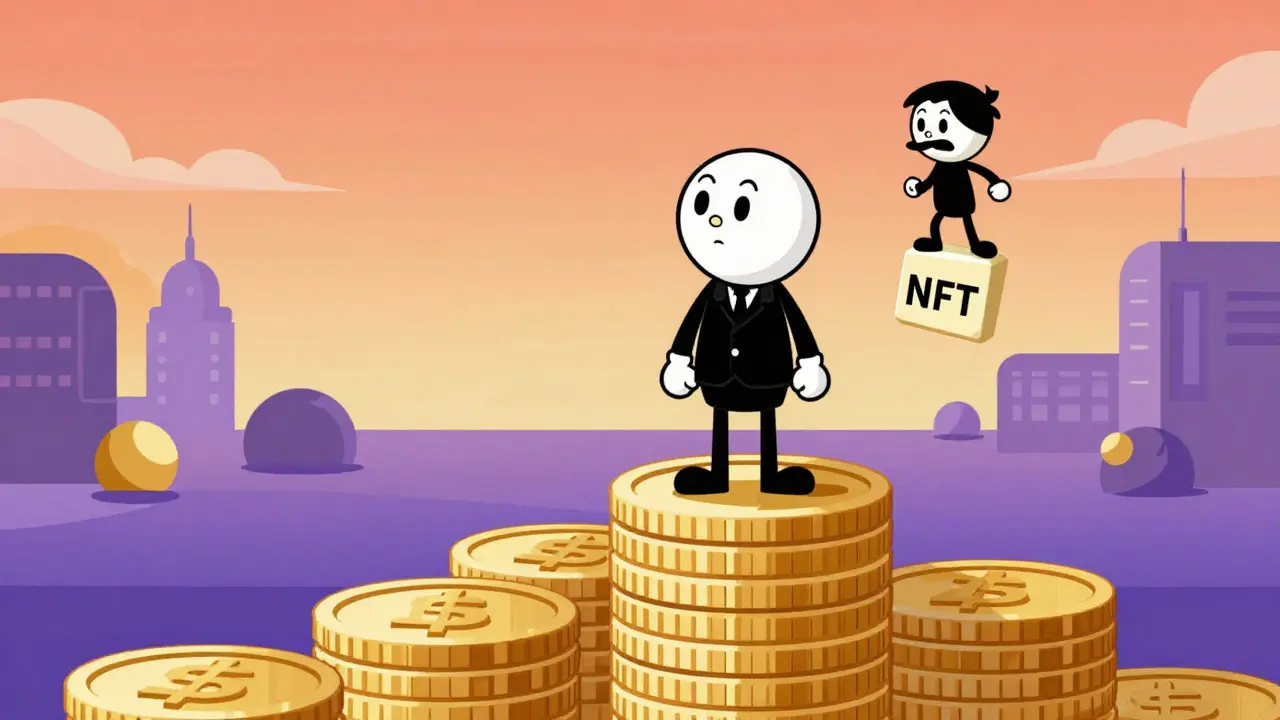
For NFTs, value is subjective and cultural. It relies heavily on scarcity and social proof. A digital image might be worth $69 million (like Beeple’s 'Everydays: The First 5000 Days') not because the pixels are rare, but because the artist is famous, the collection is limited, and the community agrees it’s valuable. If the hype dies, the value can crash to zero overnight. There is no intrinsic "cash flow" from an NFT unless it generates royalties or grants access to a paid service. This makes NFTs high-risk, high-reward speculative assets rather than stable stores of value.

Ownership Rights and Copyright
A common misconception is that buying an NFT means you own the copyright to the artwork. Usually, this is false. When you buy an NFT, you own the *token*. The creator typically retains the intellectual property rights. You can display it, resell it, or show it off, but the artist can still license the image to others or create more of it, depending on the terms set at minting.
In contrast, when you buy a cryptocurrency, you own a fraction of the network’s consensus. You don't "own" a piece of Bitcoin physically, but you control the private keys that allow you to spend it. The value comes from the network agreeing that your key holds value. With NFTs, the value comes from the network agreeing that *this specific token* is special.
Market Liquidity and Volatility
Liquidity refers to how easily you can sell an asset without affecting its price. Cryptocurrencies generally have high liquidity. Major coins like Bitcoin and Ethereum trade 24/7 on dozens of exchanges worldwide. You can usually sell large amounts quickly with minimal price impact.
NFT liquidity is fragmented. You have to go to specific marketplaces like OpenSea, Rarible, or Foundation. If you own a niche NFT, finding a buyer can take weeks or months. Furthermore, NFT markets are notorious for volatility. Prices can spike due to celebrity endorsements or influencer tweets, then plummet just as fast. According to Chainalysis, 18% of NFT trading volume in 2022 involved wash trading (fake trades to boost appearance), which distorts true liquidity metrics.
Practical Considerations for Users
If you’re thinking about entering either space, know what you’re getting into.
- Learning Curve: Cryptocurrency basics (wallets, keys, gas fees) take about 3.2 hours for a new user to master, according to Coinbase data. NFTs require additional research into art valuation, marketplace dynamics, and IP rights. OpenSea reports that 68% of new buyers spend at least two weeks researching before their first purchase.
- Security Risks: Crypto users worry about exchange hacks and lost private keys. NFT users face "rug pulls" (scams where developers abandon a project) and plagiarism. Always verify contracts and creators.
- Regulatory Environment: Cryptocurrencies are increasingly regulated as financial instruments. The EU’s MiCA framework, effective in 2024, provides clear rules. NFTs remain in a gray area, though the U.S. SEC watches closely for NFTs that act like securities.
Future Outlook: Where Are They Headed?
Cryptocurrencies are becoming part of mainstream finance. With 128 million Americans now owning some form of crypto, we’re seeing institutional adoption through ETFs and corporate treasuries. Ethereum’s recent upgrades have reduced energy consumption by 99.95%, addressing a major criticism.
NFTs are expanding beyond art. We’re seeing them used for ticketing (FIFA sold 3.2 million NFT tickets for the 2022 World Cup), identity verification, and gaming assets. However, the market is cooling off. Sales dropped from $24.8 billion in 2021 to $10.5 billion in 2022. The question remains: will NFTs become a permanent utility layer for digital ownership, or will they fade as a speculative bubble? Time will tell, but the underlying technology for proving digital ownership is likely here to stay.
Frequently Asked Questions
Can you divide an NFT?
No. Unlike Bitcoin, which can be divided into satoshis, an NFT is indivisible. You own the whole token or none of it. This makes NFTs less suitable for small payments and more suitable for collecting or representing whole assets.
Do I need a cryptocurrency wallet to buy an NFT?
Yes. Most NFTs are built on blockchains like Ethereum, so you need a compatible wallet (like MetaMask) to store them and pay transaction fees (gas) in the native cryptocurrency (like Ether). You don't need to "hold" the NFT as currency, but you need the crypto to interact with the network.
Is an NFT better than a cryptocurrency for investment?
It depends on your risk tolerance. Cryptocurrencies are generally considered lower risk due to higher liquidity and established networks. NFTs are higher risk due to subjectivity and illiquidity. Many investors diversify by holding both, treating crypto as a core holding and NFTs as speculative satellite positions.
What happens if an NFT marketplace shuts down?
Your NFT is still safe because it lives on the blockchain, not the website. You can move it to another marketplace or keep it in your wallet. However, you might lose access to certain features tied to that specific platform, such as staking rewards or community perks.
Are NFTs taxed differently than cryptocurrencies?
In many jurisdictions, including the US, NFTs are treated as property for tax purposes, similar to how cryptocurrencies are handled. You may owe capital gains tax when selling an NFT for a profit. Always consult a tax professional for advice specific to your location.