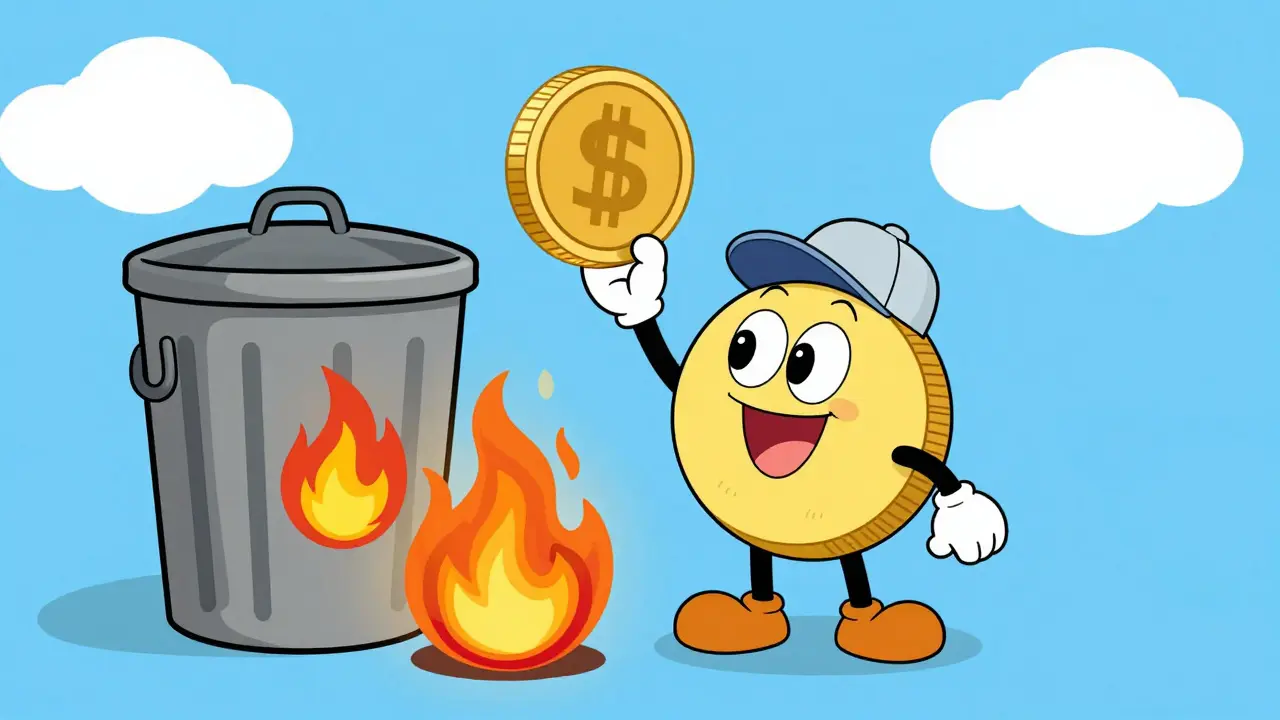
Imagine holding a rare trading card. Now imagine the manufacturer publicly burning half of all existing copies in front of you. What happens to the value of the card in your hand? In the world of cryptocurrency, this exact dynamic plays out daily through a process called token burning. It is not just a gimmick; it is a fundamental tool for managing digital scarcity. When a project burns tokens, they are permanently removed from circulation. This reduces the total supply, which, if demand stays steady or grows, can drive up the price per token. But how does this actually work under the hood, and why do some projects thrive while others fail despite aggressive burning strategies?
What Is Token Burning and Why Do It?
At its core, token burning is the deliberate act of sending cryptocurrency to an address that no one can access, effectively removing those coins from existence forever. Think of it like shredding cash and throwing the pieces into the ocean. Once gone, they cannot be spent, traded, or recovered. This creates artificial scarcity. In traditional economics, when supply drops and demand holds, prices rise. Crypto projects use this principle to manage their tokenomics-the economic structure of their ecosystem.
The primary goals behind burning tokens usually fall into three buckets:
- Creating Scarcity: By reducing supply, holders may see the value of their remaining tokens increase.
- Managing Inflation: Many blockchains mint new tokens as rewards for validators or miners. Burning helps offset this inflation, keeping the network stable.
- Demonstrating Commitment: When a team burns their own allocated tokens, it signals confidence in the project’s long-term health rather than a quick exit strategy.
However, burning alone is not a magic bullet. A 2021 study by the University of Cambridge analyzed 127 burn events and found that only 32% resulted in statistically significant price increases within a week. The key takeaway? Burns work best when paired with real utility and growing adoption, not just hype.
How Token Burns Are Implemented Technically
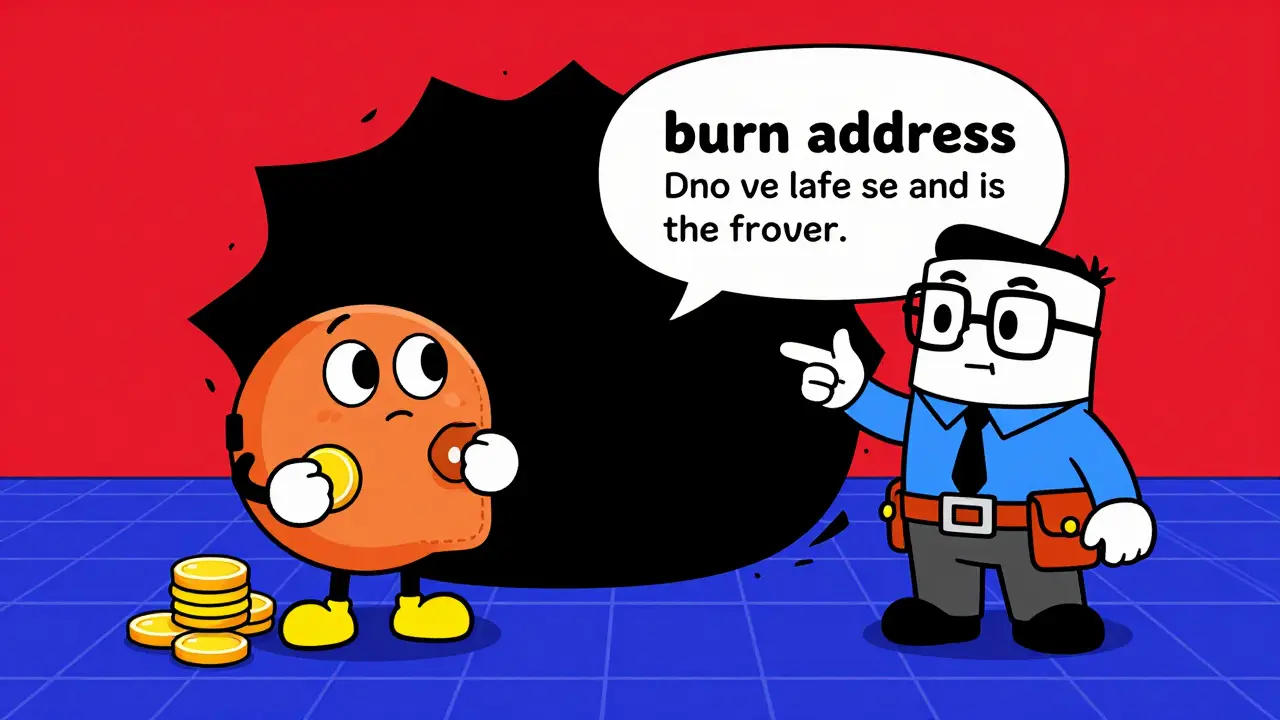
You might wonder, "How do you actually destroy digital data?" You don't delete it from the blockchain-blockchains are immutable, meaning nothing can be erased. Instead, developers send tokens to a "burn address." These are special wallet addresses designed to be inaccessible because no one holds the private key required to sign transactions from them.
On Ethereum, two common burn addresses are used:
0x0000000000000000000000000000000000000000(The Null Address)0x000000000000000000000000000000000000dEaD(A more recognizable vanity address)
When you send tokens to these addresses, the transaction is recorded on the ledger, but the funds are locked forever. For example, Ethereum's EIP-1559 upgrade changed how transaction fees work. Instead of going entirely to miners (or validators), the base fee of every transaction is burned. Since its launch in August 2021, this mechanism has burned millions of ETH, making Ethereum potentially deflationary during periods of high network activity.
For custom tokens, implementation varies based on the smart contract language. On Ethereum-based chains, developers write functions in Solidity. A basic burn function looks something like this:
function burn(uint256 amount) public {
    require(balances[msg.sender] >= amount, "Insufficient balance");
    balances[msg.sender] -= amount;
    totalSupply -= amount;
    emit Transfer(msg.sender, address(0), amount);
}
This code checks if the user has enough tokens, subtracts them from their balance, reduces the total supply, and emits an event for transparency. While simple, getting this wrong can lead to catastrophic errors. Security firms like Trail of Bits have warned that improper configuration can accidentally lock up user funds or create vulnerabilities exploitable by hackers.
Types of Burn Mechanisms
Not all burns are created equal. Projects choose different strategies depending on their goals and technical capabilities. Here are the most common approaches:
| Mechanism Type | How It Works | Pros | Cons |
|---|---|---|---|
| Scheduled Burns | Regular intervals (e.g., quarterly) based on a formula. | Predictable, builds trust, easy to plan around. | Market often prices this in, limiting short-term impact. |
| Transaction Fee Burns | A portion of every transaction fee is burned automatically. | Passive, scales with network usage, encourages activity. | Complex to implement, depends heavily on network traffic. |
| Buyback and Burn | Project uses revenue to buy tokens from the market, then burns them. | Directly supports price, shows financial health. | Costly, risky during bear markets when liquidity is low. |
| Community Burns | Holders voluntarily send tokens to burn addresses, sometimes for rewards. | Engages users, decentralizes control. | Unpredictable volume, relies on active participation. |
| One-Time Large Burns | A single massive reduction in supply, often by founders. | Creates immediate shock and publicity. | Can cause volatility, doesn't provide ongoing support. |
Binance, for instance, uses a scheduled burn model for its BNB token. Every quarter, they calculate a burn amount based on BNB's price and total supply, aiming to reach 50% of the initial supply over time. This predictability has helped build long-term holder confidence. On the other hand, meme coins like Shiba Inu rely heavily on community-driven burns, where users donate tokens to receive NFTs or status, creating a gamified approach to supply reduction.
Risks and Pitfalls to Watch Out For
While burning sounds beneficial, it comes with significant risks if implemented poorly. First, there is the danger of market manipulation accusations. Regulators like the U.S. Securities and Exchange Commission (SEC) have hinted that aggressive burns designed solely to pump prices could be viewed as unregistered securities transactions. Projects must ensure their burns serve a genuine economic purpose, not just speculation.
Second, technical failures are a real threat. If a developer makes a mistake in the smart contract code, tokens might get sent to a recoverable address instead of a true burn address, or worse, the entire supply could be locked. In 2022, a bug in a DeFi protocol led to $2.3 million in user funds being accidentally burned due to an interface error. Always conduct thorough security audits before deploying any burn mechanism.
Third, over-reliance on burning can mask underlying weaknesses. If a project has no real utility, no active development, and poor governance, burning tokens will only delay the inevitable collapse. Look at TerraUSD (UST): despite implementing various mechanisms to stabilize its peg, the lack of fundamental value led to a $40 billion implosion in 2022. Burns cannot fix a broken business model.
Future Trends in Token Economics
The landscape of token burning is evolving. We are moving away from simple supply cuts toward more sophisticated models. One emerging trend is "burn-to-access", where users burn tokens to gain entry to premium features, exclusive communities, or higher staking yields. This ties the burn directly to utility, ensuring that reduced supply correlates with increased demand for services.
Another shift is the integration of dynamic burn rates. Protocols like Chainlink are exploring models where the amount burned adjusts automatically based on network usage or external market conditions. This creates a self-regulating system that responds to real-time economic pressures rather than fixed schedules.
As we look ahead, expect to see tighter regulatory scrutiny. The European Securities and Markets Authority (ESMA) has flagged burn mechanisms as potential tools for market manipulation. Future compliance may require greater transparency, such as publishing detailed reports on burn motivations and execution methods. For developers, this means building systems that are not only technically sound but also legally robust.
Key Takeaways for Investors and Developers
If you are evaluating a crypto project, don't just look at the headline number of tokens burned. Ask deeper questions:
- Is the burn tied to actual network activity or revenue?
- Does the project have strong fundamentals beyond tokenomics?
- Are the burn mechanics transparent and audited?
For developers, prioritize security and clarity. Use standardized libraries like OpenZeppelin for smart contract components, engage professional auditors, and document your burn logic thoroughly. Remember, trust is the most valuable asset in crypto. A well-executed burn mechanism enhances that trust; a flawed one destroys it.
Does burning tokens always increase the price?
No. While burning reduces supply, price is determined by both supply and demand. If demand drops faster than supply, the price can still fall. Studies show that only about one-third of burn events lead to significant short-term price gains.
What is a burn address?
A burn address is a cryptocurrency wallet address that has no known private key. Because no one can access it, any tokens sent there are permanently removed from circulation. Common examples include Ethereum's null address (0x0...) and the vanity address 0x...dEaD.
How does Ethereum's EIP-1559 affect burning?
EIP-1559 introduced a base fee for transactions that is automatically burned rather than paid to validators. This makes Ethereum potentially deflationary during periods of high network congestion, as more ETH is destroyed than created through issuance.
Are token burns legal?
Generally, yes, but regulators are watching closely. The SEC has warned that burns used primarily to manipulate prices could violate securities laws. Projects should ensure burns are part of a legitimate economic strategy and maintain transparency.
Can I burn my own tokens?
Yes, if the token's smart contract includes a burn function. Most ERC-20 tokens allow holders to burn their own balance. However, you cannot force others to burn theirs unless the protocol design mandates it (like transaction fee burns).