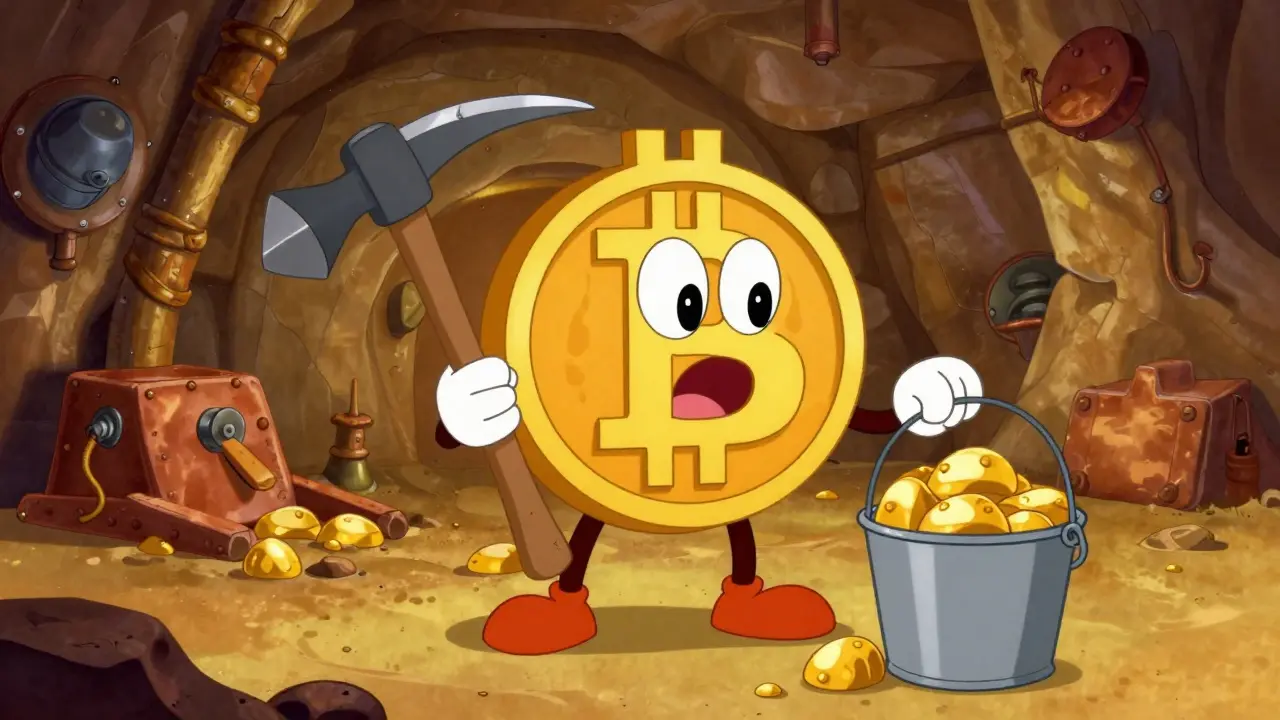
Imagine a gold mine where the amount of gold you can extract is cut in half every four years. No matter how hard you dig or how many workers you hire, the output drops on a strict schedule. This isn't science fiction; it is exactly how Bitcoin operates. The declining block reward schedule is the heartbeat of this digital asset, a mechanism that ensures scarcity and drives value over time. If you are holding Bitcoin or considering buying some in 2026, understanding this schedule is not just academic-it explains why prices move and why the network stays secure.
The Core Mechanism: What Is the Block Reward?
To understand the decline, we first need to look at what miners actually get paid. When a miner solves a complex mathematical puzzle to add a new block of transactions to the blockchain, they receive two things:
- Block Subsidy: Newly created bitcoins. This is the "inflation" part of Bitcoin, but it is strictly controlled.
- Transaction Fees: Small amounts of BTC paid by users who send money across the network.
In the early days, the subsidy was the main paycheck. Today, after the April 2024 halving, the subsidy stands at 3.125 BTC per block. While that sounds like a lot, remember that miners share this reward based on their computing power (hashrate). As the subsidy shrinks, the relative importance of transaction fees grows. Eventually, fees will have to cover the entire cost of securing the network once the subsidy hits zero around the year 2140.
A History of Halvings: From 50 BTC to 3.125 BTC
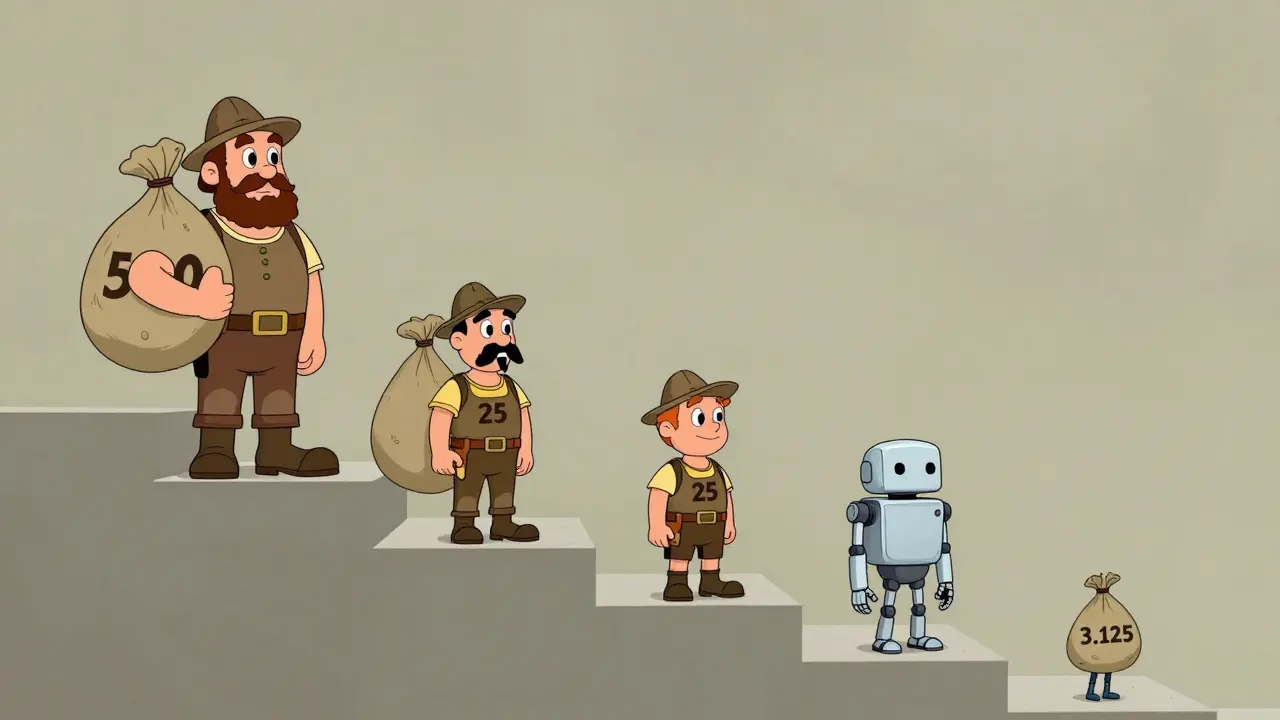
The term "halving" refers to the event where the block subsidy is cut in half. This happens automatically every 210,000 blocks, which takes roughly four years. You cannot vote to change this. It is hardcoded into the protocol by Satoshi Nakamoto in 2009. Here is how the journey has unfolded so far:
| Year | Event | Previous Reward | New Reward |
|---|---|---|---|
| 2009 | Genesis | N/A | 50 BTC |
| 2012 | 1st Halving | 50 BTC | 25 BTC |
| 2016 | 2nd Halving | 25 BTC | 12.5 BTC |
| 2020 | 3rd Halving | 12.5 BTC | 6.25 BTC |
| 2024 | 4th Halving | 6.25 BTC | 3.125 BTC |
| ~2028 | 5th Halving (Projected) | 3.125 BTC | 1.5625 BTC |
Notice the pattern? Each step reduces the flow of new coins entering the market. By 2028, when the next halving occurs, miners will only receive 1.5625 BTC per block from the subsidy alone. This predictable decay is what makes Bitcoin different from traditional currencies.
Why Scarcity Matters: Bitcoin vs. Fiat Money
Central banks control fiat currencies like the US Dollar or Euro. They can print more money whenever they decide to stimulate the economy. This often leads to inflation, where your purchasing power decreases over time. Bitcoin’s declining block reward schedule acts as a counterweight to this system.
With a hard cap of 21 million coins, Bitcoin becomes deflationary by design. As the supply of new coins slows down, demand tends to outpace supply if adoption continues. Think of it like a limited edition sneaker drop. If only 100 pairs exist and 1,000 people want them, the price goes up. Bitcoin is essentially the ultimate limited edition asset, with the release rate slowing down every four years until no new coins are ever minted again.
The Miner’s Dilemma: Profitability Under Pressure
You might wonder: if rewards keep dropping, why do miners bother? Why don’t they just shut down their machines? The answer lies in the relationship between price and difficulty.
When a halving occurs, the immediate effect is a 50% drop in revenue for miners. Inefficient miners-those with old hardware or high electricity costs-often go bankrupt. This is called "mining consolidation." However, if the price of Bitcoin rises enough to offset the lower reward, the remaining miners stay profitable. Historically, Bitcoin’s price has surged in the months following each halving, suggesting that the market anticipates the reduced supply.
But there is a risk. If the price doesn’t rise fast enough, or if energy costs spike, miners may lose money. This is why experts watch the "miner capitulation" events closely. It’s a stress test for the network. So far, Bitcoin has survived every one, but the margin for error gets smaller with each halving.
The Future: Transaction Fees and Layer 2 Solutions
By the time we reach 2140, the block subsidy will be effectively zero. Miners will rely entirely on transaction fees. Can the network sustain itself then? This is the biggest question in Bitcoin economics.
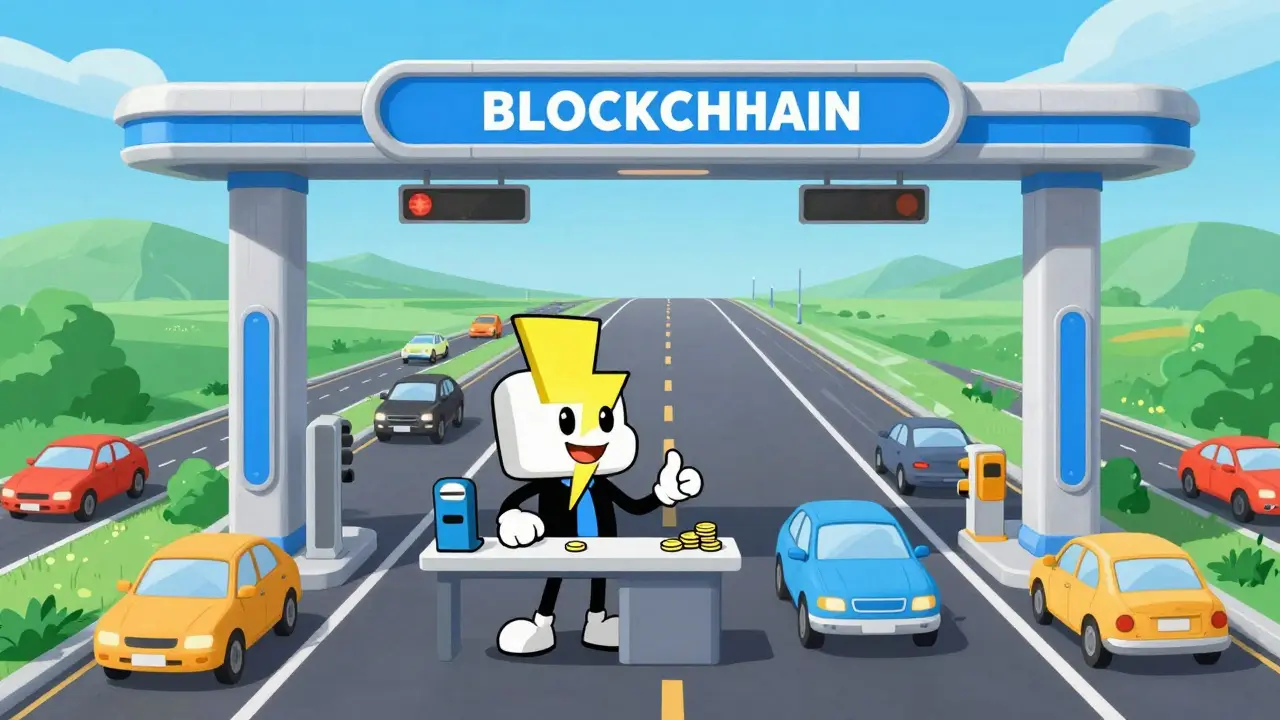
Right now, transaction fees are a small fraction of miner income. But as Bitcoin becomes more scarce and valuable, people will pay higher fees to prioritize their transactions. Additionally, technologies like the Lightning Network are changing the game. Lightning allows for instant, cheap micropayments off-chain, while settling larger amounts on the main Bitcoin blockchain. This could create a steady stream of fee revenue even as the subsidy vanishes.
Think of it like a toll road. The highway (main chain) charges a premium for direct access, while the side roads (Layer 2) handle local traffic efficiently. As long as global commerce uses Bitcoin as a settlement layer, fees should theoretically remain robust.
What This Means for Investors in 2026
We are currently in the post-2024 halving cycle. For investors, this period is historically significant. Previous cycles saw massive bull runs leading up to the halving and continuing for 12-18 months afterward. While past performance doesn’t guarantee future results, the economic principles remain the same: supply shock meets growing demand.
If you are buying Bitcoin now, you are betting on the continued reduction of new supply. You are also betting that institutions and individuals will continue to adopt it as a store of value. The declining block reward schedule is not a bug; it is the feature that protects your investment from inflation.
Frequently Asked Questions
When is the next Bitcoin halving?
The next Bitcoin halving is projected to occur in 2028. It will reduce the block reward from 3.125 BTC to 1.5625 BTC per block.
Will Bitcoin ever run out of new coins?
Yes, but very slowly. The last fraction of a Bitcoin will likely be mined around the year 2140. After that, no new bitcoins will be created, and miners will rely solely on transaction fees.
Does the halving always make Bitcoin’s price go up?
Not immediately. Prices can be volatile right after a halving due to miner selling pressure. However, historically, the reduced supply has led to significant price appreciation within 12-18 months as demand catches up.
How do miners survive if rewards keep dropping?
Miners survive by improving efficiency, using cheaper electricity, and benefiting from rising Bitcoin prices. As subsidies drop, transaction fees become a larger part of their income, incentivizing them to process more transactions.
Can the Bitcoin halving schedule be changed?
Technically, yes, but practically, no. Changing the halving schedule would require consensus from the majority of miners, developers, and node operators. Given Bitcoin’s decentralized nature and the strong belief in its fixed supply, such a change is highly unlikely and would likely split the network.
Linda Hilliard
July 5, 2026 AT 01:29It is absolutely laughable that the general public still requires a primer on such elementary cryptographic principles. The concept of algorithmic scarcity is not rocket science, it is basic monetary theory 101. If you are struggling to grasp the implications of the declining block subsidy in 2026, perhaps you should reconsider your financial literacy before attempting to participate in this market. :P
Kristine Lawson
July 5, 2026 AT 14:19While the article provides a superficial overview, it fails to adequately address the moral implications of energy consumption associated with Proof-of-Work mining. One must consider whether the environmental cost justifies the speculative value placed on digital tokens.
Tawny Holmes
July 5, 2026 AT 23:10The math is simple. Supply drops. Demand stays same or grows. Price goes up. It’s not magic. It’s economics.
Nick G
July 6, 2026 AT 02:31I appreciate the detailed breakdown of the historical halving events, as it provides necessary context for those of us who may not be deeply entrenched in the technical specifics of blockchain architecture. It is fascinating to observe how the network has adapted over time, and I believe that fostering a deeper understanding of these mechanisms can help bridge the gap between skeptics and proponents. We must remain open to the possibility that decentralized systems offer unique solutions to longstanding economic challenges, even if they appear unconventional at first glance.
Nick Wengel
July 7, 2026 AT 16:54This helps explain why my uncle keeps talking about bitcoin. I guess it is like saving money but in a computer. Thanks for the simple explanation.
Alicia Hull
July 8, 2026 AT 01:17How do we know miners won't just abandon the network when fees drop? The reliance on transaction fees seems precarious given current adoption rates. This needs more scrutiny.
Johan Otto
July 9, 2026 AT 01:02Oh wow, another post pretending to be smart about crypto. Boring. 🙄
Anuj Kashyap
July 9, 2026 AT 12:43One might ponder the irony of a system designed to resist centralization yet relying entirely on centralized energy grids. The philosophical underpinnings are rich, but the practical reality is often messy. 😂
KEITH WONG
July 10, 2026 AT 10:12lol ur all missing the point. its gonna moon no matter what. hodl 💎🚀
Natalie Lucas
July 11, 2026 AT 13:30So excited for 2026! Lets gooo!! 🔥🔥
Hamza k
July 12, 2026 AT 05:43The sheer audacity of expecting transaction fees to replace subsidies is almost poetic in its hubris. We are building a castle on sand while ignoring the rising tide of regulatory scrutiny. It is a beautiful disaster waiting to happen.
Kim Kay
July 12, 2026 AT 10:23i think its cool how it works. maybe i should try buying some. dont want to make mistakes tho.
Kat Barr
July 12, 2026 AT 14:03You guys are so negative!!! It is going to be amazing!! Just trust the process!! 😊✨💖
Logan Edmison
July 14, 2026 AT 11:38the void stares back when the subsidy hits zero. we are all just ants on a burning platform of code. deep stuff man. really makes u think about existence.
Michelle Walker
July 15, 2026 AT 01:25Stop pretending this is investment advice. It is gambling. Pure speculation. Wake up sheeple.