When you hear "OneSwap," you might think of Uniswap - the giant of decentralized exchanges. But OneSwap isn’t Uniswap. It’s a different beast altogether, and if you’re looking for a simple DEX to trade tokens without the chaos of Ethereum gas fees, it might be worth your time. OneSwap is a decentralized exchange built on the Binance Smart Chain (BSC), designed to offer fast, low-cost swaps with a user-friendly interface. Unlike Uniswap, which runs on Ethereum and demands you juggle gas fees and network choices, OneSwap keeps things simple: lower fees, faster confirmations, and a clean layout that doesn’t overwhelm new users.
What Is OneSwap?
OneSwap launched in early 2021 as a fork of Uniswap V2, but with one big change: it moved from Ethereum to Binance Smart Chain. This shift wasn’t just technical - it was strategic. BSC offers block times of around 3 seconds and transaction fees under $0.10, even during peak usage. That’s a world away from Ethereum’s $5-$15 swings. OneSwap uses the same Automated Market Maker (AMM) model as Uniswap - meaning no order books, just liquidity pools where users deposit pairs of tokens to enable trading. But instead of relying on Ethereum’s congested network, OneSwap taps into BSC’s scalability, making it ideal for traders who want speed without sacrificing decentralization.
OneSwap isn’t just a clone. It added features Uniswap didn’t have at the time: a built-in launchpad for new tokens, staking for yield, and a governance token called ONE. The ONE token lets holders vote on protocol upgrades, fee structures, and which new tokens get listed. It’s not as powerful as Uniswap’s UNI token (which has a real treasury and community treasury), but for a smaller chain, it gives users a voice. As of January 2026, OneSwap handles roughly $120 million in daily trading volume across BSC, with over 280,000 unique wallets interacting with the platform each month.
How OneSwap Compares to Uniswap
It’s impossible to talk about OneSwap without comparing it to Uniswap. They’re both AMMs. They both let you trade without KYC. But their differences define who they serve.
| Feature | OneSwap | Uniswap |
|---|---|---|
| Blockchain | Binance Smart Chain (BSC) | Ethereum + 37 Layer 2s |
| Transaction Fee | $0.05-$0.15 | $0.50-$15.00 (varies by network) |
| Trading Volume (Daily, Jan 2026) | $120 million | $1.8 billion |
| Total Value Locked (TVL) | $480 million | $4.2 billion |
| Liquidity Depth | Good for BSC tokens | Best in class for ETH, BTC, and major altcoins |
| Token Approval Risk | High - many scam tokens listed | High - but more vetted pools |
| User Experience | Simple, beginner-friendly | Complex - requires network and slippage awareness |
| Governance Token | ONE (used for voting) | UNI (used for voting + treasury) |
OneSwap wins on cost and ease. If you’re trading BSC-native tokens like CAKE, BUSD, or new memecoins, it’s often the fastest and cheapest option. Uniswap wins on depth. If you’re swapping ETH for USDC or DAI, or need to access tokens only listed on Ethereum, Uniswap is the only real choice. OneSwap doesn’t have the liquidity to compete with Uniswap on major pairs - its ETH/USDC pool has less than $2 million in liquidity, while Uniswap’s has over $1.2 billion.
How to Use OneSwap
Getting started is straightforward:
- Get a Web3 wallet that supports BSC - MetaMask, Trust Wallet, or WalletConnect.
- Add the Binance Smart Chain network to your wallet. Use these settings: Network Name: BSC, RPC URL:
https://bsc-dataseed.binance.org/, Chain ID: 56, Symbol: BNB, Block Explorer:https://bscscan.com. - Buy some BNB to cover gas fees. You can swap ETH or USDT for BNB on a centralized exchange like Binance or Kucoin, then send it to your wallet.
- Go to oneswap.finance and click "Connect Wallet."
- Select the tokens you want to swap. OneSwap auto-finds pools, but always check the token contract address before approving.
- Set your slippage tolerance. For stablecoins like BUSD, use 0.5%. For volatile tokens, go up to 3-5%.
- Click "Swap" and confirm the transaction in your wallet.
That’s it. No registration. No KYC. No waiting. Transactions confirm in under 10 seconds.
Pros and Cons
Pros
- Low fees - You’ll rarely pay more than $0.15 per trade, even during high volume.
- Fast - BSC’s speed means swaps finish in seconds, not minutes.
- Beginner-friendly - The interface is clean, with fewer options than Uniswap, reducing decision fatigue.
- Launchpad access - You can buy new tokens directly on OneSwap before they hit bigger exchanges.
- Staking rewards - Stake ONE or LP tokens to earn up to 15% APY on some pools.
Cons
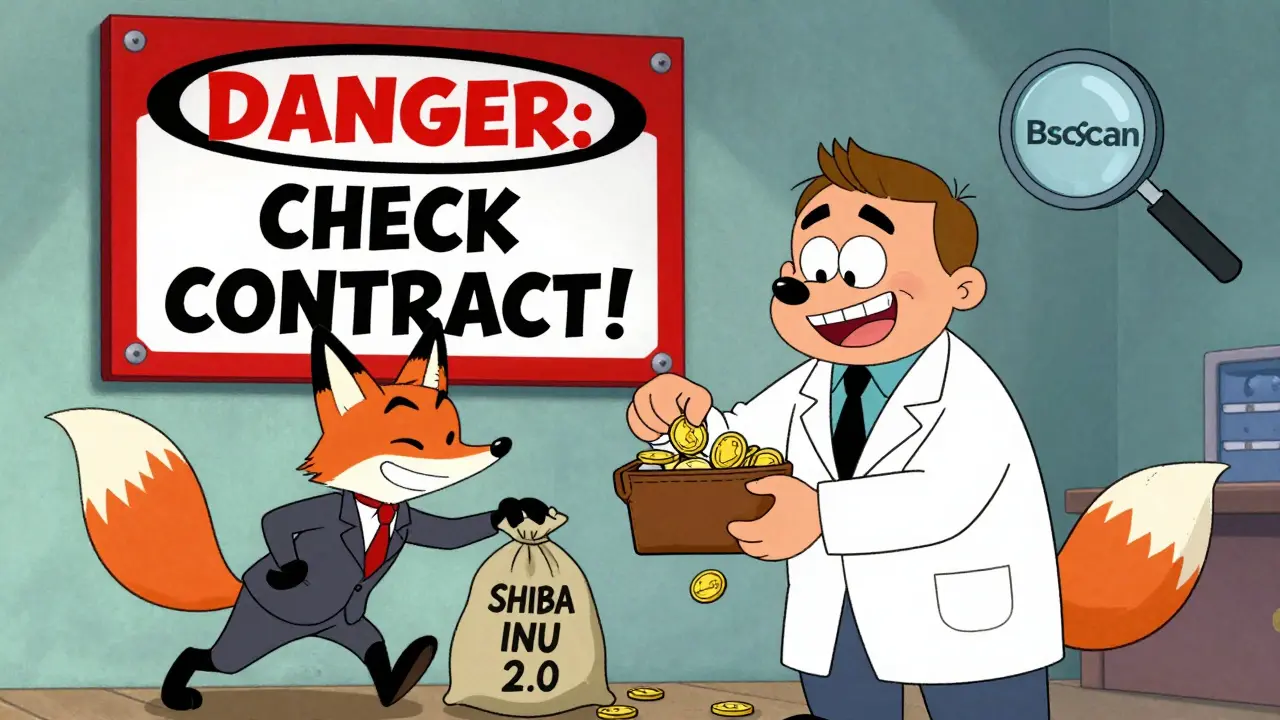
- Scam tokens everywhere - Because there’s no curation, you’ll find hundreds of fake tokens with names like "SHIBA INU 2.0" or "ELON COIN." Always check contract addresses on BscScan.
- Low liquidity on major pairs - If you’re trading ETH or BTC, you’ll get better rates on Uniswap or PancakeSwap.
- No cross-chain support - OneSwap only works on BSC. No Arbitrum, no Polygon, no Solana.
- Weak governance - ONE token holders rarely vote, and proposals often pass with under 10% participation.
- No customer support - If you send funds to the wrong address, there’s no way to recover them.
Security and Risks
OneSwap’s smart contracts have been audited by CertiK and PeckShield, and both gave it a "high" security rating. That’s good news - the code itself is solid. But security on OneSwap isn’t about the code. It’s about you.
The biggest risk? Token approvals. OneSwap lets you swap any token - even ones that don’t exist yet. Scammers create tokens with names like "BUSD" or "ETH" and trick users into approving infinite spending. Once you do that, they can drain your wallet. In Q4 2025, over 1,200 wallets lost over $4.3 million on OneSwap due to malicious approvals, according to BscScan’s fraud dashboard.
Here’s how to stay safe:
- Never approve a token unless you’ve verified its contract address on BscScan.
- Use a token approval checker like revoke.cash to revoke permissions you no longer need.
- Set slippage to 1% or lower for stablecoins. Never go above 5% unless you’re trading a new, unknown token.
- Use a hardware wallet like Ledger or Trezor for anything over $500.
OneSwap doesn’t offer insurance, recovery, or refunds. You’re fully in control - and fully responsible.
Who Is OneSwap For?
OneSwap isn’t for everyone. It’s not the best choice if you:
- Trade Ethereum-based tokens regularly
- Need deep liquidity for large swaps
- Want built-in safety features like stop-loss or fiat on-ramps
- Are new to crypto and don’t understand approvals or slippage
But if you:
- Trade BSC-native tokens like CAKE, TWT, or new memecoins
- Want to avoid Ethereum gas fees
- Like staking and earning yield on your liquidity
- Don’t mind doing your own research
…then OneSwap is a solid, fast, cheap option.
Final Thoughts
OneSwap isn’t trying to be Uniswap. It doesn’t need to be. It’s built for a different crowd - users who value speed and low cost over depth and prestige. It’s the go-to DEX for BSC traders who want to swap tokens without waiting 10 minutes or paying $8 in gas.
It’s not perfect. The scam token problem is real. The lack of cross-chain support is a limitation. And the governance is weak. But if you know what you’re doing, OneSwap delivers on its promise: fast, cheap, decentralized swaps.
For beginners on BSC, it’s one of the easiest places to start trading. For experienced users, it’s a reliable tool for trading niche tokens that don’t exist on larger DEXes. Just remember: no one’s watching your back. You’re the only one who can protect your funds.
Is OneSwap safe to use?
OneSwap’s smart contracts have been audited and are secure. But the platform itself doesn’t vet tokens - so scam tokens are common. Your safety depends on you: always verify contract addresses, use revoke.cash to manage approvals, and never approve unlimited spending. Use a hardware wallet for large amounts.
How does OneSwap make money?
OneSwap earns revenue through trading fees. Each swap charges 0.3% - 0.05% goes to liquidity providers, 0.2% to the protocol treasury, and 0.05% is burned. The treasury funds development and marketing. The ONE token also generates value through staking rewards and governance.
Can I trade ETH or BTC on OneSwap?
Yes, but not well. OneSwap has ETH and BTC pools, but liquidity is very low compared to Uniswap or PancakeSwap. Slippage can be high, and prices may not be competitive. If you’re trading ETH or BTC, use Uniswap or a centralized exchange instead.
What’s the difference between OneSwap and PancakeSwap?
Both run on BSC, but PancakeSwap is older, larger, and has more features. PancakeSwap has yield farming, lotteries, NFTs, and a stronger community. OneSwap is simpler - focused on swaps and staking. PancakeSwap has more liquidity, but OneSwap’s interface is cleaner and easier for beginners.
Do I need to do KYC to use OneSwap?
No. OneSwap is fully decentralized. You only need a Web3 wallet like MetaMask. No identity verification, no email, no personal data required.
Can I lose money on OneSwap?
Yes - and often. The biggest risks are scams (fake tokens), high slippage on volatile pairs, and incorrect network settings. You can also lose money through impermanent loss if you provide liquidity to unstable token pairs. Always research before swapping or staking.
If you’re trading on BSC, OneSwap is a real option. Just don’t treat it like a bank. Treat it like a tool - powerful, fast, and dangerous if you’re careless.