
On July 18, 2025, the United States passed its first-ever federal law to regulate stablecoins. The GENIUS Act - short for the Guiding and Establishing National Innovation for U.S. Stablecoins Act of 2025 - didn’t just add another rule to the pile. It rewrote the rules entirely. For the first time, there’s a clear, nationwide standard for what a stablecoin can be, who can issue it, and how it must be backed. And it’s not optional. Starting January 18, 2027, or 120 days after final rules are issued - whichever comes first - only those who follow this law can legally issue payment stablecoins in the U.S.
Who Can Issue Stablecoins Now?
Before the GENIUS Act, anyone with a website and a smart contract could launch a stablecoin. Some were backed by cash. Others by risky assets. A few weren’t backed at all. That chaos is over. Under the new law, only three types of entities can issue payment stablecoins: insured depository institutions (like banks and credit unions), their subsidiaries, or nonbank financial firms that get special approval from the Federal Reserve.
That means companies like Coinbase or Circle can’t issue stablecoins on their own anymore. They’d need to partner with a bank that’s already regulated. And even then, that bank has to prove it can handle the compliance burden - audits, reporting, AML checks, and more. This isn’t a suggestion. It’s a legal requirement. If you’re not one of these approved issuers, you’re breaking the law by issuing a stablecoin tied to the U.S. dollar.
Backed 1:1 - No Exceptions
One of the biggest fears about stablecoins has always been: "What if they don’t have the money?" Terra’s collapse in 2022 proved that risk wasn’t theoretical. The GENIUS Act shuts that door. Every stablecoin issued must be backed by reserves equal to 100% of its value. No more 80%. No more 90%. It’s 1:1 - dollar for dollar.
But here’s the detail most people miss: those reserves aren’t just sitting in a vault. They have to be in specific, low-risk assets. Only four types are allowed: physical U.S. cash, U.S. Treasury bills, repurchase agreements (repos) backed by Treasuries, and any other asset the regulators explicitly approve. No corporate bonds. No crypto. No commercial paper. Just the safest, most liquid assets the U.S. government allows.
And it’s not enough to say you have the reserves. You have to prove it. Every issuer must submit monthly reports showing exactly what’s in the reserve. Every quarter, an independent, registered public accounting firm must audit those reserves. That audit report goes to federal regulators - and it’s public. Transparency isn’t optional. It’s the law.
No Rehypothecation - Except This One Loophole
Rehypothecation means using your customers’ assets as collateral for your own bets. It’s how Lehman Brothers got in trouble. The GENIUS Act bans it outright - with one narrow exception.
Issuers can use their Treasury bill reserves as collateral for short-term repurchase agreements, but only if those trades go through a cleared central counterparty approved by regulators. And even then, they can’t use more than what’s needed to cover expected redemptions. This isn’t about making money. It’s about making sure there’s cash available when someone wants to redeem their stablecoin. If you’re trying to profit from your users’ money, you’re violating the law.

Who Holds the Keys?
Self-custody is still legal. If you want to hold your own private keys, you can. The GENIUS Act specifically says that companies selling hardware wallets or software apps for self-custody are exempt. No licensing needed. No reporting required. That’s a win for users who don’t trust banks.
But if you’re a company offering custodial services - holding keys for your users - you’re now regulated like a bank. You need state or federal banking approval. Your custody assets must be kept separate from your own funds. No commingling. No borrowing. No mixing. If you’re a crypto exchange holding stablecoins for customers, you now need a banking license or to partner with one.
The Stablecoin Certification Review Committee
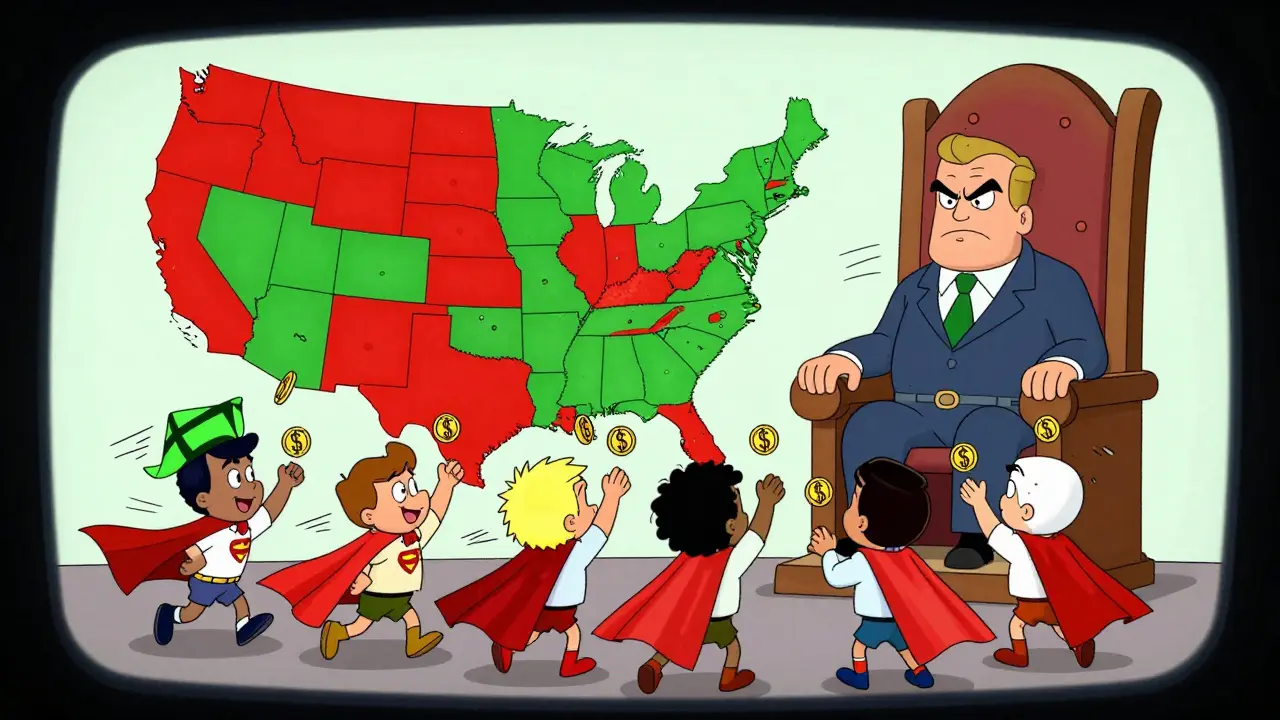
Here’s where things get complicated. The law creates a new oversight body called the Stablecoin Certification Review Committee (SCRC). It’s chaired by the Treasury Secretary and includes the Fed Chair and the FDIC Chair. Their job? To decide whether a state’s stablecoin rules are "substantially similar" to the federal ones.
That means if a state like Wyoming tries to create its own lighter-touch stablecoin rules, the SCRC can block it. If a state’s rules are too weak, the federal government can override them. That’s a huge power shift. It’s designed to prevent a patchwork of conflicting rules - but it also gives federal regulators final say over state-level innovation.
And here’s the catch: state-issued stablecoins are still exempt. That means if a state creates its own digital dollar, the GENIUS Act doesn’t apply. That loophole could lead to two parallel systems: one federal, one state. And that’s exactly what the law was meant to avoid.
Why This Matters for You
If you use stablecoins to send money, pay for goods, or trade crypto, this law changes your experience - but not how you think.
On the good side: your stablecoin is now backed by real U.S. Treasuries. Audits are public. Issuers can’t gamble with your money. If you hold USDC or USDT, and they’re issued by a bank under this law, you have more confidence they won’t vanish overnight.
On the downside: fewer issuers. Less competition. Higher fees. If only three banks can issue stablecoins, they’ll have more control over pricing, redemption speed, and access. Smaller players might get squeezed out. And if you’re outside the U.S., you might find fewer U.S.-backed stablecoins available on international exchanges.
For businesses: if you accept stablecoins for payments, you’ll need to verify your payment processor is compliant. If you’re a fintech startup, you can’t build a stablecoin product without a banking partner. The barrier to entry just got a lot higher.
What’s Not Covered
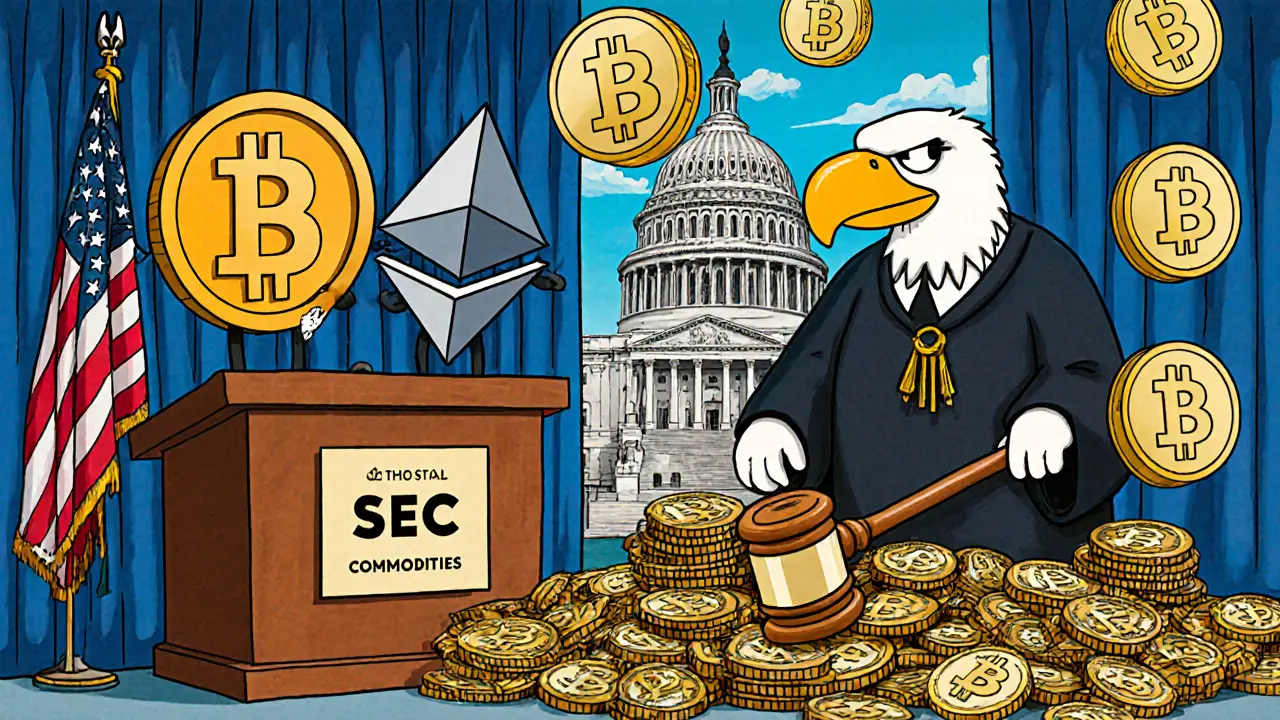
The GENIUS Act only applies to "payment stablecoins" - those designed to be used like money. It doesn’t touch algorithmic stablecoins, stablecoins tied to other currencies, or stablecoins used only for DeFi lending. Those are still in the gray zone. The law also doesn’t regulate non-stable crypto assets like Bitcoin or Ethereum. This isn’t a crypto law. It’s a dollar law.
And it doesn’t solve everything. There’s still no federal law on stablecoin taxation. No clear rules on cross-border transfers. No standardized dispute resolution for failed redemptions. Those will come later - if they come at all.
What Comes Next
The law gives issuers 18 months to comply, or 120 days after final regulations are published - whichever comes first. That means the real pressure starts in mid-2026, when regulators release the technical details: What counts as a "repurchase agreement"? What’s the exact audit format? How often do reports need to be filed?
Expect a wave of mergers. Smaller stablecoin issuers will either get bought by banks or shut down. Banks that didn’t care about crypto a year ago are now scrambling to build compliance teams. Crypto exchanges are rushing to partner with regulated institutions.
Internationally, this is a signal. Hong Kong passed its own stablecoin law in May 2025. The EU has MiCA. Now the U.S. has its version. The race isn’t about who invents stablecoins first - it’s about who regulates them best. The GENIUS Act makes the U.S. dollar the only currency with a clear, federal-backed digital form. That’s not just a financial move. It’s a geopolitical one.
Final Thought
The GENIUS Act isn’t perfect. It’s not the most innovative framework. It’s not even the most flexible. But it’s the first one that actually works. It forces transparency. It bans speculation. It protects users. And it gives the dollar a digital edge.
For everyday users, it means less risk. For issuers, it means more cost. For regulators, it means more control. And for the future of money? It means the U.S. is finally ready to play - on its own terms.
Akhil Mathew
January 29, 2026 AT 15:08The GENIUS Act is a wake-up call for the whole crypto space. No more shady reserve tricks, no more pretending your stablecoin is safe when it’s basically a bet on commercial paper. Finally, someone’s saying ‘enough’ to the wild west. I’ve seen too many people lose money because someone thought they could game the system. This isn’t perfect, but it’s the first real step toward making digital money actually trustworthy.
laurence watson
January 30, 2026 AT 22:44As someone who uses USDC every week to pay freelancers overseas, I’m relieved. I don’t care if it’s a bank or a crypto firm behind it - I just need to know my money won’t vanish because someone got greedy. The 1:1 backing and public audits? That’s what I’ve been asking for since 2021. Honestly, I’m surprised it took this long.
Will Pimblett
January 31, 2026 AT 18:50Oh wow, so now the Fed gets to decide who can print digital dollars? Cool. So when they say ‘only approved issuers,’ what’s the real list? Are we talking JPMorgan, Citi, and Bank of America? And who’s gonna be the ‘special approved’ nonbank? Circle? Probably. Because nothing says freedom like a government-approved monopoly.
Raju Bhagat
February 2, 2026 AT 09:50YOOOOOOOOO this is actually huge like imagine your stablecoin is just like cash but digital and backed by TREASURIES?? no cap like i can finally trust my usdc without checking the news every 5 minutes 😭😭😭 also self custody still legal?? YES MY KEYS MY COINS
Meenal Sharma
February 3, 2026 AT 14:58Let’s be honest - this is not about stability. It’s about control. The Federal Reserve has been watching crypto for years, waiting for the right moment to bring it into the fold. Now, with this law, they’ve created a system where only entities they approve can operate. This isn’t regulation. It’s assimilation. And the moment they control the digital dollar, they control the narrative. The state-issued loophole? That’s the trapdoor. Watch how quickly it gets closed.
Elizabeth Jones
February 5, 2026 AT 08:44The distinction between payment stablecoins and DeFi stablecoins is legally and economically sound. It prevents regulatory overreach while preserving innovation in permissionless finance. The fact that algorithmic and foreign-currency-pegged stablecoins remain unregulated is not a flaw - it’s a necessary boundary. Money, as a medium of exchange, requires trust. DeFi, as a speculative layer, thrives on risk. The GENIUS Act recognizes this duality, and that’s rare in financial legislation.
Gustavo Gonzalez
February 7, 2026 AT 07:19Let’s cut the fluff. This law is a corporate bailout disguised as consumer protection. Who benefits? The big banks. Who gets squeezed? Every small DeFi project, every indie wallet, every DAO trying to build something new. The audit requirements? Overkill for small players. The partnership mandate? A de facto ban on innovation. And don’t get me started on the SCRC - a committee of unelected bureaucrats deciding what states can do? That’s not federalism. That’s centralization with a nice PR team.
Wayne mutunga
February 7, 2026 AT 12:04I think the real win here is transparency. Even if it’s just for the big players, having public quarterly audits and clear reserve rules means we can finally start trusting the system. I used to be skeptical - now I think this might actually make crypto more mainstream. Not because it’s exciting, but because it’s safe. And sometimes, safety is the most revolutionary thing you can offer.
Moray Wallace
February 9, 2026 AT 03:17Interesting that they exempted self-custody but regulated custodial services. That’s the right call. People should own their keys - but if you’re running a business holding them for others, you’re a bank. Simple. No gray area. Good framework.
Calvin Tucker
February 10, 2026 AT 13:02What’s missing is a clear path for international adoption. If the U.S. insists on 100% Treasury backing, but other jurisdictions allow diversified reserves, won’t we just see a flood of offshore stablecoins? The dollar’s dominance isn’t threatened by crypto - it’s threatened by bureaucratic inertia. This law protects the dollar’s status, but at the cost of global interoperability. The real question isn’t whether this is good regulation - it’s whether it’s future-proof.