
You’ve probably seen the ticker BILL pop up on your social feeds or trading screens. It’s flashy, it’s tied to the fast-moving Solana ecosystem, and it promises a quirky twist on how we think about money. But what exactly is Shill Bill? Is it a legitimate investment opportunity, or just another flash-in-the-pan meme token that will vanish as quickly as it appeared?
If you are looking for a serious financial instrument with deep utility, you might want to pause. If you are curious about the mechanics of Solana meme coins, referral bots, and high-risk speculation, you are in the right place. Let’s break down what Shill Bill actually is, how its associated tools work, and why the data suggests extreme caution.
The Basics: What Is Shill Bill (BILL)?
At its core, Shill Bill is a meme-inspired cryptocurrency token built on the Solana blockchain. The ticker symbol is BILL. Unlike major cryptocurrencies like Bitcoin or Ethereum, which have clear technological roadmaps and widespread institutional adoption, BILL falls squarely into the "meme coin" category. This means its value is driven largely by community sentiment, viral marketing, and speculation rather than underlying utility or revenue generation.
The branding revolves around a cartoon character named "Bill," who supposedly represents resistance to inflation and financial manipulation. It’s satirical commentary packaged as a digital asset. The token launched publicly in late May 2025, appearing on major tracking platforms like CoinGecko and CoinMarketCap shortly after. As of mid-2026, no formal whitepaper, technical documentation, or identified founding team has been disclosed by major aggregators. This anonymity is common in the meme coin space but adds a layer of risk for anyone considering buying in.
Tokenomics: Supply and Circulation
When evaluating any crypto project, understanding the supply dynamics is crucial. For Shill Bill, the numbers are straightforward but tell a specific story:
- Total Supply: 1,000,000,000 (1 Billion) BILL tokens.
- Maximum Supply: 1,000,000,000 BILL tokens.
- Circulating Supply: Approximately 999,551,367 to 1,000,000,000 BILL.
Effectively, 100% of the token supply is already in circulation. There are no locked tokens, no vesting schedules for a development team, and no hidden reserves waiting to be dumped on the market later-at least according to self-reported data on platforms like CoinMarketCap and CoinCodex. While this sounds transparent, it also means there is no structural mechanism preventing early holders from selling off their entire stack at once, which can lead to massive price crashes.
The token operates as an SPL (Solana Program Library) token, meaning it lives on the Solana network. This allows for fast transactions and low fees, which is essential for a token designed for frequent trading and social sharing.
The ShillBill Bot: How the Ecosystem Works
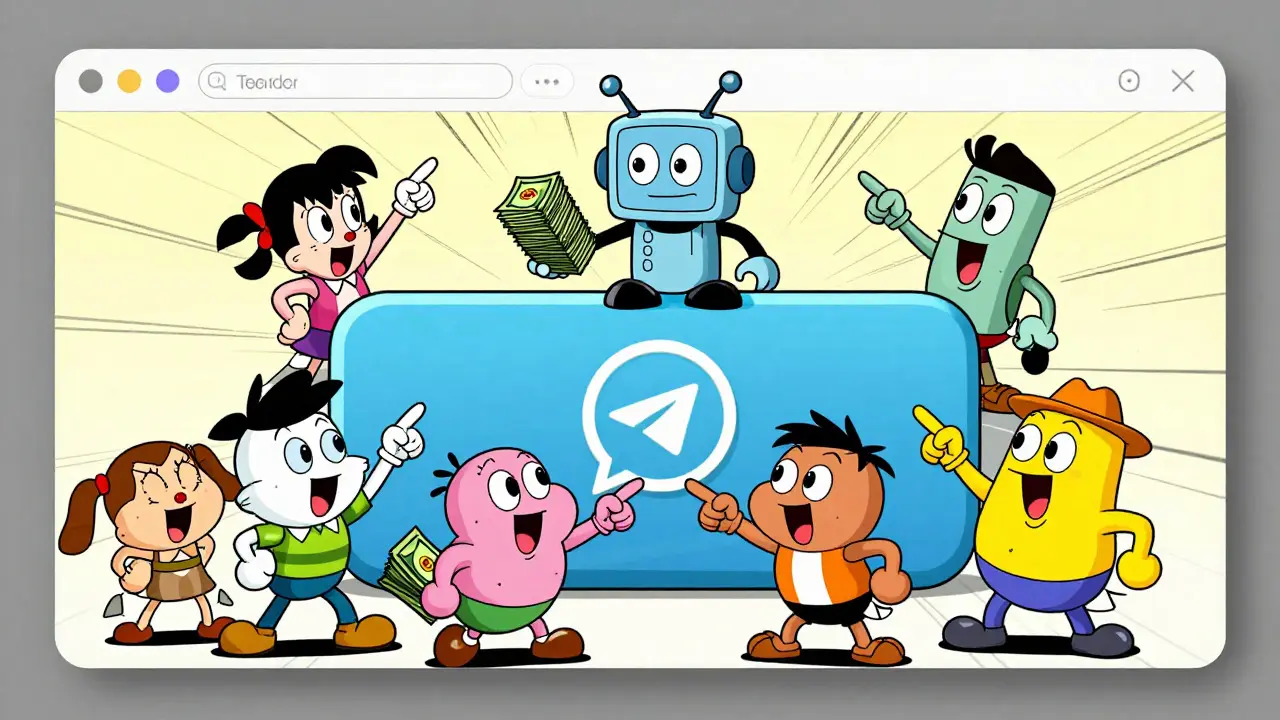
Here is where things get interesting. Shill Bill isn’t just a static token; it’s part of a broader ecosystem centered around a tool called the ShillBill Bot is a Telegram-based trading assistant that incentivizes users to promote Solana tokens.
The concept is simple: you get paid to "shill" (promote) other crypto projects. Here is how it works in practice:
- Create a Wallet: Users interact with the bot via Telegram. You can create a wallet by searching for the bot or clicking a buy button under an existing shill message.
- Paste Contract Addresses: You paste the contract address of any Solana token into the chat.
- Generate Cards: The bot auto-generates a token card with a buy button.
- Earn Referrals: When someone else clicks that button and buys the token, you earn a cut of the trading fees in SOL (Solana’s native currency), not necessarily in BILL tokens.
The revenue-sharing model is aggressive. According to tutorials released in August 2025, shillers receive:
- 40% of trading fees from direct buyers using their link.
- 30% of fees from users who sign up via their referral.
- 10% of fees from second-level referrals (referrals of your referrals).
This creates a three-tier affiliate structure. However, keep in mind that rewards are paid in SOL, and you need to maintain a minimum balance of roughly 0.02 SOL in your wallet to cover gas fees and ensure credits process correctly. This tool turns social media promotion into a potential income stream, but it relies entirely on the volume of trades happening through those links.
Market Performance: A Story of Extreme Volatility
If you are looking for stability, look elsewhere. The market data for BILL paints a picture of extreme volatility and significant drawdowns. Let’s look at the numbers from various sources between 2025 and 2026:
| Metric | Data Point | Source/Date Context |
|---|---|---|
| All-Time High (ATH) | ~$0.006705 (€0.006705) | Reached May 29, 2025 |
| Price Drop from ATH | ~99.69% - 99.72% | By June 2025 |
| Market Cap (Mid-2025) | $3.32 Million (DropsTab) vs $5,929 (CoinCodex) | Shows data discrepancy |
| 24-Hour Volume | ~$84 - $100 | Raydium/Phantom DEX data |
| Exchange Listings | Not Listed | Binance, Bitget show zero volume/listings |
Notice the discrepancy in market cap figures. One source listed it at over $3 million in June 2025, while others showed it dropping to less than $10,000 by September 2025. This inconsistency highlights the thin liquidity of the asset. With daily trading volumes often hovering around $80 to $100 on decentralized exchanges like Raydium, even a small sell order can crash the price significantly.
Major centralized exchanges like Binance and Bitget do not list BILL for active trading. Binance explicitly marks it as "not listed," and Bitget shows a fully diluted valuation near zero. This lack of institutional exchange support means you are reliant on decentralized exchanges (DEXs), which carry higher risks of slippage and smart contract vulnerabilities.
Risks and Sentiment: Why Experts Are Cautious
Let’s talk about the elephant in the room: risk. Platforms like CoinCodex and Bitget classify BILL as a high-risk asset. In September 2025, CoinCodex recorded a Fear & Greed Index of 43, labeled "Fear," indicating bearish sentiment. Bitget’s analysis noted that the majority of investors were experiencing negative returns due to consistent price declines.
Why so cautious? Several factors contribute to this outlook:
- No Fundamental Utility: Outside of the referral bot, the BILL token itself doesn’t have a clear use case. It doesn’t govern a protocol, secure a network, or provide access to exclusive services.
- Anonymity: No known team or audited smart contracts are publicly verified. In crypto, "trustless" is good, but "anonymous developers" can mean rug pulls.
- Liquidity Depth: With such low trading volume, exiting a large position without crashing the price is nearly impossible.
- Long-Term Projections: Some automated forecasting models on platforms like Bitget project a price of $0.00 by 2027 and 2032. While these algorithms are not crystal balls, they reflect the current lack of momentum and adoption.
Bitget also notes an internal contradiction in its own forecasts-predicting both a 0% ROI and a +15% change by 2032. This confusion underscores how unreliable predictive models are for micro-cap assets with little historical data.
How to Buy Shill Bill (If You Still Want To)
If you understand the risks and still want to participate in the Shill Bill ecosystem, here is the practical path forward. Remember, this involves interacting with decentralized finance (DeFi) protocols.
- Set Up a Solana Wallet: Download a wallet like Phantom or Solflare. Ensure you back up your seed phrase securely.
- Fund Your Wallet: Buy SOL (Solana) from a reputable exchange and transfer it to your wallet. Keep at least 0.02-0.05 SOL for gas fees.
- Access a DEX: Go to Raydium or Jupiter, the primary decentralized exchanges on Solana.
- Find the Token: Paste the official BILL contract address (verify this carefully, as fake tokens are common) into the swap interface.
- Swap: Exchange your SOL for BILL. Be aware of slippage settings; you may need to increase them if liquidity is low.
Alternatively, you can engage with the ShillBill bot directly on Telegram to earn SOL through referrals, though this requires active social media effort rather than passive holding.
Conclusion: Is Shill Bill Worth It?
Shill Bill (BILL) is a speculative micro-cap token that leverages the hype of the Solana meme coin sector and a clever referral-based bot system. It offers a fun, gamified way to engage with crypto communities, but it lacks the fundamental strength, liquidity, and transparency of established assets.
For the average investor, BILL is likely too risky. The 99%+ drop from its all-time high serves as a stark warning. However, for degenerate traders and social marketers willing to hustle on Telegram for small SOL rewards, it provides a unique, albeit volatile, playground. Always do your own research (DYOR), never invest more than you can afford to lose, and verify contract addresses before swapping.
Is Shill Bill (BILL) listed on Binance?
No. As of mid-2026, Binance explicitly states that Shill Bill is not listed for trading. You must use decentralized exchanges (DEXs) like Raydium to trade BILL.
What is the total supply of Shill Bill?
The total and maximum supply of Shill Bill is 1,000,000,000 (1 billion) tokens. Nearly 100% of this supply is currently in circulation.
How does the ShillBill bot make money?
The ShillBill bot earns by facilitating trades on Solana. Users who share token links earn a percentage of the trading fees generated when others buy through their links. Rewards are paid in SOL.
Who created Shill Bill?
The founding team behind Shill Bill remains anonymous. No public whitepaper or developer identities have been disclosed on major tracking platforms.
Is Shill Bill a safe investment?
Shill Bill is considered high-risk. It has experienced drawdowns of over 99% from its peak, has low liquidity, and lacks fundamental utility. It should only be approached with capital you are prepared to lose entirely.
Which blockchain is Shill Bill on?
Shill Bill is built on the Solana blockchain as an SPL token. This allows for fast transactions and low fees compared to Ethereum-based tokens.
What is the all-time high price of BILL?
The all-time high for Shill Bill was approximately $0.006705, reached in late May 2025. Since then, the price has dropped significantly.
Does Shill Bill pay dividends?
There is no confirmed dividend mechanism for the BILL token itself. However, the associated ShillBill bot distributes trading fee shares in SOL to active referrers.