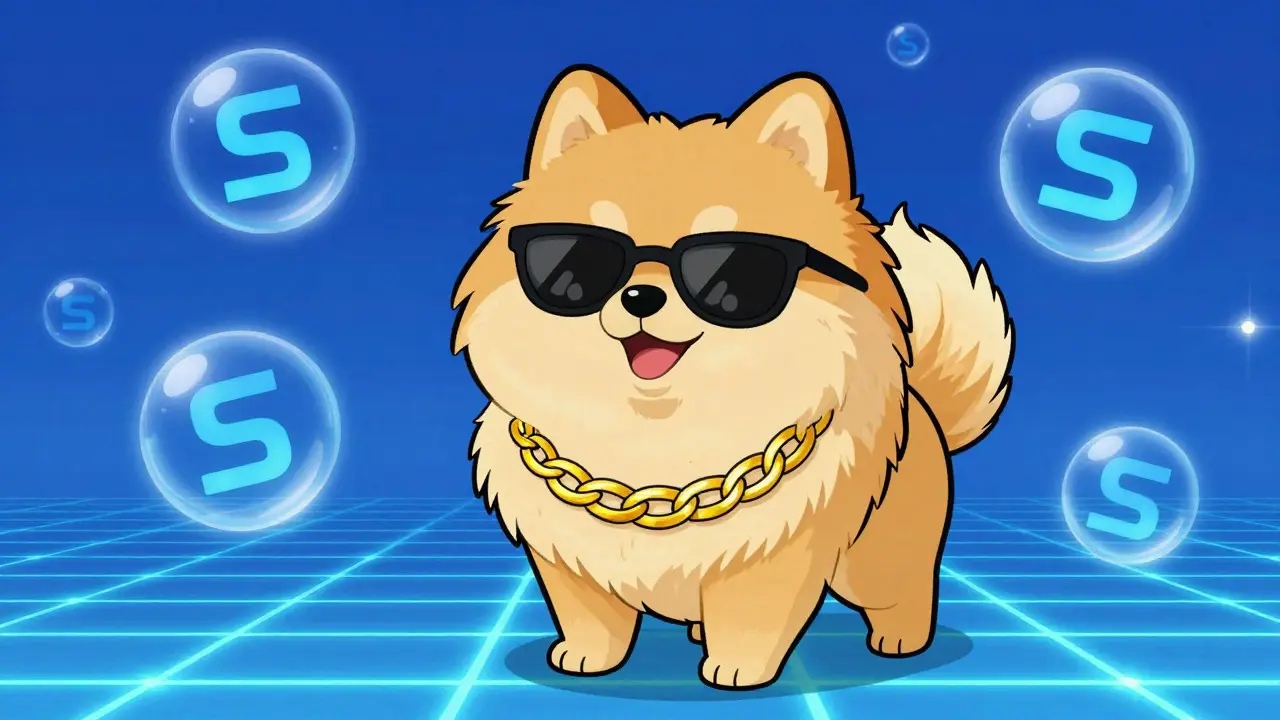
Have you ever scrolled through social media and felt a sudden urge to buy a cryptocurrency just because it featured an adorable dog? If so, you are not alone. This is exactly what happened with Kori The Pom, also known by its ticker symbol KORI. It is a meme cryptocurrency built on the Solana blockchain that centers around a Pomeranian dog theme. Launched in May 2025, this token quickly captured the attention of retail investors looking for the next big viral hit in the crypto space.
But here is the catch: unlike Bitcoin or Ethereum, which have clear use cases like digital currency or smart contracts, KORI is pure speculation. Its value comes entirely from community hype, social media trends, and the emotional connection people feel toward cute animals. Before you decide to invest your hard-earned money, you need to understand what KORI actually is, how it works, and whether it is worth the risk in the current market landscape of 2026.
The Origins of Kori The Pom
To understand where KORI stands today, we first need to look at its beginnings. The project was deployed on letsBONK.fun, a popular launchpad for Solana-based tokens, on May 13, 2025. The development team behind the project remains anonymous, a common trait among many successful meme coins. They positioned KORI as "the cutest pomeranian on the solana blockchain" and aimed to make it "the most viral dog on social media."
This branding strategy worked initially. By leveraging the existing popularity of dog-themed cryptocurrencies like Dogecoin and Shiba Inu, KORI tapped into a niche audience that wanted something fresh yet familiar. However, anonymity also means there is no public accountability. There are no identified founders to answer questions about future plans or address security concerns. This lack of transparency is a significant factor to consider when evaluating the long-term viability of the project.
Technical Specifications and Tokenomics
From a technical standpoint, KORI operates as an SPL token on the Solana blockchain. This choice of infrastructure is crucial because Solana is known for its high-speed transactions and low fees. On average, transaction confirmations take about 400 milliseconds, and fees typically stay under $0.00025 per trade. This makes it cheap and fast for users to buy, sell, and transfer KORI tokens compared to networks like Ethereum, where gas fees can be prohibitively expensive.
Here are the key tokenomic details you should know:
- Total Supply: Capped at exactly 1,000,000,000 (1 billion) tokens.
- Circulating Supply: Approximately 999,874,703 tokens, representing nearly 100% of the total supply.
- Contract Address: HtTYHz1Kf3rrQo6AqDLmss7gq5WrkWAaXn3tupUZbonk (always verify this before trading).
- Utility: None beyond speculative trading. There is no staking, governance, or additional functionality documented.
The fact that almost the entire supply is already in circulation means there is no inflationary pressure from new token releases. However, without utility features like staking rewards or governance rights, holders rely solely on price appreciation driven by demand. This dynamic often leads to extreme volatility, as seen in KORI's price history.
Market Performance and Price Volatility
If you have been watching KORI since its launch, you have likely experienced some wild rides. The token hit its all-time high of $0.0578 on July 13, 2025, but has since faced significant corrections. As of late 2025 and early 2026, prices have fluctuated widely across different exchanges. For instance, Coinbase reported prices around $0.0259, while other platforms like LiveCoinWatch showed figures closer to $0.0164. These discrepancies highlight liquidity issues and potential manipulation risks within the market.
Volatility is a defining characteristic of KORI. Data from CoinCodex indicates a volatility rate of nearly 21%, meaning the price can swing dramatically within short periods. One user on Reddit documented a 300% gain from an early investment, only to warn others about the "extreme volatility making it unsuitable for risk-averse investors." Another report noted 40% price swings within just two hours, with no apparent news catalyst to explain the movement.
| Feature | Kori The Pom (KORI) | Dogecoin (DOGE) | Bonk (BONK) |
|---|---|---|---|
| Blockchain | Solana | Ethereum/PoS | Solana |
| Market Cap (Approx.) | $15M - $25M | $14.2B+ | $1.2B+ |
| Utility | None (Speculative) | Tips, Payments | Ecosystem Integration |
| Risk Level | Very High | High | High |
When comparing KORI to established players like Dogecoin or even other Solana meme coins like Bonk, the difference in market dominance is stark. KORI holds less than 0.1% of the total crypto market cap, whereas Dogecoin commands billions. This size difference matters because larger coins tend to have deeper liquidity pools, making them less susceptible to massive price swings from single large trades.
How to Buy and Trade KORI Safely
Buying KORI requires a bit more technical know-how than purchasing Bitcoin on a centralized exchange like Coinbase or Binance. Since KORI is primarily traded on decentralized exchanges (DEXs), you will need to set up a compatible wallet and acquire SOL for transaction fees.
- Set Up a Wallet: Download and install a Solana-compatible wallet such as Phantom Wallet. Secure your seed phrase offline; if you lose it, you lose access to your funds forever.
- Acquire SOL: Buy Solana (SOL) on a major centralized exchange and transfer it to your Phantom wallet. You will need SOL to pay for gas fees when swapping tokens.
- Connect to a DEX: Navigate to a decentralized exchange like Orca or Meteora. Connect your Phantom wallet to the platform.
- Swap SOL for KORI: Enter the KORI contract address (HtTYHz1Kf3rrQo6AqDLmss7gq5WrkWAaXn3tupUZbonk) to ensure you are buying the correct token. Set your slippage tolerance appropriately-often between 5-8% due to low liquidity.
- Confirm the Transaction: Review the details carefully, including the amount of KORI you will receive and the estimated fee. Confirm the swap in your wallet.
A critical tip for traders: always check the liquidity depth before making large purchases. LiveCoinWatch data suggests that trades above $500 can experience significant slippage, meaning you might get fewer tokens than expected. Start small, especially if you are new to DeFi.

Risks and Regulatory Concerns
Investing in meme coins like KORI carries substantial risks. Beyond the obvious price volatility, there are regulatory hurdles looming on the horizon. In September 2025, U.S. SEC Commissioner Gary Gensler stated that tokens lacking utility features may be deemed unregistered securities. While enforcement actions against individual retail holders are rare, this statement casts a shadow over projects like KORI that offer no functional use case beyond speculation.
Additionally, the anonymous nature of the development team raises red flags regarding rug pulls or abandonment. Although KORI has maintained some level of activity since its launch, there is no guarantee that the project will continue to thrive. JPMorgan's October 2025 Crypto Outlook noted that 80% of meme coins without utility are expected to lose over 90% of their value within three years. This statistic underscores the importance of treating any investment in KORI as high-risk capital you can afford to lose entirely.
Community Sentiment and Future Outlook
The strength of KORI lies in its community. With over 12,000 members on Telegram and active discussions on Reddit and Twitter, the project maintains a vibrant social presence. Daily social media mentions average around 1,200, indicating sustained interest. However, sentiment is polarized. Some users celebrate quick profits, while others complain about rapid dumps and lack of direction.
Looking ahead, predictions vary wildly. CoinCodex models suggest a potential rise to $0.0325 by March 2027, assuming continued growth in the meme coin sector. Conversely, technical analysts note neutral-to-sell signals based on moving averages and oscillators. Without a clear roadmap or planned utility upgrades, KORI's future depends heavily on broader market trends and the ability of its community to sustain hype.
In summary, Kori The Pom is a classic example of a Solana-based meme coin: fast, cheap to trade, and highly volatile. It offers entertainment and speculative opportunities but lacks fundamental value. If you choose to participate, do so with caution, limited exposure, and a solid understanding of the risks involved.
Is Kori The Pom (KORI) a good investment?
KORI is considered a high-risk speculative asset rather than a traditional investment. It lacks utility and relies entirely on community hype. Only invest money you can afford to lose completely, and consider it part of a diversified portfolio if you enjoy high-volatility assets.
Where can I buy KORI tokens?
You can buy KORI on decentralized exchanges (DEXs) like Orca and Meteora using a Solana-compatible wallet such as Phantom. You will need SOL to pay for transaction fees. Always verify the contract address to avoid scams.
What is the total supply of KORI?
The total supply of KORI is capped at 1,000,000,000 (1 billion) tokens. Nearly 100% of these tokens are currently in circulation, meaning there is no inflationary pressure from new minting.
Does KORI have any utility besides being a meme coin?
Currently, KORI has no documented utility beyond speculative trading. There are no staking mechanisms, governance features, or partnerships announced. Its value is derived purely from social media trends and community engagement.
Who created Kori The Pom?
The development team behind KORI The Pom is anonymous. Like many meme coins, the founders have not publicly revealed their identities, which adds to the speculative nature of the project.