
You write a smart contract that promises to pay out insurance if it rains in Flagstaff on Tuesday. The code is perfect. The blockchain runs exactly as written. But here’s the catch: your blockchain lives in a sealed digital box. It has no eyes, no ears, and no way to look outside to see if the sky is actually gray. This is the oracle problem, and solving it is what makes modern DeFi possible.
Blockchain oracles are the bridges that let these isolated systems talk to the real world. They aren't just data feeds; they are complex verification layers that ensure the information entering your smart contract is accurate, timely, and tamper-proof. Without them, most of the financial applications you use today-like lending platforms or prediction markets-would simply stop working. Let’s break down how they work, why they matter, and which ones are actually worth your attention.
The Core Problem: Why Blockchains Can’t See Outside
To understand oracles, you first need to grasp why blockchains are so stubborn about external data. Blockchains like Ethereum are deterministic. This means every node in the network must arrive at the exact same result given the same input. If one node thinks the price of Bitcoin is $30,000 and another thinks it’s $30,001 because of a slight delay in fetching data from an API, consensus breaks. The chain forks or rejects the transaction.
This architecture prevents smart contracts from directly accessing off-chain data. You can’t just write `fetch("api.com/price")` inside Solidity code and expect it to work reliably across thousands of nodes. That’s where oracles step in. An Oracle is a service that provides external data to smart contracts, acting as a trusted intermediary between the blockchain and the outside world. They query data sources, verify their accuracy through multiple channels, and then push that verified data onto the blockchain in a format the smart contract can trust.
How Decentralized Oracles Actually Work
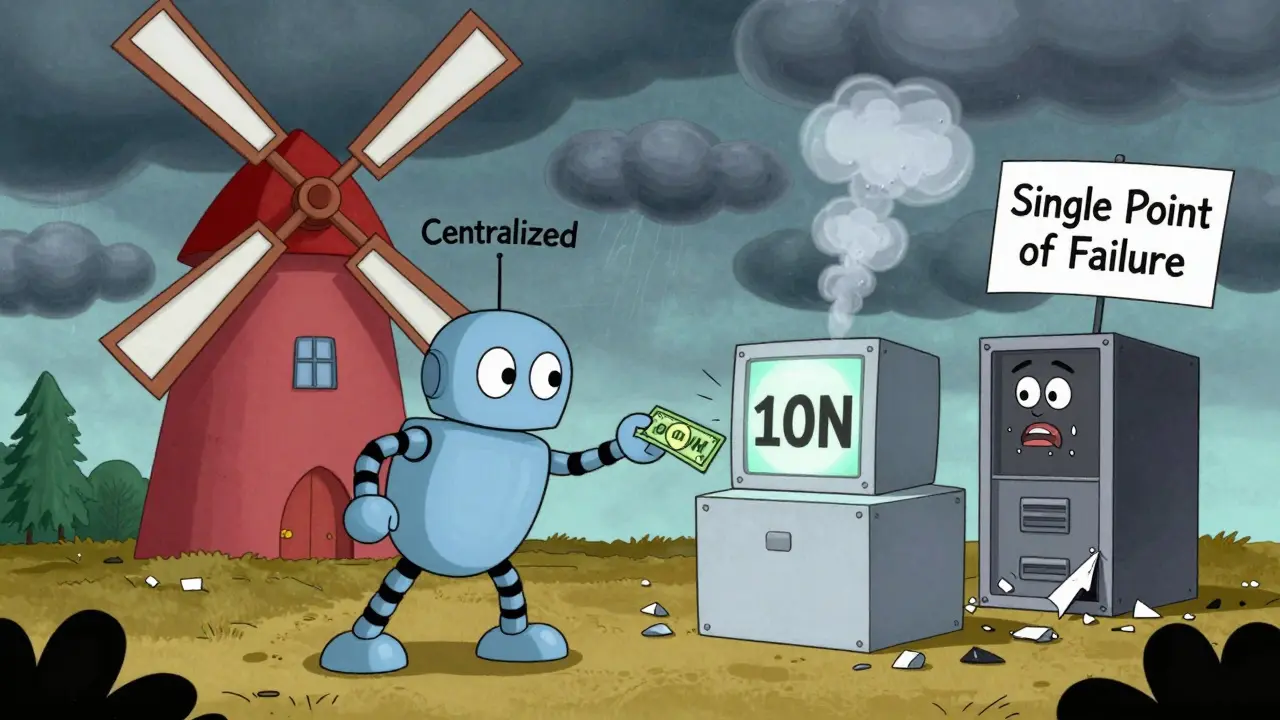
Early attempts at oracles were centralized. A single server would fetch data and send it to the chain. Simple, right? Wrong. If that server goes down, gets hacked, or lies, your entire system fails. Today, the industry standard is the Decentralized Oracle Network (DON), a network of independent node operators who collectively fetch, aggregate, and deliver data to smart contracts. Think of it as a jury rather than a single judge.
Here is the typical workflow for a request using a network like Chainlink:
- Request: Your smart contract emits an event asking for specific data, such as the current ETH/USD price.
- Aggregation: Multiple independent nodes receive this request. Each node queries different reputable data providers (like Coinbase, Binance, or Kraken).
- Consensus: The nodes compare their results. Using algorithms like median calculation, they filter out outliers. If one node reports a glitchy price, it’s ignored.
- Delivery: The aggregated, verified data is sent back to the blockchain via a special transaction.
This process ensures that no single point of failure exists. Even if half the nodes go offline or try to cheat, the remaining honest nodes can still reach consensus. As of late 2023, Chainlink secured over $10 billion in value across more than 1,400 projects by utilizing this multi-node aggregation model.
Types of Oracles: Not All Bridges Are Built Alike
Not every oracle does the same job. Depending on your needs, you might need data coming in, going out, or moving between chains. Here is how the major types differ:
| Type | Direction | Primary Use Case | Complexity |
|---|---|---|---|
| Inbound Oracle | Off-chain → On-chain | Price feeds, weather data, sports scores | Medium |
| Outbound Oracle | On-chain → Off-chain | Triggering bank transfers, sending emails, controlling IoT devices | High |
| Cross-Chain Oracle | Chain A → Chain B | Bridging assets, syncing state between L1 and L2s | Very High |
| Compute Oracle | Input → Computation → Output | Verifiable random numbers (VRNs), heavy calculations off-chain | High |
Inbound oracles are the most common. When you check the price of a token on Uniswap, you’re relying on an inbound oracle. Outbound oracles are trickier because they require the blockchain to initiate an action in the real world. For example, if a smart contract holds funds and needs to release payment only after a package is delivered, an outbound oracle listens for the delivery scan and tells the contract to execute.
Cross-chain oracles have become critical as users move between networks like Ethereum, Polygon, and Avalanche. These oracles don’t just pass data; they often handle the security proofs required to verify that an event happened on one chain before allowing it to affect another. CCIP (Cross-Chain Interoperability Protocol) is Chainlink’s protocol designed to enable secure communication and asset transfer across diverse blockchain networks.

The Big Players: Who Dominates the Market?
If you’re building on blockchain today, you’ll likely encounter three main names. While there are dozens of smaller projects, these three hold the vast majority of the market share.
Chainlink is the leading decentralized oracle network, holding approximately 70% of the market share and supporting thousands of integrations. Its strength lies in its massive network effect. Because so many protocols use Chainlink, liquidity providers and developers trust its price feeds implicitly. It supports a wide range of data types, from simple prices to complex verifiable randomness.
Pyth Network is a high-performance oracle solution focused on low-latency financial data, particularly popular among Solana-based applications. Pyth differs from Chainlink by having data publishers (like exchanges and market makers) submit data directly to the oracle network, reducing intermediaries. This makes it faster but arguably less decentralized in terms of data sourcing diversity compared to traditional DONs.
API3 is an oracle solution that aims to connect first-party APIs directly to smart contracts, eliminating third-party middlemen. Their "Airnode" technology allows API providers to run their own oracle nodes, meaning the data source itself verifies the data. This reduces trust assumptions but requires more effort from data providers to set up.
Real Risks: What Happens When Oracles Fail?
Oracles aren’t magic. They introduce new attack vectors. The biggest risk isn’t usually the oracle lying; it’s the oracle being manipulated or lagging.
Consider the Euler Finance incident in November 2022. An attacker exploited a flaw in how price updates were handled during a period of low liquidity. The oracle reported a skewed price, allowing the attacker to borrow against collateral at an inflated value. This resulted in nearly $200,000 in losses. While small compared to some hacks, it highlighted a critical truth: garbage in, garbage out.
Another common issue is "stale data." If an oracle updates prices every hour, but the market crashes in ten minutes, your smart contract might act on outdated information. Most robust systems use "heartbeats" (time-based updates) combined with deviation thresholds (update only if price changes by X%). Developers must configure these carefully. Too frequent updates waste gas; too infrequent updates risk inaccuracy.
Why Enterprises Care About Oracles Now
A few years ago, oracles were mostly a crypto-native concern. Today, they are central to enterprise blockchain adoption. According to a Deloitte report, 87% of surveyed enterprises cite reliable oracles as critical for production deployment. Why? Because banks and insurers want to automate settlements based on real-world events without manual intervention.
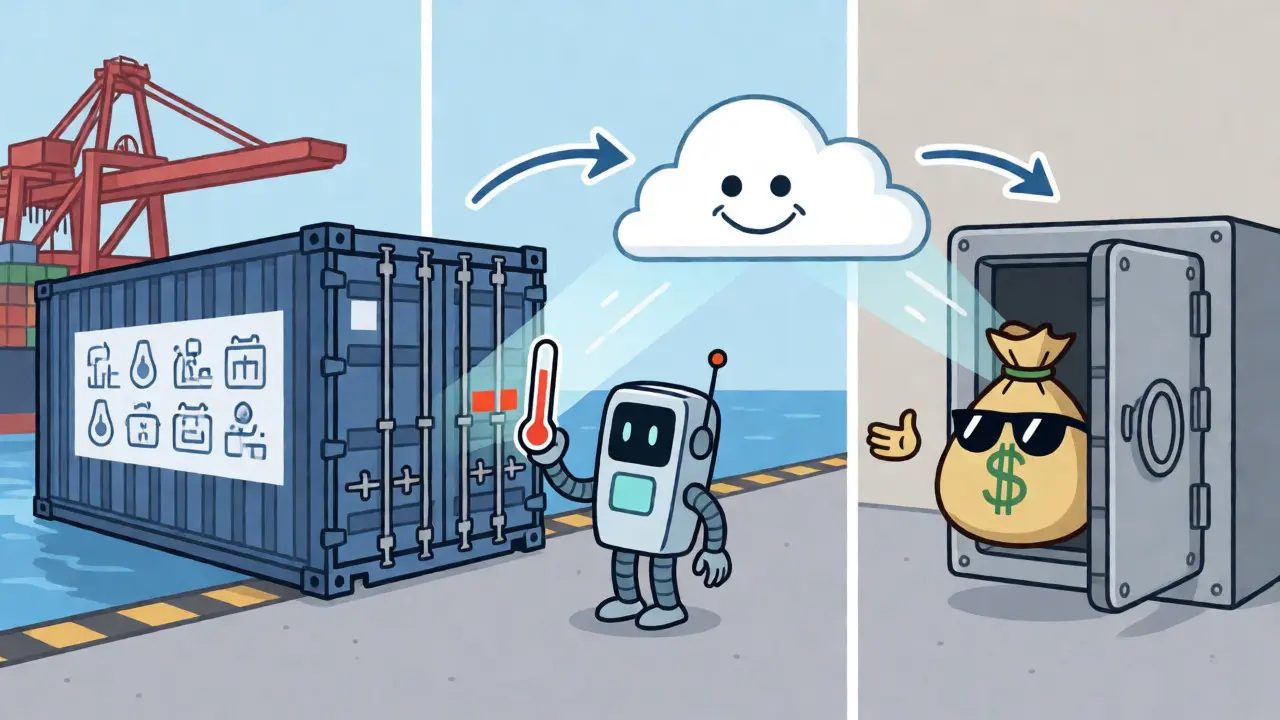
Imagine a supply chain application. A shipping container arrives at a port. An IoT sensor records the temperature. An oracle verifies this reading and sends it to a smart contract. If the temperature exceeded a safe threshold, the contract automatically triggers an insurance claim. No paperwork, no disputes. This level of automation relies entirely on the integrity of the oracle layer.
Regulations are catching up, too. The EU’s MiCA framework, effective in 2024, imposes strict data validation requirements on financial applications. This favors established, audited oracle networks over ad-hoc solutions. If you’re building a serious product, you can’t just scrape a website and hope for the best.
Getting Started: A Practical Checklist for Developers
If you’re looking to integrate an oracle into your project, here is a quick reality check based on developer feedback:
- Start with Price Feeds: Don’t reinvent the wheel. Use existing, battle-tested price feeds from Chainlink or Pyth. They cost nothing to read on-chain (only gas for the transaction).
- Understand Latency: Know how often the data updates. Is it every block? Every minute? Every hour? Match this to your business logic.
- Check the Source: Where does the data come from? A reputable oracle aggregates from multiple exchanges. A sketchy one might rely on a single API key.
- Test on Testnets: Always simulate oracle failures. What happens if the feed stops updating? Does your contract pause or keep running with stale data?
For experienced Solidity developers, basic integration takes about 10-20 hours. The hard part isn’t the code; it’s understanding the economic incentives behind the oracle network and ensuring your contract handles edge cases gracefully.
Can smart contracts access the internet directly?
No. Blockchains are closed systems designed for determinism. Direct internet access introduces non-deterministic variables (like network latency or changing web content) that would prevent nodes from reaching consensus. Oracles serve as the necessary bridge to import this external data safely.
Are oracles always decentralized?
Not necessarily. There are centralized oracles, where a single entity provides the data. These are simpler and cheaper but introduce a single point of failure. Decentralized Oracle Networks (DONs) use multiple independent nodes to verify data, offering higher security at the cost of complexity and sometimes higher fees.
What is the difference between Chainlink and Pyth?
Chainlink uses a decentralized network of nodes that fetch data from various aggregators, providing strong decentralization and broad compatibility. Pyth focuses on speed and precision by allowing data publishers (exchanges/market makers) to submit data directly to the oracle network. Pyth is often preferred for high-frequency trading applications due to lower latency, while Chainlink remains the gold standard for general-purpose reliability.
Who pays for oracle services?
Typically, the smart contract owner or the user triggering the transaction pays for the oracle update via gas fees. In some models, the protocol subsidizes oracle costs to keep user experience smooth. Node operators are incentivized by rewards paid in the native token of the oracle network (e.g., LINK for Chainlink).
Can oracles be hacked?
Yes. While the cryptographic proofs are strong, vulnerabilities can exist in the implementation logic or the underlying data sources. Manipulation attacks, where an attacker influences the spot price on a low-liquidity exchange to skew the oracle average, are a known risk. Proper configuration of deviation thresholds and heartbeat intervals helps mitigate this.


liam & the bees
September 2, 2026 AT 13:33Great breakdown! I've been trying to wrap my head around this for weeks and this finally made it click. The analogy of the sealed digital box is spot on.
Edward Ogunfolaju
September 3, 2026 AT 18:01This is exactly what people need to hear. Stop sleeping on oracle infrastructure. It is the backbone of DeFi and without it you are just gambling in the dark. Get your facts straight before you dump your bags.
Liam Grimes
September 4, 2026 AT 16:34Nice write up mate. Just a small correction though, Chainlink isn't the only game in town anymore. Pyth is getting massive traction on Solana and Cosmos chains because of the low latency. If you're building high freq stuff you really gotta look at them instead of just defaulting to LINK feeds every time. Also watch out for gas spikes when you're aggregating data, can get pricey if not coded right.
Matthew O'Neill
September 6, 2026 AT 16:08The author clearly lacks an understanding of epistemological verification in distributed systems. Calling oracles "bridges" is a reductive metaphor that ignores the fundamental issue of trust minimization versus trust assumption. A decentralized oracle network does not eliminate the need for trusted third parties; it merely shifts the trust vector from a single entity to a quorum of economic actors who may collude under adverse market conditions. Furthermore, the mention of Euler Finance as a primary example is lazy journalism. That was a flash loan attack exploiting liquidity depth, not purely an oracle failure. To conflate these two distinct vectors demonstrates a superficial engagement with the subject matter. Real security requires zero-knowledge proofs, not median aggregation.
Emmanuel Ogbomo
September 7, 2026 AT 22:07I like how this article explains the problem first. Most people jump straight into solutions without understanding why the blockchain is isolated in the first place. It’s like trying to fix a car engine without knowing what fuel does. Peaceful thoughts.
Tasha Davis
September 8, 2026 AT 15:32OMG YES!!! This is so helpful!! I always got confused between price feeds and actual oracles but now it makes total sense!! Thank you for explaining it so simply!! 🙌🙌
Stephanie Millar
September 9, 2026 AT 04:32It is quite fascinating... really... how much we rely on these invisible layers... without even thinking about them... until they break... which they do... often...
Jarnail Singh
September 9, 2026 AT 15:09India is actually leading the charge in blockchain adoption and our developers are building some of the most sophisticated oracle integrations I have seen :) We don't just copy Western models, we innovate faster. While you guys argue about Chainlink vs Pyth, we are already deploying enterprise-grade solutions in Mumbai and Bangalore. :)
Ashwini Chaskar
September 9, 2026 AT 21:44it feels like everyone is ignoring the human element here oracles are just code but the nodes are run by humans who can be bribed or lazy its scary really especially when billions are at stake and nobody seems to care about the ethical implications of trusting anonymous operators with real world truth
Sam Ariafar
September 10, 2026 AT 12:12It is disappointing that the article glosses over the regulatory risks. MiCA is mentioned, but the compliance burden on oracle providers is underestimated. We need stricter accountability, not just technical explanations.
Jane yuan
September 11, 2026 AT 05:11True independence means owning your data pipeline. Relying on external oracles is a vulnerability. The American spirit of self-reliance applies here too. Build your own verification layer.
Ian Munro
September 11, 2026 AT 11:48Accurate summary. The distinction between inbound and outbound oracles is crucial for developers to grasp early on.
Trista Dennis
September 12, 2026 AT 03:43Sure, let's pretend that 'decentralized' networks aren't just centralized companies wearing a hoodie. Because obviously, if one node operator goes down, the whole thing doesn't collapse. Right?
Carey Thornton
September 13, 2026 AT 19:00Dude, this is absolute gold. The way you broke down the consensus mechanism? Chef's kiss. 👌 But honestly, the gas fees part needs more love. It’s brutal out there.
David Powell
September 14, 2026 AT 16:20Another article telling us what we already know. How original. Next you'll tell me water is wet.
Valentine Okpala
September 15, 2026 AT 11:21A lovely introduction to a complex topic 🤓 It helps to remember that technology serves society, not the other way around. Oracles bring the outside world in, which is a beautiful concept if you think about it. 🌍✨
Sean Dalton
September 15, 2026 AT 17:25Oh please. Another tech bro pretending to understand economics. You call it a bridge, I call it a bottleneck. And don't get me started on the Irish tax haven angle of these crypto projects. Typical.