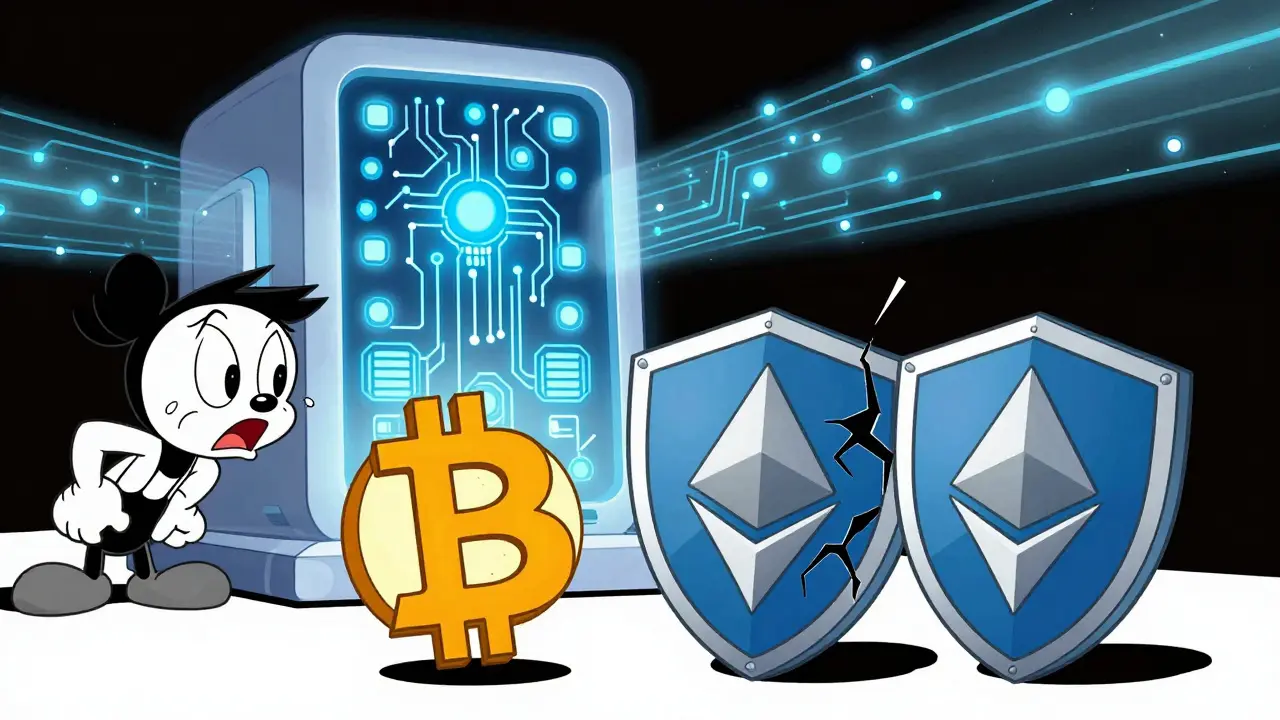
When you send a transaction on Bitcoin or Ethereum, it doesn't go through a bank server. It travels across a Peer-to-Peer (P2P) network, a web of computers talking directly to each other. This setup is the heart of blockchain technology. It promises freedom from central control. But that same freedom creates blind spots. Hackers know this. They target these weak links to steal funds or break the system.
You might think your wallet is safe because the code is encrypted. Encryption protects the data inside the message. It does not protect how the message gets there. If someone blocks your view of the network, they can feed you fake information. This is called an Eclipse Attack. In this scenario, an attacker surrounds your computer with their own nodes. You only see them. You never see the real network. This lets them hide transactions, double-spend coins, or delay payments indefinitely.
The Core Problem: How P2P Networks Work
To understand the risk, you need to see how these networks connect. Every blockchain node uses specific ports to talk. Bitcoin listens on port 8333. Ethereum uses port 30303. These are just doors for data packets. When you start a node, it needs to find neighbors. It asks known peers for more addresses. Then it connects to them.
This process sounds simple. It has major flaws. Most public nodes have limited connection slots. A standard Bitcoin node allows about 125 connections. Ethereum nodes allow even fewer active inbound connections by default. An attacker doesn't need to hack your computer. They just need to fill those slots with their own bots. Once your slots are full, legitimate nodes cannot reach you. You are isolated. This isolation is the first step in most P2P attacks.
The structure of the network matters too. Bitcoin uses a random graph topology. Nodes connect randomly. Ethereum uses a Kademlia-based Distributed Hash Table (DHT). This is a structured map. Each type has different weaknesses. Random graphs resist targeted data manipulation but suffer from partitioning. Structured DHTs are efficient but vulnerable to routing anomalies where attackers manipulate the map to isolate specific data.
Eclipse Attacks and Gethlighting Explained
The most famous threat is the Eclipse Attack. Researchers Heilman et al. described this at USENIX Security in 2015. The goal is total isolation. In January 2019, Monero users faced this reality. Attackers used about 130 IP addresses to surround victim nodes. Transactions delayed for 8 to 12 minutes. Users thought the network was broken. It wasn't. Their nodes were blinded.
Ethereum faced a similar but smarter threat. In 2023, researchers published the "Gethlighting" paper at NDSS. They showed you don't need total eclipse to cause damage. By targeting just 1.5% of network bandwidth, attackers could disrupt nodes significantly. This broke the old assumption that you needed massive resources to attack the network. The fix came quickly. The Ethereum Foundation released Geth v1.11.0 on March 15, 2023. This update patched the vulnerability. But it proved that new attack vectors appear constantly.
These attacks work because P2P networks trust the first connection they make. If your initial seed nodes are compromised, your entire view of the chain becomes false. You might accept a block that the rest of the world rejects. Your wallet shows one balance. The real ledger shows another. This discrepancy allows thieves to spend coins twice before the network corrects itself.
Real-World Impact on Users and Nodes
You might wonder if this affects you. If you use a custodial exchange like Binance or Coinbase, they handle node security. But if you run your own node or use a self-custody wallet connected to public RPC endpoints, you are exposed. In December 2022, Bitcoin Core maintainers noted that 0.3% of public nodes showed signs of targeted eclipse attempts. That seems small. For a node operator, it means failure.
User reports paint a clear picture. During the Gethlighting incident, Reddit users reported swap failures lasting 47 minutes. Gas prices looked normal. The issue was purely network-level. Trustpilot reviews for various wallet services show that 27% of negative feedback cites "network issues" as the cause. Often, these issues stem from poor P2P connectivity rather than bugs in the app code.
For enterprises, the stakes are higher. The EU's MiCA framework, effective December 2024, now requires robust network layer security assessments. Companies ignoring P2P risks face regulatory fines. The global blockchain security market grew to $3.84 billion in 2023. Much of this money goes toward protecting the P2P layer. Why? Because cryptographic flaws are rare. Network layer failures are common. Dr. Emin Gün Sirer noted that 78% of consensus failures originate from network issues, not bad math.

Defending Your Node: Practical Steps
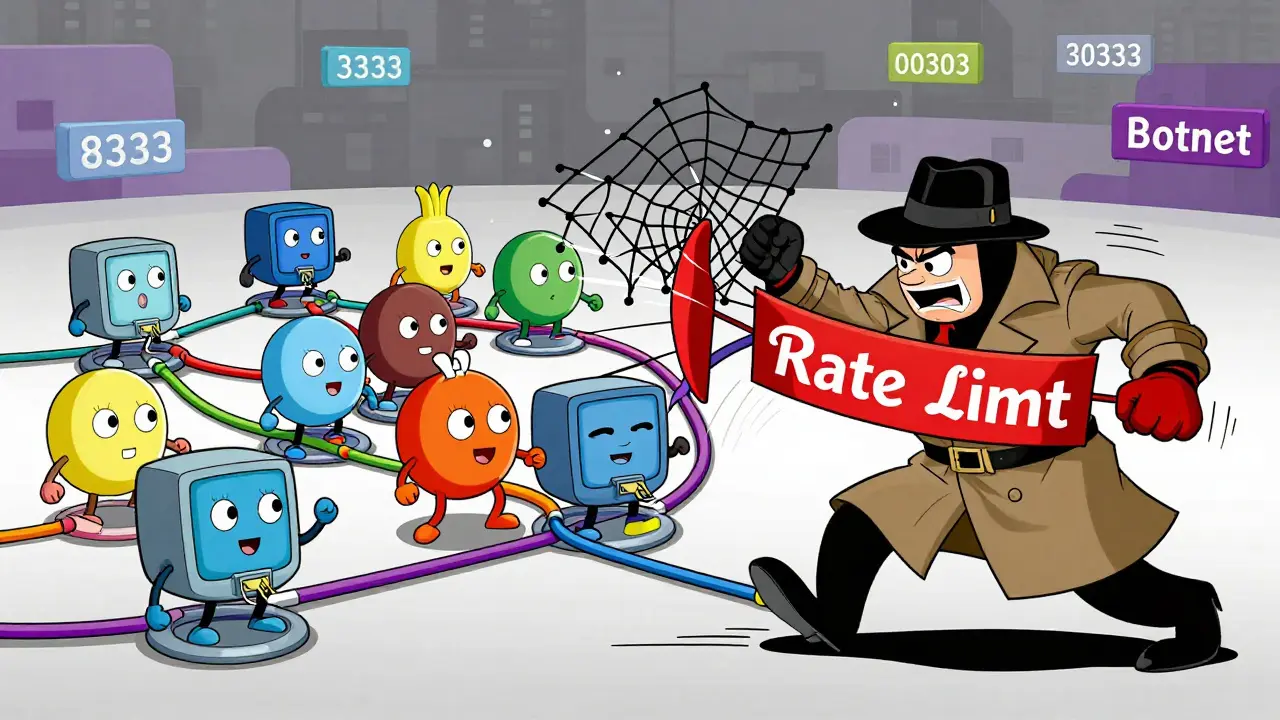
You can reduce your risk without becoming a security expert. First, diversify your connections. Don't rely on one DNS seed list. Rotate your seeds regularly. This prevents attackers from poisoning your initial discovery phase. Second, implement rate limiting. Block IPs that try to open too many connections too fast. This stops botnets from filling your slot limit.
Third, use peer scoring systems. Ethereum introduced EIP-5845 to score peers based on behavior. Nodes that send invalid blocks or disconnect frequently get banned automatically. Bitcoin Core also implements similar logic. Enable these features in your client configuration. Fourth, consider using TLS 1.3 encryption for all node communications. While Bitcoin currently relies on unencrypted TCP/IP for maximum compatibility, newer implementations should enforce certificate pinning. Only 63% of networks do this properly, according to Qualysec's 2023 report.
Finally, monitor your logs. Look for unusual patterns. If you suddenly lose half your peers and gain 50 new ones from the same IP range, something is wrong. Set up alerts for connection drops. Early detection saves you from long-term isolation.
| Measure | Effectiveness | Complexity | Primary Benefit |
|---|---|---|---|
| DNS Seed Rotation | High | Low | Prevents initial poisoning |
| Rate Limiting | Medium | Medium | Stops slot exhaustion |
| Peer Scoring | High | High | Bans malicious nodes automatically |
| TLS 1.3 Encryption | Medium | High | Hides traffic content from ISPs |
Future Trends and Quantum Threats
The landscape is changing fast. Ethereum plans "DevP2P 2.0" for Q2 2026. This upgrade aims to cut the attack surface by 70%. It will move toward a more structured topology that balances efficiency with resilience. Bitcoin developers merged PR #27891 in July 2024 to enforce connection diversity. These changes help, but they aren't perfect.
A bigger threat looms on the horizon. Quantum computing. Dr. Ari Juels warned at Black Hat 2025 that quantum networking could break current P2P security models within 5 to 7 years. Current encryption relies on mathematical problems hard for classical computers. Quantum machines solve these instantly. If that happens, every P2P connection becomes transparent to eavesdroppers. Developers must prepare post-quantum cryptography protocols now. Waiting until the hardware arrives will be too late.
Hybrid architectures offer a middle ground. Projects like Polkadot use parachains to distribute load. This reduces the strain on any single P2P link. Layer-2 solutions also help by moving transactions off the main P2P layer. However, the base layer remains critical. As long as decentralization exists, P2P vulnerabilities will exist. The trade-off is unavoidable. You choose between total control and total security. Blockchain chooses control.
What is a P2P network in blockchain?
A Peer-to-Peer (P2P) network is a decentralized system where computers (nodes) communicate directly without a central server. In blockchain, nodes share transaction data and validate blocks. This setup ensures no single entity controls the ledger, making it resistant to censorship and single points of failure.
How does an Eclipse Attack work?
An Eclipse Attack occurs when an attacker monopolizes all incoming and outgoing connections of a target node. By flooding the node's connection slots with malicious bots, the attacker isolates the victim from the rest of the network. The victim then only sees information controlled by the attacker, allowing for transaction hiding or double-spending.
Is my personal wallet vulnerable to P2P attacks?
If you use a non-custodial wallet that connects to public nodes, yes. Lightweight wallets often rely on remote servers. If those servers are compromised or eclipsed, your view of the blockchain becomes inaccurate. Running your own full node and securing its P2P connections is the best defense against these risks.
What is the difference between Bitcoin and Ethereum P2P topologies?
Bitcoin uses a random graph topology where nodes connect unpredictably. This makes it harder to target specific data but easier to partition the network. Ethereum uses a Kademlia-based Distributed Hash Table (DHT), which is a structured map. DHTs are faster for finding data but more susceptible to routing manipulation and ID mapping attacks.
Can quantum computing break blockchain P2P security?
Yes, potentially. Current P2P security relies on cryptographic algorithms that quantum computers could solve efficiently. Experts predict this threat could materialize within 5 to 7 years. To mitigate this, the industry is developing post-quantum cryptography standards to secure future P2P communications against quantum decryption.