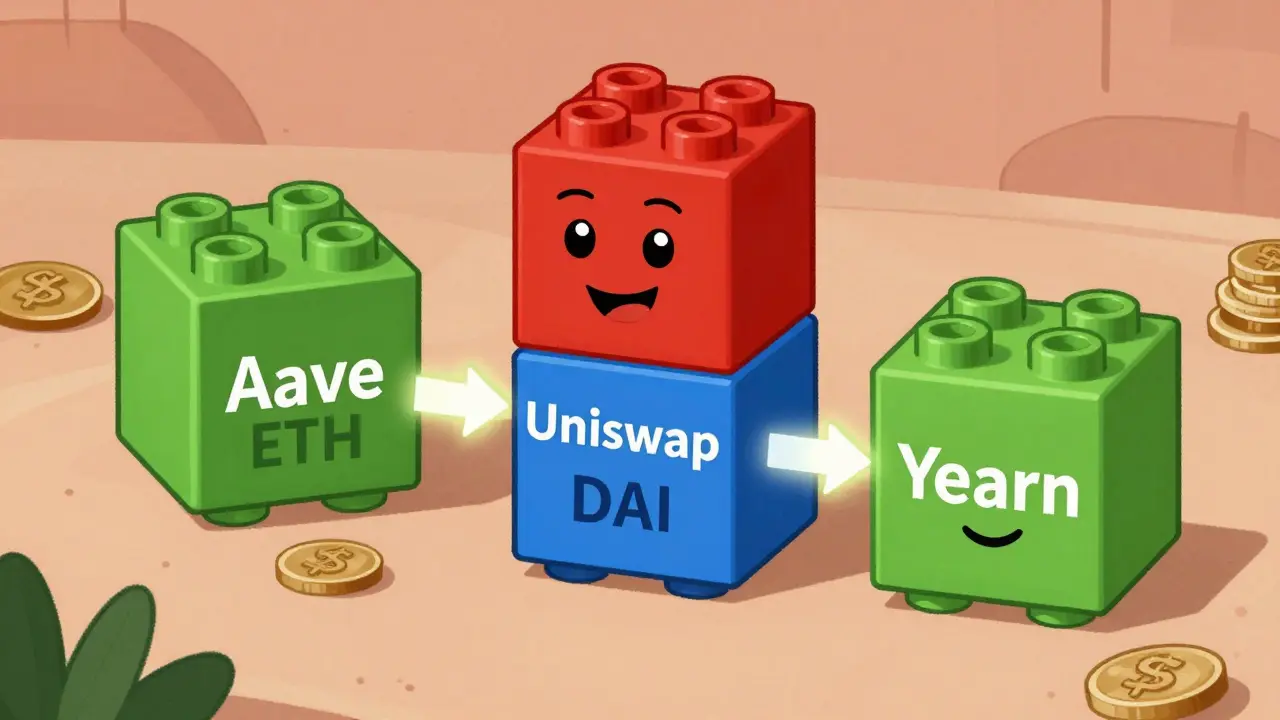
The Shift from Static Pools to Dynamic Intelligence
Remember when swapping tokens meant waiting minutes for a transaction to confirm while paying fees that sometimes exceeded the trade value itself? That era feels distant now. As we move through 2026, the backbone of decentralized finance (DeFi) has undergone a radical transformation. The Automated Market Maker (AMM), once limited to simple constant product formulas like Uniswap’s early iterations, is now evolving into a sophisticated ecosystem of intelligent algorithms. These next-generation systems are no longer just about matching buyers and sellers; they are about optimizing capital efficiency, bridging isolated blockchain networks, and even pricing intangible assets.
The core promise of DeFi-permissionless, trustless trading-remains intact, but the machinery under the hood has changed dramatically. Early AMMs relied on the $x \times y = k$ formula, which was elegant but inefficient for stablecoins or volatile pairs. Today’s innovations address these historical pain points by introducing dynamic fee structures, cross-chain interoperability, and novel price discovery mechanisms. If you are still using first-generation pools without understanding these shifts, you are likely leaving money on the table through impermanent loss and high slippage.
Scalability: Solving the Congestion Crisis
The biggest hurdle for AMMs has always been scalability. Ethereum’s mainnet congestion used to make small trades economically unviable. Next-generation AMMs solve this by integrating deeply with Layer 2 (L2) solutions. We aren’t just talking about occasional bridges; modern AMMs are native to L2 environments like Optimistic Rollups and zk-Rollups.
zk-Rollups use zero-knowledge proofs to verify transactions off-chain before posting data to the mainnet. This allows AMMs to process thousands of trades per second with near-instant finality and fractions of a cent in gas fees. Similarly, sharding technology is being implemented to split blockchains into smaller shards, allowing parallel processing. For the average user, this means your swap executes instantly. For liquidity providers, it means higher turnover rates and more frequent fee earnings without the friction of network bottlenecks.
Decentralized storage solutions also play a role here. By offloading heavy data processing from the main blockchain to distributed storage networks, AMMs reduce computational load. This results in faster transaction times and a smoother user experience, critical for maintaining liquidity during high-volatility market events.
Cross-Chain Interoperability: Breaking Down Silos
Liquidity has historically been fragmented across different chains. You might have ETH on Ethereum, MATIC on Polygon, and SOL on Solana, but moving them between AMMs required risky bridge transfers. Next-generation AMMs are designed to operate natively across multiple blockchain networks.
This cross-chain functionality doesn’t just mean moving assets; it means unified liquidity pools. Imagine providing liquidity once and having that pool accessible to traders on five different chains simultaneously. Protocols are now using atomic swaps and shared security models to ensure that trades execute securely across chains without the need for trusted intermediaries. This expands the total addressable market for every pool, reducing slippage and improving price stability for all participants.

The Rise of Function Oracle AMMs
One of the most groundbreaking developments in recent years is the emergence of the Function Oracle AMM. This model acts as a peer-to-pool mechanism that facilitates trades based on continuous user assessments rather than static order books. Unlike traditional AMMs that rely solely on reserve ratios, this system captures the "premium"-the additional value traders are willing to pay based on their perceptions and expectations.
Here is how it works: Transaction prices are dynamically determined by agent behaviors through wrap and unwrap functions. Technical restrictions ensure only one transaction can occur at each time point T, creating a discrete but highly responsive pricing model. This approach reflects broader market dynamics by continuously adjusting to changes in sentiment. It essentially tokenizes expectations. If the market believes an asset will surge, the premium adjusts immediately, allowing early entrants to capture value while protecting latecomers from excessive volatility.
Specialized Models: Curve, Balancer, and Beyond
The AMM landscape has diversified beyond the generic constant product model. Different assets require different mathematical approaches to minimize impermanent loss and maximize efficiency.
| Model Type | Best Use Case | Key Advantage | Risk Profile |
|---|---|---|---|
| Constant Product (Uniswap V2 style) | Volatile token pairs | Simplicity and broad adoption | High impermanent loss |
| Stableswap (Curve style) | Stablecoins and pegged assets | Low slippage for similar assets | Low, unless depeg occurs |
| Weighted Pool (Balancer style) | Multi-asset portfolios | Customizable ratios (up to 8 assets) | Moderate, depends on weights |
| Function Oracle | Expectation-based trading | Dynamic premium pricing | Variable, sentiment-driven |
Curve Finance specializes in pools of similar assets, offering some of the lowest swap fees in the industry. Its algorithm minimizes slippage when trading between assets that should theoretically have the same value, like USDC and DAI. Meanwhile, Balancer extends flexibility by allowing users to create dynamic liquidity pools of up to eight different assets in any ratio. This turns an AMM into a self-balancing portfolio manager, automatically rebalancing holdings as prices fluctuate.
Tokenizing the Intangible
Perhaps the most speculative yet exciting frontier is the tokenization of non-traditional assets. Next-generation AMMs are extending their reach beyond cryptocurrencies to include artworks, celebrity endorsements, community engagements, and intellectual property.
These assets traditionally lack direct monetary measurement. However, by using premium-powered mechanisms, AMMs can establish new price discovery frameworks. For example, a digital art piece could be tokenized, and its value determined not just by sales history but by ongoing community engagement metrics fed into the oracle. This makes investment access permissionless. Instead of needing a gallery representative, anyone can buy a fraction of the asset’s value via the AMM. This liquidity injection transforms illiquid assets into tradable instruments, potentially serving as collateral for lending protocols in the future.

TradFi Integration and Algorithmic Precision
We are witnessing a convergence between Traditional Finance (TradFi) and DeFi. Institutional players are entering the space, bringing with them demands for deeper liquidity and stricter risk management. Next-gen AMMs are responding by incorporating heuristic methods and advanced distributed data approaches.
Market making is becoming increasingly automated and algorithm-driven. These tools enable rapid responses to market changes, achieving optimal prices for clients. New-generation crypto market makers feature global OTC (Over-The-Counter) liquidity integration, meaning large institutional orders can be filled without causing massive slippage in public pools. This electronification of trading enhances transparency and workflow automation, making DeFi viable for pension funds and hedge funds alike.
Practical Implementation for Users
For the everyday user, navigating this new landscape requires a shift in mindset. The learning curve is steeper because newer models involve complex smart contract interactions. Here are practical steps to engage safely:
- Verify Cross-Chain Bridges: Ensure the AMM uses audited, non-custodial bridges for cross-chain swaps. Avoid centralized intermediaries where possible.
- Understand Fee Structures: Next-gen AMMs often use dynamic fees. Check if the protocol adjusts fees based on volatility. High volatility periods may incur higher fees to protect liquidity providers.
- Monitor Impermanent Loss Tools: Use dashboards that simulate IL for specific pools. Specialized pools like Curve’s Stableswap mitigate IL for stablecoins, but volatile pairs remain risky.
- Start Small with Novel Assets: If exploring tokenized real-world assets (RWAs), start with small positions. Price discovery mechanisms for intangibles are still maturing.
Future Trajectory: AI and Machine Learning
Looking ahead, the integration of artificial intelligence into AMM algorithms represents the next frontier. Machine learning models can analyze vast datasets to predict short-term price movements and adjust pool parameters proactively. This enables more sophisticated market-making strategies and improved capital efficiency. As cross-chain interoperability becomes standard, we can expect a unified global liquidity layer where assets flow seamlessly between chains, governed by intelligent, adaptive protocols.
What is the main difference between first-generation and next-generation AMMs?
First-generation AMMs primarily used the constant product formula ($x \times y = k$) and operated on single chains with high gas fees. Next-generation AMMs incorporate Layer 2 scaling, cross-chain interoperability, dynamic fee structures, and specialized algorithms like Stableswap or Function Oracle models to improve capital efficiency and reduce slippage.
How do Function Oracle AMMs determine prices?
Function Oracle AMMs determine prices dynamically based on user behavior and sentiment. They capture a "premium" that traders are willing to pay based on their expectations, adjusting prices continuously through wrap and unwrap functions rather than relying solely on static reserve ratios.
Are cross-chain AMMs safe to use?
Safety depends on the underlying bridge technology. Next-gen AMMs using atomic swaps and zero-knowledge proofs offer higher security by eliminating trusted intermediaries. Always check if the protocol is audited and uses non-custodial cross-chain messaging layers.
Can I provide liquidity to tokenized real-world assets?
Yes, next-generation AMMs are beginning to support tokenized assets like art or IP. However, these markets are less liquid and more speculative. Price discovery is driven by community engagement and premiums, so thorough research is essential before providing liquidity.
Why is Layer 2 integration important for AMMs?
Layer 2 solutions like zk-Rollups and Optimistic Rollups significantly reduce transaction costs and increase speed. This makes AMMs accessible for smaller trades and improves the overall user experience by removing the bottleneck of mainnet congestion.