
Imagine trying to build a house where the building codes change every time you turn around. That was the reality for blockchain businesses in the United States for years. You couldn't be sure if your token was a security, a commodity, or something else entirely. Then came Wyoming.
In 2019, this small state with fewer than 600,000 people passed 13 new laws designed specifically for the digital age. It wasn't just a tweak to existing rules; it was a complete overhaul. Today, Wyoming is known as the "Delaware of Digital Assets." But what does that actually mean for you if you are looking to launch a crypto project, form a DAO, or open a digital bank?
The Core Legal Framework
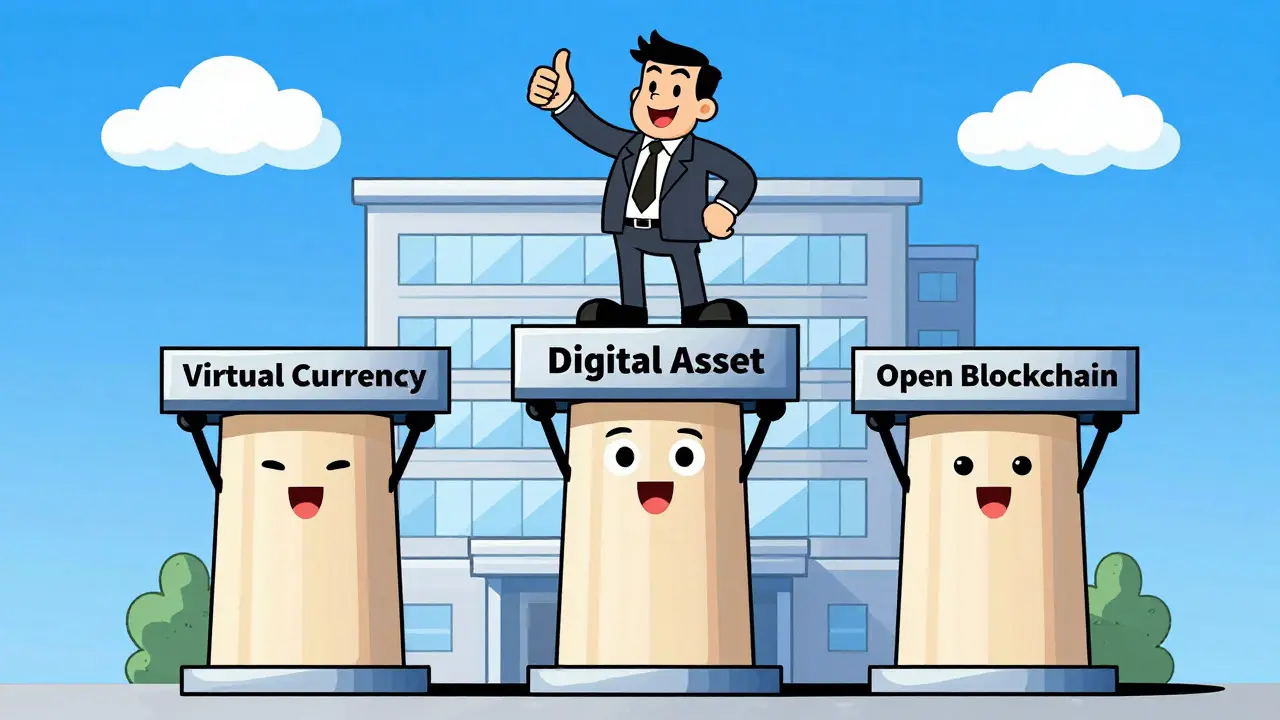
Wyoming didn't just pass one law; they built an ecosystem. To understand why businesses flock here, you have to look at the three pillars of their legal structure. These laws work together to remove the guesswork that plagues other jurisdictions.
The Virtual Currency Act is legislation that exempts virtual currency activities from the Money Transmitters Act. This is huge. In most states, moving crypto counts as money transmission, which requires expensive and difficult licenses. Wyoming says no. If you are dealing in virtual currency, you are exempt from these burdensome requirements, provided you follow specific reporting rules.
Next is the Digital Asset Act, which defines digital assets as property rather than securities or commodities by default. This act categorizes assets into three types: digital consumer assets, virtual currency, and digital securities. By classifying most tokens as property, Wyoming removes the immediate fear of SEC enforcement for many utility tokens. It also gives banks clear rules on how to custody these assets, solving a major headache for traditional financial institutions wanting to enter the space.
Finally, there is the Open Blockchain Token Law, which carves out consumptive tokens from state securities laws when specific notice requirements are met. If your token is used to access a service (like computing power or storage) rather than as an investment contract, it can avoid being classified as a security. This clarity allows developers to launch products without navigating a maze of federal and state securities regulations.
| Law Name | Primary Function | Regulatory Body |
|---|---|---|
| Virtual Currency Act | Exempts VC from money transmission laws | Division of Banking |
| Digital Asset Act | Defines assets as property; sets custody rules | Division of Banking |
| Open Blockchain Token Law | Exempts utility tokens from securities laws | Secretary of State |
| Series LLC / DAO Law | Allows legal recognition of decentralized orgs | Secretary of State |
Why Wyoming Wins: Tax and Structure
Legal clarity is great, but taxes keep entrepreneurs awake at night. Wyoming has a distinct advantage here because it has no state income tax. No corporate income tax either. For a blockchain company generating revenue through transaction fees or staking rewards, this is a massive benefit compared to states like California or New York.
But the real game-changer is the Series Limited Liability Company (LLC). Wyoming was the first state to allow Series LLCs. What makes them special? A Series LLC acts like a parent company with multiple child compartments. Each series has its own assets, liabilities, and members. If one part of your business gets sued, the others are protected. This structure is perfect for blockchain projects that manage multiple tokens or NFT collections. You can segregate risk so that a problem with one asset doesn't sink the entire organization.
This leads directly to Wyoming's most famous innovation: the DAO LLC. Before 2021, Decentralized Autonomous Organizations existed in a legal gray area. They had code, but no legal standing. Wyoming changed that by allowing DAOs to register as LLCs. Now, a DAO can own property, sign contracts, and sue or be sued. Members of the DAO are not personally liable for the organization's debts, provided they stick to the governance rules. This brings the wild west of Web3 into the structured world of American corporate law.
The SPDI Charter: Banking for the Digital Age
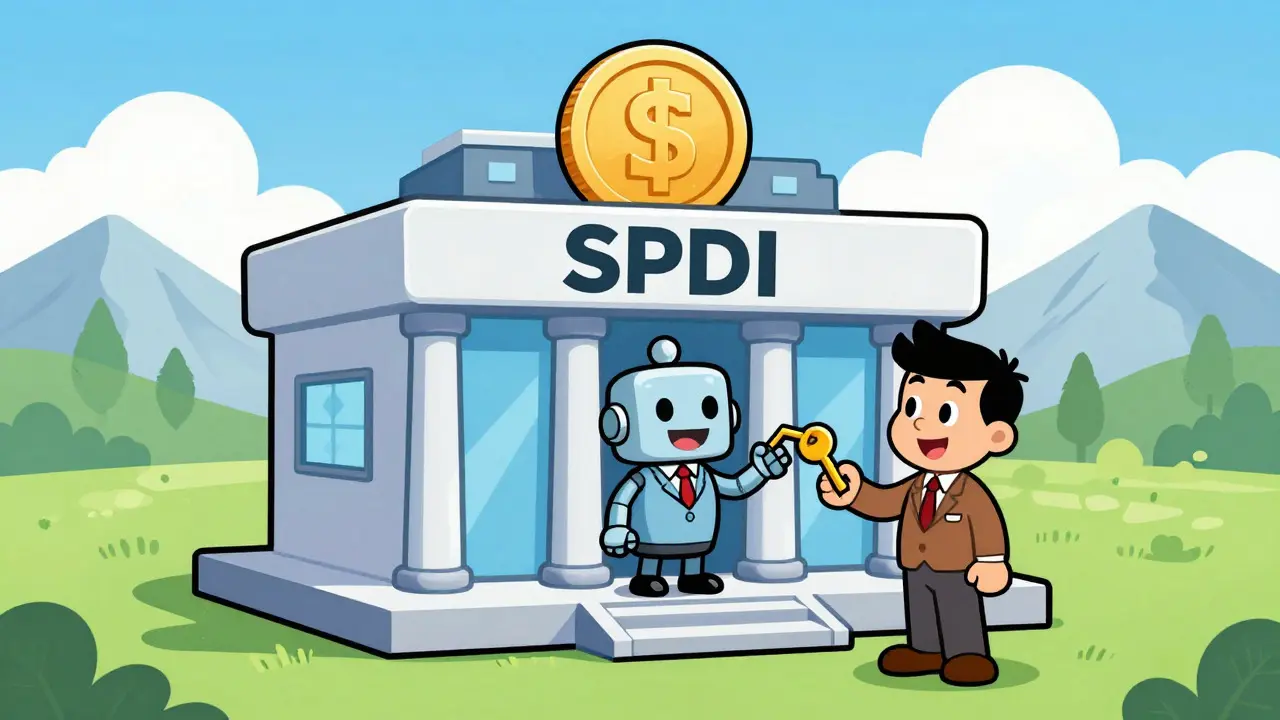
If you want to go bigger than just holding assets, you need banking services. Traditionally, crypto exchanges struggled to get bank accounts because traditional banks feared regulatory crackdowns. Wyoming solved this with the Special Purpose Depository Institution (SPDI) charter.
An SPDI is a bank, but not quite. It can hold deposits and provide payment services, but it cannot make traditional loans. More importantly, it is explicitly allowed to custody digital assets. The first SPDI was Kraken, approved in 2020. This proved that a crypto exchange could operate as a regulated U.S. bank. Since then, several other institutions have followed suit. The requirement is strict: you need significant capital reserves and robust compliance systems, overseen by the Wyoming Division of Banking. But once you have it, you have a secure, federally recognized way to handle customer funds without relying on wary traditional banks.
Practical Steps for Business Formation
So, how do you actually set up shop in Wyoming? It is more straightforward than you might think, but precision matters.
- Choose Your Entity Type: Decide if you need a standard LLC, a Series LLC, or a DAO LLC. Most pure-play crypto projects start with a DAO LLC if they plan to use smart contracts for governance.
- File with the Secretary of State: You will file Articles of Organization. For a DAO, you must include specific language stating that the entity is governed by smart contracts and that members are identified by public keys or network addresses.
- Obtain an EIN: Like any U.S. business, you need a Federal Employer Identification Number from the IRS. Wyoming LLCs can get this online, even if you live abroad, though it may require an expedited processing fee.
- Register as a Money Service Business (MSB): Even though Wyoming exempts you from state money transmitter licenses, you still likely need to register with FinCEN (Financial Crimes Enforcement Network) at the federal level if you are moving large volumes of value.
- Set Up Banking: Open a business bank account. While SPDIs are for institutions, regular LLCs can open accounts at fintech-friendly banks or neo-banks that accept Wyoming entities.
One common pitfall is assuming that Wyoming law protects you from federal oversight. It doesn't. The SEC and CFTC still have jurisdiction. Wyoming provides a safe harbor from *state* interference and creates a clear legal identity, but you must still comply with federal anti-money laundering (AML) and know-your-customer (KYC) rules.
Future-Proofing: The WYST Stablecoin
Wyoming isn't resting on its laurels. The state is actively developing the Wyoming Stable Token (WYST), scheduled for full implementation in mid-2025. This is a stablecoin issued by the state itself, backed by the state's treasury reserves. While primarily intended for government transactions, it signals a deep commitment to blockchain infrastructure. For businesses, this means the state is testing the waters of digital currency integration, potentially paving the way for easier interoperability between traditional finance and blockchain applications within the state.
The University of Wyoming also plays a role, offering specialized courses in blockchain technology and working with legislators to refine laws. This academic-industry partnership ensures that the legal framework evolves alongside the technology, preventing the lag that often stifles innovation elsewhere.
Who Should Choose Wyoming?
Not every blockchain business needs to incorporate in Wyoming. If you are a small developer team building a non-commercial tool, a local LLC might suffice. However, Wyoming is ideal for:
- Token Issuers: Those launching utility tokens who want to minimize securities law risks.
- DAOs: Projects requiring legal liability protection for members and the ability to own intellectual property.
- Custody Providers: Companies needing clear rules on how to store digital assets for clients.
- High-Growth Startups: Businesses seeking tax efficiency and investor-friendly structures.
If your primary market is outside the U.S., consider whether Wyoming adds complexity. But if you are targeting U.S. investors or partners, the credibility of a Wyoming charter is a powerful signal of legitimacy.
Do I need to live in Wyoming to form a crypto LLC?
No. Wyoming allows non-residents to form LLCs. You only need a registered agent physically located in the state to receive legal documents. Many formation services offer this for a small annual fee.
Is a Wyoming DAO legally binding?
Yes. Under Wyoming law, a DAO LLC is a recognized legal entity. Its smart contract governance rules are treated as part of its operating agreement, making decisions made on-chain legally enforceable within the state.
Does Wyoming protect me from the SEC?
Partially. Wyoming law clarifies state-level definitions, reducing the risk of state securities charges. However, the SEC is a federal agency. Wyoming's laws provide a strong defense argument that your token is not a security, but they do not grant immunity from federal investigation.
What are the costs of forming a Wyoming LLC?
The filing fee for Articles of Organization is $100. There is also an annual license tax of $50 plus $0.0002 per dollar of assets located in Wyoming. Most crypto LLCs have minimal physical assets in the state, keeping this cost very low.
Can a Wyoming SPDI lend money?
Generally, no. SPDIs are prohibited from engaging in traditional lending activities. Their primary function is to custody digital assets and facilitate payments, ensuring stability and reducing credit risk for depositors.