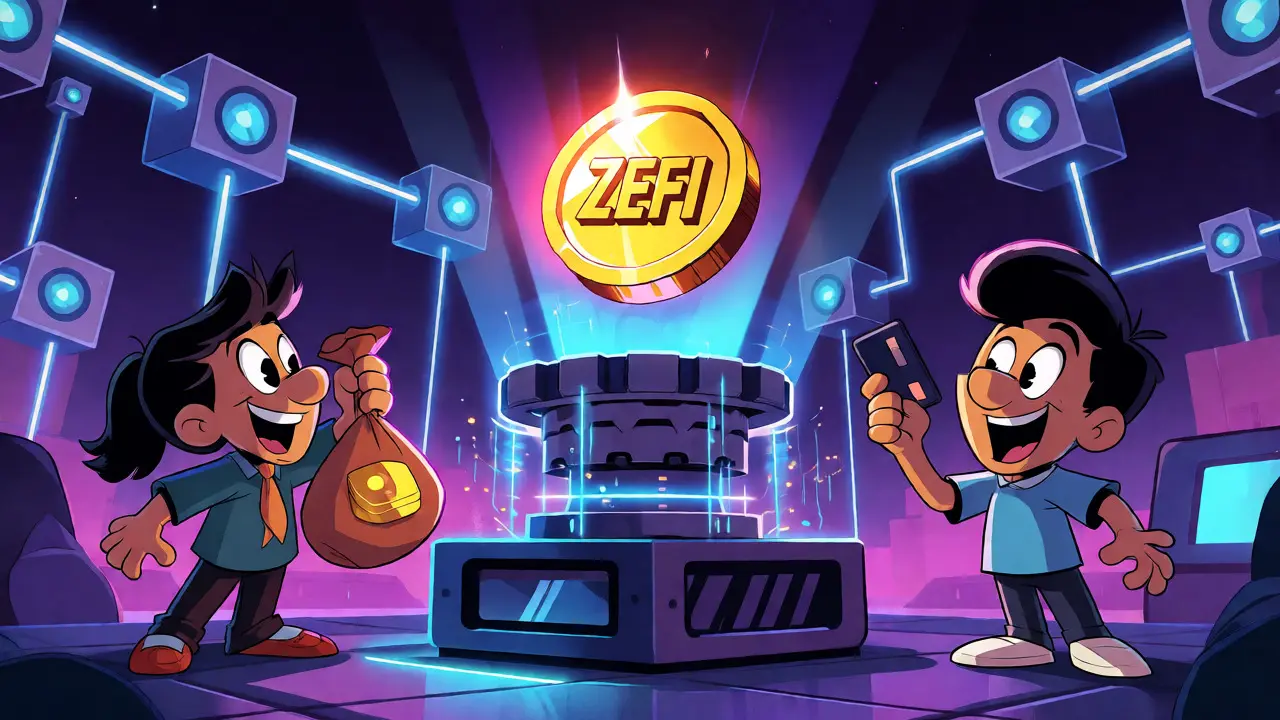
You probably saw the ticker ZEFI flash across your screen and wondered: what is this thing? Is it the next big DeFi breakout, or just another ghost in the machine of the Binance Smart Chain? If you are digging into ZCore Finance, you are looking at a project that tries to solve a very specific headache for crypto users: how to actually spend your yield without selling your assets manually.
ZCore Finance is a decentralized finance (DeFi) ecosystem built on the BNB Chain that combines a PancakeSwap-style exchange with a real-world crypto payment card. The native token, ZEFI, serves as both the reward for providing liquidity and the fuel for its deflationary model. But here is the kicker: while the tech stack looks familiar, the market performance tells a different story. With a price drop of over 99% from its all-time high, understanding what ZCore Finance actually does-and why it struggled-is crucial before you put any money into it.
The Core Concept: Bridging DeFi Yields and Real-World Spending
Most people who farm yield on decentralized exchanges face a frustrating bottleneck. You earn tokens by locking up your liquidity, but converting those rewards into cash to buy groceries usually involves swapping on a DEX, moving funds to an exchange, withdrawing to fiat, and then spending. It is slow, expensive, and taxable in many jurisdictions.
ZCore Finance attempts to bypass this friction. The platform positions itself as a solution that "unites two generations of financial tools." On one side, you have the standard automated market maker (AMM) experience-swapping tokens and earning fees. On the other side, you have a credit card infrastructure linked directly to your farming income. The goal is simple: farm ZEFI, transfer it to the card account with zero protocol fees, and spend it via Visa or Mastercard rails. This isn't just theoretical; the project launched its initial card rollout in Brazil, aiming for global expansion later. For the average user, this promises a seamless loop where passive income becomes active purchasing power instantly.
Tokenomics: Unlimited Supply Meets Aggressive Burning
If you look at traditional cryptocurrencies like Bitcoin, scarcity is the main driver of value. ZEFI flips this script. The token has an unlimited supply, meaning new coins are minted forever. Specifically, the protocol emits 1 ZEFI per block. Given the roughly 3-second block time on BNB Chain, that translates to about 28,800 new ZEFI tokens entering circulation every single day.
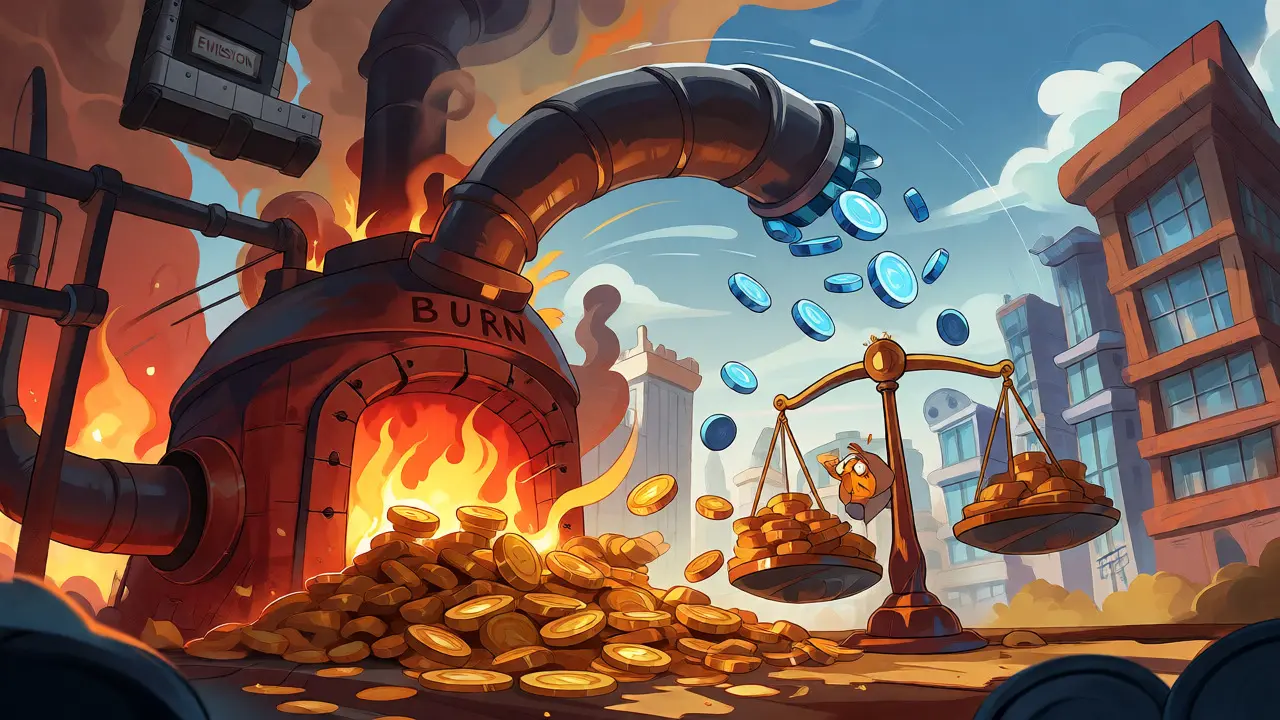
So, if they are printing money daily, why doesn't the price hit zero immediately? Enter the deflationary mechanism. ZCore Finance implements a perpetual burn model. When users create new farms or deposit into certain pools, a 4% fee is charged. Of that fee, 90% (which is 3.6% of the total deposit) is used to buy back ZEFI, along with related ecosystem tokens WZCR and ZCRT, and then send them to a dead address. This effectively removes those tokens from circulation permanently.
The remaining 10% of the fee goes to the developer fund. The math is designed so that if trading volume and farm deposits are high enough, the amount of ZEFI burned exceeds the amount emitted. This creates a "perpetual deflation" narrative, theoretically pushing the price up even as more tokens are created. However, this model relies heavily on sustained high activity. If interest wanes, emissions outpace burns, and inflation takes over.
Technical Architecture: A Fork with Features
Technically, ZCore Finance is not reinventing the wheel. It is a fork of PancakeSwap, the dominant decentralized exchange on BNB Chain. This means the core smart contracts use the same constant-product formula ($x \times y = k$) that powers swaps on Uniswap and PancakeSwap. Users connect their wallets, swap BEP-20 tokens, and provide liquidity to pairs like ZEFI/BNB.
Once you provide liquidity, you receive LP (Liquidity Provider) tokens. These LP tokens can be staked in ZEFI farms to earn rewards. The interface mirrors the familiar layout of other BSC DEXs, making the learning curve shallow for anyone who has used DeFi before. The smart contracts have undergone audits, which adds a layer of security credibility, though always remember that "audited" does not mean "risk-free."
The integration with the payment card is where the technical complexity increases. The system needs to handle real-time conversion of ZEFI to fiat currency at the point of sale. This requires robust off-chain infrastructure working in tandem with the on-chain blockchain data. While the DEX part is standard fare, the bridge between the blockchain wallet and the physical card network is the unique value proposition-and potentially the biggest operational risk.
Market Performance: The Reality Check
Let's talk numbers, because they matter. As of recent data, ZEFI trades at micro-cap levels. Its all-time high was approximately $3.68. Today, it hovers around $0.002. That is a decline of roughly 99.95%. Why such a massive drawdown?
- Limited Liquidity: Daily trading volumes often sit in the tens or hundreds of dollars, not millions. Low liquidity makes the price volatile and hard to exit without slippage.
- Small Holder Base: There are only about 2,920 addresses holding ZEFI. Compare this to PancakeSwap's CAKE, which has hundreds of thousands of holders. A small community means less organic demand.
- Supply Reporting Issues: Major aggregators like CoinMarketCap often list the circulating supply as "0" or "NaN" because they cannot accurately track the dynamic burn/emission ratio. This lack of transparent data scares off institutional investors and cautious retail traders.
The token ranks near #5857 on major trackers. It is not dead-the contract is live, and transactions still occur-but it operates in the shadows of larger protocols. The "high APR" advertised on farms is often inflated by the low price of the reward token. If the price of ZEFI drops by 50%, your effective yield drops by 50%, regardless of the percentage rate shown on the dashboard.
ZEFI vs. The Competition
To understand where ZEFI fits, we need to compare it to the giants of BNB Chain DeFi and similar niche projects.
| Feature | ZCore Finance (ZEFI) | PancakeSwap (CAKE) | Venus Protocol (XVS) |
|---|---|---|---|
| Primary Function | DEX + Payment Card | DEX + Launchpad | Lending & Borrowing |
| Token Supply | Unlimited (Deflationary Burn) | Finite Cap | Finite Cap |
| Real-World Utility | High (Card Integration) | Medium (Staking/Governance) | Low (Protocol Governance) |
| Market Cap Rank | Niche (~#5800+) | Top Tier | Top Tier |
| Risk Profile | Very High | Moderate | Moderate |
ZEFI distinguishes itself through the card feature, which neither CAKE nor XVS offers natively in the same integrated way. However, competitors like Crypto.com or Binance offer cards with much deeper liquidity and brand trust. ZEFI competes on the promise of higher yields derived from its aggressive burn mechanics, but this comes with significantly higher volatility and lower adoption rates.

How to Use ZCore Finance: A Step-by-Step Guide
If you want to test the waters, here is how you engage with the ecosystem. You will need a Web3 wallet like MetaMask or Trust Wallet configured for the BNB Smart Chain.
- Acquire BNB: Buy BNB on a centralized exchange and send it to your wallet. You need this for gas fees.
- Connect to the DEX: Visit the official ZCore Finance app portal. Connect your wallet.
- Swap for ZEFI: Trade some BNB or stablecoins (USDT/USDC) for ZEFI using the swap interface.
- Provide Liquidity: Go to the "Farms" or "Exchange" section. Create a pair, typically ZEFI/BNB. Deposit equal values of both tokens. You will receive LP tokens.
- Stake LP Tokens: Stake your LP tokens in the corresponding ZEFI farm. Your rewards start accruing immediately.
- Harvest and Spend: Claim your ZEFI rewards. If you have access to the card service (currently focused on Brazil), you can transfer these rewards to your card balance to spend offline.
Be aware of impermanent loss. If the price of ZEFI changes significantly compared to BNB while you are providing liquidity, you might end up with less value than if you had just held the tokens separately. The 4% entry fee on user-created farms also eats into your principal, so calculate whether the projected APR covers this cost.
Risks and Red Flags
No investment is without risk, and ZEFI carries several specific ones. First, the concentration of ownership. With under 3,000 holders, a few large wallets can manipulate the price. Second, the reliance on the card rollout. If the global expansion of the payment card fails or faces regulatory hurdles, the primary utility driver vanishes. Third, the confusion factor. There are other projects named "Zefi" or "ZeFi" on different chains (like zkSync or Ethereum). Always verify the contract address: 0x0288D3E353fE2299F11eA2c2e1696b4A648eCC07. Using the wrong token can lead to total loss.
Finally, consider the opportunity cost. The capital tied up in ZEFI could potentially earn safer returns in blue-chip DeFi protocols. ZEFI is a speculative play on the intersection of high-yield farming and consumer crypto payments. It works best for users who believe in the long-term viability of niche DeFi forks and are comfortable with high volatility.
Is ZCore Finance safe to invest in?
ZCore Finance uses audited smart contracts on the BNB Chain, which provides a baseline of security. However, it is a micro-cap asset with low liquidity and a history of significant price volatility. "Safe" is relative; it is suitable for high-risk speculative portfolios but not for conservative savings.
What is the contract address for ZEFI?
The official BEP-20 contract address for ZCore Finance (ZEFI) on the Binance Smart Chain is 0x0288D3E353fE2299F11eA2c2e1696b4A648eCC07. Always double-check this address when adding the token to your wallet to avoid scams.
Can I buy ZEFI on Coinbase or Binance?
As of recent updates, ZEFI is primarily traded on decentralized exchanges within the BNB Chain ecosystem, such as PancakeSwap. Major centralized exchanges like Coinbase and Binance may list it for tracking purposes but do not always support direct buying or selling. You typically need to swap BNB for ZEFI via a DEX.
How does the deflationary mechanism work?
ZEFI has an unlimited supply, emitting 1 token per block. To counteract inflation, a 4% fee is applied to deposits in user-created farms. 90% of this fee is used to buy back ZEFI tokens and burn them, removing them from circulation permanently. This aims to increase scarcity if trading volume is high.
Is the ZCore Finance card available globally?
The initial rollout was focused on Brazil. While a global expansion was targeted for Q3 2024, availability may vary by region due to regulatory requirements and partnership agreements. Check the official website for the most current list of supported countries.