Imagine holding Bitcoin through a brutal market crash, watching your portfolio drop 40%, but never having to sell a single satoshi. You still have cash in your pocket, earning interest, while your BTC sits safely in cold storage. This isn't a hypothetical scenario; it’s the core promise of USDa, a Bitcoin-collateralized, over-collateralized, omnichain stablecoin issued by Avalon Labs. Launched in late 2024, USDa aims to solve one of crypto’s oldest problems: how to unlock liquidity from Bitcoin without triggering tax events or losing long-term exposure.
If you’ve been wondering what all the buzz around Avalon Labs is about, or if you’re confused because "USDA" sounds like every other stablecoin out there, you’re in the right place. We’re going to break down exactly how this coin works, why it’s different from USDT or USDC, and whether it’s safe enough for your portfolio. Spoiler alert: it’s not just another digital dollar; it’s a financial instrument built specifically for Bitcoin maximalists who want to play the DeFi game.
The Core Concept: Why Bitcoin Needs Its Own Dollar
Most stablecoins today-like Tether (USDT) or Circle (USDC)-are backed by fiat currency held in bank accounts. They work fine for trading, but they disconnect you from the underlying asset. If you hold Bitcoin, you’re often forced to choose: keep your BTC and watch its value fluctuate, or sell it for stablecoins and lose your upside potential.
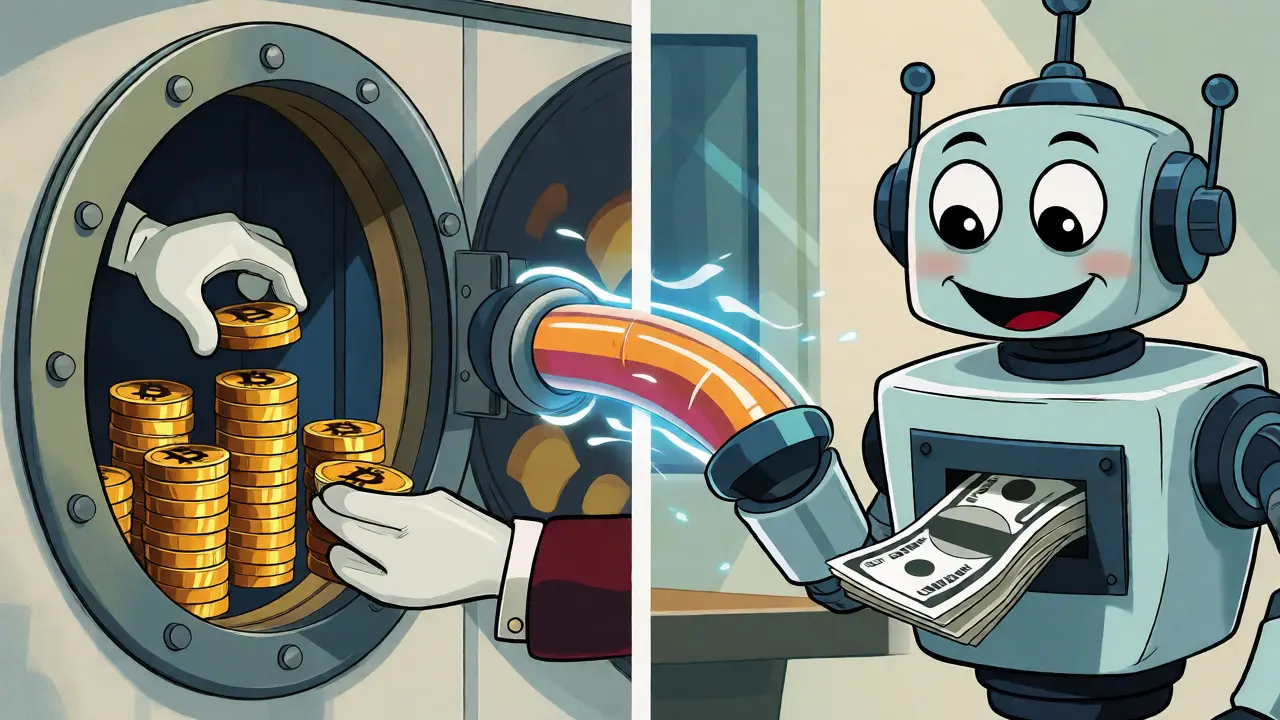
Avalon Labs flipped the script. Instead of backing their stablecoin with dollars, they backed it with Bitcoin. Specifically, USDa is minted when users deposit Bitcoin or Bitcoin derivatives (like FBTC) into Avalon’s platform. Think of it like a home equity line of credit, but for your Bitcoin. You put up your house (BTC) as collateral, and the bank gives you cash (USDa) that you can spend or invest elsewhere. As long as you don’t default on the loan terms, you get to keep owning the house.
This design targets a specific user base: people who believe Bitcoin will go higher in the long run but need dollar-denominated liquidity right now. By using USDa, you avoid selling your BTC. You maintain your exposure to price appreciation while accessing a stable medium of exchange. It’s a clever arbitrage between volatility and utility.
How USDa Works: The CeDeFi Mechanism
Avalon Labs operates in what’s called CeDeFi-a hybrid of centralized and decentralized finance. This matters because it affects both speed and risk. Unlike purely decentralized protocols where code is law and no one can intervene, Avalon uses smart contracts for the heavy lifting but retains some centralized controls for stability and compliance.
There are two main ways to get USDa:
- Minting with Collateral: You deposit approved assets like FBTC (a Bitcoin derivative) into Avalon’s CDP (Collateralized Debt Position) system. The protocol calculates your borrowing power based on the current price of Bitcoin and issues USDa at a specific ratio. This is the primary method for Bitcoin holders.
- Minting with USDT: If you don’t have Bitcoin to lock up, you can simply swap USDT for USDa at a strict 1:1 rate via a conversion vault. This creates a direct peg mechanism.
The genius-or complexity, depending on your view-is in the redemption. Users can convert USDa back to USDT at a guaranteed 1:1 rate through a dedicated vault. This indirect peg means USDa doesn’t track the US dollar directly; it tracks USDT, which in turn tracks the dollar. As long as USDT holds its parity, USDa should too. Arbitrageurs keep this loop tight, ensuring the price stays near $1.00 even if secondary markets dip slightly.
Yield Generation: Enter sUSDa
Holding cash usually means losing money to inflation. Holding idle Bitcoin means missing out on yield opportunities in DeFi. Avalon Labs addresses this with sUSDa, a savings account token. When you deposit USDa into Avalon’s savings product, you receive sUSDa, which accrues interest over time.
This turns USDa from a passive transactional tool into an active yield-bearing asset. While you’re waiting for Bitcoin to moon, your USDa holdings generate returns. These yields typically come from the lending activity on the platform-people borrowing against their Bitcoin pay interest, which flows back to USDa holders. It’s a closed-loop economy where the demand for leverage funds the supply of yield.
Comparing USDa to Other Stablecoins
It’s easy to confuse USDa with other projects, especially since tickers like USDA are used by Angle Protocol and AtlantisChain. Here’s how Avalon’s USDa stacks up against the competition:
| Feature | USDa (Avalon Labs) | USDT (Tether) | USDC (Circle) | Angle USDA |
|---|---|---|---|---|
| Backing Asset | Bitcoin & BTC Derivatives | Fiat Currency & Commercial Paper | Fiat Currency & Treasuries | Multi-Asset Crypto Reserves |
| Peg Mechanism | Indirect via 1:1 USDT Conversion | Direct Fiat Redemption | Direct Fiat Redemption | Algorithmic/Over-collateralized |
| Primary Use Case | BTC Liquidity & Yield | Trading & Payments | Institutional Payments | DeFi Composability |
| Risk Profile | Crypto Volatility + Smart Contract | Counterparty/Banking Risk | Regulatory/Counterparty Risk | Protocol Design Risk |
The key takeaway? USDa carries more market risk than USDC because its collateral (Bitcoin) is volatile. However, it offers higher potential capital efficiency for Bitcoin holders who don’t want to sell. If you’re already long BTC, USDa lets you double-dip: you keep the BTC upside and earn stablecoin yield.
Risks and Red Flags You Should Know
No financial instrument is free of risk, and USDa has specific vulnerabilities you need to understand before jumping in.
Smart Contract Upgradeability: One major concern flagged by analysts is the use of proxy contracts on Ethereum. These allow the development team to change the code behind the contract after deployment. While this enables upgrades and bug fixes, it also means the rules can change. In a fully decentralized protocol, code is immutable. In Avalon’s CeDeFi model, a central authority retains some control. If the team decides to alter fees or redemption terms, they can. Always check recent audit reports before committing large sums.
Liquidation Cascades: Because USDa is over-collateralized, a sharp drop in Bitcoin’s price could trigger liquidations. If BTC falls faster than the system can adjust, borrowers might be forced to sell collateral at bad prices. This can create temporary stress on the USDa peg, though the 1:1 USDT redemption vault acts as a safety net.
Counterparty Risk: Since USDa relies on USDT for its peg, any issue with Tether impacts USDa. If USDT de-pegs, USDa follows. Additionally, the centralized components of Avalon’s platform mean you’re trusting the company to manage reserves and operations correctly.
Who Should Use USDa?
USDa isn’t for everyone. It’s a specialized tool designed for specific strategies.
It’s great for:
- Long-term Bitcoin Holders: If you plan to HODL BTC for years but need cash flow now, USDa lets you borrow against your stack without selling.
- Yield Farmers: If you want to earn interest on your stablecoins while staying exposed to the broader crypto market, sUSDa provides a competitive APY.
- Arbitrageurs: Traders who monitor the spread between USDa and USDT can profit from minor deviations.
It’s less ideal for:
- Beginners: Understanding CDPs, collateralization ratios, and liquidation thresholds requires some DeFi literacy.
- Conservative Investors: If you prefer FDIC-insured banks or simple fiat-backed stablecoins, the added layer of crypto volatility might be too much.
Final Thoughts
USDa represents a maturing phase in DeFi. We’re moving past the era of experimental algorithmic stablecoins toward products that offer tangible utility for existing asset classes. For Bitcoin holders, Avalon Labs provides a bridge between being a passive investor and an active participant in the financial ecosystem. Just remember: high capital efficiency comes with high responsibility. Monitor your collateral ratios, keep an eye on the peg, and stay informed about protocol updates.
Is USDa the same as USDA from Angle Protocol?
No. Despite similar tickers, they are completely different projects. USDa (Avalon Labs) is backed by Bitcoin and part of a CeDeFi lending platform. USDA (Angle) is a decentralized, multi-asset backed stablecoin focused on Euro and USD markets. Always verify the issuer when checking prices or sending funds.
How do I redeem USDa for cash?
You can redeem USDa directly for USDT at a 1:1 ratio through Avalon’s conversion vault. From there, you can withdraw USDT to your wallet or exchange it for fiat currency on a centralized exchange like Coinbase or Binance.
What happens if Bitcoin crashes?
If Bitcoin drops significantly, your collateral value decreases relative to your debt. If your collateralization ratio falls below the required threshold, your position may be liquidated to repay the debt. This protects the solvency of the protocol but means you could lose some of your Bitcoin collateral.
Can I earn interest on USDa?
Yes. By depositing USDa into Avalon’s savings product, you receive sUSDa, a yield-bearing token. The interest rates vary based on platform utilization and borrowing demand, offering a way to grow your stablecoin holdings passively.
Is USDa audited?
Avalon Labs undergoes regular security audits, but always check the latest reports on their official documentation site. Look for audits from reputable firms like CertiK or Hacken. Pay attention to any notes regarding upgradeable contracts or centralization risks.