
Have you ever seen a cryptocurrency price chart that looks like a rollercoaster designed by a madman? One day it’s up, the next it’s down, and then it crashes so hard you wonder if the project even exists anymore. That is exactly what TurboX has been doing lately. If you are reading this because you saw a ticker symbol flying by on social media or noticed a sudden spike in volume, stop for a second. Before you click "buy," you need to know what you are actually getting into.
TurboX (TBX) is a speculative cryptocurrency token operating on the Binance Smart Chain (BSC), characterized by extreme volatility, limited public information, and significant smart contract risks. It is not a mainstream digital asset like Bitcoin or Ethereum. Instead, it sits firmly in the category of high-risk, early-stage tokens often associated with meme coin culture or experimental projects that lack substantial utility. As of May 2026, TurboX is trading at a fraction of its all-time high, raising serious questions about its long-term viability and safety.
The Basic Facts: What Is TurboX?
To understand TurboX, we first have to look at where it lives. The token runs on the Binance Smart Chain, also known as BNB Chain, which is a blockchain network that allows for fast and cheap transactions compared to Ethereum. This infrastructure choice is common for many low-cap tokens because it lowers the barrier to entry for developers and traders. You can buy and sell TBX quickly without paying massive gas fees.
Here are the hard numbers you need to know:
- Token Symbol: TBX
- Blockchain: Binance Smart Chain (BSC)
- Maximum Supply: 500 million tokens
- All-Time High (ATH): $1.1488 (reached on December 4, 2024)
- All-Time Low (ATL): $0.1286 (recorded on July 8, 2025)
- Current Status: Trading approximately 88% below its peak value
The maximum supply of 500 million tokens suggests a fixed cap, which is generally a positive sign in crypto economics. However, the circulating supply-the number of tokens actually available for trade-is a mystery. Multiple major tracking platforms, including CoinGecko, report this data as unavailable or blank. Without knowing how many tokens are truly in circulation, calculating the true market capitalization becomes nearly impossible. This opacity is a major red flag for any serious investor.
Price History: From Peak to Valley
If you had bought TurboX at its all-time high in December 2024, you would have lost roughly 88% of your investment by mid-2026. That is not a typo. The token peaked at over $1.14 per unit, a respectable figure for a small-cap coin. But since then, it has plummeted. By July 2025, it hit an all-time low of just $0.1286.
As of May 2026, the price is hovering in a confusing range. Different exchanges show wildly different prices. On some platforms, you might see quotes around $0.009, while others show figures closer to $0.13. These discrepancies aren't just minor differences; they indicate fragmented liquidity. When a token trades at significantly different prices across exchanges like Bybit, Coinbase, and Crypto.com, it means there isn't enough volume to keep the price stable everywhere. This makes arbitrage difficult and increases the risk of slippage when you try to sell.
| Metric | Value / Data Point | Implication |
|---|---|---|
| All-Time High | $1.1488 (Dec 2024) | Peak speculation phase |
| All-Time Low | $0.1286 (Jul 2025) | Market bottom or capitulation point |
| Current Trend | Highly Volatile | Unpredictable short-term movements |
| 7-Day Performance | +1.30% | Minimal growth compared to broader market |
| Market Rank | #7,285 - #7,322 | Low global relevance and liquidity |
Notice how TurboX underperforms the broader cryptocurrency market. While the general crypto market grew by over 11% in a recent seven-day period, TurboX managed only a 1.3% gain. Even within its own ecosystem, the BNB Chain, it barely moved. This lack of momentum suggests that institutional interest or large-scale retail adoption is absent.
The Elephant in the Room: Smart Contract Risks
This is the most critical section of this article. Please read it carefully. According to security analyses from platforms like Gopluslabs, the smart contract governing TurboX has a dangerous feature: it can be modified by the creator.
In the world of decentralized finance (DeFi), immutability is usually king. Once a contract is deployed, it should not change. However, TurboX’s contract allows the developer to:
- Disable selling for specific wallets (or everyone).
- Change transaction fees arbitrarily.
- Mint new tokens, potentially diluting existing holders.
- Transfer tokens from other users' wallets.
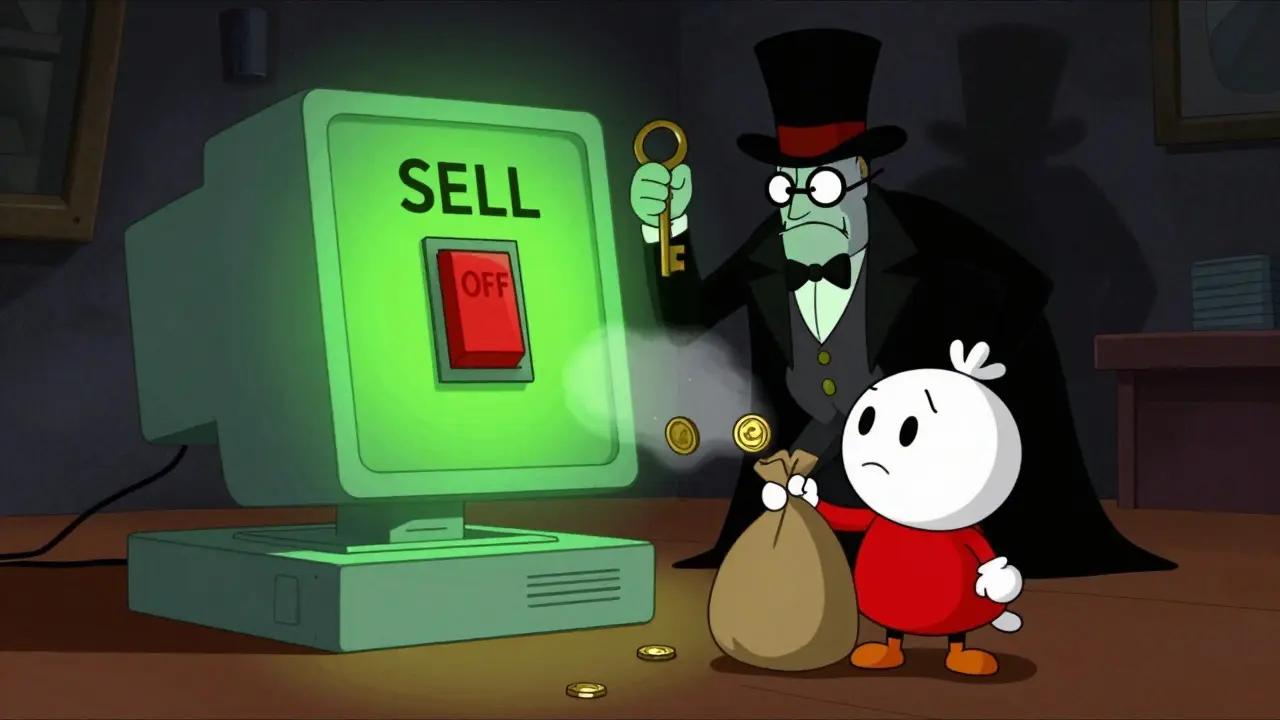
CoinMarketCap explicitly warns users to "exercise caution" and "DYOR" (Do Your Own Research) because of these permissions. Why does this matter? Because it means you do not truly own your TurboX tokens. The developer holds the keys to the kingdom. If they decide to rug pull-a term for when developers abandon a project and take the money-they can simply turn off the ability to sell. You could hold thousands of dollars worth of TBX on paper, but you wouldn't be able to cash out.
This level of centralization contradicts the core promise of blockchain technology. For a token ranked in the top 7,000 globally, such high administrative privileges are unacceptable for anyone looking for a safe store of value.
Liquidity and Trading Volume Issues
You might think that because TurboX is listed on major exchanges like Coinbase, Bybit, and LBank, it must be safe. Listing on an exchange does not equal endorsement of quality. Exchanges often list tokens to attract trading fees, regardless of the project's fundamentals.
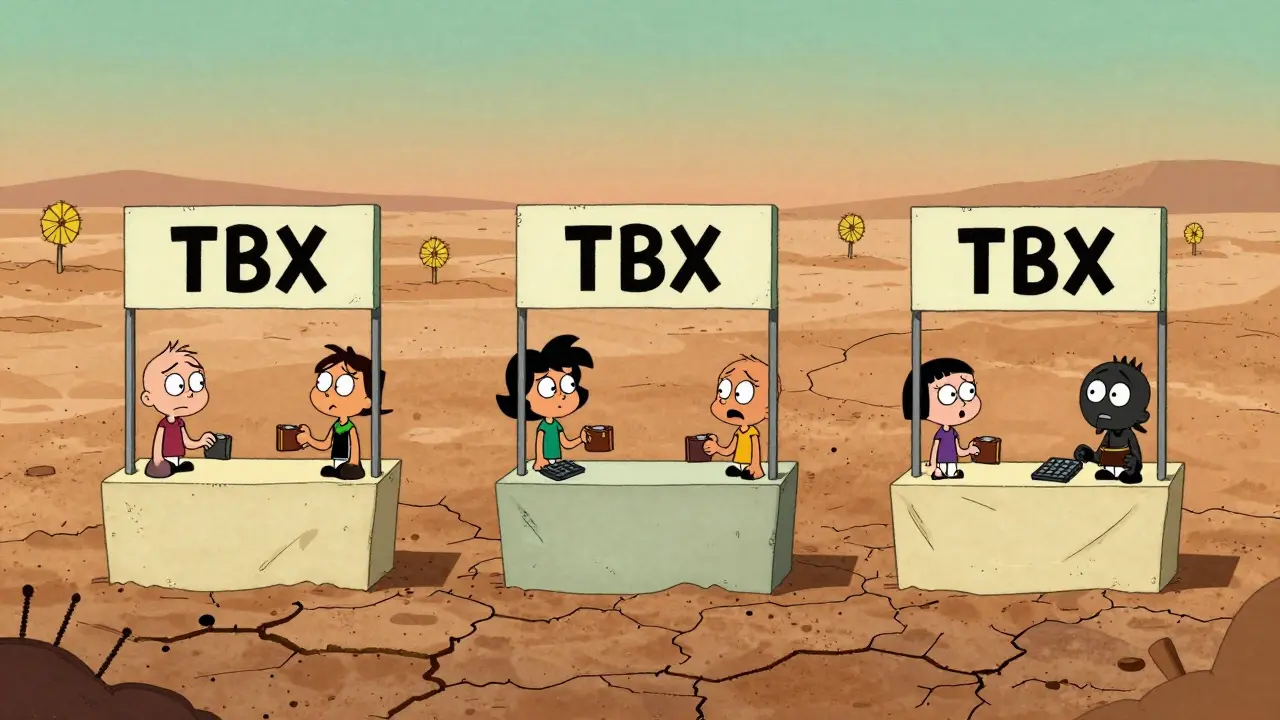
Look at the trading volume data. It is inconsistent and often alarming. Some days, CoinGecko reports a 24-hour volume of $170. Other times, CoinMarketCap reports $0. Zero volume means no one is trading. If you try to sell a significant amount of TBX during a zero-volume period, you will likely crash the price yourself or fail to find a buyer entirely.
This phenomenon is called "liquidity fragmentation." The token exists in many places, but the actual money backing those trades is thin. This creates a fragile market structure where a single large sell order can wipe out the price. For retail investors, this means high slippage-you might expect to sell at $0.10, but the execution happens at $0.05 because there are no buyers at the higher price.
Missing Information: The Transparency Gap
When evaluating a cryptocurrency, you should be able to answer basic questions: Who built it? What problem does it solve? Where is the whitepaper? For TurboX, the answers are largely missing.
There is no clear information about the founding team. Are they anonymous? Do they have prior experience in blockchain development? We don't know. There is no detailed whitepaper explaining the technological innovation behind TBX. Is it a meme coin with no utility? Is it part of a larger DeFi protocol? The available data doesn't say.
Furthermore, community metrics are scarce. Successful crypto projects usually have vibrant communities on Twitter, Discord, or Telegram. They release regular updates, roadmap progress, and partnership announcements. TurboX lacks this public presence. The absence of a clear narrative or use case suggests that the token may have been created purely for speculation rather than providing real-world value.
This lack of transparency is not unique to TurboX, but it is a hallmark of high-risk assets. In contrast, established projects like Solana or Cardano publish extensive documentation, reveal their teams, and undergo rigorous audits. TurboX offers none of these safeguards.
Is TurboX Worth Buying in 2026?
Let’s be direct. If you are looking for a safe investment, TurboX is not it. The combination of an 88% drop from its all-time high, opaque circulating supply, and dangerous smart contract permissions makes it extremely risky.
However, some traders are attracted to these tokens for one reason: potential for rapid gains. Because the market cap is so low (reported between $4.7 million and $145 depending on the source), a small influx of capital can cause huge percentage increases. This is gambling, not investing. You are betting that someone else will pay more for the token than you did, despite the lack of fundamental value.
If you decide to proceed, treat it like entertainment money-money you are fully prepared to lose completely. Never invest funds you need for rent, bills, or savings. Use a separate wallet for such high-risk assets to isolate them from your main holdings. And always verify the contract address directly from official sources, as fake tokens with similar names are common scams.
Can I sell my TurboX (TBX) tokens?
Technically, yes, if there is liquidity on the exchange you are using. However, due to low trading volumes and fragmented liquidity, you may face significant slippage, meaning you receive less money than expected. Additionally, the smart contract allows the developer to disable selling, which poses a severe risk.
Why is the TurboX price so volatile?
The price volatility is driven by low liquidity, speculative trading, and a lack of fundamental utility. With a small market cap and inconsistent volume, even minor buy or sell orders can cause large price swings.
Is TurboX a scam?
While there is no definitive proof of malicious intent, the token exhibits several characteristics of high-risk projects, including anonymous teams, missing whitepapers, and smart contracts that allow the creator to modify rules or halt trading. These features align with patterns often seen in rug pulls.
Where can I buy TurboX?
TurboX is listed on several platforms including Bybit, LBank, and some DEXs on the Binance Smart Chain. However, availability and liquidity vary significantly between exchanges. Always check current trading pairs before attempting to purchase.
What is the maximum supply of TBX?
The maximum supply of TurboX is 500 million tokens. However, the circulating supply is not consistently reported by major trackers, making accurate valuation difficult.