You’ve probably seen the ticker TITI pop up on a price tracker or heard it mentioned in a crypto group chat. It’s not Bitcoin. It’s not even Dogecoin. So, what exactly is Titi Financial, a meme-themed cryptocurrency that promises a metaverse and free NFTs?
In short, Titi Financial is a community-driven meme token built on the BNB Smart Chain (BSC). It operates with a massive supply of one quadrillion tokens and aims to build an ecosystem around its "TitiVerse" metaverse and NFT drops. But before you rush to buy, there are some serious red flags regarding liquidity, data inconsistencies, and extreme volatility that you need to understand.
The Basics: What Is Titi Financial?
Titi Financial isn’t trying to solve global banking issues or process enterprise transactions. It positions itself squarely in the "meme coin" category-assets driven by internet culture, community hype, and speculative trading rather than underlying utility. However, unlike early meme coins that relied solely on jokes, Titi Financial claims to offer "bountiful utility" through its broader ecosystem.
The project lives on the BNB Smart Chain, a blockchain known for low transaction fees and fast speeds compared to Ethereum. This makes it easier for developers to create tokens and for users to trade them without paying high gas fees. The primary contract address for Titi Financial is 0xE618eF7C64AFedE59A81CEf16d0161c914eBab17. Always double-check this address if you plan to interact with the token, as scammers often create fake versions with similar names.
According to market data aggregators like CoinMarketCap, Titi Financial ranks somewhere between #6,700 and #53,000 depending on how different platforms calculate market cap. This places it firmly in the "micro-cap" territory-a segment of the crypto market characterized by tiny valuations, high risk, and potential for explosive but unpredictable price swings.
Tokenomics: The Quadrillion Supply Problem
If you look at the numbers for Titi Financial, they can be confusing. Here is the breakdown:
- Total Supply: 1 Quadrillion (1,000,000,000,000,000) TITI tokens.
- Maximum Supply: Fixed at 1 Quadrillion.
- Circulating Supply: Disputed. Some sources say 1 Quadrillion; others say 0.
A supply of one quadrillion sounds huge, but in the world of meme coins, it’s common. Projects use large supplies to make the individual token price look incredibly cheap (e.g., fractions of a penny), which psychologically appeals to new investors hoping to turn $10 into $1,000. However, this also means that for the price to rise significantly, an enormous amount of money needs to flow into the project.
Here is where things get tricky. There is a major discrepancy in how different platforms report Titi Financial’s status:
| Platform | Reported Circulating Supply | Reported Market Cap | Trading Volume (24h) |
|---|---|---|---|
| CoinMarketCap | 1 Quadrillion | ~$189,790 USD | $0 |
| Coinbase | 0 TITI | $0 USD | N/A |
| Binance | 0 TITI | $0 USD | N/A |
Why does this matter? If Coinbase and Binance list the circulating supply as zero, it means their algorithms do not recognize active trading pairs or reliable liquidity pools for TITI. When major exchanges cannot verify the supply, it suggests the token lacks deep, liquid markets. You might see a price listed, but actually buying or selling significant amounts could be impossible or result in massive slippage (getting a much worse price than expected).
The Ecosystem: TitiVerse and NFT Airdrops
To justify its existence beyond being just another joke coin, Titi Financial promotes two main features: the TitiVerse and NFT rewards.
1. The TitiVerse Metaverse
The project describes the TitiVerse as an "open-world, expansive, and hugely engaging" virtual environment. In theory, this would allow users to use their TITI tokens and associated NFTs to buy land, customize avatars, or participate in games. However, as of mid-2026, there is little public evidence of a fully functional, widely adopted metaverse platform. Many crypto projects announce ambitious roadmaps that never materialize, so treat this feature as aspirational rather than current reality.
2. NFT Airdrops (Titi Citizens)
Holders of TITI tokens are periodically rewarded with non-fungible tokens called "Titi Citizens." These are digital collectibles sent directly to wallets holding TITI at specific snapshot dates. The idea is to incentivize long-term holding ("HODLing") rather than quick flipping. While receiving free NFTs sounds appealing, remember that most NFTs have negligible resale value unless there is strong secondary market demand. Currently, there is no clear data showing these NFTs have significant utility or financial value outside the immediate Titi Financial community.
Price Performance and Volatility
Let’s talk about the money side of things. Titi Financial has experienced extreme drawdowns since its early days.
- All-Time High (ATH): Approximately $0.00000001 USD (reached in March 2022).
- Current Price Range: Hovering around $0.00000000018 to $0.0000000002 USD.
- Drawdown from ATH: Roughly 98%.
This means that if you bought at the peak, you have lost almost all your capital. Technical analysis tools like those on CoinCodex show mixed signals. For instance, a Relative Strength Index (RSI) of 54.56 suggests the asset is neither overbought nor oversold, sitting in neutral territory. However, forecasts from such platforms often predict further declines due to lack of buying pressure.
One critical metric to watch is trading volume. Multiple sources report a 24-hour trading volume of $0 USD. Zero volume is a dangerous sign. It means there are very few, if any, active buyers and sellers. Without volume, you cannot easily exit your position. If you decide to sell, you might find no one willing to buy, or the act of selling itself could crash the price further because the order book is so thin.
Risks You Must Consider
Investing in micro-cap meme coins like Titi Financial carries risks far higher than mainstream cryptocurrencies. Here is what you need to watch out for:
- Liquidity Risk: With reported volumes near zero, getting your money out is difficult. You might hold tokens worth thousands on paper but unable to convert them to cash.
- Data Inconsistency: The conflict between CoinMarketCap’s data and major exchanges like Binance/Coinbase indicates a lack of standardized tracking. This opacity makes it hard to assess true market health.
- Scams and Impersonation: Because Titi Financial is a meme coin, scammers frequently create fake websites, fake Telegram groups, and fake contract addresses. Always verify links through official channels.
- No Institutional Backing: Unlike some newer stablecoin projects (such as TiTi Protocol, which is a completely different entity), Titi Financial does not report audits from major firms like Slowmist or Hacken, nor does it have disclosed venture capital funding. This increases the risk of smart contract vulnerabilities.
Titi Financial vs. TiTi Protocol: Don't Get Confused
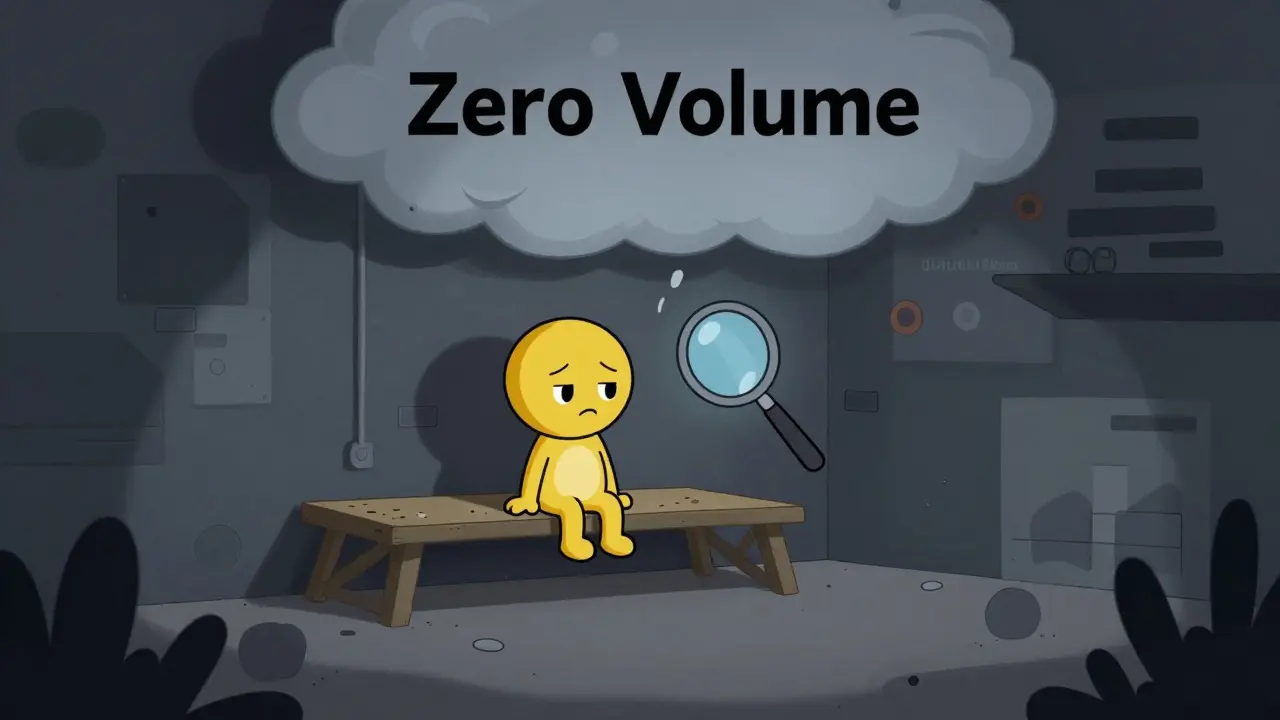
A common mistake beginners make is confusing Titi Financial with TiTi Protocol. They sound similar and both use variations of the name "Titi," but they are entirely different projects.
- Titi Financial (TITI): A meme coin on BNB Smart Chain focused on community, NFTs, and a metaverse. High risk, speculative.
- TiTi Protocol: A stablecoin system pegged to the US Dollar (TiUSD). It reports institutional investment and multiple security audits. Lower risk profile relative to meme coins, but still distinct from traditional banking.
Never assume that news about TiTi Protocol’s audits or funding applies to Titi Financial. They are separate entities with different goals and risk profiles.
How to Buy or Hold TITI (If You Choose To)
If you understand the risks and still want to participate in the Titi Financial ecosystem, here is the general process:
- Set Up a Wallet: You need a wallet compatible with the BNB Smart Chain. MetaMask or Trust Wallet are popular choices. Ensure you configure the wallet to connect to the BNB Chain network.
- Acquire BNB: You will need BNB (Binance Coin) to pay for transaction fees and to swap for TITI. Buy BNB on a major exchange like Binance or Coinbase and withdraw it to your personal wallet.
- Use a Decentralized Exchange (DEX): Since centralized exchanges may not support direct TITI trading, you’ll likely need to use a DEX like PancakeSwap. Connect your wallet to PancakeSwap.
- Add the Token Contract: Paste the official contract address (
0xE618eF7C64AFedE59A81CEf16d0161c914eBab17) into the DEX. Do not search by name alone, as fake tokens may appear. - Swap: Exchange your BNB for TITI. Be aware of high slippage settings; you may need to adjust them to complete the trade, but this also means you might receive fewer tokens than expected.
Final Thoughts on Titi Financial
Titi Financial is a classic example of a high-risk, high-reward meme coin experiment. It offers a vision of a community-driven metaverse and NFT rewards, which appeals to crypto enthusiasts looking for more than just price speculation. However, the current reality involves near-zero trading volume, conflicting data across major platforms, and a price that has dropped 98% from its highs.
Treat Titi Financial as entertainment or a small speculative bet, not as a serious investment. Only allocate funds you are prepared to lose entirely. Keep an eye on whether the TitiVerse develops real user activity and if trading volumes begin to stabilize. Until then, proceed with extreme caution.
Is Titi Financial a scam?
There is no definitive proof that Titi Financial is a scam, as it has a live smart contract and a holder base. However, it exhibits many characteristics of high-risk assets, including zero trading volume on major exchanges and conflicting supply data. Scammers often create fake versions of legitimate meme coins, so always verify the contract address.
Where can I buy TITI tokens?
Titi Financial is primarily traded on decentralized exchanges (DEXs) like PancakeSwap on the BNB Smart Chain. Major centralized exchanges like Binance and Coinbase track the price but currently report zero circulating supply or trading volume, meaning direct fiat-to-TITI purchases are not available on these platforms.
What is the difference between Titi Financial and TiTi Protocol?
They are completely different projects. Titi Financial is a speculative meme coin with a quadrillion-token supply. TiTi Protocol is a stablecoin system pegged to the US dollar, backed by reserves and audited by security firms. Do not confuse the two.
What is the TitiVerse?
The TitiVerse is the proposed metaverse ecosystem for Titi Financial. It is described as an open-world virtual environment where users can utilize TITI tokens and NFTs. As of mid-2026, it remains largely an aspirational roadmap item with limited public adoption metrics.
Why is the trading volume of TITI zero?
A zero trading volume indicates that there are very few active buyers and sellers on tracked platforms. This is common for micro-cap meme coins that have lost momentum. It poses a significant liquidity risk, making it difficult to sell tokens without drastically affecting the price.
Do I need BNB to buy TITI?
Yes. Since Titi Financial runs on the BNB Smart Chain, you need BNB to pay for transaction (gas) fees and to swap for TITI tokens on decentralized exchanges like PancakeSwap.
Are the NFT airdrops valuable?
Currently, there is no clear market data indicating that "Titi Citizens" NFTs have significant resale value. Their primary utility appears to be symbolic membership within the community and potential future access to the TitiVerse, rather than immediate financial gain.

Steven Briggs
July 10, 2026 AT 19:38just lost my shirt on this shit
Brad Semp
July 12, 2026 AT 09:55The fundamental analysis presented here is adequate, though one must appreciate the sheer audacity of a quadrillion supply model. It is reminiscent of the hyperinflationary policies seen in failed state economies, yet packaged with the aesthetic appeal of internet vernacular. The discrepancy between CoinMarketCap and Binance data is not merely an oversight; it is a glaring indictment of the regulatory void that permits such entities to operate without basic accounting standards. One cannot simply ignore the liquidity crisis when the order book is effectively non-existent.
Kim Kay
July 13, 2026 AT 22:46i think ppl need to be more carefull with their money its so easy to get scammed these days and i see so many newbies jumping in without reading the fine print which is really sad because they just want to believe in the dream but the dream is usually a nightmare for most people who dont have deep pockets or experience in crypto markets so please take your time and do ur research before buying anything that sounds too good to be true
Korn Arrieta
July 15, 2026 AT 19:44You are all missing the point entirely. This isn't about utility. It's about attention economy exploitation. The zero volume isn't a bug, it's a feature for the insiders who dumped months ago. Stop pretending there's any 'community' left when the only active participants are bots pumping fake metrics on DEX aggregators. Wake up.
Curtis Johnson
July 15, 2026 AT 22:44look i get it everyone wants to win big but we gotta keep our heads straight man
the fact that major exchanges show zero circulating supply is like a giant red flag waving in your face and if you cant see that then maybe you should step back and breathe for a second
i remember back in the day when meme coins were just fun jokes but now they feel like traps designed to catch desperate people
we need to support each other through these tough times and not let greed cloud our judgment
let's just focus on what matters and protect our hard earned cash instead of throwing it into the abyss
peace out everyone stay safe
Hamza k
July 16, 2026 AT 08:53absolute carnage down here folks! 💀
its like watching a car crash in slow motion but with digital monkeys instead of metal scraps
the tiverse is nothing but a mirage in the desert of bad decisions
you think you're buying into the future but you're actually funding someone's yacht in the bahamas
keep your eyes peeled and your wallets locked tight because the wolves are circling and they smell fear!
Sophie Nakasako
July 18, 2026 AT 03:25I find myself pondering the nature of value in a digital vacuum. If a coin has no utility and no volume, does it truly exist?
We often project meaning onto symbols, hoping they reflect our desires for wealth or status. But perhaps Titi Financial is a mirror, showing us our own susceptibility to hype.
It’s fascinating how community can build something from nothing, only to watch it dissolve into thin air. What does this say about our collective trust in decentralized systems?
Let’s discuss the philosophical implications of holding assets that may never regain relevance. Is it hope, or is it denial?
John Harman
July 18, 2026 AT 04:28listen up you idiots
this token is dead weight
anyone holding this is either stupid or lying
check the contract yourself and see how much liquidity is actually locked
it's basically empty
stop crying and move on to something real like solana memes or whatever is trending today
don't come back here whining about losses
Michelle Walker
July 19, 2026 AT 07:47Weak analysis. You failed to mention the rug pull mechanics embedded in the smart contract. Typical retail ignorance.
John Harman
July 20, 2026 AT 02:24exactly what i said
smart contracts are rigged
developers can pause trading whenever they want
you have zero rights
accept it
Jackie D
July 22, 2026 AT 01:07honestly im just curious why anyone would still hold this after seeing the charts
like seriously whats the plan here
are we waiting for aliens to buy it or what
i mean sure nfts sound cool but if nobody wants them theyre just jpeg files taking up space on your wallet
maybe the team is working on something secret but until then its just a ghost town
wish i hadnt bought in at the top lol
Kat Barr
July 23, 2026 AT 20:44oh noes!!! 😱😱😱
guys pls be careful okie?? 🥺💔
i saw my friend lose so much money on similar coins last year and it broke his heart!! 😭💸
always remember to DYOR and never invest more than u can afford to lose okay?? 🙏✨
lets spread love and caution instead of hate!! 🌈🕊️
hope everyone stays safe and sound out there!! 🛡️💖
Kristy Morrow
July 25, 2026 AT 17:58you fools think you know anything about finance
the market is a social construct and price is irrelevant if the narrative holds
but since the narrative is dead this coin is trash
stop asking questions and start thinking critically
or don't i don't care
Ruth Williams
July 26, 2026 AT 12:16It is truly disheartening to observe the lack of due diligence displayed by the majority of participants in this thread. The conflation of Titi Financial with TiTi Protocol demonstrates a profound ignorance of financial instruments. One must distinguish between speculative assets and regulated stablecoin protocols. To treat them as equivalent is intellectually lazy and financially dangerous. I suggest educating oneself on basic economic principles before engaging in such frivolous speculation.
Antony Lopez
July 27, 2026 AT 17:24typical american stupidity
buying garbage tokens while our country burns
focus on real issues not monkey coins
these crypto scams are destroying families
government needs to ban this shit
Logan Edmison
July 28, 2026 AT 19:47so like its basically over right?
i mean the graph looks like a cliff
and nobody is talking about it anymore
guess ill just sell and cry about it later
why did i listen to twitter influencers again
DJ Maleko
July 29, 2026 AT 15:07bro i checked the telegram group and its full of bots spamming links to other scams 🤡💀
devs vanished months ago
dont be a chump
burn the bag and run 🏃♂️💨
Erika Pozzetto
July 30, 2026 AT 17:03In consideration of the aforementioned discrepancies in data reporting across various financial platforms, it becomes evident that the lack of standardized verification mechanisms poses a significant threat to investor confidence and market integrity. Furthermore, the absence of institutional backing and independent security audits exacerbates the inherent risks associated with micro-cap assets, thereby necessitating a cautious approach to capital allocation within this sector. It is imperative that stakeholders remain vigilant and prioritize transparency and accountability in all future engagements with such speculative instruments.
Winston Lacewing
July 31, 2026 AT 03:36THIS IS A TRAGEDY OF PROPORTIONS!!! 😡😡😡
people are being robbed blind and nobody cares!!
the moral decay of society is evident in how we celebrate these failures instead of learning from them!!
shame on all of you for participating in this circus!! 🎪🤡
repent and seek truth elsewhere!! ✝️🙏