
Ever tried swapping ETH on Base for USDC on Optimism and ended up with half your transaction stuck? That’s the mess most cross-chain tools leave behind. t3rn (TRN) is trying to fix that - not by moving tokens between chains, but by making them act like one single network. Think of it like a universal remote for DeFi: you tell it what you want, and it makes it happen - all in one go, or not at all.
What t3rn actually does (no fluff)
Most bridges lock your asset on Chain A, send a message, and unlock it on Chain B. If the message gets lost? Your money sits there. Forever. t3rn doesn’t do that. Instead, it lets smart contracts run across multiple blockchains as if they were one. Want to borrow on Aave on Arbitrum using collateral on BNB Chain? t3rn handles the whole thing - borrowing, transferring, repaying - in a single atomic step. No partial executions. No stranded assets. No waiting. It works through a network of independent actors called Executors. These aren’t validators. They’re people or bots who front their own money to execute your request. If they succeed, they get paid. If they fail, they lose. That’s how the system stays honest. No centralized middleman. No trusted third party. Just competition, cryptography, and real capital at risk.The TRN token: more than just a coin
The TRN token is the engine behind all of this. It’s not just a currency you trade. It’s what pays Executors, covers protocol fees, and will eventually secure the network through staking. There are exactly 100 million TRN tokens - no more, no less. That’s a fixed supply, designed to create scarcity as usage grows. As of October 2025, TRN trades around $0.020036. That’s down from its all-time high of $0.3911 in July 2025, but don’t let that scare you. The price reflects the testnet phase - this isn’t the final product yet. The real value kicks in when mainnet launches in 2025. Until then, the network is already processing 78 million cross-chain orders through 14,000 Executors. Each one costs less than five cents. That’s faster and cheaper than any bridge out there.How it’s different from bridges like Wormhole or LayerZero
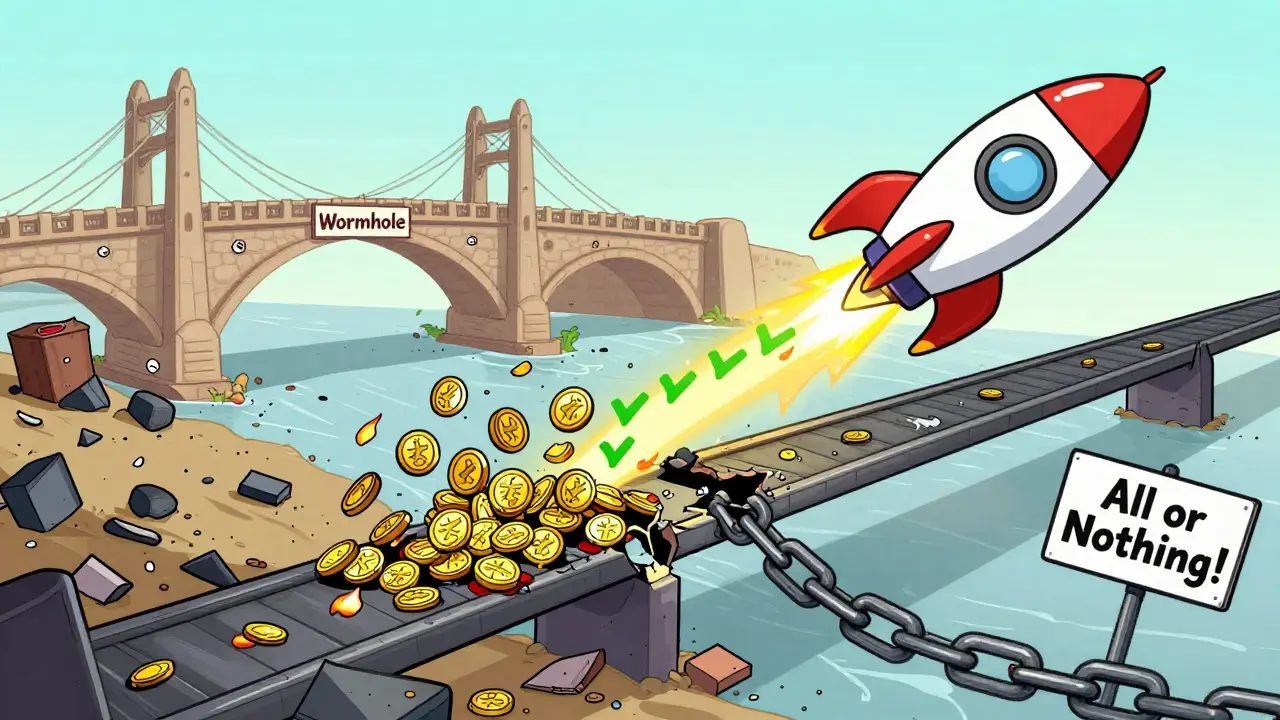
Wormhole and LayerZero are message-passing protocols. They move data. t3rn moves execution. Here’s the difference:- Wormhole/LayerZero: You send a message saying, "Move 1 ETH from Ethereum to Solana." They deliver the message. What happens after? You’re on your own.
- t3rn: You say, "Swap 1 ETH on Ethereum for USDC on Solana and deposit it into a yield vault." t3rn does it all - swaps, transfers, deposits - in one guaranteed step.
Real-world use cases you can actually use
Right now, t3rn is in testnet, but it already supports nine major chains: Arbitrum, Base, BNB Chain, Optimism, Sei, Monad, Unichain, Berachain, and Ethereum. That’s not a list of niche chains - those are the networks where real DeFi activity happens. Here’s what this unlocks:- One-click DeFi strategies: Borrow on Aave, collateralize on Morpho, stake on EigenLayer - all from one click.
- Cross-chain governance: Vote on a proposal on Snapshot while your tokens live on Polygon.
- Agent-driven workflows: Let a bot automatically rebalance your portfolio across chains based on yield rates.
AI-powered Executors: the next leap
t3rn isn’t stopping at human-run Executors. It’s introducing AI agents called Aixecutors. These aren’t sci-fi gimmicks - they’re learning from real on-chain data to find the cheapest, fastest paths for your transactions. If liquidity is low on Optimism but high on Base, the AI reroutes your swap automatically. It’s like having a trading bot that works across every blockchain at once. This is huge. Most cross-chain tools are static. t3rn is becoming dynamic. It doesn’t just connect chains - it adapts to them.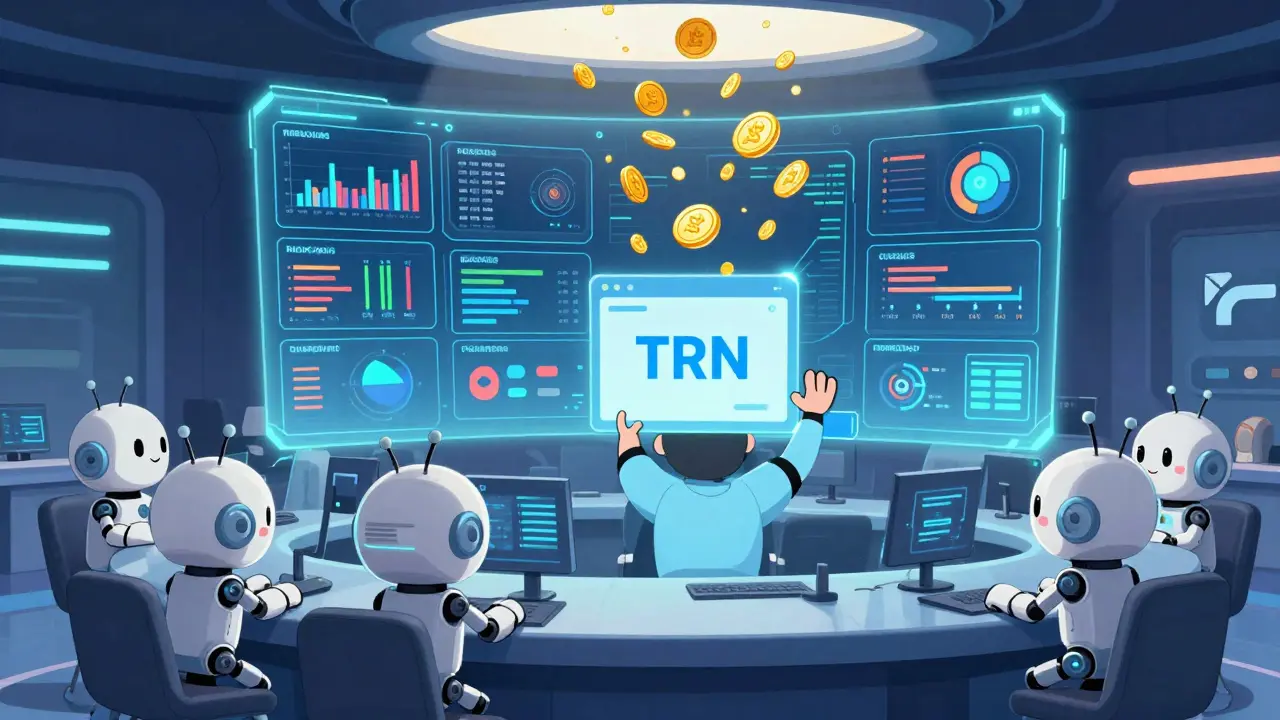
Who backs it? Why it matters
t3rn raised $6.8 million in funding from top-tier investors like Polychain Capital and HTX Ventures. That’s not a small amount - it’s institutional-grade backing. Polychain has backed Solana, Cosmos, and Chainlink. Their involvement means this isn’t a side project. It’s infrastructure. The team also reserved 5% of the total TRN supply for a public IDO. That’s a rare move - many projects hoard tokens for insiders. This shows they want real users, not just speculators.What’s next? Mainnet in 2025
The testnet is already handling millions of transactions. The next step is mainnet launch - expected in late 2025. Once live:- TRN staking will go live - earning rewards for locking up tokens.
- Executors will be fully incentivized with real fees.
- Developers will start building apps that rely on t3rn’s atomic execution.
Is TRN a good investment?
Right now, it’s not a coin you buy because it’s cheap. It’s a bet on infrastructure. If t3rn’s mainnet launches successfully and gains adoption, TRN could become essential - like ETH for Ethereum or SOL for Solana. But if the launch fails, or if competitors catch up, the price could stay flat for years. The tokenomics are smart: fixed supply, fee burning, staking rewards, and real utility. But none of that matters if no one uses it. The testnet numbers are promising. 78 million orders. 14,000 Executors. Sub-penny costs. That’s not theory - that’s proof of demand. The real question isn’t whether TRN will rise. It’s whether the world will need a universal execution layer. And with DeFi getting more complex by the day, the answer seems to be yes.What is t3rn (TRN) used for?
t3rn (TRN) powers a universal execution protocol that lets smart contracts run across multiple blockchains in one atomic transaction. It’s used to execute cross-chain DeFi actions - like swapping tokens, borrowing, staking, or voting - without the risk of partial failures. The TRN token pays Executors, covers fees, and will be used for staking once mainnet launches.
How does t3rn differ from blockchain bridges?
Traditional bridges move tokens between chains by locking and unlocking assets, often leaving funds stranded if something goes wrong. t3rn doesn’t move assets - it executes actions. It combines calldata, liquidity, and settlement into one guaranteed transaction. Either the whole thing happens, or nothing does. No partial outcomes.
Is t3rn live on mainnet?
No, t3rn is currently in advanced testnet as of early 2026. It has processed over 78 million cross-chain orders with 14,000 Executors and supports nine major blockchains. Mainnet launch is expected in late 2025, with full staking and protocol upgrades rolling out after.
How many TRN tokens are there?
There is a fixed maximum supply of 100 million TRN tokens. No more will ever be created. This scarcity model is designed to align token value with network usage. A small portion was allocated for public distribution via IDO, while the rest funds development, team incentives, and ecosystem growth.
Can I stake TRN right now?
No, staking is not available yet. It’s planned for mainnet launch in 2025. Once live, staking will allow users to lock TRN to help secure the network and earn rewards from protocol fees and Executor payouts. Until then, TRN can only be traded on exchanges or used in testnet environments.
Why do Executors need to front their own capital?
Executors front their own capital to guarantee execution. If a transaction fails, they absorb the loss. If it succeeds, they get paid by the protocol. This creates real economic pressure to act honestly and efficiently. It’s not like proof-of-stake - there’s no voting. There’s real money on the line. That’s what makes the system trustless and reliable.
What blockchains does t3rn support?
As of mid-2025, t3rn’s testnet supports nine major blockchains: Arbitrum, Base, BNB Chain, Optimism, Sei, Monad, Unichain, Berachain, and Ethereum. These are all high-activity networks where real DeFi apps operate. The protocol is designed to add any new chain quickly, making it one of the most flexible cross-chain systems available.
Is t3rn decentralized?
Yes. t3rn is fully decentralized. It has no central servers, no team-controlled keys, and no single point of failure. The network runs on a global set of independent Executors who compete to fulfill transactions. The settlement layer is verified by cryptographic proofs, not by a central authority. Even the AI-powered Aixecutors operate autonomously based on on-chain data.
How much does a t3rn transaction cost?
In testnet, t3rn executes cross-chain transactions for under $0.05 per call. That’s significantly cheaper than using multiple bridges or paying gas fees across chains manually. The cost is expected to stay low on mainnet because of the competitive Executor model - more participants mean lower prices.
Who should pay attention to t3rn?
Developers building cross-chain DeFi apps, traders using multi-chain strategies, and long-term crypto investors looking at infrastructure plays. If you’re tired of juggling wallets, bridging tokens, and risking half your trade - t3rn is the solution waiting to launch. It’s not for casual users yet, but it’s the future of seamless Web3.
Colin Lethem
March 3, 2026 AT 01:43Cheryl Fenner Brown
March 3, 2026 AT 05:35kati simpson
March 3, 2026 AT 06:00Reggie Fifty
March 4, 2026 AT 12:20Trenton White
March 5, 2026 AT 12:21Mae Young
March 6, 2026 AT 08:21Colin Lethem
March 7, 2026 AT 15:45lori sims
March 8, 2026 AT 21:11Michelle Mitchell
March 9, 2026 AT 15:12Cory Derby
March 11, 2026 AT 04:20Sriharsha Majety
March 12, 2026 AT 06:39Tabitha Davis
March 13, 2026 AT 17:23