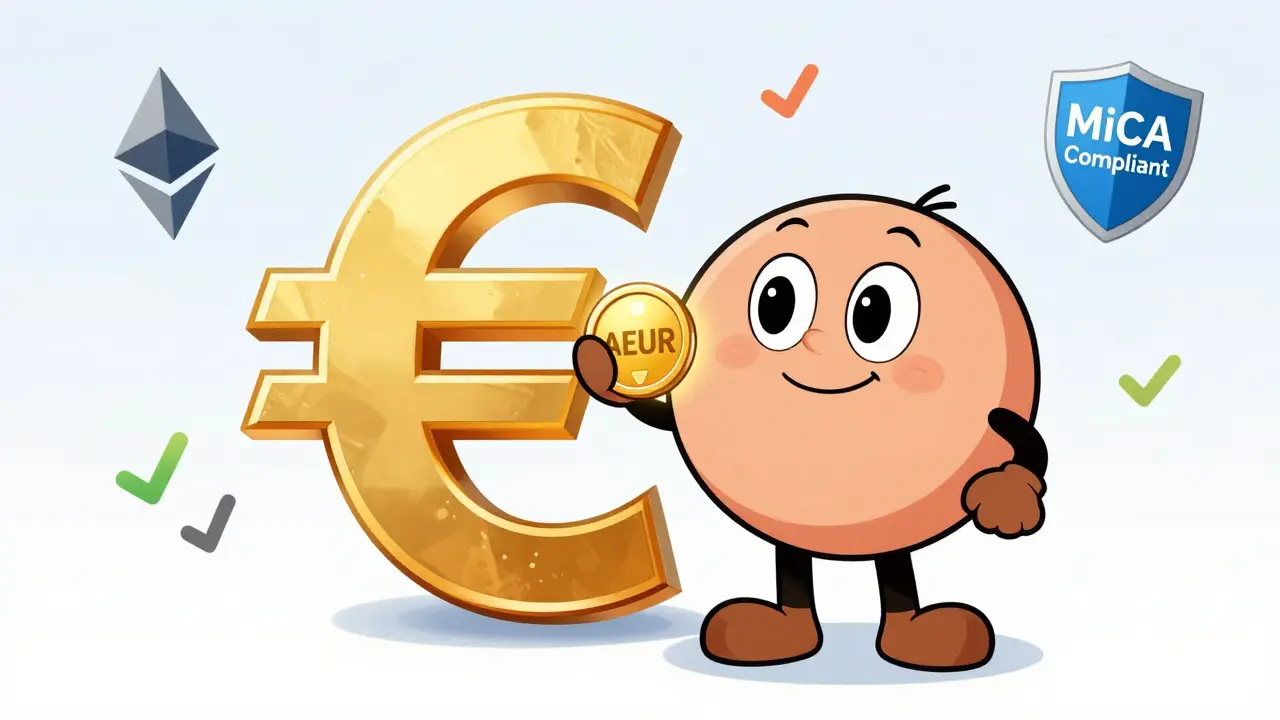
If you’ve heard of AEUR and wondered what it actually is, you’re not alone. Many people stumble upon this token while browsing crypto exchanges and assume it’s just another altcoin. But AEUR isn’t trying to beat Bitcoin or outpace Ethereum. It’s designed to do something simpler-and more important-than that: hold its value. AEUR is a Euro-backed stablecoin, meaning every single AEUR token is meant to be worth exactly one Euro. No wild swings. No speculation. Just stability.
How AEUR Works: Backed by Real Euros
< p>Think of AEUR like digital cash that’s tied directly to the Euro. For every AEUR in circulation, Anchored Coins AG, the company behind it, holds one Euro in reserve. That’s called a 1:1 peg. It’s not a guess. It’s not an algorithm. It’s not a mix of other cryptocurrencies. It’s cash-real, physical Euros-locked away in secure bank accounts. If you hold 100 AEUR, you should be able to redeem them for €100 at any time.This model is called a full-reserve system. It’s the same one used by USDC and EURC. But unlike some stablecoins that claim to be backed by reserves but don’t publish regular audits, Anchored Coins makes a point of operating under strict European financial rules. That’s where MiCA comes in.
Why MiCA Matters: The European Rulebook for Stablecoins
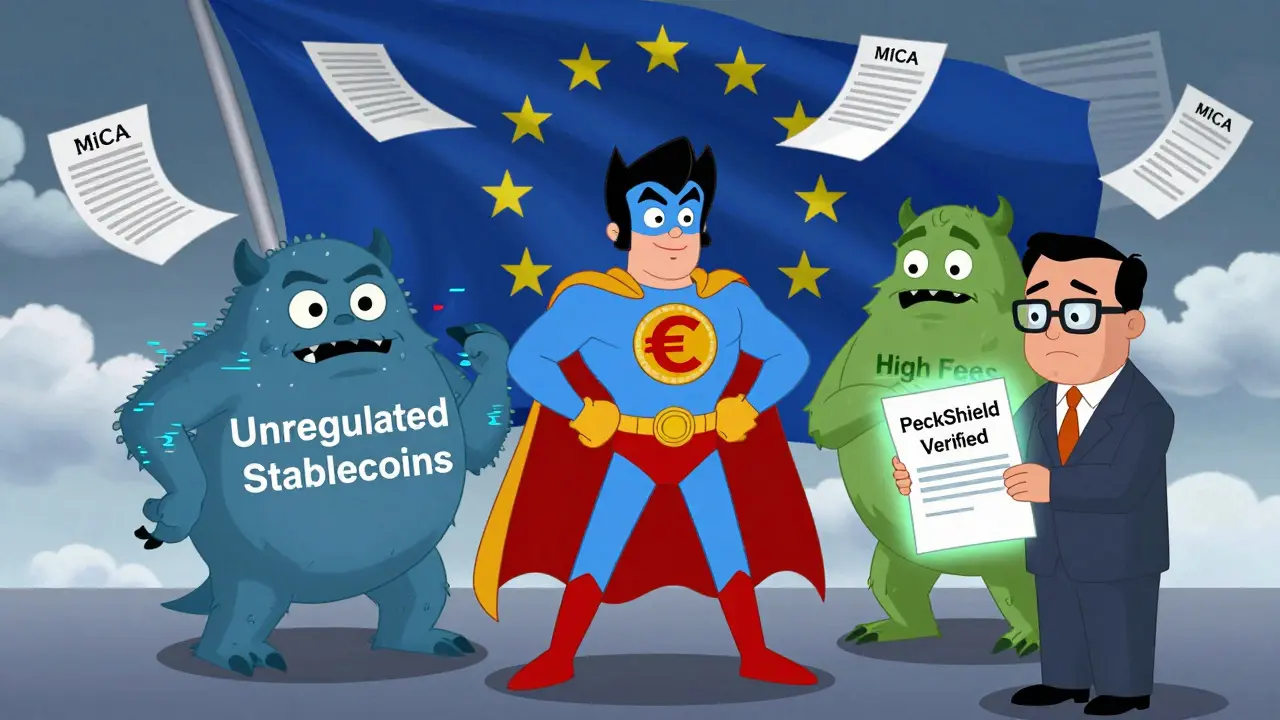
In June 2023, the European Union passed a law called MiCA-short for Markets in Crypto-Assets Regulation. It was the first major attempt to bring order to the wild west of crypto. MiCA says: if you want to issue a stablecoin in Europe, you have to follow the rules. That includes publishing a detailed white paper, getting approval from regulators, proving your reserves are real, and being transparent about how you manage risk.
AEUR was built from the ground up to meet these rules. That’s a big deal. Many stablecoins that were popular in 2022 got shut out of European markets after MiCA kicked in. AEUR didn’t just adapt-it was designed for this moment. Its white paper includes everything MiCA requires: issuer details, how the token works, what rights you have as a holder, and even environmental impact assessments. That kind of transparency is rare in crypto.
Where AEUR Lives: Ethereum and BNB Smart Chain
You won’t find AEUR on just one blockchain. It’s available on two of the most widely used networks: Ethereum and BNB Smart Chain.
- On Ethereum, AEUR follows the ERC-20 standard. This means it works with most wallets like MetaMask, Trust Wallet, and Ledger. But Ethereum gas fees can be high-sometimes $1 to $5 per transaction, especially during busy times.
- On BNB Smart Chain, it’s a BEP-20 token. Gas fees here are usually under $0.50, making it cheaper for small transfers or frequent payments.
This dual-chain setup gives users flexibility. If you’re doing large institutional transfers, Ethereum’s security and liquidity might be better. If you’re paying a freelancer or buying something online, BNB Smart Chain saves you money.

Security and Control: Audits, KYC, and Freezing Funds
AEUR isn’t fully decentralized. And that’s intentional.
To buy AEUR directly from Anchored Coins, you need to go through KYC (Know Your Customer) and AML (Anti-Money Laundering) checks. You’ll need to upload a government ID and sometimes a selfie. It’s the same process you’d go through opening a bank account. Some people hate this. Others appreciate it-especially if they’re a business or institution that needs to prove they’re following the law.
Also, Anchored Coins has the ability to freeze AEUR tokens on specific addresses. If law enforcement requests it-say, to stop stolen funds from being moved-they can block those tokens. That’s not something Bitcoin or Ethereum can do. It’s a trade-off: more control means more compliance, but less anonymity.
Smart contracts behind AEUR have been audited by PeckShield, a well-known security firm. That’s a good sign. But audits are snapshots in time. There’s no public record of how often they’re repeated, which leaves some questions open.
How AEUR Compares to Other Euro Stablecoins
AEUR isn’t the only Euro stablecoin out there. Two others are worth comparing:
| Token | Issuer | Backing | Blockchains | Market Cap (approx.) | MiCA Compliant? |
|---|---|---|---|---|---|
| AEUR | Anchored Coins AG | 1:1 Euro reserves | Ethereum, BNB Smart Chain | Not publicly disclosed | Yes |
| EURC | Circle | 1:1 Euro reserves | Ethereum, Solana, Avalanche, Stellar | $56 million | Yes |
| EURI | Banking Circle S.A. | 1:1 Euro reserves | Ethereum, Polygon | Not publicly disclosed | Yes |
AEUR is smaller than EURC, which is issued by Circle-the same company behind USDC. But AEUR has one edge: it’s built by a European company, headquartered in Switzerland, and designed specifically for EU regulations. EURC is American. EURI is Luxembourg-based. AEUR’s whole identity is tied to MiCA compliance, making it a natural fit for European businesses, banks, and crypto platforms that need to stay within EU law.
Who Uses AEUR? Real Use Cases
AEUR isn’t for gamblers or day traders. It’s for people who need stable value in a volatile market.
- European crypto exchanges use AEUR to offer Euro-denominated trading pairs without relying on traditional bank transfers.
- Freelancers and remote workers in the EU get paid in AEUR and can cash out to Euros quickly and cheaply.
- DeFi platforms in Europe use AEUR as collateral for loans because it’s compliant and liquid.
- Businesses paying suppliers across borders use AEUR to avoid currency conversion fees and delays.
It’s not designed to be a store of wealth like Bitcoin. It’s designed to be a payment tool-digital cash that doesn’t lose value overnight.
What You Need to Know Before Buying AEUR
Here’s the reality check:
- It’s not anonymous. You need ID to buy directly from Anchored Coins. If privacy is your top priority, look elsewhere.
- It’s not the most liquid. You won’t find AEUR on Coinbase or Binance (as of early 2026). It’s on smaller exchanges like Gate.io and KuCoin. Check availability before you buy.
- It’s not risk-free. Even with reserves, the company behind it could fail. That’s why audits and regulatory oversight matter.
- It’s not for long-term holding. If you’re trying to get rich, AEUR won’t help. If you want to preserve value while moving money, it’s perfect.
Also, gas fees vary. Ethereum transactions can cost $2-$5. BNB Smart Chain? Usually under $0.20. Always check fees before sending.
Future of AEUR: What’s Next?
Anchored Coins says it plans to expand to more blockchains. No names yet, but they’re looking at networks with strong security, low fees, and growing adoption. They’re also working on improving their reporting-something MiCA will require more of over time.
The big question: will AEUR grow? It’s too early to say. But one thing is clear: as Europe tightens its grip on crypto, compliant tokens like AEUR will have a real advantage. Non-compliant stablecoins are already being phased out. AEUR isn’t fighting that trend-it’s built for it.
Is AEUR backed by real Euros?
Yes. Every AEUR token is backed by one Euro held in reserve by Anchored Coins AG. The company follows a full-reserve model, meaning there’s a direct 1:1 match between tokens in circulation and Euros held in secure bank accounts.
Can I buy AEUR on Coinbase or Binance?
As of early 2026, AEUR is not listed on Coinbase or Binance. It’s available on exchanges like Gate.io and KuCoin. Always check the exchange’s listing page before trading.
Do I need to do KYC to buy AEUR?
Yes. If you buy AEUR directly from Anchored Coins, you must complete KYC and AML checks, including uploading a government-issued ID. This is required under MiCA regulations and helps prevent fraud and money laundering.
Is AEUR safer than other stablecoins?
AEUR is safer than unregulated stablecoins because it’s MiCA-compliant, audited, and fully backed. But it’s not as decentralized as Bitcoin or Ethereum. Its centralized control-like the ability to freeze funds-makes it more like a bank account than a pure crypto asset.
Can I use AEUR for DeFi or lending?
Yes. Many European DeFi platforms accept AEUR as collateral for loans or use it in liquidity pools. Its regulatory compliance makes it attractive to platforms that need to avoid legal risk.
What happens if Anchored Coins goes bankrupt?
If Anchored Coins AG fails, the Euros backing AEUR are supposed to be held in segregated accounts, meaning they’re legally separate from the company’s other assets. In theory, holders should still be able to redeem their Euros. But there’s no guarantee-this depends on legal processes and jurisdiction.
Why not just use Euros in a bank instead?
AEUR lets you move Euros on blockchain networks quickly and cheaply-especially across borders. Sending €1,000 via traditional banking can take days and cost $20-$50. Sending AEUR on BNB Smart Chain takes minutes and costs less than $0.50.
If you’re in Europe and need a stable, legal, and efficient way to move money on-chain, AEUR is one of the most reliable options available. It’s not flashy. It’s not meant to make you rich. But if you care about stability, compliance, and real-world utility, it’s worth a closer look.
Josh V
January 17, 2026 AT 02:07Gas fees on Ethereum are still a nightmare.
Bharat Kunduri
January 17, 2026 AT 20:52Jason Zhang
January 18, 2026 AT 01:02Lauren Bontje
January 18, 2026 AT 21:41Patricia Chakeres
January 20, 2026 AT 13:25Tony Loneman
January 21, 2026 AT 12:09Deb Svanefelt
January 23, 2026 AT 05:31It’s like plumbing - you only notice it when it’s broken.
CHISOM UCHE
January 24, 2026 AT 22:08Liza Tait-Bailey
January 25, 2026 AT 12:32also bnb chain fees are a dream. 0.10 usd? yes please
Dustin Secrest
January 27, 2026 AT 11:31Katherine Melgarejo
January 28, 2026 AT 17:08Christina Shrader
January 29, 2026 AT 03:54It’s not sexy. But it works.
Pramod Sharma
January 29, 2026 AT 21:21nathan yeung
January 31, 2026 AT 12:39Stephanie BASILIEN
February 2, 2026 AT 11:53Chris O'Carroll
February 4, 2026 AT 01:30Stephen Gaskell
February 4, 2026 AT 23:51Deb Svanefelt
February 6, 2026 AT 07:10