Have you ever stumbled upon a cryptocurrency that promises to simplify digital finance but trades for less than a penny? That’s the reality of ABDS Token, an ERC-20 utility coin issued by ABD Systems designed to facilitate payments and governance within their IT ecosystem. It sounds ambitious, especially when backed by a company with over a decade of history. But when you look at the charts, the story gets complicated fast. The price has crashed from over a dollar to fractions of a cent, and liquidity is practically nonexistent on many platforms.
If you are wondering whether this is a hidden gem or a high-risk trap, you aren't alone. Micro-cap tokens like ABDS often fly under the radar until they explode-or implode. This guide breaks down what ABDS actually does, where it lives on the blockchain, and why the data surrounding it is so messy. We’ll look at the tokenomics, the exchange options, and the red flags you need to watch out for before putting any money into this asset.
The Basics: What Is ABDS Token?
At its core, ABDS is not just a speculative coin; it is a utility token built for a specific purpose. It was launched by ABD Systems, an IT solutions provider that claims to have more than 13 years of operating experience. The idea behind ABDS is to bridge the gap between traditional tech support and the world of blockchain. While most crypto projects exist entirely online, ABD Systems markets itself as offering in-person support through physical offices, aiming to make crypto adoption easier for people who aren’t tech-savvy.
Technically, ABDS runs on the Ethereum blockchain. This means it follows the ERC-20 standard, which is the same format used by thousands of other tokens. You can find it in wallets that support Ethereum, such as MetaMask or Phantom. The contract address you need to verify transactions is 0xb56aaac80c931161548a49181c9e000a19489c44. Always double-check this address if you are sending funds, as there is no customer service to reverse a mistaken transfer on the blockchain.
The primary use cases for holding ABDS include:
- Paying for services: Using the token to buy IT solutions or digital financial products from ABD Systems.
- Accessing premium features: Unlocking higher-tier tools within their ecosystem.
- Staking: Locking up your tokens to earn rewards, though the yield depends on the project’s treasury health.
- Governance: Voting on future developments of the platform.
However, a utility token is only valuable if people actually use the services it pays for. As of mid-2026, there is little public evidence of massive adoption outside of small communities, which keeps the demand-and therefore the price-very low.
Tokenomics and Supply: The Numbers Game
When analyzing any crypto, supply dynamics are crucial. For ABDS, the numbers tell a story of extreme dilution and volatility. The maximum supply of ABDS is fixed at 100,000,000 tokens. No new tokens can be minted after this cap is reached, which theoretically prevents infinite inflation. However, the circulating supply-the amount of tokens actually available to trade-is where things get confusing.
Data aggregators show wildly different figures. Some sources report a circulating supply of around 3 million tokens, while others claim it is closer to 15 million. This discrepancy suggests that either tokens are being unlocked gradually, or different exchanges are tracking different pools of liquidity. Regardless of the exact number, the fully diluted valuation (FDV) remains microscopic. If every single one of the 100 million tokens were in circulation, the total market value would still be under $200,000 at current prices.
| Metric | Value / Range |
|---|---|
| Blockchain | Ethereum (ERC-20) |
| Max Supply | 100,000,000 ABDS |
| Circulating Supply | 3,000,000 - 15,000,000 ABDS (varies by source) |
| All-Time High (ATH) | $1.36 (Nov 12, 2024) |
| Current Price Range | $0.00039 - $0.0010 USD |
| Market Cap | $1,200 - $6,000 USD |
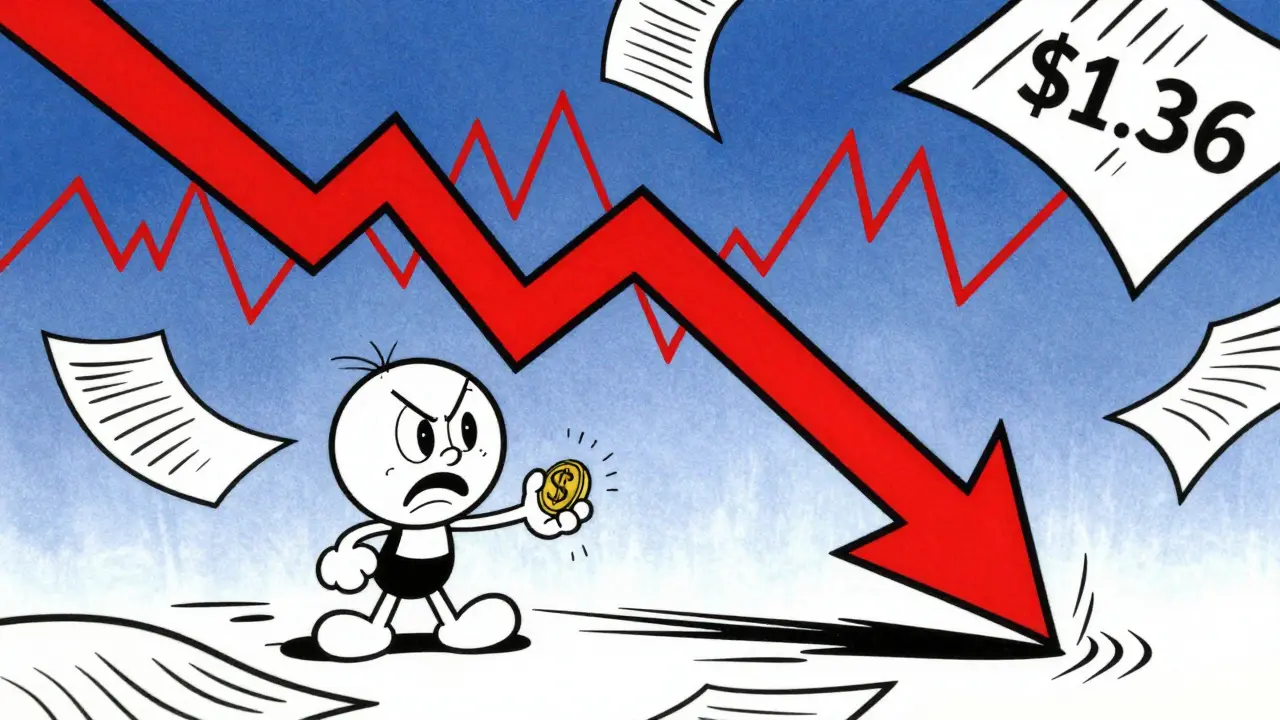
Notice the drop from the all-time high of $1.36 to less than $0.001 today. That is a decline of nearly 99.9%. In crypto terms, this is a "death spiral" scenario common among meme coins or failed utility projects. When a token loses 99% of its value, it takes a massive influx of new buyers to push it back up, which rarely happens without significant news or partnership announcements.
Where Can You Buy ABDS?
Finding a place to trade ABDS is part of the challenge. You won’t see it on major tier-one exchanges like Coinbase, Kraken, or Binance. In fact, Binance explicitly states that ABDS is not listed for trading, even though they track the price. This means you cannot buy it directly through their spot markets.
Your options are limited to smaller centralized exchanges (CEXs) and decentralized exchanges (DEXs). Historically, ABDS has been traded on platforms like:
- BitMart
- MEXC
- LBank
- DigiFinex
- BingX
For those comfortable with DeFi, you can swap ETH for ABDS on Uniswap v3 or Curve on the Ethereum network. However, be warned: liquidity is extremely thin. On some days, the entire 24-hour trading volume on Uniswap is less than $5. This creates a huge problem called slippage. If you try to sell a decent amount of ABDS, your order might crash the price because there aren’t enough buyers waiting on the other side. You could end up selling for significantly less than the displayed market price.
Risk Assessment: Is ABDS Safe?
This is the most critical section. Before investing, you need to understand the risks associated with micro-cap tokens. ABDS carries several red flags that experienced investors usually avoid.
1. Low Liquidity and Volatility
With daily volumes often under $20, the market is fragile. A single large sell order can wipe out the price. This makes it impossible to exit positions quickly if something goes wrong.
2. Security Audits vs. KYC
ABD Systems announced that they completed a KYC (Know Your Customer) verification with CertiK, receiving a "Gold Badge." While this verifies the identity of the team members, it is not the same as a smart contract audit. A KYC check tells you who is behind the project; a code audit checks if the code is secure. As of mid-2026, there is no prominent public record of a full technical security audit for the ABDS smart contract on major aggregators like CoinGecko or CoinMarketCap. Without a verified audit, you are trusting the code blindly.
3. Risk Ratings
Independent risk assessment sites like IsThisCoinAScam have assigned ABDS a "D" rating. This places it in the high-risk category, signaling issues with transparency, maturity, or community trust. Additionally, some YouTube analysts have raised concerns about the nature of investment commitments made to ABD Systems, questioning whether large sums were paid in cash or in speculative tokens.
4. Community Size
A healthy crypto project needs a strong community. Data from social trackers shows minimal activity. In early 2025, there were zero Reddit posts discussing ABDS, and sentiment analysis showed only a handful of unique speakers across all platforms. A lack of grassroots engagement often precedes further price declines.

Price History and Future Outlook
Looking at the chart, ABDS had a brief moment of fame in late 2024 when it hit $1.36. This spike was likely driven by hype, airdrop campaigns, and initial listing excitement. Since then, it has bled value consistently. By April 2025, it hit an all-time low of roughly $0.00095, and it has struggled to recover since.
Why did it crash? Typically, tokens with vague utility and no clear revenue model suffer from "sell pressure." Early investors and airdrop recipients dump their free or cheaply acquired tokens onto the market. With no steady stream of buyers using the token for actual services, the price falls.
For ABDS to recover, ABD Systems would need to demonstrate real-world usage. Are businesses paying for IT services with ABDS? Are users staking millions of tokens for rewards? Currently, the answer appears to be no. Until the ecosystem generates genuine demand, the token will likely remain a speculative asset with high downside risk.
Conclusion: Should You Buy ABDS?
Buying ABDS Token is not an investment; it is a gamble. The potential for 10x returns exists in theory because the market cap is so tiny, but the probability of losing 100% of your money is equally high due to illiquidity and lack of fundamental strength.
If you are a beginner, stay away. The complexity of buying on obscure exchanges, the risk of slippage, and the absence of robust security audits make this a poor choice for learning crypto. If you are an experienced trader looking for high-risk moonshots, ensure you only put in money you can afford to lose completely. Never invest based on hype or promises of future utility that hasn't been delivered yet.
Is ABDS Token a scam?
There is no definitive legal ruling labeling ABDS as a scam, but it exhibits many characteristics of high-risk projects. These include a near-total loss of value from its peak, low liquidity, lack of transparent smart contract audits, and a "D" rating from independent risk assessors. Always exercise extreme caution.
Can I buy ABDS on Binance?
No. Binance tracks the price of ABDS for informational purposes but explicitly states that the token is not listed for trading or services on their platform. You must use other exchanges like MEXC, BitMart, or decentralized swaps on Uniswap.
What is the contract address for ABDS?
The official ERC-20 contract address for ABDS Token on the Ethereum blockchain is 0xb56aaac80c931161548a49181c9e000a19489c44. Always verify this address on multiple sources before interacting with the token to avoid phishing scams.
Why is the ABDS price so low?
The price is low due to extreme volatility and a lack of sustained demand. After reaching an all-time high of $1.36 in 2024, the token lost over 99% of its value. With a large maximum supply of 100 million tokens and very low trading volume, the market cap remains in the thousands of dollars rather than millions.
Does ABD Systems have physical offices?
Yes, ABD Systems promotes a model that includes physical office locations to provide in-person support for users. This is marketed as a way to help non-expert users navigate crypto adoption, distinguishing it from purely online-only projects.
Has ABDS Token been audited by CertiK?
ABD Systems announced they received a CertiK KYC Gold Badge, which verifies the identity of the team. However, this is different from a smart contract security audit. As of mid-2026, there is no widely publicized technical audit of the ABDS token code itself on major data aggregators.