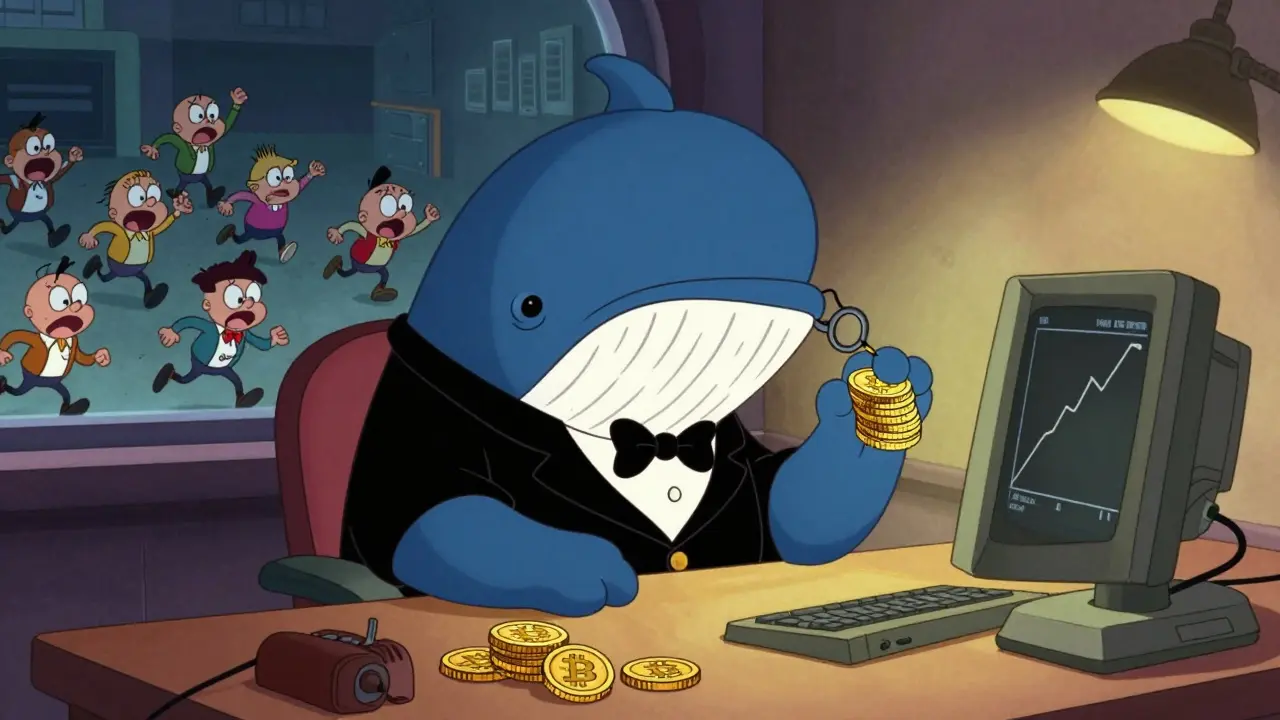
Have you ever watched a cryptocurrency price sit flat for weeks while everyone else panics or gets bored? You might think the market is dead. In reality, it’s often the most active time of all. Big players-known as crypto whales, defined as holders with massive portions of a token's supply-are quietly moving billions in assets behind the scenes. They aren’t just clicking buttons randomly; they are executing precise strategies called accumulation and distribution.
Understanding the difference between these two phases is like having a cheat sheet for the market. When whales accumulate, they are buying. When they distribute, they are selling. If you can spot which phase the market is in, you stop guessing and start positioning yourself alongside the "smart money" rather than getting crushed by it. This guide breaks down exactly how to identify these moves using real data, not just vibes.
The Anatomy of Whale Behavior
To track whales, we first need to define who they are. The term isn't just slang anymore; it has specific technical definitions depending on the asset. For Bitcoin, a whale is typically an address holding between 100 and 10,000 BTC. For Ethereum, the threshold drops to 5,000+ ETH. In smaller altcoins, controlling just 1-5% of the total supply makes you a whale.
Why does this matter? Because these entities hold enough power to move prices simply by entering or exiting positions. According to data from Glassnode Insights, whales currently control about 13.5% of Bitcoin's circulating supply. That’s over 4 million BTC sitting in a relatively small number of wallets. When these wallets move, ripples turn into waves.
| Asset Type | Whale Definition (Holdings) | Market Impact Level |
|---|---|---|
| Bitcoin (BTC) | 100 - 10,000 BTC | High (Global Benchmark) |
| Ethereum (ETH) | 5,000+ ETH | Medium-High (DeFi Core) |
| Major Altcoins | Top 1-5% of Supply | Very High (Volatility Driver) |
| Meme Coins / Micro-Caps | Any Large % of Liquidity Pool | Critical (Rug Pull Risk) |
Phase 1: Accumulation (The Quiet Buy)
Accumulation is the phase where whales increase their holdings. It usually happens when the market is boring, fearful, or sideways. Retail investors-the average person trading on apps-often get tired during this period. They see no big green candles, hear bad news, and sell their coins at low prices. Whales love this.
During accumulation, you will notice specific patterns:
- Low Volume: Trading volume dries up because whales are absorbing supply slowly without spiking the price.
- Narrow Price Range: The price bounces between support and resistance but doesn’t break out. This is called consolidation.
- On-Chain Signals: Metrics like the Bitcoin Accumulation Trend Score rise toward 1. A score near 1 means large entities are aggressively accumulating.
For example, in late 2023, Bitcoin whales increased their aggregate holdings by 1.33% while the price was consolidating. The Accumulation Trend Score approached 1, signaling that smart money was preparing for the next leg up. By the time retail traders noticed the rally, the whales had already loaded up.
Whales use tactics like UTXO consolidation to hide their tracks. Instead of one giant buy, they split purchases across multiple addresses or combine small holdings to look like organic activity. This makes it harder for casual observers to detect the buildup.
Phase 2: Distribution (The Silent Sell)
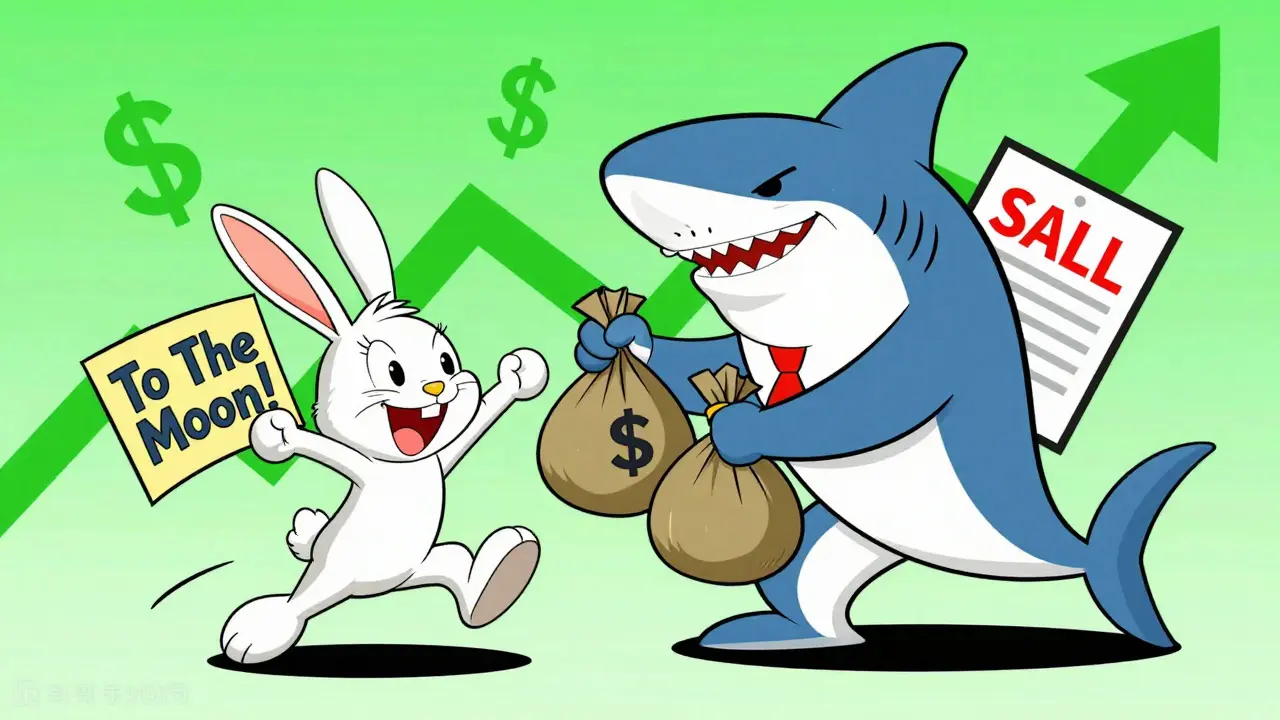
Distribution is the opposite. It’s when whales reduce their positions to take profits. This phase is dangerous because it often coincides with extreme optimism. News headlines scream "To the Moon!" Social media is full of moon charts. Retail investors are FOMO-ing (Fear Of Missing Out) into new highs.
While you’re buying the top, whales are selling to you. Here’s what distribution looks like:
- High Volume, Stalling Price: Huge amounts of coins are traded, but the price refuses to go higher. This indicates heavy selling pressure being absorbed by eager buyers.
- Exchange Inflows: Large amounts of crypto move from cold storage to exchanges. As OKX Academy notes, whale inflows to exchanges are often associated with potential selling activity.
- Accumulation Trend Score Drops: The score falls toward 0, indicating distribution mode.
A classic case study is the Cake/USDT pair analyzed by Steemit users. During the distribution phase, whales created "obvious bullish signals" through strategic buying to lure retail in, then dumped their bags. Once the retail euphoria faded, the inevitable downtrend began.
Tools to Track Whale Movements
You don’t need to be a blockchain developer to track whales. Several platforms provide accessible tools, ranging from free public dashboards to expensive professional suites.
Free/Low-Cost Options:
- Glassnode Studio: Offers public charts for metrics like Supply per Whale. Great for beginners learning to read on-chain data.
- Blockchain.com Whale Tracker: Simple alerts for large transactions.
- CoinGecko/CoinMarketCap: Basic holder distribution stats for many tokens.
Professional Tools:
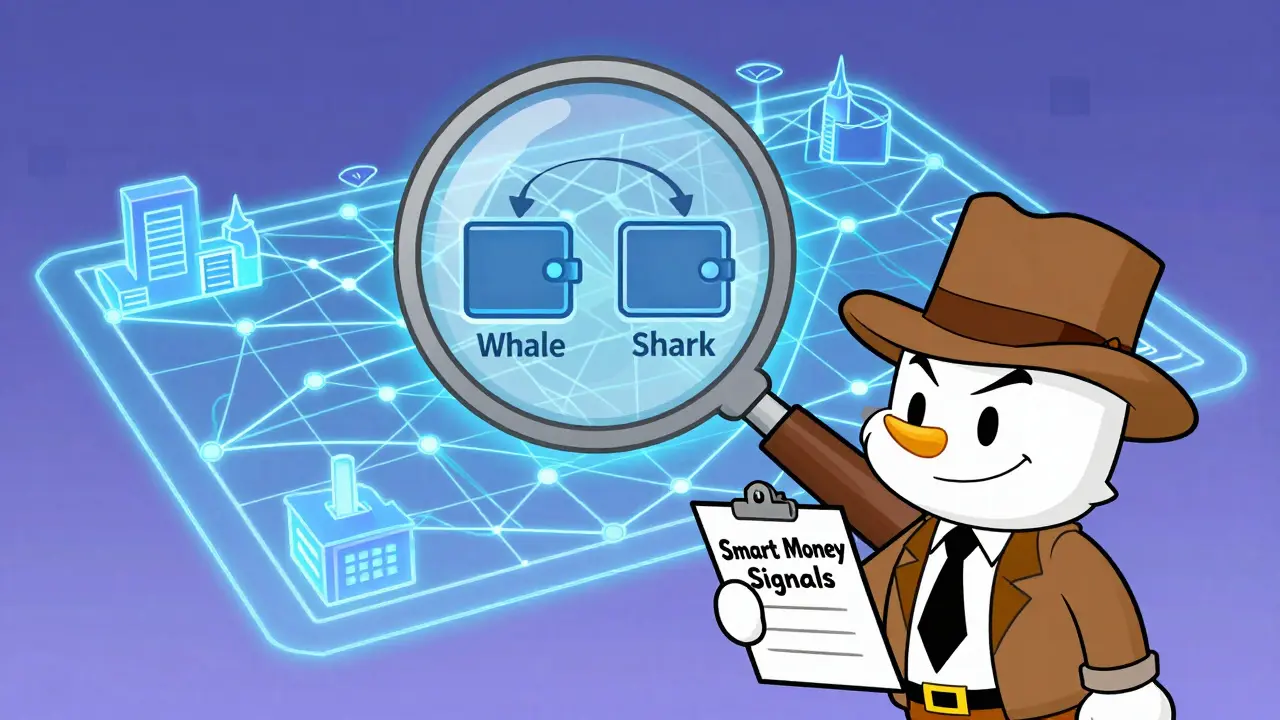
- Nansen ($999/month): Labels wallets as "Smart Money" based on historical profitability. It tracks inflows/outflows in real-time.
- Bitquery: Uses tiered classifications (Dolphins, Sharks, Whales) to analyze supply concentration.
If you are serious about this, consider starting with Glassnode’s free tier. Spend 20-30 hours studying basic accumulation signals before paying for premium tools. Understanding the logic is more important than the software itself.
Pitfalls and False Signals
Tracking whales isn’t foolproof. Even experts get burned. Here are common traps:
- Macro Overrides: In July 2023, whale accumulation signals appeared for Bitcoin, but the price continued dropping due to Federal Reserve interest rate hikes. Macro events can drown out on-chain signals.
- Spoofing: Whales sometimes move funds to create fake signals. Dr. Jane Chen of CryptoSlate warns that whales sometimes employ spoofing tactics to manipulate retail sentiment.
- Staking Misinterpretation: Seeing large deposits on an exchange doesn’t always mean selling. Funds might be moved for staking or lending. Always check the context.
Pro tip: Wait for confirmation. Don’t act on a single day of data. Look for three consecutive days of consistent accumulation or distribution signals across multiple metrics before making a trade.
Regulatory Risks and Future Trends
The landscape is changing. In May 2023, SEC subpoenas of major OTC desks led to a 22% decrease in whale-sized transactions as institutions tried to fly under the radar. Privacy regulations in the EU and California may also restrict access to detailed wallet data in the future.
However, technology is adapting. Platforms like Bitquery are using machine learning to predict whale movements with 68.3% accuracy. Nansen’s Smart Money tracking focuses on behavior, not just size, identifying wallets that consistently generate alpha. By 2025, CoinDesk Research predicts 78% of institutional portfolios will use whale tracking as a core strategy.
As whales become more sophisticated-using multi-sig wallets and DeFi protocols to obscure positions-retail traders must rely less on raw transaction sizes and more on aggregated trend scores and behavioral analysis.
What is the difference between whale accumulation and distribution?
Accumulation is when whales buy and increase their holdings, usually during low-volume, sideways markets. Distribution is when whales sell and reduce their holdings, typically during high-volume, optimistic market peaks.
How do I know if a whale is accumulating Bitcoin?
Look for rising Supply per Whale metrics and an Accumulation Trend Score nearing 1. Also, watch for large transfers from exchanges to cold wallets, which indicate long-term holding intent.
Are whale tracking tools reliable?
They are useful indicators but not perfect. Whales can spoof signals, and macroeconomic factors can override on-chain trends. Always combine whale data with broader market analysis and wait for multiple confirmations.
What is the Bitcoin Accumulation Trend Score?
It is a metric developed by Glassnode that quantifies whale behavior on a scale of 0 to 1. A score close to 1 suggests strong accumulation by large entities, while a score near 0 indicates distribution.
Do whales control the entire crypto market?
No, but they have significant influence. Whales control about 13.5% of Bitcoin's supply. While they can drive short-term volatility and sentiment, broader market trends are also shaped by adoption, regulation, and macroeconomics.