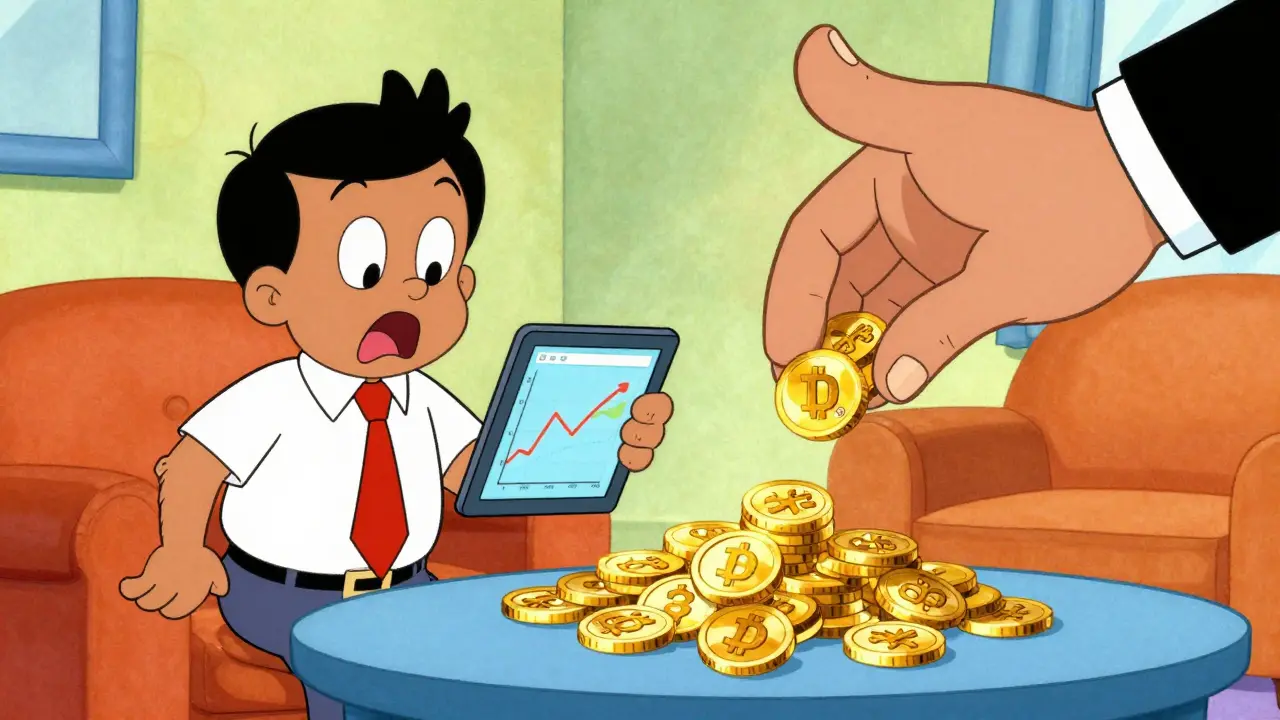
Imagine waking up to find that 30% of your hard-earned crypto profits are gone before you even think about your spending plan. For many Indian investors, this isn't a nightmare-it's the current reality of the Virtual Digital Assets is a broad regulatory category encompassing cryptocurrencies, NFTs, and other digital tokens generated through cryptographic means. Also known as VDAs, these assets are governed by strict rules that differ wildly from how you'd tax a gold bond or a share of Reliance Industries.
If you're trading Bitcoin or collecting Bored Ape NFTs, you're operating in a space that is legal to own but not recognized as a payment method. This creates a unique friction: you can hold the asset, but the moment you make a profit, the government wants a significant slice. Since the Finance Act of 2022, the ambiguity of "gray areas" has been replaced by a very clear, very expensive set of rules. Whether you're a casual holder or a high-frequency trader, understanding these restrictions is the only way to avoid a nasty surprise from the Income Tax Department.
The Core Tax Burden: 30% Flat Rate
The most jarring part of the Income Tax Act, 1961 is the primary legislation governing the levy and collection of income tax in India, which was amended to include specific sections for digital assets is the flat tax rate. Under Section 115BBH, any income earned from the transfer of a VDA is taxed at a flat 30%.
Here is the catch: this rate is absolute. It doesn't matter if you're in the 5% tax bracket or the 30% bracket; you pay 30% on your VDA gains. Even more frustrating is that this applies regardless of how long you held the asset. In traditional investing, holding a stock for over a year often lowers your tax rate. With VDAs, the "holding period" is irrelevant. You pay the same rate whether you flipped a coin in ten minutes or held it for ten years.
When calculating your taxable gain, the government is very strict about what you can deduct. You can only subtract the cost of acquisition. This means if you spent ₹1,00,000 to buy Bitcoin and sold it for ₹1,50,000, you're taxed on the ₹50,000 profit. However, if you paid ₹2,000 in exchange fees or spent money on electricity for mining, those costs cannot be deducted. You're paying tax on the gross profit, not the net profit.
The "No-Loss" Trap and Set-off Restrictions
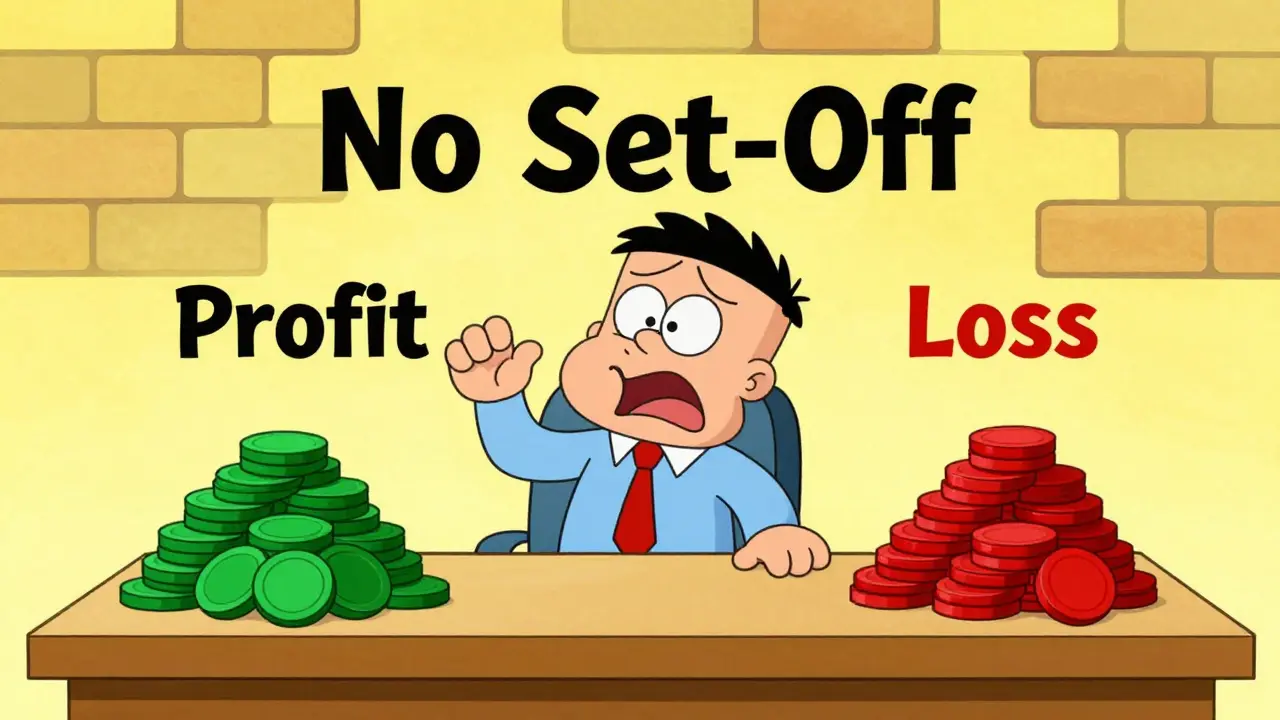
In a normal investment portfolio, if you lose money on one stock but make money on another, you can offset the loss against the gain to lower your total tax bill. In the world of VDAs, that's completely forbidden. If you make a profit on Ethereum but lose an equal amount on a meme coin, you still owe tax on the Ethereum gains. You cannot set off VDA losses against any other income, nor can you use them to reduce the tax on other digital assets in the same year.
The only silver lining is that you can carry forward these losses for up to eight years, but only to offset future VDA gains. This creates a punitive cycle for investors. For example, a user on Reddit once shared how they lost nearly ₹3 lakh on Ethereum but were still forced to pay tax on other small gains because they couldn't offset the loss against their salary income. It makes the asset class feel more like a gamble than a diversified investment.
Decoding the 1% TDS Mechanism
To keep a close eye on every single transaction, the government implemented a 1% Tax Deducted at Source ( TDS is a mechanism where a portion of a payment is deducted by the payer and remitted to the government as a prepaid tax ). If you trade on an Indian exchange like WazirX or CoinDCX, the exchange automatically deducts 1% of the transaction value and sends it to the government.
While 1% sounds small, it's a massive tracking tool. It ensures the Income Tax Department knows exactly who is trading and how much. If you're a "specified person"-which generally includes small business owners or those without a business income-you have specific duties, such as issuing TDS certificates in Form 16E. A critical warning: if you fail to provide your PAN (Permanent Account Number), that 1% TDS can skyrocket to 20% under Section 206AA.
| Feature | Virtual Digital Assets (VDA) | Equity Shares (Listed) |
|---|---|---|
| Tax Rate | Flat 30% | 10-20% (depending on period) |
| Loss Set-off | Not allowed against other income | Allowed against similar capital gains |
| Deductible Expenses | Only Cost of Acquisition | Brokerage, STT, etc. |
| TDS Application | 1% on most transfers | Generally not applicable for retail |
| Indexation Benefit | None | Available for Long Term (certain cases) |
Compliance and Reporting Steps
Filing your taxes isn't as simple as clicking a button. You need to use specific forms, typically ITR-2 or ITR-3. Within these forms, there is a dedicated "Schedule VDA" where you must disclose every single transaction. You'll need to provide the date you bought the asset, the date you sold it, the cost of acquisition, and the final sale value.
If you're doing crypto-to-crypto trades-say, swapping Bitcoin for Solana-you can't just ignore it. The Central Board of Direct Taxes is the central inland revenue board that provides administrative guidance and manages the direct tax system in India requires you to value these swaps in Indian Rupees (INR) at the moment of the transaction. You should use exchange rates from government-recognized platforms to avoid disputes.
To keep yourself safe from audits, maintain a digital paper trail. This includes:
- Full transaction histories downloaded from all exchanges.
- Records of wallet addresses used for transfers.
- Proof of the original purchase price (bank statements or exchange screenshots).
The Institutional Impact and Market Shift
These taxes haven't just annoyed retail traders; they've scared off big money. Institutional investors have significantly reduced their exposure to the Indian crypto market. Some reports suggest that the tax structure costs India billions in potential Foreign Direct Investment (FDI) every year because global funds find the 30% flat rate too aggressive compared to countries like Singapore or Portugal.
However, the market has proven surprisingly resilient. Many investors are shifting their strategies. Instead of holding direct tokens, some are exploring crypto-adjacent products. There is a growing interest in Bitcoin ETFs (Exchange Traded Funds), which may be taxed as securities rather than VDAs, offering a much more favorable tax treatment. This is a clever way to get exposure to the price movement of Bitcoin without triggering the punitive VDA tax rules.

Future Outlook: The 2025 Reform
The landscape shifted further with the Income Tax Act of 2025. While the 30% rate remains, the government is moving toward a "digital-first" enforcement model. The introduction of the "Tax Year" as the primary assessment period aims to simplify the calendar, but the core philosophy remains: the government wants a high percentage of the gains from these high-volatility assets.
There is also the pending Virtual Asset Service Providers Bill. If passed, this will introduce licensing for exchanges, which will likely make TDS collection even more seamless and inescapable. While the rules feel harsh, the simplicity of a flat rate is actually a relief for some professional traders who no longer have to spend hours calculating complex tax slabs every month.
Can I deduct mining costs from my crypto profits?
No. Under current Indian tax law for VDAs, only the cost of acquisition is deductible. Expenses like electricity, hardware, and mining pool fees are not allowed as deductions against VDA gains.
What happens if I trade crypto-to-crypto?
A crypto-to-crypto trade is treated as two transactions: selling the first asset for INR and using that INR to buy the second asset. You must calculate the gain or loss in INR at the time of the swap and pay the 30% tax on any profit made.
Is the 1% TDS a final tax?
No, the 1% TDS is an advance tax payment. It is not the final tax. You still need to calculate your total gains at the end of the year and pay the remaining 29% (to reach the total 30% rate) when filing your returns.
Can I offset my crypto losses against my salary income?
Absolutely not. VDA losses cannot be set off against any other head of income, including salary, business income, or capital gains from stocks. They can only be carried forward to offset future VDA gains.
What is the penalty for not providing a PAN for TDS?
If you do not provide a valid PAN to the exchange or the deductor, the TDS rate increases from 1% to 20% under Section 206AA of the Income Tax Act.
Next Steps for Investors
If you've been ignoring your crypto taxes, now is the time to act. Start by downloading your full trade history from every exchange you've used. Use a spreadsheet to map out every "Buy" and "Sell" event, ensuring you have the INR value for every transaction. If you have a complex portfolio with DeFi swaps and multiple wallets, consider using a crypto-specific tax software that supports Indian regulations.
For those looking to optimize, look into the legalities of gifting assets to family members in lower tax brackets or exploring regulated ETFs. However, always consult a certified chartered accountant (CA) before implementing these strategies, as the Income Tax Department is increasingly using blockchain analytics to track transfers and identify tax evasion.
Arti Jain
April 29, 2026 AT 16:39Standard procedure for a developing economy. Only those with zero patriotism complain about funding national infrastructure via VDA taxes.
VIVEK SINGH
May 1, 2026 AT 14:07Oh sure, because nothing says "innovation" like a 30% flat tax that ignores losses. Truly a masterpiece of fiscal wisdom that ensures no one actually makes money in the long run. Bravo to the genius minds behind this.
Robert Smith
May 2, 2026 AT 08:1530% is wild 💀😭
Emily A
May 2, 2026 AT 17:35The lack of indexation benefits is the most egregious part of this framework. It fundamentally ignores the inflationary nature of currency and effectively taxes the nominal gain rather than the real economic gain, which is a basic failure in tax theory.
Lex Harley
May 3, 2026 AT 09:38Man this is some heavy stuff. The slippage on those crypto-to-crypto trades must be insane when u factor in the tax hit. Hope the folks in India can find some way to optimize their portofolios without getting hit by the IT dept. Just sounds like a total nightmare for any retail trader trying to maintain a decent CAGR while dealing with such an agressive tax regime.
Ipsita Seal
May 4, 2026 AT 10:21Too much reading for a simple "you lose money" story.
Lloyd I
May 5, 2026 AT 10:34Keep your heads up everyone! It's a tough environment but focusing on those ETFs might be the perfect pivot to keep the dream alive and stay compliant!
Carli Bates
May 6, 2026 AT 06:37imagining the gov actually tracking a defi swap through a mixer... cute
Felix Eduardo Velasquez
May 8, 2026 AT 03:48From a broader perspective, these regulations are designed to discourage speculation rather than kill the industry. By making the cost of frequent trading high via TDS and flat taxes, the state effectively forces a shift toward long-term holding, although the current lack of long-term capital gains benefits makes that transition contradictory in practice.
Bevon Findley
May 9, 2026 AT 12:06Quite a quaint system! 😊
Kristi Swartz
May 10, 2026 AT 21:22it is simply wrong to avoid paying taxes when the government provides the infrastructure that allows you to live and trade safely in a country
Jan Conrad
May 12, 2026 AT 04:03The 1% TDS is actually a brilliant tracking mechanism from a data collection standpoint. It creates a real-time ledger of activity that makes it nearly impossible for the average retail user to hide transactions. For those of you using decentralized exchanges, remember that the on-chain data is permanent and the tax authorities are getting better at using forensics tools to link wallets to KYC'd exchange accounts.
its me
May 14, 2026 AT 02:28We must ask ourselves if the pursuit of digital wealth is merely a mask for our inner greed which the government is now simply reflecting back to us through these taxes. It is a spiritual cleansing of the portfolio, really
Aaron Zeiler
May 16, 2026 AT 00:09just use a spreadsheet for the INR conversion at the time of trade its way easier than trying to find a software that actually works for indian laws
Veronica Bago
May 16, 2026 AT 05:54This is a lot of stress for some digital coins. I'll just stick to my savings account and watch the chaos from the sidelines lol.