
Running a crypto business in Nigeria used to feel like walking through a minefield. You had the Central Bank of Nigeria (CBN) restricting bank accounts and an unclear legal status for digital assets. But the landscape shifted dramatically with the Investments and Securities Act 2025, which formally recognized cryptocurrencies as securities under the jurisdiction of the Securities and Exchange Commission (SEC). This change didn't just lift restrictions; it replaced them with a structured, mandatory licensing regime. If you are operating or planning to operate a crypto exchange, wallet service, or mining operation in Nigeria, you now need a Virtual Asset Service Provider (VASP) license.
This isn't optional paperwork. The SEC has made it clear that all entities involved in virtual asset activities must be licensed. This guide breaks down exactly what that means for your business, from the heavy capital requirements to the streamlined incubation programs designed to help startups get off the ground.
What Exactly Is a VASP License in Nigeria?
A VASP license is the official authorization granted by the Nigerian Securities and Exchange Commission (SEC) allowing a company to provide services related to virtual assets. Before 2025, many businesses operated in a gray area, relying on peer-to-peer networks because banks wouldn't touch them. Now, the definition of who needs a license is broad and strict.
If your business does any of the following, you fall under this regulatory framework:
- Cryptocurrency exchange operations (trading fiat for crypto or crypto for crypto).
- Digital wallet custody services (holding keys for users).
- Token issuance (launching new coins or security tokens).
- Mining activities and staking operations.
- Airdrop distributions.
- Crypto-based payment processing for everyday transactions.
The SEC views these activities as part of the securities market. This classification brings legitimacy but also places you under the same scrutiny as traditional financial institutions. You are no longer just a tech startup; you are a regulated financial entity.
Financial and Corporate Requirements: The High Bar
The most immediate hurdle for any applicant is the financial requirement. The SEC wants to ensure that only financially stable entities can handle public funds and digital assets. This is not a low-cost entry point.
| Requirement Category | Specific Criteria | Details & Notes |
|---|---|---|
| Paid-Up Capital | N500,000,000 (Five Hundred Million Naira) | Equivalent to approx. $325,000 USD. Must be fully paid up before application. |
| Corporate Structure | Legally incorporated company | Must be registered with the Corporate Affairs Commission (CAC). Foreign entities must have a local subsidiary. |
| Documentation | CAC Certificates & MEMART | Includes Certificate of Incorporation, Memorandum and Articles of Association, and current Status Report. |
| Financial Statements | Audited Reports | Existing companies submit audited financials. New entities must provide audited statements of affairs by certified public accountants. |
| Physical Presence | Local Office & Resident Director | You cannot run this remotely. A physical office in Nigeria is required, managed by a director resident in the country. |
Note the emphasis on local presence. The SEC requires a director to be physically resident in Nigeria. This rule effectively prevents international platforms from serving Nigerian customers without establishing a genuine local footprint. It’s a move toward accountability and easier regulatory oversight.
Operational Compliance: AML, KYC, and Security
Having the money and the corporate papers is only half the battle. The SEC mandates rigorous operational standards to prevent money laundering, terrorist financing, and fraud. These protocols align with global standards set by the Financial Action Task Force (FATF).
Your compliance framework must include:
- Robust KYC Systems: You must implement customer identification and verification systems that prevent anonymous transactions. Every user must be verified before they can trade or hold assets.
- Ongoing Monitoring: Real-time monitoring of transactions to detect suspicious patterns. You need automated tools that flag unusual activity immediately.
- Record Retention: You are required to keep comprehensive customer records for a minimum of seven years. This includes transaction histories, identity documents, and even communication records.
- Tax Registration: All licensed VASPs must register with Nigerian tax authorities and contribute to the government's fiscal goals.
- Reporting: Regular submission of reports on suspicious transactions to relevant financial intelligence units.
Additionally, your technology infrastructure must meet the SEC’s Technology Risk Management requirements. This means investing heavily in cybersecurity protocols, data protection measures, and system resilience planning. A hack isn't just a PR disaster; it's a regulatory violation that could cost you your license.

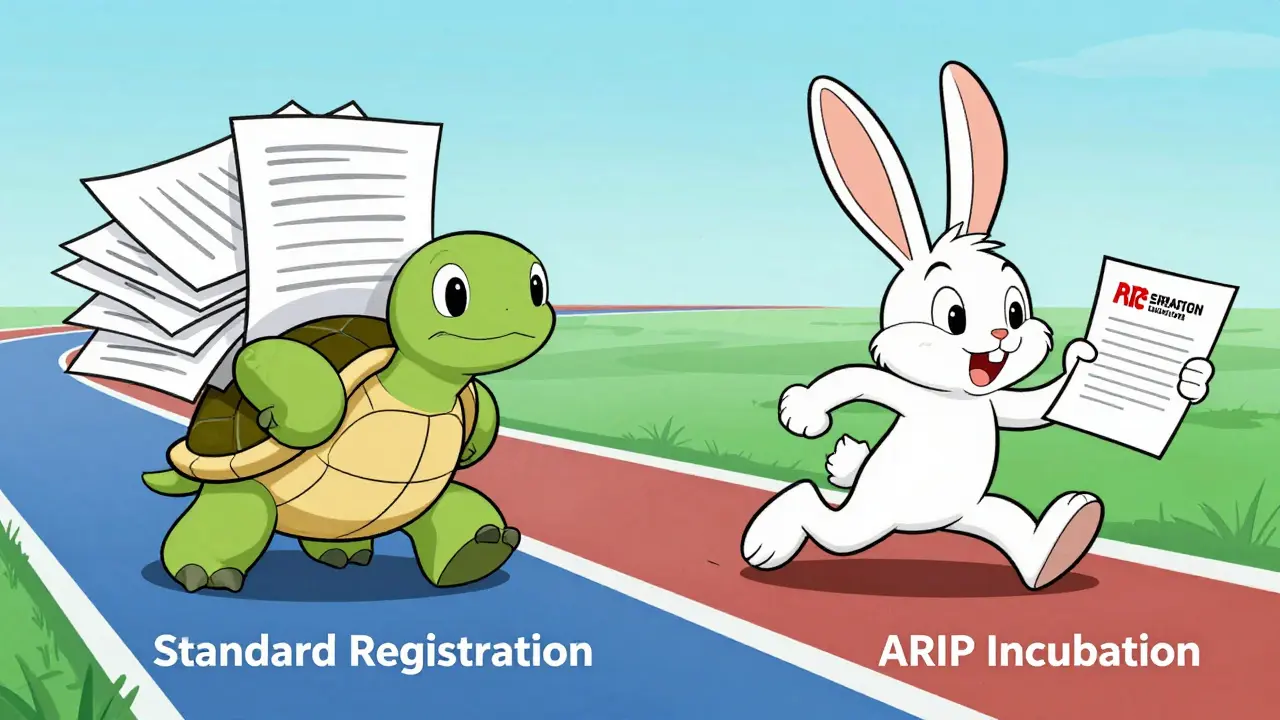
The Two Pathways: Standard vs. Accelerated Regulatory Incubation Program (ARIP)
Recognizing that the full licensing process can be daunting for startups, the SEC introduced two pathways. For established firms with deep pockets, the standard registration process applies. However, for newer ventures, there is a more flexible option: the Accelerated Regulatory Incubation Program (ARIP).
Standard Registration
This is the traditional route. You submit all documentation, pay fees, undergo due diligence, and wait for approval. It is thorough but can be slow. It is best suited for companies that already have their capital raised, office leased, and team hired.
Accelerated Regulatory Incubation Program (ARIP)
ARIP is designed to simplify onboarding. It allows you to obtain preliminary approval "in principle," meaning you can start operating under SEC oversight while you finish the full registration requirements. This is a game-changer for startups that need to generate revenue to fund their compliance journey.
To qualify for ARIP, you must:
- Be legally incorporated with a clear corporate structure.
- Maintain a Nigerian office with your CEO or Managing Director resident in Nigeria.
- Be actively engaged in securities and investment business.
- Have a pending virtual asset-related application with the SEC.
The ARIP timeline is strict. You begin regulatory incubation, submit quarterly progress reports, receive guidance at the 10-month mark, and face a decision at 12 months. At the one-year mark, you either pursue full registration or cease operations if you haven't met the criteria. There is no indefinite probation.
Step-by-Step Application Process
Navigating the bureaucracy requires precision. Here is how the process typically unfolds:
- Preparation: Ensure your company is registered with the CAC. Gather your MEMART, Status Report, and appoint a resident director. Secure the N500 million paid-up capital.
- Business Model Submission: Draft a comprehensive business plan. The SEC wants to see a unique value proposition. Detail your target market, revenue model, and risk management strategies.
- Compliance Framework Documentation: Write out your internal rules. This includes investor protection mechanisms, conflict of interest policies, customer dispute resolution frameworks, and detailed KYC/AML procedures.
- Technical Infrastructure Proof: Provide specifications for your tech stack. Show evidence of cybersecurity measures, data encryption standards, and backup systems.
- Sworn Undertakings: A director or company secretary must sign a sworn undertaking to comply with all SEC Rules and Regulations and the Investments and Securities Act 2005.
- Submission: Submit the complete dossier to the SEC. If applying via ARIP, indicate your intent to join the incubation program.
- Review & Feedback: The SEC will review your application. They may request additional information or clarification. Respond promptly to avoid delays.
- Approval: Once satisfied, the SEC grants the license or preliminary approval (for ARIP participants).
Challenges and Market Implications
While the new framework provides legal clarity, it comes with significant costs. Industry experts note that the compliance burden is heavy. The N500 million capital requirement alone excludes many small players. Operational costs for AML/KYC software, resident staff, and secure infrastructure will likely be passed on to users in the form of higher trading fees.
For international cryptocurrency platforms, the choice is binary: get a VASP license and establish a local presence, or exit the Nigerian market. This could reduce competition, potentially benefiting licensed incumbents. However, it also raises consumer confidence. Users are more likely to trust a platform that is regulated, insured, and subject to regular audits.
The government’s motivation is partly fiscal. With a goal to increase tax collection from under 10% of GDP to 18% by 2027, regulating the crypto sector opens a new revenue stream. Licensed VASPs become taxable entities, bringing informal economic activity into the formal economy.
Future Outlook
Nigeria’s approach serves as a model for other African nations. As the SEC gains experience with VASP oversight, expect further refinements. We may see updated guidelines on cross-border transactions, specific rules for DeFi protocols, and potential adjustments to capital requirements based on market feedback. For now, the message is clear: crypto in Nigeria is here to stay, but it must play by the rules.
How much does it cost to get a VASP license in Nigeria?
The primary financial requirement is a minimum paid-up capital of N500,000,000 (approximately $325,000 USD). Beyond this, you must budget for legal fees, auditing costs, technology infrastructure, office rent, and salaries for resident staff. Total setup costs often exceed the capital requirement significantly.
Can foreign companies apply for a VASP license in Nigeria?
Yes, but they must incorporate a local subsidiary registered with the Corporate Affairs Commission (CAC). Furthermore, the company must have a physical office in Nigeria and a director who is a resident of Nigeria. Remote operations from abroad are not permitted.
What is the difference between standard registration and ARIP?
Standard registration requires full compliance before you can operate. ARIP (Accelerated Regulatory Incubation Program) allows qualified startups to begin operations under provisional oversight while they complete the full registration process over a 12-month period.
Does the VASP license cover mining and staking?
Yes. The 2025 legislation expanded the scope of regulated activities to include mining operations, staking services, token issuance, and airdrop distributions, in addition to traditional exchange and wallet services.
How long do I need to keep customer records?
Licensed VASPs must maintain comprehensive customer records, including transaction histories and identity verification documents, for a minimum of seven years. This aligns with international anti-money laundering standards.
Lee Paige
June 5, 2026 AT 06:53The SEC is just a front for the globalist agenda to track every single transaction you make. They want total control over your wealth, and this license is just another shackle. Wake up people.
aaliyah zahid
June 5, 2026 AT 09:55Oh look, another government agency trying to monetize our freedom with a fancy new acronym. Because nothing says 'innovation' like paying half a billion naira to fill out paperwork while they watch your every move. Truly inspiring leadership we have here.
Karthikeyan S
June 5, 2026 AT 21:25bro really thinks 500m naira is cheap 😂 the system is rigged against small players. big corps will eat everyone alive. typical corporate greed 📉💀
Narendra Kulkarni
June 6, 2026 AT 01:17its actually good that they are bringing some order to the chaos. i know its expensive but at least now we have clear rules instead of operating in the dark. hope it helps legitimize the sector for long term growth.
verna kennedy
June 7, 2026 AT 20:08You need to understand that regulation is not about restricting freedom; it is about ensuring stability and trust. If you cannot afford the capital requirements, perhaps you should reconsider entering this high-stakes industry. The market demands professionalism.
Dinesh Pattigilli
June 9, 2026 AT 12:30lol only idiots would think crypto is free money. the elites always find a way to tax everything. this license fee is just the first step before they seize your assets if you disagree with their policies. stay woke or get crushed.
Madhu Menon
June 10, 2026 AT 00:21Is it truly freedom if it comes with such heavy chains? The philosophical implication of state-sanctioned digital currency is profound. We must question whether the security provided outweighs the loss of autonomy. 🤔
Mark Corpuz
June 11, 2026 AT 22:00The requirement for a resident director and physical office ensures accountability, which is crucial for protecting investors. While the capital threshold is high, it aligns Nigeria with international standards for financial institutions.
Caitlin Donahue
June 12, 2026 AT 08:15i mean its kinda crazy how much money u need just to start. like why do they care so much? seems like they just want to squeeze more cash from people who are already struggling. not cool at all tbh.
Kelly Tenney
June 12, 2026 AT 10:02I see the challenge, but I also see the opportunity for those who can adapt. Building a compliant business takes time, but the rewards for being a trusted player in the market are significant. Let's support each other through this transition.
Caralee Robertson
June 12, 2026 AT 13:05this whole process sounds so stressful and complicated. i dont even know where to begin with all these documents and fees. feels like they are setting us up to fail from the start. sigh.
Greg Lewis
June 13, 2026 AT 16:24they say its for security but really its just about control. you cant hide your transactions anymore. the end of privacy is near and we are helping them build the cage ourselves. funny how that works huh