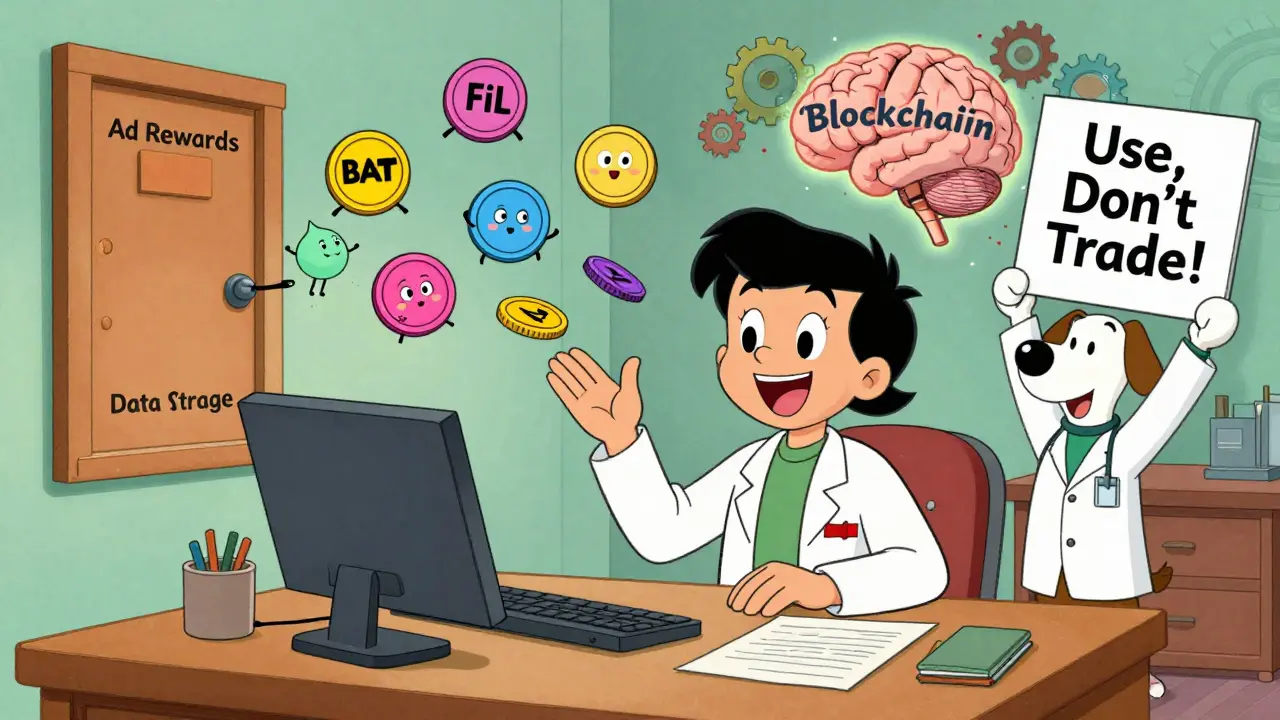
Utility tokens aren’t just another crypto buzzword-they’re the engine driving real functionality in thousands of blockchain apps. Unlike Bitcoin or Ethereum, which are primarily stores of value or platforms, utility tokens exist to do something. They unlock features, pay for services, or grant access to decentralized systems. If you’ve ever used Brave browser and earned BAT for viewing ads, or staked LINK to get data from Chainlink, you’ve already interacted with a utility token. These aren’t speculative bets; they’re digital keys to digital services.
How Utility Tokens Actually Work
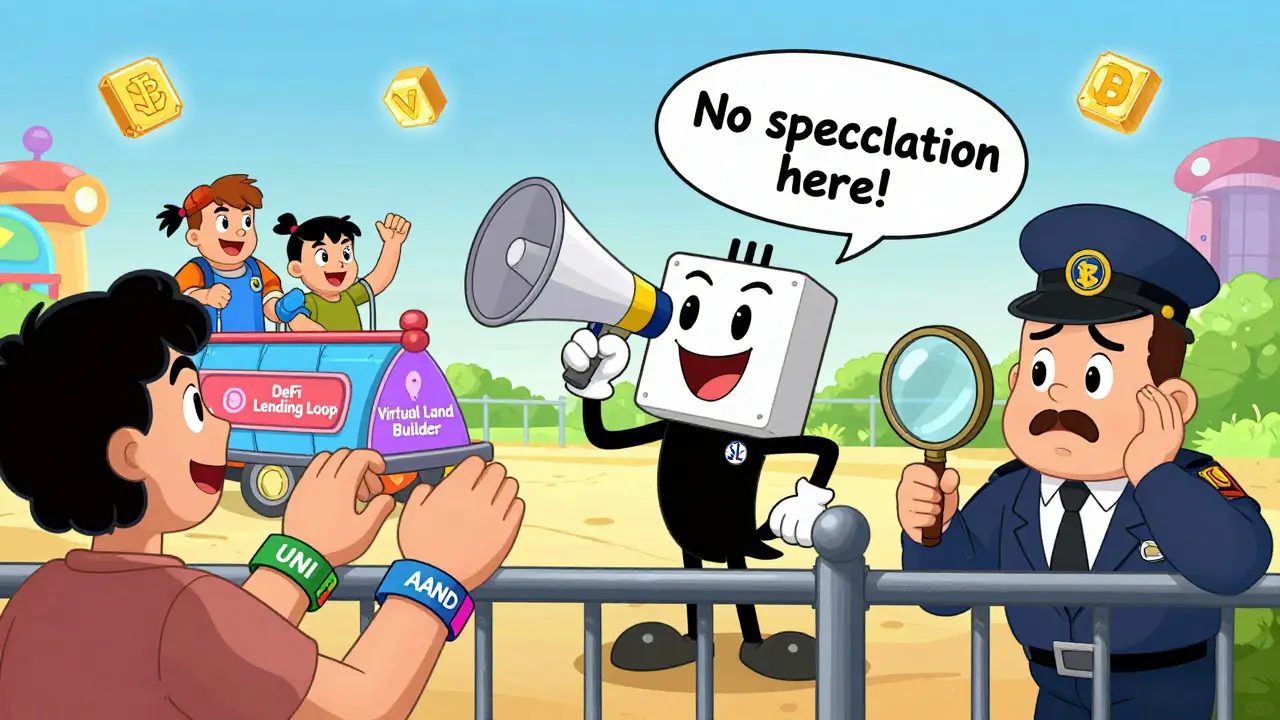
Think of a utility token like a theme park wristband. You don’t buy the wristband to sell it later-you buy it because it lets you ride the roller coasters. Same idea. A utility token gives you access to a specific service on a blockchain. It’s issued by a project to fund development, but its real value comes from what you can do with it after you hold it.
Most utility tokens run on Ethereum using the ERC-20 standard. That’s not a coincidence. ERC-20 is a simple, repeatable template that lets developers create tokens that work anywhere Ethereum does-wallets, exchanges, DeFi apps. Over 73% of all utility tokens use this standard, according to TokenSniffer’s 2023 data. Others run on Binance Smart Chain, Solana, or Polygon, each offering faster or cheaper transactions. Solana, for example, confirms transactions in under half a second and costs less than a penny per transfer, making it ideal for apps that need speed, like gaming or micropayments.
When a project launches a token, it defines exactly what it does. Does it pay for storage? Then it’s like Filecoin’s FIL. Does it reward attention? Then it’s Basic Attention Token (BAT). Does it let you vote on governance? Then it’s a utility token with voting rights. The key is: the token must have a clear, non-speculative function. If all it does is hope to go up in price, regulators will likely call it a security.
Top Use Cases You’re Already Using (or Should Be)
Utility tokens power real, working systems. Here are the biggest and most proven use cases right now:
- Decentralized Finance (DeFi): Over 92% of DeFi protocols use native utility tokens. Uniswap’s UNI lets you vote on protocol changes and earn fees. Aave’s AAVE secures the lending platform by acting as collateral for loans. These aren’t optional-they’re core to how the system runs.
- Web Browsing & Advertising: Brave Browser’s BAT token pays users for viewing privacy-focused ads. By Q3 2023, over 64 million people used Brave, and many earned $50-$300 annually just by browsing. No tracking. No ads. Just fair compensation.
- Decentralized Storage: Filecoin’s FIL token pays miners to store data on a global network. It’s like Amazon S3, but decentralized. Users pay in FIL; miners earn it. The system self-balances based on supply and demand.
- Gaming & NFTs: Axie Infinity’s AXS lets players breed, battle, and earn in-game assets. The Sandbox’s SAND lets users buy virtual land and build experiences. These tokens aren’t just currency-they’re ownership stakes in digital worlds.
- Data Oracles: Chainlink’s LINK token pays node operators to fetch real-world data (like stock prices or weather) and feed it to smart contracts. Without LINK, DeFi loans couldn’t know if a house price dropped.
These aren’t theory. They’re live, active, and growing. Brave has 64 million monthly users. Filecoin stores over 10 exabytes of data. DeFi protocols using utility tokens hold over $100 billion in locked value.
Why Most Utility Tokens Fail (And How to Spot the Good Ones)
Not all utility tokens survive. In fact, 67% fail within 18 months, according to the Bank for International Settlements. Why? Because they’re built on bad economics.
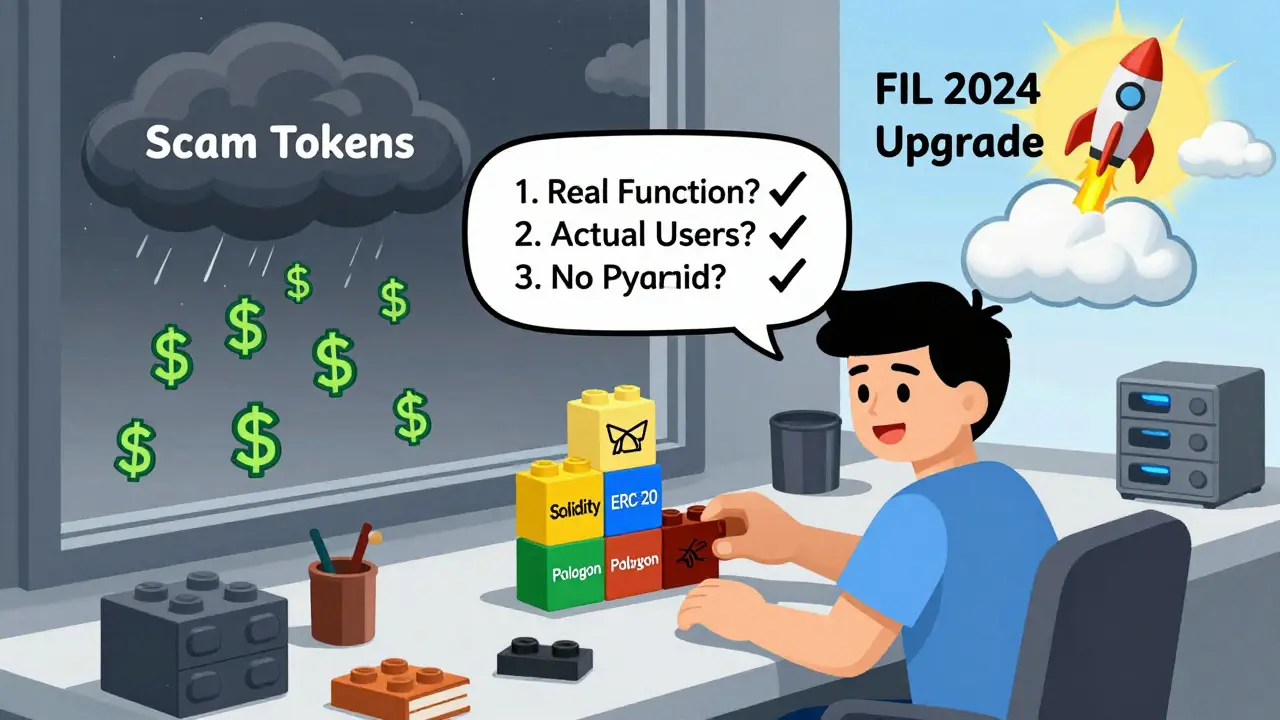
A good utility token has three things:
- Clear, non-negotiable function: Does it pay for something? Grant access? Enable voting? If the whitepaper says “value will grow because we’re awesome,” that’s a red flag.
- Real demand: Are people actually using the service? BAT works because Brave has millions of users who want ad rewards. If no one’s using the app, the token has no purpose.
- Tokenomics that don’t rely on price pumps: If the token’s value depends on new buyers constantly entering, it’s a pyramid. A healthy model uses token burning (destroying tokens to reduce supply), staking rewards, or usage-based demand.
Filecoin is a great example. FIL isn’t traded because people think it’ll go up. It’s traded because people need to pay for storage. The more data stored, the more FIL is used-and burned. That’s sustainable.
On the flip side, EOS.IO’s token crashed 95% after its early hype because staking was too complex. Users had to lock up tokens to get bandwidth, and the system became a mess. No one wanted to use it. The token lost its utility.
Regulatory Gray Zones and What’s Changing
The SEC says 90% of utility tokens are actually securities. That’s a scary stat. But here’s the nuance: it’s not about the token-it’s about how it’s sold.
If a project sells a token as an investment opportunity-promising profits from others’ efforts-it’s likely a security. If it sells a token as a prepaid service-“buy this to access our platform”-it’s more likely a utility token.
That’s why new projects are changing. Gartner’s Avivah Litan found 63% of new tokens now include compliance features from day one. Some add revenue-sharing (like paying token holders a cut of fees) in a way that avoids the Howey Test. Others design tokens that can’t be traded until the network is live-making them harder to classify as investments.
The EU’s MiCA regulation (effective December 2024) will help. It clearly separates utility tokens from financial instruments-if they don’t promise profits, they’re not securities. The U.S. still plays it case-by-case, which creates uncertainty. But projects are adapting. Many now launch on regulated exchanges or partner with licensed custodians.
What’s Next: Hybrid Tokens and the Future
The future of utility tokens isn’t pure utility. It’s hybrid.
Take Filecoin’s upcoming FVM upgrade. Right now, FIL is just a payment token for storage. In 2024, it’ll become a programmable currency-like Ethereum. Developers will build apps on Filecoin, and users will pay in FIL to use them. Suddenly, FIL isn’t just a payment tool. It’s a full ecosystem token.
Same with Ethereum’s ERC-6551 standard. It lets NFTs hold tokens. Imagine a digital artwork that comes with 10 BAT tokens inside it. You own the art, and you get access to Brave’s ad rewards just by holding it. That’s utility layered on utility.
By 2025, Matthew Graham of Sunny Capital predicts 75% of new decentralized apps will use utility tokens. That’s not hype-it’s logic. Blockchains need incentives. Users need rewards. Services need payment. Utility tokens are the only thing that ties all three together.
They’re not magic. They’re mechanics. And as the Web3 ecosystem grows, they’ll become as common as login buttons.
How to Get Started (Without Getting Scammed)
If you want to use or create a utility token, here’s how to avoid the pitfalls:
- For users: Only use tokens from projects with real, active apps. Check their website. Do they have users? Do they show transaction stats? If not, walk away.
- For creators: Start simple. Use Polygon or Binance Smart Chain to deploy a token for under $100. Build a tiny app first-maybe a tipping system or access pass. Test demand before scaling.
- For developers: Learn Solidity basics. Use OpenZeppelin’s pre-built token contracts. Don’t reinvent the wheel. 40-60 hours of study is enough to create a working token.
- Always check: Is the token required to use the service? If yes, it’s likely a utility token. If it’s optional and sold as a “future profit,” it’s probably a security.
There’s no shortcut. But there is a clear path: build something useful, let the token serve it, and let the market decide.
Are utility tokens the same as cryptocurrencies?
No. All utility tokens are cryptocurrencies, but not all cryptocurrencies are utility tokens. Bitcoin and Ethereum are cryptocurrencies that act as money or platforms. Utility tokens are a subset-they’re designed for specific functions within apps, like paying for storage or accessing services. Think of it like this: Bitcoin is cash. BAT is a bus pass.
Can I make money from utility tokens?
You can, but that’s not their purpose. Utility tokens can increase in value if demand for the service grows-like BAT rising as more people use Brave. But if you buy a token hoping to flip it, you’re treating it like a security, which risks regulatory issues. The best returns come from using the service, not trading the token.
Why do utility tokens have price volatility?
Because they’re traded on exchanges. Even if a token’s only job is to pay for cloud storage, people still buy and sell it like stock. If the app gains users, demand rises and price goes up. If the app fails, demand drops and price crashes. That’s why tokens tied to real usage (like FIL or BAT) hold value better than ones with no clear function.
How do I know if a utility token is legitimate?
Look for three things: 1) A working product with real users-not just a whitepaper. 2) Transparent tokenomics showing how the token is used, burned, or earned. 3) Documentation and community support. If the project has a GitHub with active commits and a Discord with daily activity, that’s a good sign. If the website looks like a meme, walk away.
Can utility tokens be used across different blockchains?
Most can’t-not by design. Utility tokens are built for one ecosystem. A BAT token only works in Brave’s system. Cross-chain bridges exist, but only 22% of utility tokens support them. That’s intentional. It keeps the token’s value tied to its specific use case. If a token works everywhere, it loses its focus-and often its value.
Elizabeth Choe
February 14, 2026 AT 04:06Okay but let’s be real-BAT is the only utility token I actually use. I open Brave just to get my daily ad bucks, then cash out to buy coffee. No tracking, no BS, just chill vibes. It’s like getting paid to not hate the internet. 🤷♀️
Grace Mugambi
February 14, 2026 AT 10:07It’s fascinating how utility tokens flip the script on value. They’re not about speculation-they’re about access. Like a library card for the digital age. The real innovation isn’t the token-it’s the ecosystem that makes it necessary.
Crystal McCoun
February 14, 2026 AT 22:09I’ve read this post three times. And I still think: utility tokens work best when they’re invisible. You shouldn’t notice the token-you should notice the service. If you’re thinking about the token’s price, you’re already doing it wrong. Also, staking isn’t a feature-it’s a trap if the protocol doesn’t have real users.
Filecoin’s burning mechanism? That’s the gold standard. It’s not about hype. It’s about scarcity created by demand. And that’s sustainable.
Elijah Young
February 16, 2026 AT 07:43Most people don’t realize utility tokens are just payment systems with extra steps. They’re not revolutionary. They’re just… awkwardly decentralized. The real win is when they replace centralized gatekeepers-like Brave replacing Google ads. But that’s rare.
Donna Patters
February 17, 2026 AT 22:47How can anyone take this seriously? A token that pays you for ads? This is the dystopian future we were warned about: surveillance capitalism, rebranded as ‘Web3.’ The only thing ‘utility’ here is the illusion of autonomy. It’s capitalism with a blockchain tattoo.
Michelle Cochran
February 18, 2026 AT 15:03It’s not about utility-it’s about control. Who really benefits when you ‘earn’ BAT? The company that owns Brave. The token is a leash. You think you’re getting paid? No-you’re being monetized. And now you’re proud of it. That’s the real tragedy.
Claire Sannen
February 19, 2026 AT 23:47Filecoin’s model is the clearest example of a utility token done right. The token’s value is directly tied to storage demand. No speculation needed. Just supply, demand, and a functioning network. That’s rare. And it’s why it’s still alive after six years.
Christopher Wardle
February 20, 2026 AT 15:40Utility tokens aren’t magic. They’re economic instruments. The difference between a good one and a bad one is whether it solves a problem or creates one. Most projects confuse ‘token’ with ‘solution.’ They’re not the same.
monique mannino
February 20, 2026 AT 16:56OMG YES!! 🙌 I use SAND to buy virtual land and now I’m building a tiny art gallery in The Sandbox. It’s silly, but it’s mine. And I earned it by playing, not investing. That’s the dream. 💫
Peggi shabaaz
February 22, 2026 AT 11:41honestly i just use bat because it blocks ads and pays me back. no need to overthink it. if it works, it works. blockchain is just tech at this point
Ben Pintilie
February 24, 2026 AT 03:14lol i read the whole thing and still don’t get why this matters. just use paypal.
🫠
Sakshi Arora
February 25, 2026 AT 12:17utility token is not crypto but still crypto? so its like a key not money but still money? i think i need to sleep
Desiree Foo
February 26, 2026 AT 00:15It is deeply irresponsible to frame utility tokens as anything other than speculative instruments masquerading as utility. The SEC is correct. This is securities fraud disguised as innovation. And you’re celebrating it? Shameful.
Robbi Hess
February 26, 2026 AT 06:12This entire post reads like a marketing deck. ‘Over 73% use ERC-20’? Big deal. So do 90% of failed projects. ‘64 million Brave users’? Most of them are bots. The data is curated. The truth? Most utility tokens are vaporware.
Keturah Hudson
February 27, 2026 AT 06:37In Nigeria, we use crypto tokens for everything-utility, payments, remittances. Here, people treat them like stocks. But in places where banks fail, utility tokens aren’t theoretical-they’re survival. This isn’t just tech. It’s dignity.
Ace Crystal
February 27, 2026 AT 20:23STOP overcomplicating it. Utility token = key to a service. That’s it. No need for whitepapers, no need for ‘tokenomics.’ If it works, use it. If it doesn’t, move on. The future isn’t complex-it’s simple. And it’s already here.