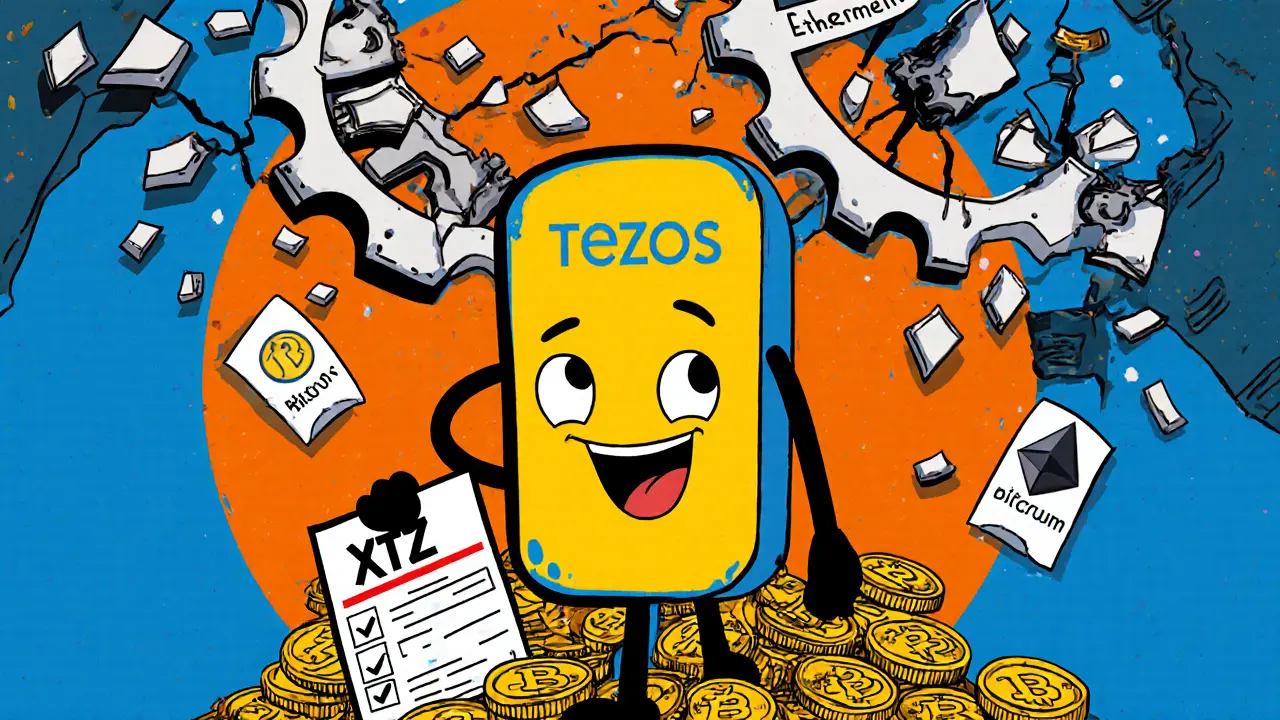
Tezos Governance: How Decentralized Voting Shapes the Blockchain
When you think of how blockchains make decisions, most assume it’s developers pushing updates behind closed doors. But Tezos governance, a self-amending blockchain protocol that lets token holders vote directly on changes. Also known as on-chain governance, it’s one of the few systems where upgrades happen because the community says so—not because a CEO or core team decides. This isn’t just theory. Since 2018, Tezos has gone through over 10 protocol upgrades—all approved by stakeholders holding XTZ tokens. No hard forks. No community splits. Just votes, results, and code updates that roll out automatically.
How does it actually work? Every few months, Tezos opens a voting cycle. Holders lock up their XTZ (no need to sell) and vote yes or no on proposed changes. Proposals can come from anyone—developers, researchers, even regular users—but they need enough support to get on the ballot. Once voting ends, if a majority approves, the upgrade activates automatically. This is on-chain voting, a process where decisions are recorded and executed directly on the blockchain. It’s different from Ethereum or Bitcoin, where changes rely on miner consensus or social coordination. Tezos makes governance part of the protocol itself.
And it’s not just about tech upgrades. Tezos governance has been used to adjust transaction fees, improve security, and even reallocate funds from the treasury to support new projects. This makes it a living system—constantly adapting based on what users actually want. That’s why it’s often called blockchain democracy, a model where economic power translates directly into decision-making power. If you hold XTZ, you’re not just a passive investor. You’re a participant in shaping the future of the network.
But it’s not perfect. Critics say large holders (whales) dominate votes, and many small holders don’t bother participating. Still, Tezos keeps improving its system—adding better tools for education, simplifying voting interfaces, and even experimenting with delegation so people who don’t want to vote can still have their voice counted through trusted representatives.
What you’ll find in the posts below aren’t just random articles. They’re real-world examples of how governance plays out—sometimes in surprising ways. You’ll see how proposals get made, how voting power shifts, and how failed ideas get buried. You’ll also find stories about scams pretending to be Tezos governance tools, and how to tell the difference between real votes and fake airdrops. This isn’t theoretical. It’s happening right now, on a blockchain that lets you have a say.
Tezos (XTZ) is a self-upgrading blockchain with on-chain governance and formal verification for secure smart contracts. Learn how it works, why it's different from Ethereum, and where it's being used today.
View More