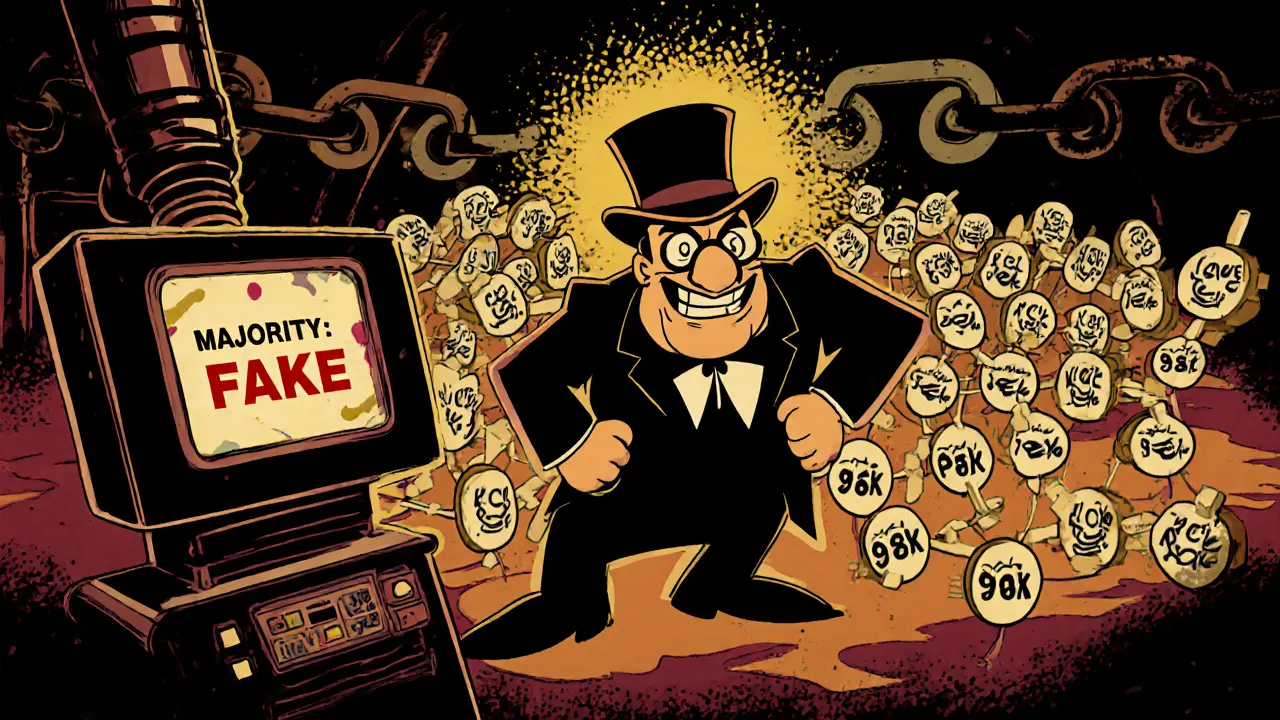
Sybil attack: How fake identities threaten decentralized networks
When a Sybil attack, a type of security breach where one entity creates multiple fake identities to gain disproportionate control. Also known as identity flooding, it undermines the core promise of decentralized systems: that no single party should dominate. Imagine a voting system where one person pretends to be a thousand people. That’s a Sybil attack — and it’s not science fiction. It’s happened on crypto networks, DeFi protocols, and even early peer-to-peer file-sharing platforms. Without defenses, these fake identities can manipulate votes, drain liquidity, or crash token prices by creating false demand.
Blockchain networks rely on consensus — agreement among participants — to stay secure. But if someone can spawn hundreds of fake nodes or wallets, they can trick the system into thinking their version of the truth is the majority view. This is why Sybil resistance, the set of techniques used to prevent fake identities from overwhelming a network matters so much. Projects like Bitcoin use proof-of-work to make creating fake nodes expensive. Others, like Ethereum’s proof-of-stake, require real economic stakes — you have to lock up real crypto to participate. If you try to fake it, you lose your stake. That’s the key: make fraud costly, not easy.
Some networks use identity verification, a method where users prove they’re real humans through KYC or social graphs to block Sybil actors. But that fights the whole point of decentralization. So most projects avoid full KYC and instead use clever tricks: limiting how many accounts one IP can create, requiring proof of unique human behavior, or even using machine learning to spot bot-like patterns. The most successful systems don’t just stop Sybil attacks — they make them pointless. If you can’t profit from fake accounts, why bother making them?
The posts below show exactly how Sybil attacks show up in the wild — from fake airdrops pretending to be legitimate, to exchanges with inflated trading volume, to tokens with zero supply but fake price charts. These aren’t just scams. They’re low-effort Sybil attacks dressed up as opportunities. You’ll see how LocalTrade, Decoin, and even some "airdrop" projects rely on fake identities to trick users. And you’ll see how projects like VoltSwap and Flux fight back with transparent tech that makes manipulation harder. This isn’t theory. It’s real-world crypto survival.
A Sybil attack lets one attacker control a blockchain by creating fake nodes. Bitcoin is safe because it's too expensive to fake nodes. Smaller chains are vulnerable. Learn how Proof of Stake, social graphs, and economic barriers stop these attacks.
View More