P2P Crypto Exchange: How Peer-to-Peer Trading Works and What to Watch For
When you trade crypto on a P2P crypto exchange, a platform that connects buyers and sellers directly without holding your funds. Also known as peer-to-peer trading, it’s one of the few ways to buy Bitcoin or altcoins without handing over your ID or waiting for bank approvals. Unlike centralized exchanges like Coinbase or Binance, a P2P crypto exchange doesn’t act as a middleman—you deal straight with another person. That means more control, but also more risk.
This model relies on three key pieces: crypto escrow, a system that holds your funds until both sides fulfill their part of the deal, payment methods, like bank transfers, PayPal, or even cash in person, and user reputation, the system that tracks who’s trustworthy and who’s a scammer. These aren’t just features—they’re your safety net. Without them, you’re just sending money to a stranger with no way back.
But here’s the catch: most P2P crypto exchanges don’t require KYC. That’s great if you value privacy, but it also means scammers can slip through. Look at what happened with LocalTrade—fake volume, no regulation, and a trail of users who lost money trying to recover funds from fake recovery schemes. That’s not an exception. It’s the rule on unregulated platforms. On the flip side, platforms like LocalBitcoins and Paxful built their reputation by enforcing strict user ratings and dispute resolution. They proved you don’t need a bank to make crypto trading safe—you just need accountability.
And it’s not just about avoiding scams. P2P trading is how people in countries with strict capital controls—like Vietnam or Nigeria—get access to crypto. With the State Bank of Vietnam banning stablecoins and forcing exchanges to hold $379 million in capital, P2P became the only real option for many. It’s also how users bypass delistings of privacy coins like Monero, where centralized exchanges bow to regulators but P2P platforms don’t care.
But here’s what most beginners miss: a P2P crypto exchange doesn’t make you immune to fraud. It just moves the risk from the platform to the person you’re trading with. That’s why you need to check trade history, avoid off-platform communication, and never release crypto before you have clear proof of payment. One bad trade can wipe out weeks of savings.
What you’ll find below isn’t a list of the best P2P platforms. It’s a collection of real stories—some warning you away from fake exchanges like Decoin, others showing how tools like escrow and reputation systems can actually work. You’ll see how projects like VoltSwap and ABX use decentralized tech to reduce reliance on middlemen, and how scams like LEOS airdrops and BABYDB tokens prey on people who think P2P means "no rules." This isn’t theory. It’s what people lost money on last year. And it’s still happening today.
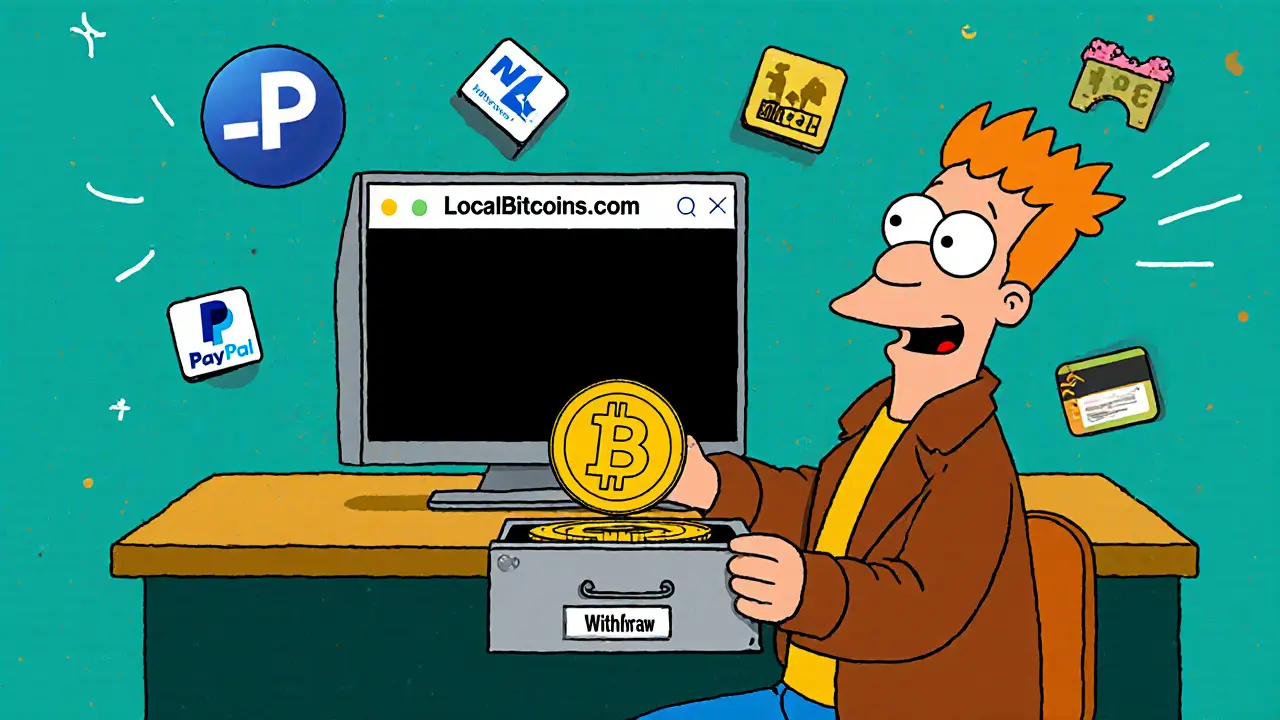
LocalBitcoins was the largest peer-to-peer Bitcoin exchange until it shut down in 2023 due to EU regulations. Learn what made it unique, why it closed, and which platforms now fill its role.
View More