OFSI: What It Is, Why It Matters in Crypto, and How It Affects Your Wallet
When you trade crypto, you might not think about OFSI, the UK’s Office of Financial Sanctions Implementation, which enforces asset freezes and trading bans tied to national security and anti-money laundering rules. Also known as UK Financial Sanctions Unit, it doesn’t just target banks—it directly affects crypto wallets, exchanges, and even individual traders who unknowingly interact with sanctioned addresses. If you’ve ever had a transaction blocked or a token delisted from a platform, OFSI could be the reason—even if you’re not in the UK.
OFSI doesn’t create laws, but it enforces them. When the UK government adds a wallet, exchange, or token to its sanctions list, OFSI makes sure no one in the UK can send or receive funds from it. That means if a crypto project is linked to a sanctioned entity—even indirectly—exchanges like Coinbase or Kraken must freeze it. This isn’t theoretical. In 2023, OFSI ordered the blocking of a Tornado Cash-related wallet holding over $10 million in ETH, and exchanges complied within hours. It’s not about privacy coins or DeFi tech—it’s about compliance. If you’re holding a token that’s been flagged, your wallet might get tagged, and you’ll need to prove you’re not involved with the sanctioned party. No one wants that hassle.
OFSI’s reach extends beyond borders. Many global exchanges follow UK rules because they’re strict, clear, and carry heavy penalties for violations. If you’re using a non-KYC platform and send funds to a wallet later flagged by OFSI, you could be caught in the crossfire. Even if you didn’t know the address was risky, your transaction history might trigger a compliance review. That’s why tools like blockchain analyzers are now essential—not just for tracking prices, but for avoiding sanctions traps. And while OFSI doesn’t ban crypto outright, it forces platforms to treat digital assets like traditional financial instruments. That’s a big shift.
What you’ll find below isn’t a list of OFSI announcements. It’s a collection of real cases where crypto projects, exchanges, or tokens got tangled in sanctions, compliance, or regulatory gray zones. You’ll read about platforms that vanished after being linked to sanctioned actors, tokens that were delisted overnight, and users who lost access to funds because they unknowingly interacted with a blocked address. These aren’t hypotheticals. They’re real stories from traders who thought crypto was beyond regulation—until OFSI showed up.
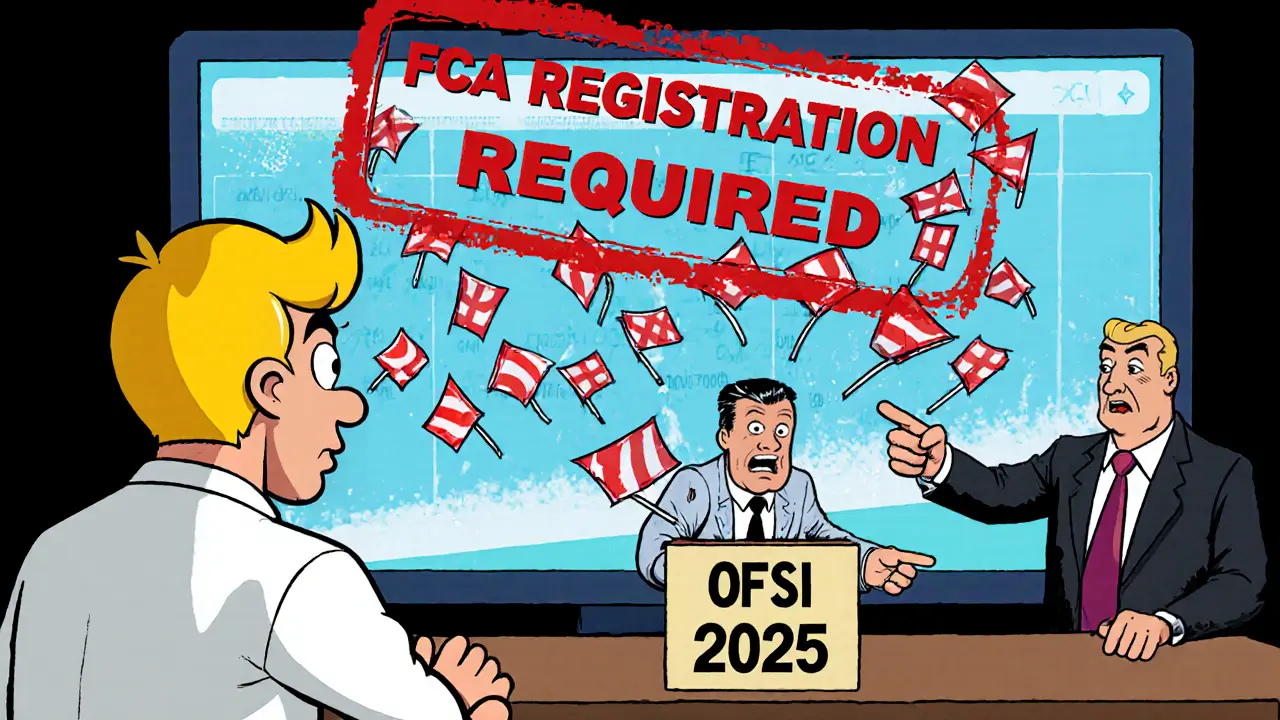
UK crypto firms face strict sanctions compliance rules in 2025. OFSI and FCA require real-time monitoring, Travel Rule enforcement, and blockchain analytics to prevent sanctions evasion. Non-compliance risks heavy fines and business closure.
View More