Lazarus Group: What It Is, How It Targets Crypto, and What You Need to Know
When you hear about a crypto exchange getting hacked for hundreds of millions of dollars, there’s a good chance the Lazarus Group, a state-sponsored cyberattack unit tied to North Korea. Also known as APT38, it’s not some lone hacker in a basement—it’s a well-funded, highly organized team with military-grade tools and direct ties to a foreign government. This isn’t about random scams or phishing emails. This is systematic, large-scale theft designed to fund national programs under the radar.
The Lazarus Group doesn’t just break in—they study their targets for months. They’ve hit exchanges like KuCoin and Ronin Network, stole over $600 million from Axie Infinity’s bridge, and even targeted crypto wallets inside banks. Their tools are custom-built, their tactics evolve fast, and they always leave behind digital breadcrumbs pointing back to North Korea. They use fake job postings to recruit developers, plant malware in popular software, and even impersonate legitimate crypto teams to trick users into handing over private keys. You won’t find them on Twitter. You’ll find them in the transaction logs of stolen funds moving through mixers and offshore wallets.
What makes them dangerous isn’t just the money they steal—it’s how they force the whole crypto ecosystem to react. Exchanges now spend millions on threat intelligence just to stay ahead. Wallet providers added extra layers of verification. Regulators started demanding proof of fund origins. Even small DeFi protocols now run security audits before launch. The Lazarus Group didn’t just attack crypto—they changed how crypto works. And they’re still active. New attacks surface every year, often targeting newer chains with weaker security or users who skip basic safety steps like hardware wallets.
If you trade crypto, you’re not immune. Even if you don’t use a major exchange, a single click on a fake airdrop link or a malicious smart contract could hand over your keys to someone working for them. The group doesn’t care if you’re a beginner or a pro—they just want access. That’s why understanding them isn’t just about curiosity. It’s about survival.
Below, you’ll find real cases of their attacks, breakdowns of how they bypassed security, and the exact steps you can take to make yourself a harder target. No fluff. No hype. Just what works.
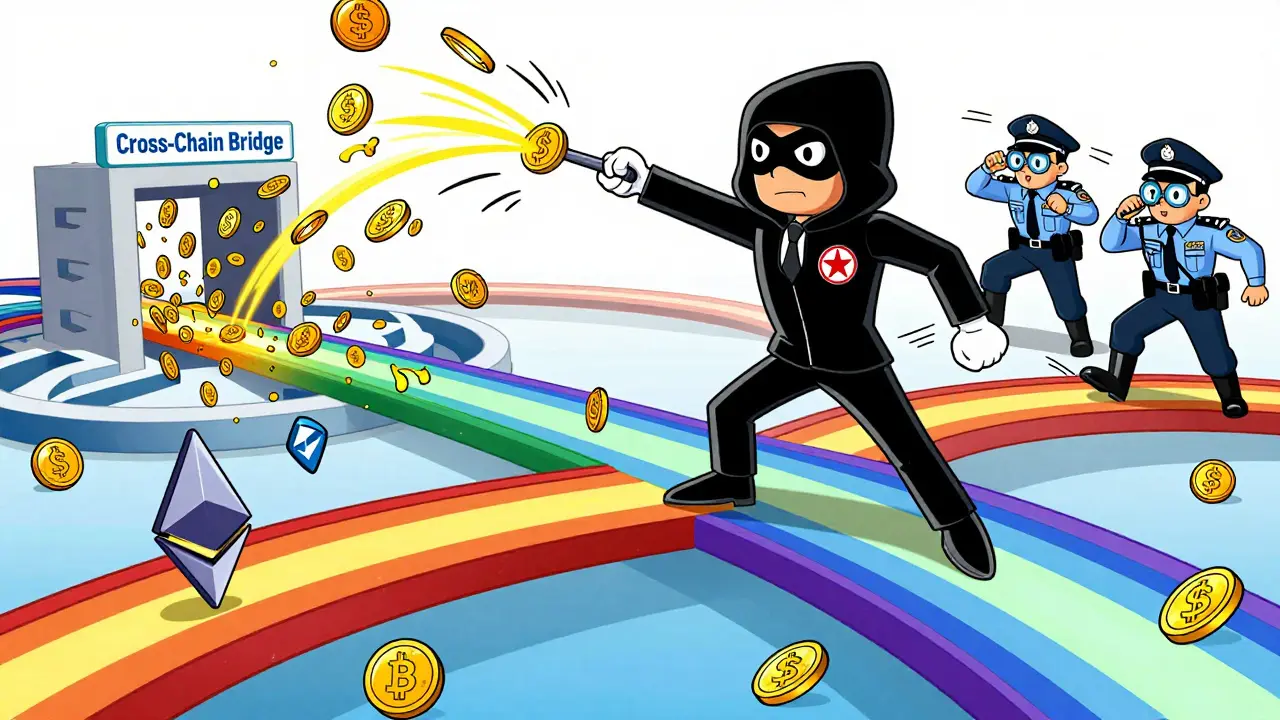
North Korean hackers are stealing billions in crypto by hopping across blockchains to hide their tracks. This is how they do it-and why it’s a global security threat.
View More