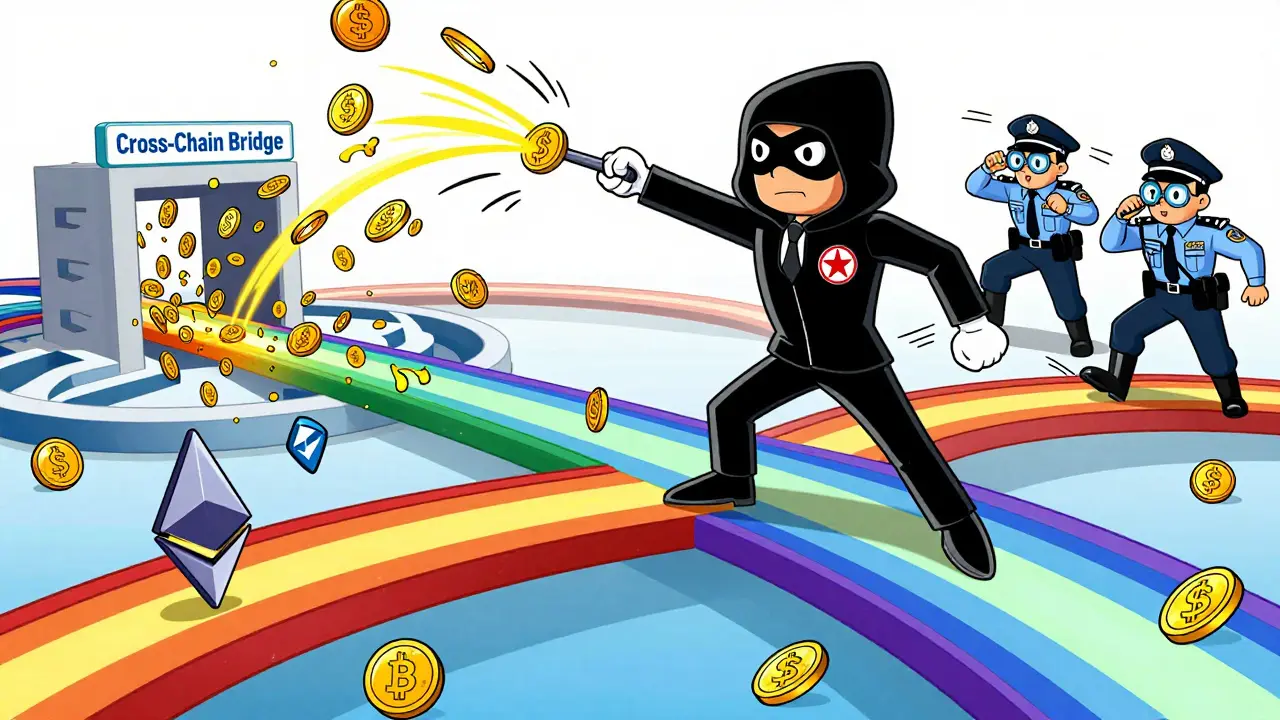
Cross-Chain Transaction Tracer
See how stolen funds are fragmented through multiple blockchains to evade detection. Enter the initial amount and number of chain hops to simulate the laundering process.
North Korean hackers aren’t just stealing crypto-they’re rewriting the rules of how money moves online. In 2025, a single attack on Bybit stole over $1.5 billion, making it the biggest crypto heist in history. But the real story isn’t the amount. It’s how they got away with it. By hopping between blockchains-Ethereum, Bitcoin, Tron, Solana, and more-they turn what should be a clear trail into a maze. And law enforcement is barely keeping up.
Why Cross-Chain Laundering Works
Blockchain was supposed to be transparent. Every transaction is public. So how do hackers hide billions? The answer is cross-chain laundering. Instead of moving stolen funds within one network, they convert them across multiple chains using bridges like Avalanche Bridge and Ren Bridge. Each conversion breaks the visual link between the original theft and the final destination. Think of it like cashing a stolen check at five different banks, each in a different country. No single bank sees the full picture. That’s exactly what DPRK hackers do. They start with Ethereum tokens, swap them to Tron, then convert to Bitcoin, then to BTTC, and finally to a new wallet on a lesser-known chain like Cronos or Moonbeam. By the time analysts catch up, the trail is cold.The Lazarus Group and Their Playbook
The main force behind these attacks is the Lazarus Group, a state-sponsored hacking unit tied to North Korea’s Reconnaissance General Bureau. They don’t just hack-they plan. Their operations follow a clear pattern:- Target a centralized exchange or high-net-worth individual using phishing or social engineering
- Drain wallets in seconds, often before anyone notices
- Send funds to freshly created addresses under their control
- Use cross-chain bridges to convert assets across networks
- Flood the system with hundreds of micro-transactions to overwhelm tracking tools
- Hold the converted Bitcoin for months, waiting for the right moment to cash out
Why Mixers Are Out, Cross-Chain Bridges Are In
A few years ago, hackers relied on crypto mixers-services like Tornado Cash and Wasabi Wallet-that blended stolen coins with others to hide their origin. But governments cracked down. Tornado Cash was sanctioned. Mixers got seized. So North Korea changed tactics. Cross-chain bridges became the new go-to. Why? Because they’re legal, decentralized, and widely used. No one shuts down a bridge because it’s a protocol, not a company. Hackers exploit this. They use the same tools ordinary users rely on to move assets between chains-except they do it at scale, with automation, and without leaving a paper trail. Elliptic reported a 111% spike in funds flowing through cross-chain services between 2023 and 2024, almost all of it tied to DPRK-linked wallets. Meanwhile, mixer usage dropped sharply. The hackers didn’t stop laundering-they upgraded.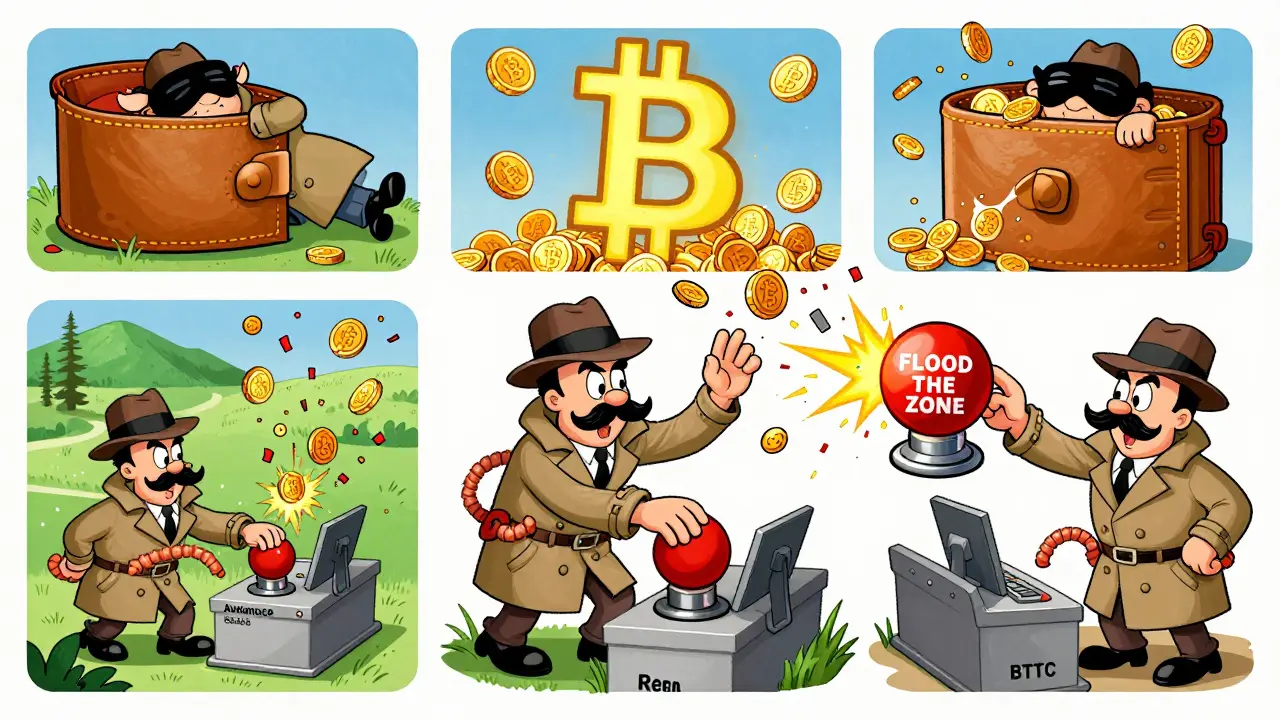
The Bybit Heist: A New Benchmark
The February 2025 Bybit breach wasn’t just big-it was a turning point. Hackers stole over $1.5 billion in a single attack, more than all of North Korea’s crypto theft in 2023 combined. What made it different? They didn’t just move funds. They flooded the system. Within hours, hundreds of transactions raced across Ethereum, Tron, Bitcoin, and BTTC. Analysts were overwhelmed. Exchanges froze accounts. But by the time investigators sorted through the noise, the money had already been converted into Bitcoin and parked in long-term wallets. Nick Carlsen from TRM Labs, a former FBI crypto expert, called it the “flood the zone” technique. It’s not about hiding one transaction. It’s about drowning every tracker in data. The goal isn’t to disappear-it’s to make tracking impossible by volume.Who’s Getting Targeted Now?
The old targets-exchanges like Binance, Coinbase, and Kraken-are still hit. But the smartest attacks now focus on people. High-net-worth crypto holders. Executives. Even influencers. Why? Because their security is weak. They use simple wallets. They click phishing links. They reuse passwords. Elliptic says the weakest link in crypto security isn’t the code-it’s the human. Hackers now pose as recruiters offering fake crypto jobs. They send fake invoices. They hack Twitter accounts to impersonate trusted figures. Once they get a private key, they drain the wallet and start the cross-chain laundering process. No exploit needed. Just deception.How Analysts Are Fighting Back
Blockchain analytics firms didn’t sit still. TRM Labs launched TRM Phoenix in 2022-the first tool that automatically traces funds across chains. Chainalysis and Elliptic followed with similar tools. Now, investigators can map a transaction from Ethereum to Tron to Bitcoin in one dashboard. The FBI has also stepped up. In 2023, they published a list of known Bitcoin addresses linked to Lazarus Group. Exchanges were asked to block them. Some did. Others didn’t. The result? A partial slowdown-but not a stop. The problem? North Korea has more time, more resources, and no fear of jail. Their hackers work from inside the country, shielded by state protection. They don’t need to run. They just need to keep stealing.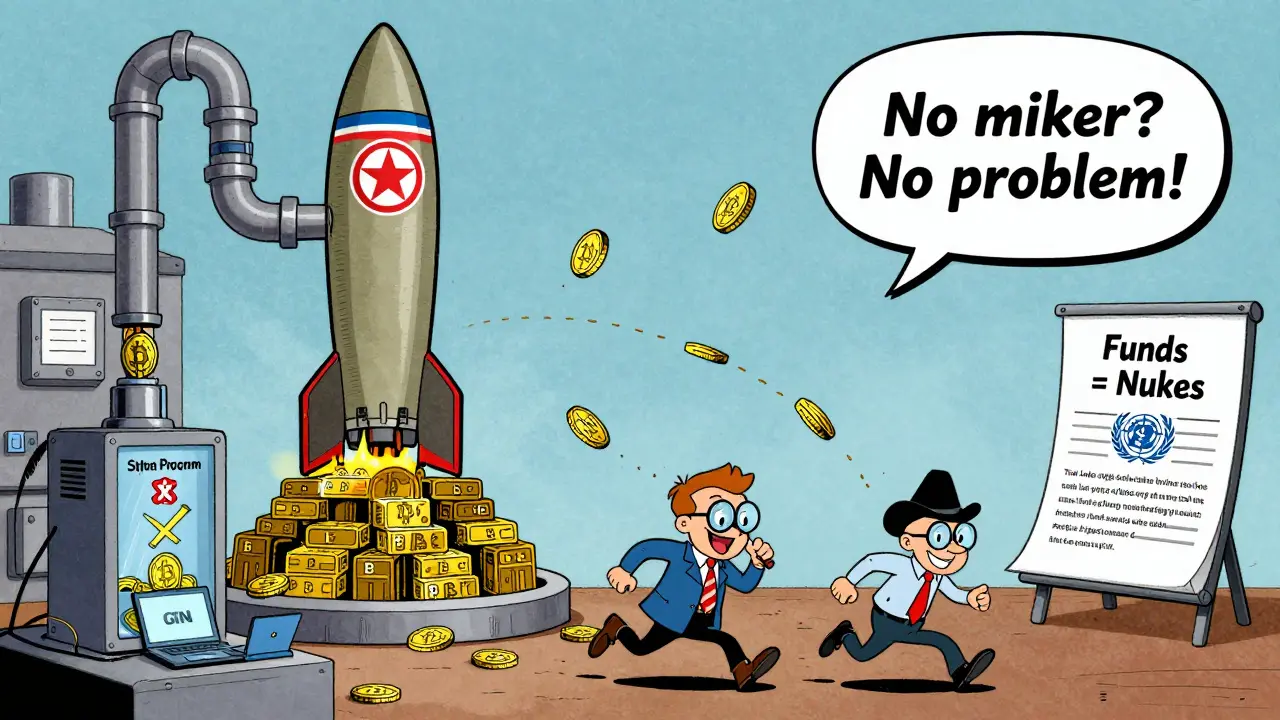
Josh Rivera
December 7, 2025 AT 21:19Oh wow, another ‘crypto is the new gold’ fairy tale. Let me guess-next you’ll tell me the DPRK is just ‘entrepreneurial’? 😂 The only thing more dangerous than their hackers is your naive belief that ‘transparency’ means anything in blockchain. They’re not hiding-they’re laughing at you while funding nukes with your FOMO.
Neal Schechter
December 8, 2025 AT 04:34Actually, this is way more nuanced than most people realize. Cross-chain bridges aren’t the problem-they’re just tools. The real issue is that regulators treat them like banks, but they’re more like open APIs. Think of it like trying to sue the internet for spam. You can’t regulate the plumbing, you gotta fix who’s dumping sewage in it. Lazarus doesn’t care about DeFi-they care about liquidity pools with weak KYC. And yeah, humans are still the weakest link.
Madison Agado
December 9, 2025 AT 07:24It’s terrifying how easily we’ve normalized this. We built a system meant to be decentralized and transparent, then turned it into a global laundering highway because we didn’t want to regulate it. Now we’re shocked when the state actors use it exactly as designed. Maybe the real question isn’t ‘how do they hide it?’ but ‘why did we let it get this far?’ We built the maze, then acted surprised when someone escaped it.
Tisha Berg
December 10, 2025 AT 08:26Just a heads-up-this stuff is real, and it’s hurting real people. If you hold crypto, please, please use a hardware wallet. Don’t click links from DMs. Don’t reuse passwords. I know it’s boring, but your grandma’s $500 in Bitcoin isn’t worth a $1M heist because she thought ‘CryptoQueen’ was legit. Stay safe out there.
Billye Nipper
December 11, 2025 AT 19:39Okay, I just read this whole thing and I’m FURIOUS!! 😤 Like, HOW are we still letting this happen?! We have the tech to trace this, we have the data, we have the teams-but no one’s acting FAST ENOUGH!! This isn’t just about money, it’s about CHILDREN’S FUTURES!! We’re funding weapons with our laziness!! I’m done waiting for ‘regulation’-we need action NOW!!
Roseline Stephen
December 13, 2025 AT 01:58Interesting breakdown. I’ve seen some of the TRM Labs reports. The spike in cross-chain volume is undeniable. But I wonder if the real shift isn’t just technical-it’s psychological. People trust bridges because they’re ‘decentralized,’ even when they’re run by one team in Singapore. We’ve replaced blind faith in banks with blind faith in code.
Isha Kaur
December 13, 2025 AT 22:18Actually, from my perspective as someone who works in fintech in India, this is not surprising at all. We’ve seen similar patterns with hawala networks and informal remittance channels for decades-people move money across borders without leaving a trace, using trusted intermediaries. The only difference here is that the intermediaries are smart contracts and bridges instead of uncle Ravi at the corner shop. The human behavior is the same: trust, anonymity, and speed. The technology just made it global and faster. We need to think about regulation that doesn’t break innovation but still protects the system, not just punish the bad guys after the fact.
Tara Marshall
December 14, 2025 AT 03:48TRM Labs data shows 9,500 BTC through Avalanche Bridge. That’s $600M+. Lazarus uses automated scripts to split and route funds. Mixers are dead. Bridges are alive. Simple.
Nelson Issangya
December 14, 2025 AT 10:52Stop talking about ‘tools’ and ‘protocols’-this is war. These aren’t hackers. They’re soldiers. And we’re losing. Every time an exchange says ‘we can’t freeze that address’ because ‘it’s decentralized,’ we’re handing them another missile. We need to treat this like terrorism. No more ‘let’s wait for Congress.’ Block the wallets. Shut the bridges. Freeze the accounts. If you’re not with us, you’re with them.
Richard T
December 15, 2025 AT 22:23What’s wild is how many people still think ‘blockchain is immutable’ like it’s some holy truth. It’s not. It’s just a ledger. And like any ledger, it can be gamed if you understand the flow. The real genius here isn’t the tech-it’s the timing. They strike during market dips, when no one’s watching, and vanish before the news even breaks. It’s psychological warfare disguised as crypto.
jonathan dunlow
December 17, 2025 AT 00:06Listen-I’ve been in this space since 2017, and I’ve seen every trick. But this? This is next level. They’re not just stealing-they’re designing a new financial system in the shadows. And guess what? It’s working. The fact that we’re still debating ‘should we regulate bridges?’ while they’re moving billions? That’s not negligence. That’s surrender. We need to stop treating crypto like a tech demo and start treating it like the global financial infrastructure it’s becoming. Or we’re all gonna pay the price.
rita linda
December 18, 2025 AT 11:28Of course the U.S. is too soft to act. We let China dominate 5G, we let Russia hack our elections, and now we’re letting North Korea fund nukes with our crypto? Wake up. This isn’t ‘cybercrime.’ This is an act of economic warfare. And if you’re not calling for sanctions on every bridge that touches North Korea-linked wallets, you’re part of the problem. Stop being ‘neutral.’ Be a patriot.
Frank Cronin
December 20, 2025 AT 00:25Oh wow, a 1500-word essay on how criminals are… good at crime? Groundbreaking. Let me guess-you also think Tornado Cash was ‘innocent’ because it was ‘code’? Newsflash: If you build a tool that’s used by a regime to fund weapons, you’re complicit. And you? You’re just another crypto bro who thinks ‘decentralization’ excuses mass theft. Go cry to your NFT collection.
miriam gionfriddo
December 20, 2025 AT 08:20OMG I JUST REALIZED-THEY’RE USING REFUND ADDRESSES TO TRICK THE BLOCKCHAIN ANALYTICS TO THINK THE FUNDS CAME FROM LEGIT USERS?? LIKE, THEY’RE SENDING MONEY TO A WALLEt AND THEN ‘REFUNDING’ IT BACK TO A DIFFERENT ONE?? I’M SCARED NOW. I JUST USED A BRIDGE. IS MY WALLET NEXT?? 😭
Nicole Parker
December 21, 2025 AT 23:31I think what’s missing from this conversation is the human cost behind every transaction. Behind every $1.5 billion heist, there’s a family who lost their life savings because they trusted a fake job offer. There’s a kid who won’t get college because their parent’s crypto got drained. This isn’t abstract. It’s grief, it’s fear, it’s betrayal. We need to talk less about the tech and more about the people. Because no algorithm can fix a broken heart.
Kenneth Ljungström
December 22, 2025 AT 03:37Big thanks for laying this out so clearly 🙏 Honestly, this is the most balanced take I’ve seen. I’ve been trying to explain this to my crypto-curious friends and this is perfect to share. Also-yes, humans are the weakest link. I got phished last year. Learned my lesson. Now I use a Ledger + 2FA + never click anything. Stay safe out there 💪🔒
Chris Jenny
December 23, 2025 AT 23:12Wait… you think this is just North Korea?? 😳 The CIA, NSA, and Mossad have been using cross-chain laundering for YEARS. This is a cover. The DPRK is just a patsy. The real thieves? The ones writing the laws. They want you scared so you’ll accept surveillance. They want you to think the hackers are the enemy… so you’ll give up your privacy. Wake up. This is psychological ops. The blockchain isn’t broken. WE are.