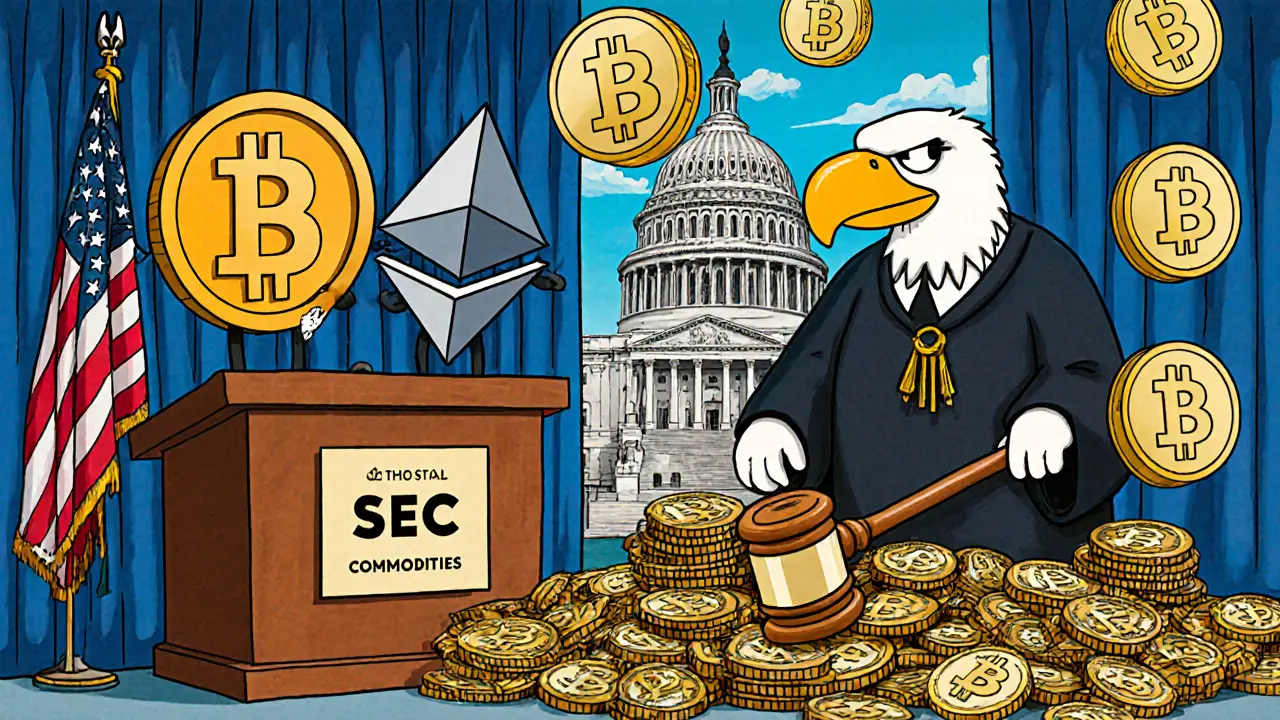
Investment and Securities Act 2025: Crypto Rules, Compliance, and What It Means for Traders
When the Investment and Securities Act 2025, a sweeping regulatory framework that redefines how digital assets are classified, traded, and reported under national securities law. Also known as Securities Act 2025, it forces crypto platforms to treat tokens like stocks if they meet certain criteria—profit expectation, central management, and public investment. This isn’t just paperwork. It’s the difference between a legal exchange and a target for regulators. Across the globe, countries are tightening their grip on crypto, and this law is the blueprint many are copying.
It directly ties into KYC crypto, the mandatory identity checks that exchanges must perform to prevent fraud and money laundering. Under the Act, platforms that skip KYC aren’t just risky—they’re breaking the law. That’s why exchanges like LocalTrade and Decoin got flagged: no identity checks, no audits, no legal footing. The Act doesn’t just want you to prove who you are—it wants proof that the tokens you’re trading are registered or exempt. And if they’re not? You’re not just trading crypto—you’re trading in unregistered securities.
This law also forces AML crypto, systems designed to detect and report suspicious crypto activity to become standard, not optional. Platforms must now report unusual trades, large unexplained transfers, or tokens with zero supply—like MARGA or BABYDB—that have no real use but are being promoted like investments. The Act doesn’t care if you think it’s a meme coin. If people are buying it hoping to profit, and there’s no team or roadmap, regulators see a security. That’s why the AdEx Network airdrop and Metahero’s past drops are now under scrutiny: were they giveaways—or unregistered offerings?
And it’s not just about exchanges. Developers launching new tokens now need to ask: does this look like an investment contract? If users are buying because they expect returns from someone else’s effort, the Act says it’s a security. That’s why projects like Carrieverse and HappyFans vanished—they had no legal structure, no disclosures, and no plan to comply. The Act doesn’t punish failure. It punishes pretending you’re not selling securities.
What you’ll find below isn’t just a list of articles. It’s a map of how this law is already changing the crypto world—from Vietnam’s $379 million exchange licensing rules to Switzerland’s wealth tax treatment, from privacy coin delistings to how wrapped tokens like WBTC now face new scrutiny. Every post here shows real cases where the Investment and Securities Act 2025, or its global cousins, made the difference between staying open and getting shut down.
The Investment and Securities Act 2025 brought the first clear federal rules for crypto trading in the U.S., classifying assets into three categories and ending years of regulatory chaos. Bitcoin is now a commodity, stablecoins are tightly controlled, and institutions can finally enter the market safely.
View More