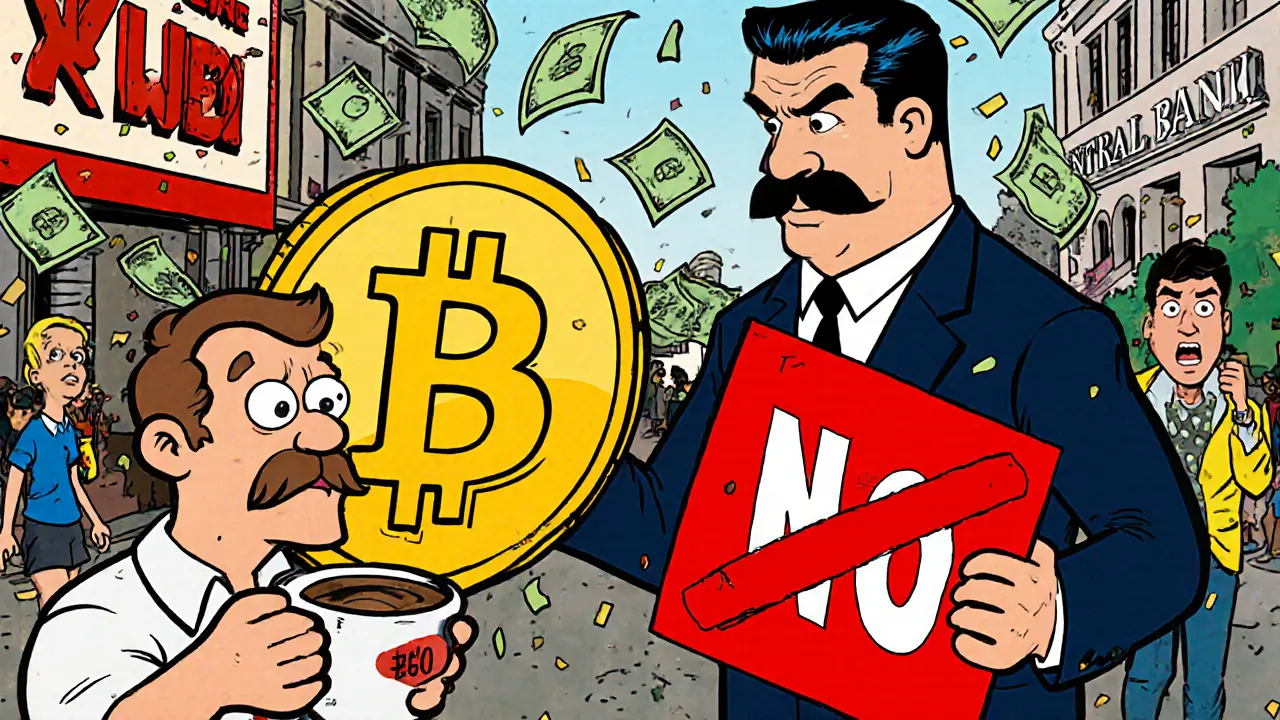
CASP License Turkey: What You Need to Know About Crypto Regulation in Turkey
When we talk about CASP license Turkey, a regulatory framework requiring crypto service providers to register with Turkey’s Capital Markets Board. Also known as Crypto Asset Service Provider license, it’s the first real attempt by Turkey to bring order to its wild crypto market—where millions trade daily but few platforms play by the rules. Before this license, anyone could launch a crypto exchange in Turkey with zero oversight. Now, if you want to legally offer trading, custody, or staking services there, you need to prove you have enough capital, security systems, and anti-fraud controls. It’s not just paperwork—it’s a full audit of your business.
This rule doesn’t just affect exchanges. It impacts crypto wallets, services that hold users’ private keys on their behalf, and even peer-to-peer platforms, where users trade directly but often rely on intermediaries to hold funds. If a platform doesn’t have a CASP license, it’s operating illegally—even if it claims to be "Turkish-friendly." And users? They’re left exposed. No license means no legal recourse if funds disappear, no protection against insider fraud, and no requirement to report suspicious activity. That’s why you’ll find posts here about unregulated exchanges like LocalTrade and Decoin—they’re the exact kind of platforms the CASP license was meant to shut down.
Turkey’s move mirrors global trends. The EU’s MiCA law, the U.S. SEC crackdowns, and even Vietnam’s $379 million capital requirements all point to the same truth: crypto can’t stay lawless forever. The CASP license is Turkey’s version of that reality check. It’s not perfect—enforcement is still patchy, and many platforms are still operating in the gray—but it’s a start. You’ll find posts here that dig into how this affects real users, what documents you need to verify a platform’s license, and how to spot fake "licensed" claims. Some posts even compare Turkey’s rules to Switzerland’s wealth tax model or Nepal’s outright ban, showing just how different the global landscape is.
What’s below isn’t just a list of articles. It’s a practical guide to staying safe in a market where regulation is catching up fast. You’ll learn which exchanges are still risky, how KYC requirements tie into the CASP license, and why projects with zero supply or no team are even more dangerous under new rules. This isn’t about hype. It’s about knowing who’s accountable—and who’s not.
Turkey has implemented one of the world’s strictest crypto frameworks, banning payments while forcing exchanges to obtain multi-million-dollar licenses. Learn how this affects traders, businesses, and political freedom.
View More