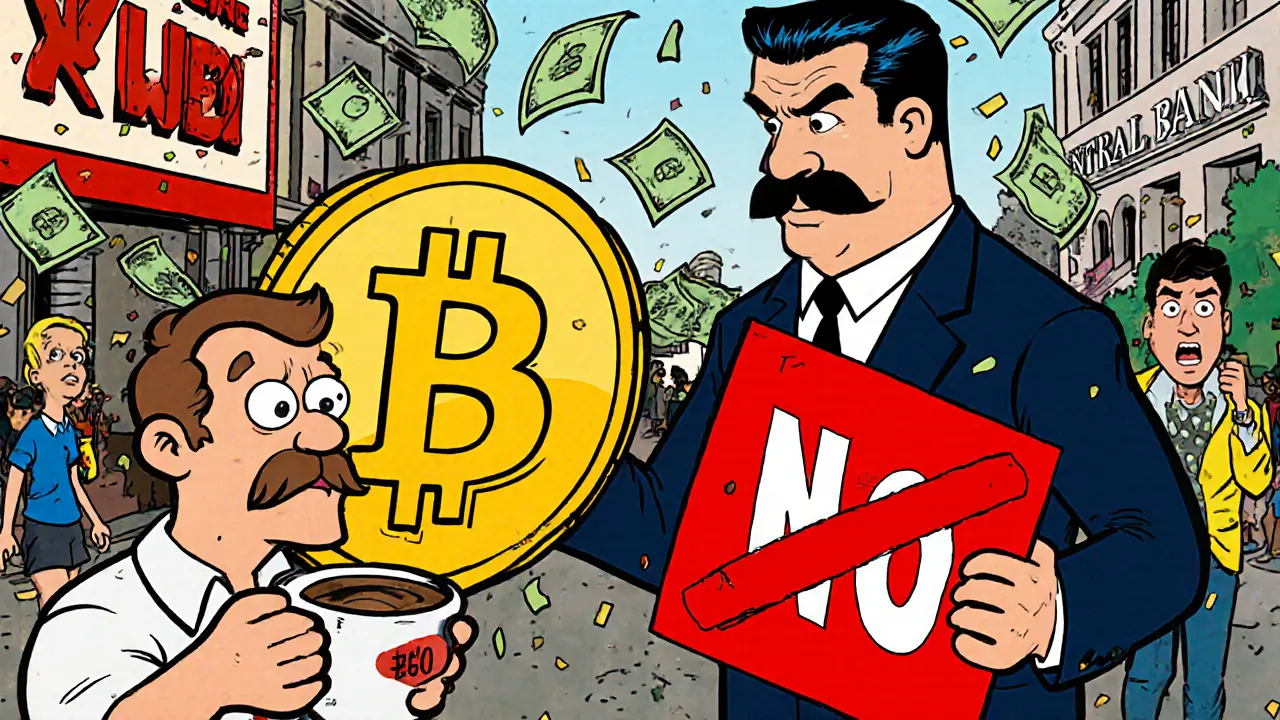
Capital Markets Board Turkey: Crypto Regulations, Compliance, and What It Means for Traders
When it comes to crypto in Turkey, the Capital Markets Board Turkey, the official government agency that regulates securities and financial markets in Turkey. Also known as CMB, it controls everything from exchange listings to investor protections. Unlike countries that ban crypto outright, Turkey lets it exist—but under strict oversight. The CMB doesn’t outright ban crypto trading, but it demands transparency, licensing, and compliance from any platform operating within its borders. If you’re trading on a Turkish exchange or holding assets tied to Turkish users, you’re under their watch.
This agency doesn’t just react—it leads. In 2024, the CMB started requiring all crypto exchanges operating in Turkey to apply for a license, prove they have local infrastructure, and submit regular audits. That’s why you’ll see platforms like LocalTrade or Decoin disappear from Turkish users’ radars: they never met the bar. Meanwhile, the CMB’s stance on KYC and AML mirrors global standards, making it harder for anonymous trading to thrive. This isn’t about stopping innovation—it’s about stopping fraud. The same rules that apply to stocks now apply to tokens. And if you think you can slip through the cracks with a foreign exchange? Think again. The CMB works with international bodies like FATF to track cross-border flows, especially when Turkish lira is involved.
It’s not just exchanges that feel the pressure. Token issuers, airdrop promoters, and even NFT marketplaces have to prove they’re not running scams. Projects like Metahero (HERO) or HappyFans (HAPPY) might have lured Turkish investors with promises of free tokens, but without CMB approval, those projects had no legal footing. And when they vanished? The CMB didn’t chase them—but it did warn users. That’s why you’ll find guides here on how to spot fake airdrops, why zero-supply coins like MARGA are red flags, and how to avoid platforms with no audits or team info. The CMB doesn’t tell you what to buy—but it does tell you what to avoid.
For traders, this means one thing: safety comes with paperwork. You’ll need ID verification, transaction records, and sometimes even tax declarations. But in return, you get real protection. Unlike unregulated platforms where funds vanish overnight, licensed Turkish exchanges must keep customer assets separate and report suspicious activity—just like banks. That’s why the Suspicious Activity Reporting, a system used by financial institutions to flag money laundering and fraud. Also known as SAR, it’s mandatory for all regulated crypto platforms in Turkey is so critical. If you see a pattern of small, rapid transfers or fake volume, it’s not just a scam—it’s a violation the CMB can act on.
And while other countries debate whether crypto is a currency, a commodity, or a security, Turkey’s CMB has already made its call: digital assets fall under securities regulation if they promise returns. That’s why projects like AlphBanX (ABX) or Flux (FLUX) must be careful how they market staking or lending—because if they’re offering interest, they’re selling a security. The CMB doesn’t care if it’s on Ethereum or Alephium. If it looks like an investment, it’s regulated.
What you’ll find below are real cases—exchanges that failed, tokens that vanished, and rules that changed overnight. No fluff. No guesses. Just what happened, why it mattered, and how the Capital Markets Board Turkey shaped the outcome. Whether you’re a trader, a developer, or just trying to keep your funds safe, this collection cuts through the noise and shows you exactly what the CMB means for your next move.
Turkey has implemented one of the world’s strictest crypto frameworks, banning payments while forcing exchanges to obtain multi-million-dollar licenses. Learn how this affects traders, businesses, and political freedom.
View More