Blockchain Tracing: How Trackers Follow Crypto Transactions and Why It Matters
When you send Bitcoin or Ethereum, that transaction doesn’t vanish—it leaves a permanent, public record on the blockchain tracing, the process of following cryptocurrency movements across wallets and exchanges using public ledger data. Also known as on-chain analysis, it’s how investigators track stolen funds, exchanges detect fraud, and regulators enforce rules. Every wallet address, every transfer, every swap gets stamped into the blockchain. You can’t delete it. You can’t hide it—unless you use privacy tools designed to break that trail.
Blockchain tracing isn’t magic. It’s math and patterns. Tools like Chainalysis and Elliptic map how coins flow from one address to another, linking them to known exchanges, darknet markets, or scam wallets. If your crypto ends up in a wallet tied to a past hack, that’s traceable. That’s why exchanges require KYC: they need to know where your coins came from. And if you’re using a dead token like MakiSwap or VVS Finance, blockchain tracing shows you exactly how much volume vanished—and who’s still holding the bag.
But here’s the twist: blockchain tracing isn’t just for cops and exchanges. Regular users use it too. Before you buy a new token like EDOG or MARGA, you can check its wallet history. Is it just one person moving coins around? Are the funds locked? Is the supply real? You don’t need a license—you just need to look. Even privacy-focused projects like Zcash and zk-Rollups don’t erase traces; they just make them harder to read. And that’s where zero-knowledge proofs, a cryptographic method that proves a transaction is valid without revealing details. Also known as ZKPs, they are changing the game—letting you prove you’re clean without showing your full history.
Regulators in Vietnam, Argentina, and Nigeria aren’t just making rules—they’re relying on blockchain tracing to enforce them. If a country bans bank crypto deals, they still need to track who’s moving funds. If a token has zero supply like Margaritis, tracing reveals it’s just a price tag on a ghost. And when a scam like PEPE MAGA traps you in a honeypot, tracing shows you can’t sell because the code is rigged.
What you’ll find here isn’t theory. It’s real cases. Dead exchanges. Fake tokens. Airdrops that went nowhere. Scams that vanished. And the tools that caught them. Whether you’re trying to avoid a rug pull, understand why your coins got flagged, or just want to know if that new coin is legit—blockchain tracing gives you the map. You don’t need to be a coder. You just need to know where to look.
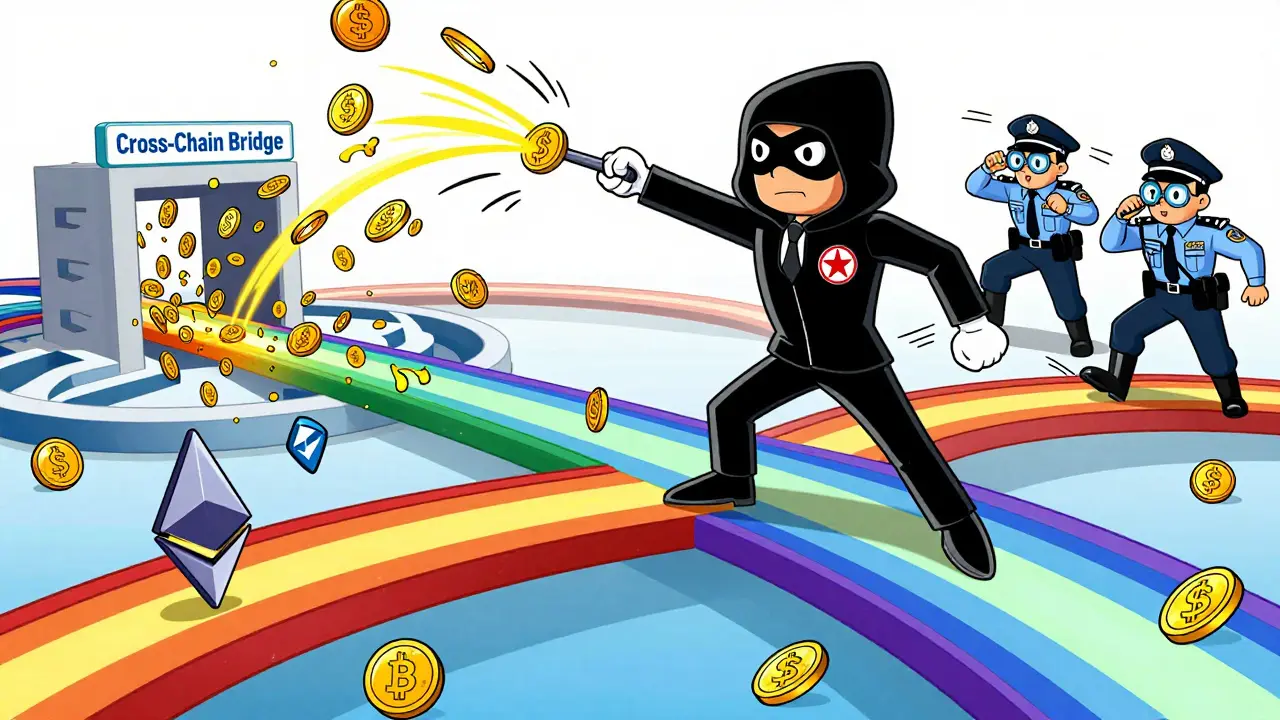
North Korean hackers are stealing billions in crypto by hopping across blockchains to hide their tracks. This is how they do it-and why it’s a global security threat.
View More