
Imagine a country where the lights go out for hours during a scorching summer heatwave, while massive underground facilities continue to hum with electricity. This is not a dystopian novel; it is the reality of state-controlled crypto mining in Iran. Since 2018, the Iranian government has turned cryptocurrency mining into a strategic tool for economic survival. But this strategy comes with a heavy price tag for ordinary citizens and a complex web of international sanctions.
The story begins when President Hassan Rouhani’s administration officially recognized cryptocurrency mining as a legal industry in July 2018. The goal was twofold: monitor existing operations and create a mechanism to bypass U.S. sanctions that had cut Iran off from the global banking system. At the same time, the Central Bank of Iran (CBI) announced plans for a national cryptocurrency backed by the rial. By December 2020, daily trading volumes hit between $16 million and $20 million across 12 different cryptocurrencies. Iran’s Bitcoin mining output alone was valued at approximately $1 billion annually.
The Rise of the "Crypto Cartel"
While private miners started small, the real game-changer arrived between 2019 and 2020. Tehran’s most powerful entities, particularly the Islamic Revolutionary Guard Corps (IRGC) and organizations under Supreme Leader Ali Khamenei, aggressively entered the sector. They didn’t just invest; they built an empire.
These state-affiliated groups partnered with Chinese companies to establish massive mining farms. A prime example is the 175-megawatt Bitcoin farm in Rafsanjan, Kerman province. This joint venture between an IRGC-linked enterprise and Chinese investors relied on Iran’s subsidized electricity tariffs, which can be as low as 0.004 cents per kWh. To put that in perspective, that is roughly 1/50th of typical global commercial rates. These operations often sit in special economic zones or on military bases, enjoying dedicated power feeds and minimal regulatory scrutiny. Investigative reports describe this network as a "crypto cartel" that systematically diverts national electricity resources for private profit.
| Feature | Global Average | Iranian State-Affiliated Ops |
|---|---|---|
| Electricity Cost (per kWh) | $0.05 - $0.10+ | $0.00004 (subsidized) |
| Regulatory Oversight | Strict compliance/taxes | Minimal/Exempted |
| Primary Operator | Private Companies | IRGC/Government Entities |
| Strategic Goal | Profit Maximization | Sanctions Evasion & Profit |
Infrastructure and Hidden Operations
The technical scale of these operations is staggering. By early 2023, total national mining capacity exceeded 1,000 megawatts, according to Iranian energy ministry reports cited by SpecialEurasia. These facilities use ASIC (Application-Specific Integrated Circuit) miners, specialized servers designed solely for solving cryptographic puzzles. Their power consumption is immense, directly contributing to grid instability.
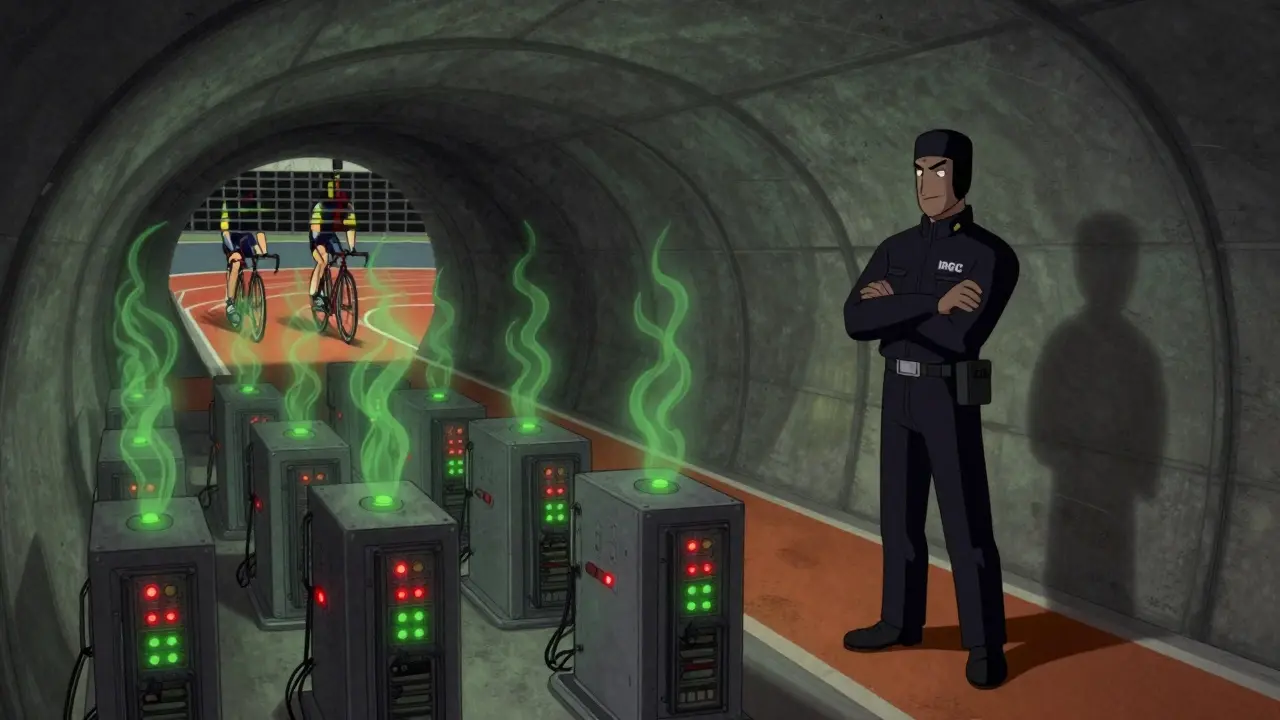
To avoid detection and public backlash, some operations are hidden in plain sight. In May 2025, investigators discovered a large-scale mining operation concealed in tunnels beneath the cycling track of the 16-hectare Shahid Ghorbani Sports Complex in Ahvaz. Service rooms housing electrical systems were repurposed to run miners undetected for over two years. Such discoveries fuel public outrage, as citizens connect nationwide power shortages directly to unregulated mining activities protected by regime officials.
The Human Cost: Energy Crisis and Public Outrage
The contradiction at the heart of Iran’s crypto policy is stark. On one hand, the government promotes regulated mining as part of its national economic strategy. On the other, unregulated state-affiliated operations exacerbate the country’s severe energy crisis. During the summer of 2024, Twitter/X posts from Iranian citizens highlighted "hours-long blackouts while IRGC mines Bitcoin." Verified accounts reported specific outages in Tehran’s District 3 lasting 14 hours during peak temperatures of 45°C.
Reddit discussions in the r/Iran community documented hundreds of comments on threads titled "How mining is destroying our power grid." Users reported factory shutdowns due to power rationing while nearby mining operations continued uninterrupted. The frustration is palpable: ordinary people suffer through heatwaves without air conditioning, while state-backed entities generate billions in foreign currency using the very same power lines.
Regulatory Tightening and Surveillance
As of 2025, cryptocurrency mining remains technically legal but operates under increasingly strict regulations. The Ministry of Industry, Mine and Trade requires official licensing, adherence to specific electricity tariffs (reportedly 7 cents per kWh for legal ops), and the use of government-approved hardware. However, enforcement is inconsistent. State-affiliated entities are routinely exempted from these requirements, creating a two-tier system.
The Central Bank of Iran has also moved to tighten control over financial flows. In December 2024, the CBI blocked all cryptocurrency-to-rial payment gateways. A partial reversal in January 2025 required government API access, providing authorities with "full user data" for all transactions. This effectively created a surveillance system for every legal crypto trade. Additionally, the August 2025 enactment of the "Law on Taxation of Speculation and Profiteering" imposed capital gains tax on cryptocurrency trading, treating digital assets like gold or real estate.
International Pressure and Sanctions Evasion
Iran’s mining sector is deeply entangled with efforts to circumvent international sanctions. The mined cryptocurrency allows the state to convert assets into foreign currency outside traditional banking channels. However, this strategy faces growing resistance from global financial institutions.
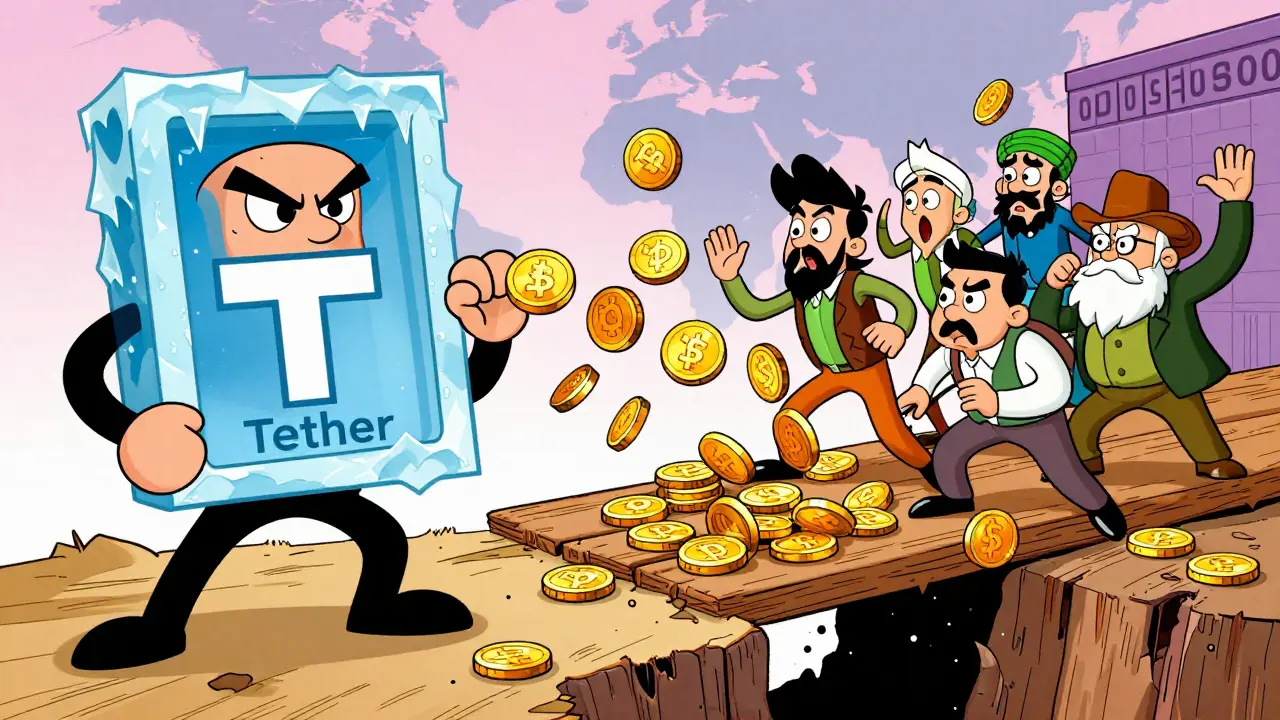
A major blow came on July 2, 2025, when Tether executed its largest-ever freeze of Iranian-linked funds. Tether blocked 42 cryptocurrency addresses with substantial exposure to Nobitex (Iran’s largest domestic exchange) and IRGC-affiliated wallets previously flagged by the Israeli National Bureau for Counter Terrorist Financing. This freeze disrupted entrenched transaction patterns, forcing rapid adaptation. In response, the government urged users to offload USDT holdings in favor of DAI via the Polygon network to preserve access to liquid stablecoins despite sanctions pressure.
Silvia Boltuc, author of SpecialEurasia’s 'Persian Files,' notes that "tensions persist between regulatory ambitions, economic necessity, and energy crises, raising questions about Iran's long-term financial strategy." The Central Bank’s own actions reflect this internal conflict, ordering closures of exchanges due to lack of transparency while simultaneously relying on them for revenue.
Challenges for Legal Miners
For those attempting to operate within the law, the path is fraught with obstacles. Obtaining a license takes approximately 6-8 weeks. More critically, mandatory use of government-approved hardware reportedly reduces mining efficiency by 15-20% compared to international standards. Power rationing specifically targets mining operations during peak demand, yet IRGC-affiliated sites often remain untouched.
Participants need more than just technical knowledge. Success requires regulatory compliance expertise and, crucially, political connections. Access to subsidized electricity and protection from enforcement actions often depends on affiliations with powerful entities like the IRGC or religious foundations such as Astan Quds Razavi. Without these ties, legal miners struggle against competitors who enjoy impunity.
Future Outlook
The trajectory points toward increasing state control and surveillance. The government attempts to balance three contradictory objectives: maintaining cryptocurrency access for sanctions evasion, preventing capital flight by citizens, and capturing tax revenue from a previously unregulated sector. Long-term viability remains uncertain given the strain on the energy grid and international isolation. As TRM Labs noted, Iran’s adaptations mirror those seen after the loss of traditional cross-border banking channels, demonstrating increasing sophistication in navigating financial restrictions. Yet, the fundamental tension between economic survival and public welfare remains unresolved.
Is cryptocurrency mining legal in Iran?
Yes, cryptocurrency mining is legally recognized in Iran since July 2018. However, it requires a license from the Ministry of Industry, Mine and Trade, adherence to specific electricity tariffs, and the use of government-approved hardware. Enforcement is uneven, with state-affiliated entities often operating outside these rules.
Who controls the majority of crypto mining in Iran?
The Islamic Revolutionary Guard Corps (IRGC) and entities linked to Supreme Leader Ali Khamenei control significant portions of the sector. They operate large-scale farms, often in partnership with Chinese firms, benefiting from subsidized electricity and minimal regulation.
How does crypto mining affect Iran's energy grid?
Mining operations consume vast amounts of electricity, contributing to national power grid instability. During peak summer months, this has led to widespread blackouts for residential and industrial users, causing public outrage and social unrest.
What happened with the Tether freeze in July 2025?
Tether froze 42 Iranian-linked cryptocurrency addresses, including those connected to Nobitex and IRGC-affiliated wallets. This was the largest-ever freeze of Iranian-linked funds, disrupting established transaction patterns and forcing users to diversify into alternative stablecoins like DAI.
Why did Iran start promoting crypto mining?
Iran promoted crypto mining primarily to circumvent U.S. sanctions that restricted its access to international banking systems. It allows the state to generate foreign currency reserves and facilitate international transactions outside the traditional SWIFT network.
Are there taxes on cryptocurrency in Iran now?
Yes, as of August 2025, the "Law on Taxation of Speculation and Profiteering" imposes capital gains tax on cryptocurrency trading, treating it similarly to other speculative assets like gold and real estate.