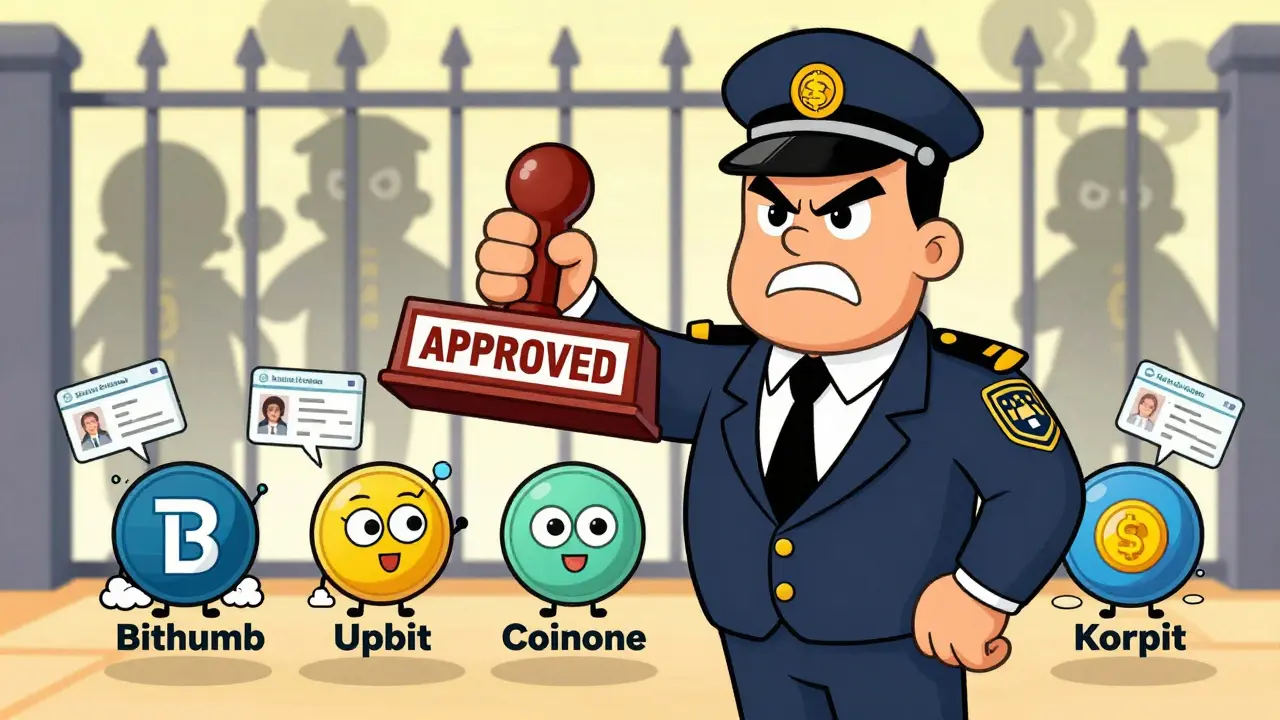
South Korea doesn’t just allow cryptocurrency trading-it controls it. Unlike countries where crypto exists in a legal gray zone, South Korea’s Financial Services Commission (FSC) has built one of the most detailed, strict, and evolving crypto regulatory systems in the world. If you’re trading, investing, or even just curious about how crypto works in Asia’s tech powerhouse, you need to understand what’s really going on behind the scenes. This isn’t about bans or hype. It’s about rules, oversight, and a quiet but powerful shift toward institutional adoption.
How South Korea’s Crypto Rules Work Today
Since 2020, every crypto exchange operating in South Korea has had to follow the same set of non-negotiable rules. There’s no loophole. No exception. If you want to let Koreans trade Bitcoin, Ethereum, or any other coin, you must pass a strict checklist.- Real-name verification: Every user must link their crypto account to a real bank account under their own name. No anonymous wallets allowed.
- Anti-money laundering (AML) and KYC: Exchanges must verify user identities and report suspicious activity to the Korean Financial Intelligence Unit (KoFIU).
- Security certification: All platforms need ISMS certification from the Korea Internet Security Agency (KISA). This isn’t optional-it’s a legal requirement.
- FATF Travel Rule: If you transfer more than KRW 1 million (about $750), you must send the sender’s and receiver’s info to the other exchange. This applies to crypto-to-crypto trades, not just fiat conversions.
Only four exchanges-Bithumb, Upbit, Coinone, and Korbit-were approved to operate under these rules at first. But now, every single crypto platform serving Korean users must meet the same standard. That’s why you won’t find random offshore exchanges advertising to Koreans anymore. The FSC shut them down.
The Big Change Coming in 2025
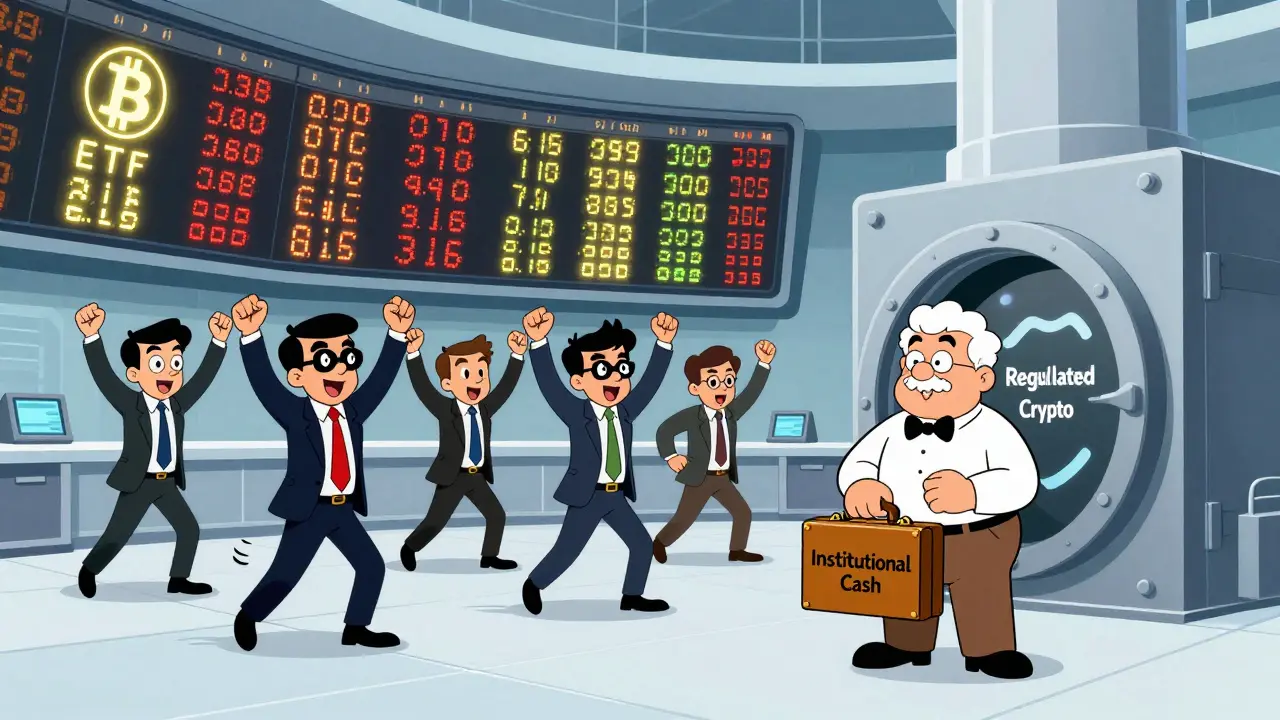
The rules you see today are just the foundation. By September 2025, South Korea will roll out its Virtual Asset Basic Law, a sweeping overhaul that will redefine crypto’s place in the country’s financial system. This isn’t a tweak. It’s a transformation.The FSC is moving from “control and restrict” to “enable and regulate.” The goal? Bring in institutional money-pension funds, mutual funds, hedge funds-and make crypto a legitimate asset class, not a fringe experiment.
Here’s what’s changing:
- Spot crypto ETFs are coming: For the first time, Koreans will be able to buy exchange-traded funds that track real cryptocurrency prices. These won’t be futures or derivatives-they’ll hold actual Bitcoin or Ethereum. The Korea Exchange will list them by late 2025 or early 2026. Sponsors must report net asset values in real time and undergo full audits.
- Corporate crypto holdings are being relaxed: Since 2017, Korean companies were banned from holding crypto on their balance sheets. That’s changing. In early 2025, the FSC proposed letting businesses open KYC-verified accounts at licensed exchanges. They’ll still have limits-no company can dump 50% of its treasury into Bitcoin-but now they can hold crypto as part of their asset strategy.
- NFTs and DeFi get clearer rules: NFTs that act like investments (like fractionalized real estate tokens) will be treated like other crypto assets. But collectible NFTs-like digital art or game items-won’t be regulated. DeFi protocols aren’t banned, but platforms facilitating them must comply with AML and reporting rules.
What’s Still Banned?
Not everything is opening up. The FSC still draws hard lines.Initial Coin Offerings (ICOs) remain illegal. Since 2017, South Korea has blocked companies from raising money by selling new tokens to the public. The fear? Scams. The FSC has seen too many fraudulent projects target retail investors. But that doesn’t mean token sales are dead. The government is working on a new framework for regulated token issuance-likely tied to security token offerings (STOs)-where projects must meet strict disclosure and audit standards.
Another restriction: You can’t trade crypto on unlicensed foreign platforms from within South Korea. The FSC blocks access to offshore exchanges that don’t comply with Korean rules. If you’re using Binance or KuCoin from Seoul, you’re technically violating the law-even if you think you’re just “investing.”
Regional Experiments: Busan, Jeju, Incheon
While the FSC sets national rules, local governments are testing new ideas. Busan, South Korea’s second-largest city, is building the Busan Digital Asset Nexus. Think of it as a sandbox for regulated crypto innovation. Here, foreign institutional investors can test Security Token Offerings (STOs) under controlled conditions. The goal? Attract global capital without letting loose regulatory risks.Jeju Island and Incheon are watching closely. If Busan succeeds, they might launch their own digital asset zones. This isn’t just about money-it’s about positioning South Korea as a global hub for blockchain finance, not just a rule-enforcer.
Taxes: No Tax Yet, But Watch Out
Right now, you don’t pay capital gains tax on crypto profits in South Korea. The government planned to start taxing gains in 2025, but they postponed it. Why? Too much uncertainty. The FSC wants to wait until the new Virtual Asset Basic Law is stable before adding tax complexity.But don’t assume it’s gone for good. The plan is still on the table. When taxes return, they’ll likely follow this model: profits offset by losses in the same year. So if you lose $10,000 in one coin and make $15,000 in another, you only pay tax on the $5,000 net gain. That’s fairer than taxing every trade.

Why This Matters Beyond Korea
South Korea’s approach is being watched by regulators in Japan, Singapore, the EU, and even the U.S. Why? Because they’re doing something rare: they’re not trying to crush crypto. They’re trying to tame it.They’ve shown that strict rules don’t kill innovation-they can make it safer and more scalable. By forcing exchanges to be transparent, secure, and accountable, they’ve built trust. And trust is what brings in institutional money.
When South Korea launches its first spot crypto ETF, it won’t just be a local event. It’ll be a signal to global investors: “If you want regulated, liquid, compliant access to crypto in Asia, this is where you go.”
What Should You Do?
If you’re a Korean investor: Stick to licensed exchanges. Don’t risk your money on unregulated platforms. Use the new ETFs when they launch-they’re safer than buying crypto directly.If you’re a foreign investor or business: Watch the September 2025 legislation. That’s when South Korea will either become a major crypto hub or double down on restrictions. The signs point to the former. Corporate crypto holdings, ETFs, and STOs are the future here.
If you’re just curious: Understand this-South Korea isn’t anti-crypto. It’s pro-control. And that control is what’s making crypto here more stable, more legitimate, and more attractive than in many other markets.
Are crypto exchanges legal in South Korea?
Yes, but only if they’re licensed by the Financial Services Commission (FSC). Only exchanges that meet strict KYC, AML, and security requirements can operate legally. Unlicensed platforms are blocked from serving Korean users.
Can I buy Bitcoin on Binance in South Korea?
Technically, no. The FSC blocks access to foreign exchanges that don’t comply with Korean regulations. While some users still access Binance or KuCoin via VPN, doing so violates local law. Only licensed Korean exchanges like Upbit and Bithumb are legally permitted.
Will I have to pay taxes on crypto gains in 2025?
Not yet. The planned 2025 crypto capital gains tax has been postponed. The FSC is waiting to implement taxes until after the new Virtual Asset Basic Law takes effect. When taxes return, they’ll likely allow losses to offset gains within the same year.
Can Korean companies own Bitcoin now?
Not officially yet, but that’s changing. In early 2025, the FSC proposed allowing corporations to hold crypto through licensed exchanges, with limits on exposure and mandatory reporting. Full approval is expected by late 2025 as part of the new regulatory framework.
What’s the difference between a crypto ETF and buying crypto directly in Korea?
A crypto ETF lets you invest in Bitcoin or Ethereum through a regulated fund traded on the Korea Exchange, like a stock. You don’t own the actual crypto-you own shares in a fund that holds it. This is safer, easier for beginners, and subject to stricter oversight than buying crypto directly on an exchange.
Are NFTs regulated in South Korea?
It depends. NFTs that function as investments-like tokens representing real estate or shares-are regulated like other crypto assets. But NFTs used as collectibles, digital art, or in-game items are generally not regulated, as long as they don’t promise financial returns.
Patricia Whitaker
December 16, 2025 AT 10:12Toni Marucco
December 17, 2025 AT 07:35amar zeid
December 19, 2025 AT 00:05Alex Warren
December 20, 2025 AT 03:23Steven Ellis
December 20, 2025 AT 07:03Claire Zapanta
December 20, 2025 AT 08:41Sue Gallaher
December 20, 2025 AT 09:13Jeremy Eugene
December 22, 2025 AT 06:28Kurt Chambers
December 23, 2025 AT 06:53Kelly Burn
December 23, 2025 AT 15:48John Sebastian
December 24, 2025 AT 07:59Eunice Chook
December 24, 2025 AT 17:31Lois Glavin
December 25, 2025 AT 03:25Abhishek Bansal
December 25, 2025 AT 07:41Bridget Suhr
December 25, 2025 AT 09:58Ike McMahon
December 27, 2025 AT 08:28JoAnne Geigner
December 29, 2025 AT 08:06Anselmo Buffet
December 31, 2025 AT 00:20