
If you're looking at SENbit as a place to trade crypto, you need to know one thing upfront: it’s not like Binance, Coinbase, or Kraken. SENbit is a smaller, China-based exchange that launched in 2018. It offers over 50 cryptocurrencies - enough to pick from if you’re not trading the biggest names. But here’s the problem: it’s not built for serious traders. It’s built for people who might not know what they’re getting into.
What You Can Trade on SENbit
SENbit lists more than 50 digital assets, including Bitcoin, Ethereum, Solana, and a few lesser-known tokens. That sounds decent until you compare it to the big players. Coinbase offers over 235 coins. Kraken has 350+. Binance US supports 158. SENbit’s selection is thin - especially if you’re looking for newer DeFi tokens or stablecoins beyond USDT and USDC. You won’t find niche assets like Arbitrum, Chainlink, or Polygon here unless they’re already on the list. If you trade altcoins regularly, you’ll hit a wall fast.
Trading Fees and Costs
SENbit doesn’t publish clear fee schedules. That’s a red flag. Most exchanges show taker and maker fees upfront. SENbit doesn’t. From user reports, fees appear to be between 0.1% and 0.5%, which is average for mid-tier exchanges. But without transparency, you’re guessing. And in crypto, guessing costs money. Compare that to Kraken’s 0%-0.4% or Binance’s 0.1% spot fees. SENbit doesn’t offer fee discounts for using its native token. No VIP tiers. No volume rebates. Just silence.
Security: A Major Red Flag
Security isn’t just about cold storage - it’s about compliance. SENbit has hit a hard limit on queries to FinCEN’s database. FinCEN is the U.S. financial crimes watchdog. Exchanges that interact with U.S. users must report suspicious activity through FinCEN’s systems. SENbit has exceeded its daily query cap. What does that mean? It can’t verify transactions properly. It can’t screen for money laundering. It can’t process withdrawals for users flagged by U.S. regulations. That’s not a glitch. That’s a broken system.
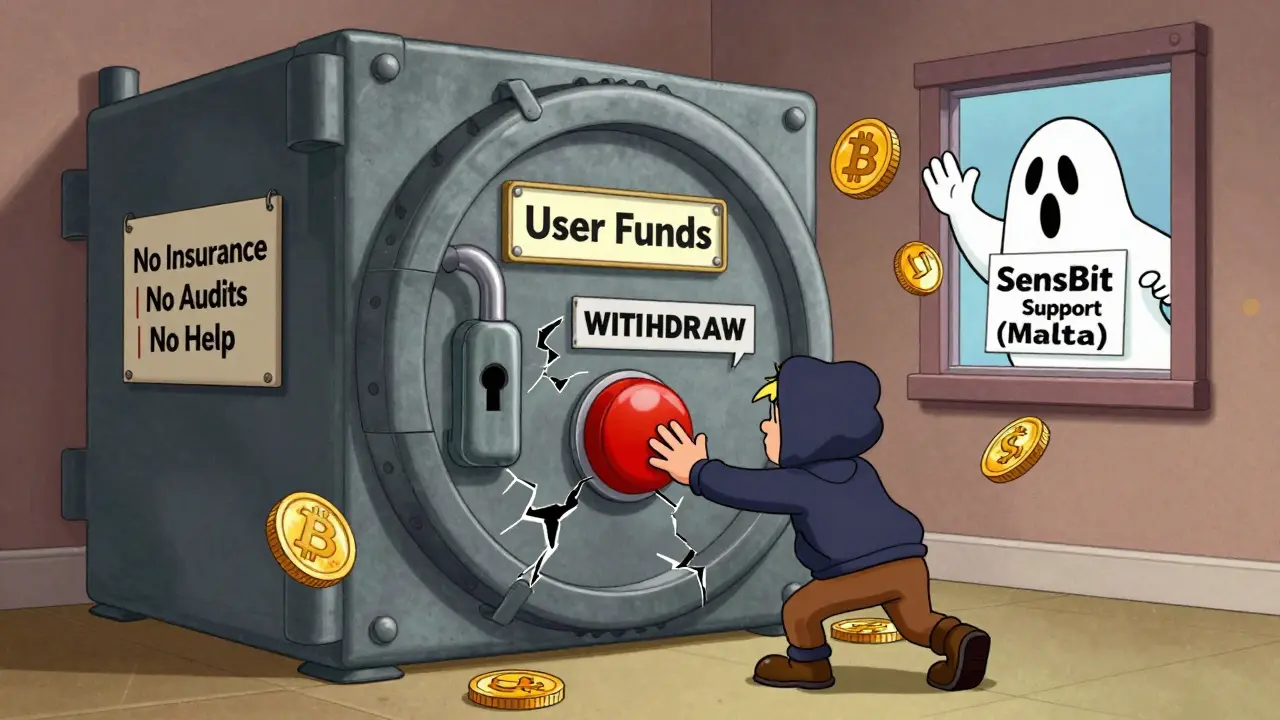
There’s no proof SENbit holds insurance for user funds. No proof it uses multi-sig wallets. No public audit reports. No proof it’s ever been penetration-tested. That’s not normal for a platform handling real money. Even smaller exchanges like KuCoin or Gate.io publish security details. SENbit doesn’t. That’s not confidence. That’s risk.
Website Issues and Downtime
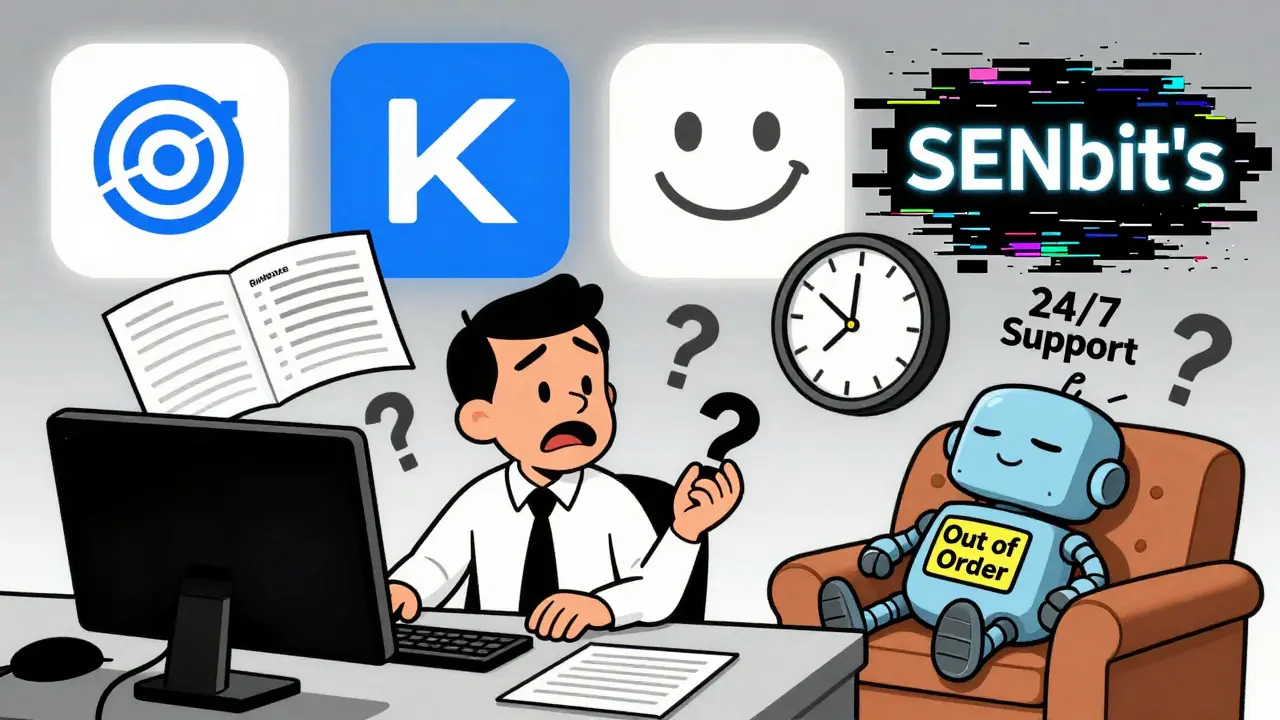
Users report the SENbit website crashes often. Sometimes you can’t log in. Sometimes you can’t check your balance. Sometimes the order book freezes during volatile markets. In crypto, minutes matter. If you’re trying to exit a losing position and the site is down, you lose money. And you can’t call someone to fix it - even though SENbit claims 24/7 support, response times are slow. Emails go unanswered for days. Live chat often disconnects.
This isn’t a one-off issue. Multiple users on Reddit and crypto forums describe the same problem: “I logged in on Tuesday, couldn’t get back in until Friday.” That’s not a technical hiccup. That’s poor infrastructure. And when your exchange can’t stay online, you’re not trading - you’re gambling on whether the site will work when you need it.
Regulatory Problems and Location Risk
SENbit is based in China. China banned all cryptocurrency trading in 2021. While some exchanges still operate from there, they do so in legal gray zones. They can’t legally serve Chinese users. They can’t access Chinese banking. They can’t get licenses. That means SENbit has no official backing. No government oversight. No legal recourse if things go wrong.
Compare that to exchanges based in the U.S., Singapore, or Malta. Those places have clear rules. If a U.S. exchange fails, you can file a complaint with the SEC or CFTC. If SENbit disappears, you have zero legal protection. And if China cracks down harder - which it might at any time - SENbit could vanish overnight. No warning. No refund.
Confusion with SensBit (Malta)
There’s another platform called SensBit - based in Malta, with a phone number and email support. It’s not the same as SENbit. But Google mixes them up. People searching for “SENbit” end up on SensBit’s site and think they’re talking to the same company. That’s dangerous. SensBit claims 99% on-time delivery and under-one-hour support. SENbit doesn’t. If you sign up thinking you’re getting SensBit’s service, you’ll be shocked when you get SENbit’s broken site and silence.
Who Should Avoid SENbit
- Anyone trading more than $500 a month - the downtime and compliance issues make it unreliable.
- Users in the U.S., EU, or UK - you risk frozen funds and no legal protection.
- Traders who need advanced tools like limit orders, stop-losses, or margin trading - SENbit doesn’t offer them properly.
- People who value transparency - SENbit hides fees, security practices, and regulatory status.
Who Might Use SENbit (With Caution)
- Users in countries with no banking access to major exchanges - if SENbit is your only option, proceed with tiny amounts.
- People experimenting with obscure altcoins not listed elsewhere - but even then, use a burner wallet.
- Those who understand the risks and treat it like a gamble, not an investment.
If you’re serious about crypto, you don’t need SENbit. There are better, safer, faster options. And if you’re not serious? Then you shouldn’t be trading crypto at all.
Alternatives That Actually Work
Instead of SENbit, consider:
- Coinbase - Best for beginners. Simple, regulated, insured.
- Kraken - Best for low fees and advanced tools. Trusted since 2011.
- Binance - Best for volume and coin selection. Global reach.
- Bybit - Best for futures and derivatives trading.
All of these have public security audits, clear fee structures, 24/7 support, and legal registration in major jurisdictions. SENbit has none of that.
Final Verdict: Don’t Trust SENbit
SENbit looks like a crypto exchange. But it doesn’t act like one. It has too many broken pieces: unreliable access, no transparency, regulatory red flags, and zero track record. In 2025, you don’t need to settle for a platform that might disappear tomorrow. There are dozens of better options - all with real security, real support, and real history.
If you’ve already deposited funds on SENbit, withdraw what you can - now. Don’t wait for it to crash. Don’t hope it improves. It won’t. And if you’re thinking of signing up? Walk away. Your money deserves better.
Is SENbit a legitimate crypto exchange?
SENbit operates as a crypto exchange but lacks key signs of legitimacy. It doesn’t publish security audits, has no clear regulatory status, and has hit FinCEN query limits - meaning it can’t comply with U.S. financial reporting rules. While it’s not officially labeled a scam, its operational flaws make it unreliable and risky for real trading.
Can I withdraw my crypto from SENbit?
Some users report successful withdrawals, but many describe delays of several days or complete lockups. Withdrawals are often blocked if your account triggers FinCEN flags - and you won’t be told why. There’s no customer service escalation path. If your withdrawal fails, you’re on your own.
Does SENbit support USD or EUR deposits?
SENbit does not offer direct fiat on-ramps. You can’t deposit USD, EUR, or any traditional currency directly. You must first buy crypto on another exchange, then send it to SENbit. This adds extra steps, fees, and risk - especially since SENbit’s site is unstable.
Is SENbit safe for long-term holding?
No. SENbit lacks insurance, public security audits, and proven infrastructure. Even if your coins are visible in your wallet, there’s no guarantee they’re securely stored. For long-term holding, use a hardware wallet or a regulated exchange like Coinbase or Kraken. SENbit is not designed for storage.
Why is SENbit so slow compared to other exchanges?
SENbit’s servers are under-resourced and poorly maintained. Users report slow order execution, frozen charts, and frequent downtime - especially during market spikes. Unlike major exchanges that invest millions in infrastructure, SENbit appears to run on minimal hardware. This makes it unsuitable for active trading.
Is SENbit banned in the U.S.?
SENbit isn’t officially banned, but it can’t legally serve U.S. users. Its FinCEN query limit means it can’t process transactions involving U.S. addresses without violating federal reporting rules. U.S. users are effectively blocked from using SENbit’s full services - even if they can access the website.
What happened to SENbit’s customer support?
SENbit claims to offer 24/7 support, but user reports show inconsistent responses. Emails often go unanswered for over 72 hours. Live chat disconnects randomly. There’s no phone number. No ticket system. No escalation path. Support appears to be outsourced and underfunded - a common sign of an exchange prioritizing cost over service.
Are there any positive reviews of SENbit?
A few users praise its simple interface and low fees - but these reviews are rare and often come from people who traded small amounts and never needed to withdraw. The vast majority of feedback highlights downtime, withdrawal issues, and lack of support. Positive reviews are outliers, not indicators of reliability.
Cheyenne Cotter
December 17, 2025 AT 10:48Look, I get that SENbit looks cheap and sketchy, but let’s be real-most of these ‘trusted’ exchanges are just corporate fronts with KYC that feels like a DMV line. I’ve had my funds locked on Kraken for 11 days because they ‘flagged’ a $20 transfer from a friend. At least SENbit doesn’t pretend to be your therapist while freezing your crypto. The FinCEN thing? Yeah, that’s a mess, but it’s not unique-half the offshore exchanges are in the same boat. If you’re not trading big money, why are you sweating over audit reports? I’ve lost more to Coinbase’s customer service than I ever did to SENbit’s downtime.
Sean Kerr
December 18, 2025 AT 00:03OMG YES!! 😭 I tried SENbit last month bc I was tired of paying $15 in fees every time I swapped… and ughhh the site kept crashing when I tried to withdraw my 0.02 ETH 😭 I thought I was going crazy but then I saw 3 other people on Reddit with the SAME issue… like… why does this even exist?? I’m just trying to HODL my shiba inu 😅
George Cheetham
December 19, 2025 AT 12:38There’s a deeper question here, beyond the technical flaws: why do we keep returning to platforms that fail us? Is it convenience? Desperation? Or the quiet hope that this time, maybe, the broken system will work? SENbit isn’t unique-it’s symptomatic. We live in an age where trust has been commodified, and every exchange, no matter how small, is a gamble dressed as a service. The real tragedy isn’t that SENbit lacks audits-it’s that we’ve normalized trading on platforms that don’t even pretend to care about our safety. We don’t need more alternatives. We need to stop rewarding indifference.
Patricia Amarante
December 20, 2025 AT 14:20I used it once to move some Dogecoin. Took 3 days to get it out. Never again.
Mark Cook
December 21, 2025 AT 22:24Bro you’re acting like SENbit is the only sketchy exchange. Have you seen what’s happening on Binance right now? They’re literally selling user data to hedge funds. At least SENbit doesn’t pretend to be ethical. Also, China’s not evil, just misunderstood. 🤷♂️
Greg Knapp
December 22, 2025 AT 22:21Everyone’s so scared of risk but you’re all fine with Coinbase which is basically a bank that hates you. SENbit doesn’t lie to you. It’s just bad. And bad is honest. I’ve lost money on it but at least I know I got scammed by a clown, not a suit
Shruti Sinha
December 23, 2025 AT 05:29Interesting analysis. I’m based in India and SENbit was the only platform that allowed me to deposit via crypto on-ramp partners when local exchanges froze withdrawals. It’s unreliable, yes-but it’s not malicious. I treat it like a public bus: it’s slow, sometimes breaks down, but it gets you where you need to go if you’re out of options. Withdrawals take 2–5 days, but they do happen. I’ve moved $1,200 total through it without losing anything. Just don’t keep more than you can afford to wait for.
Terrance Alan
December 24, 2025 AT 18:11You people are pathetic. You cry about security audits like they’re holy scriptures. Crypto is freedom. Freedom means risk. If you need a licensed, insured, regulated babysitter to hold your Bitcoin then you shouldn’t be here. SENbit is the real deal. It doesn’t bow to the state. It doesn’t beg for approval. It just exists. And that’s more than you can say for Coinbase who’s probably reporting your IP to the IRS right now. Stop whining and grow a spine
Sally Valdez
December 24, 2025 AT 20:59Oh my god you’re all so brainwashed by Western corporate propaganda. SENbit is a patriot exchange. China is building the future and you’re over here crying about FinCEN like it’s the UN. The US is bankrupt and your ‘trusted’ exchanges are just tools of the deep state. SENbit lets you trade without permission. That’s the future. Not your Coinbase nanny-state crap. If you don’t like it, go back to your 401k and cry into your Starbucks
Sammy Tam
December 26, 2025 AT 04:14Let’s be real-SENbit is the crypto equivalent of that weird taco truck that’s always half-empty but makes the best al pastor in town. The place looks like it’s held together with duct tape and hope, the guy behind the counter never smiles, and you have no idea if the meat’s fresh… but somehow, every time you eat there, you leave happy. It’s chaotic. It’s unreliable. But it works. And honestly? That’s kinda beautiful. The big exchanges are like McDonald’s-safe, predictable, soulless. SENbit? It’s got character. And in crypto, character is currency.
Kayla Murphy
December 27, 2025 AT 14:23Just wanted to say-thank you for writing this. I was on the fence about SENbit, and honestly, I didn’t know where to start looking. You laid it all out without the drama. I’m going with Kraken now. You’re right. My money deserves better. 💛