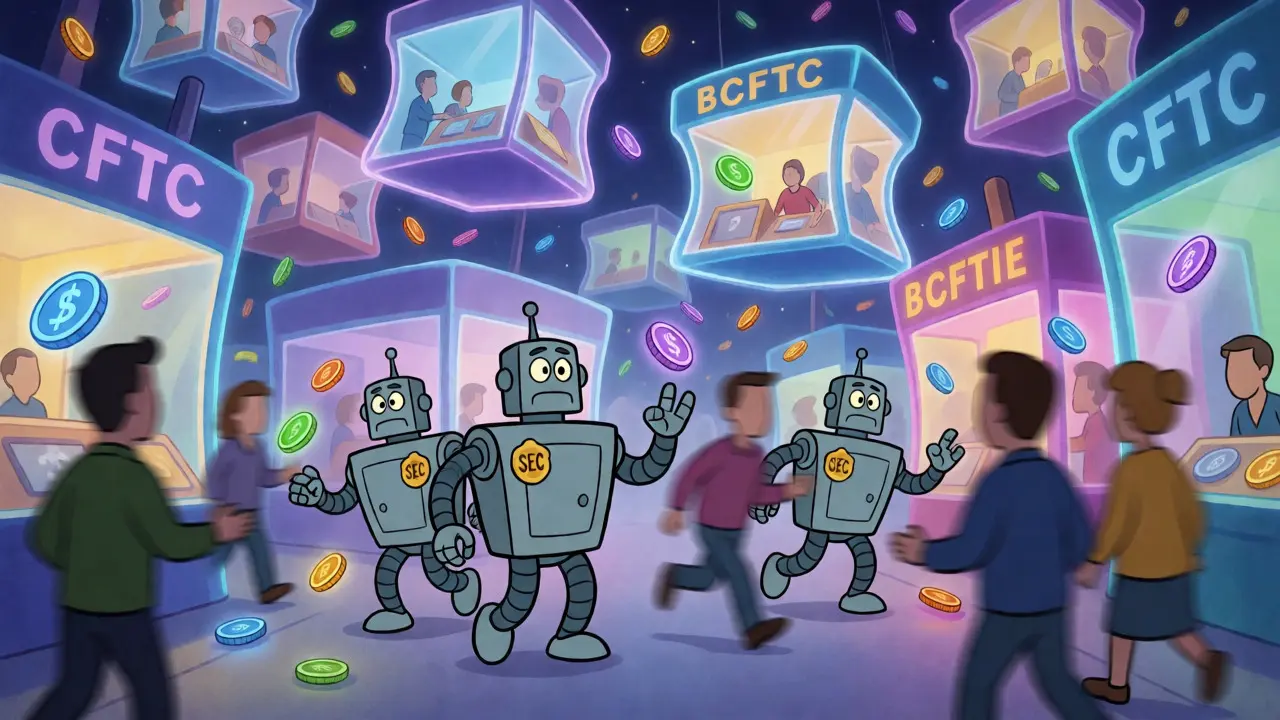
Imagine trying to police a market where the storefronts move every day, the currency changes value by the minute, and half the customers don't even have names. That’s the current state of cryptocurrency markets. Traditional regulators like the SEC or CFTC are struggling to keep up with an industry that processed $15.8 trillion in transaction volume in 2022 alone. This gap between rapid innovation and slow-moving government bureaucracy has sparked a new idea: Self-Regulatory Organizations (SROs). Think of them as the industry policing itself before the government steps in to shut it down.
What Exactly Is a Crypto SRO?
A Self-Regulatory Organization is a non-governmental entity created by industry participants to set and enforce rules for their own sector. Unlike traditional financial bodies, crypto SROs are designed specifically for decentralized digital assets. The concept isn't brand new; it mirrors structures like FINRA, which oversees U.S. brokerage firms. However, applying this model to crypto is tricky because there is no central authority to delegate power to initially. Instead, these organizations rely on voluntary membership and contractual agreements to maintain order. Their main job? Setting standards for anti-money laundering (AML), ensuring market integrity, and resolving disputes without waiting years for federal legislation to pass.
Why Do We Need Self-Regulation Now?
The primary driver behind the push for SROs is regulatory uncertainty. In 2018, CFTC Commissioner Brian Quintenz argued that a Crypto SRO could bridge the gap between the chaotic status quo and future government action. He wasn't wrong. Today, over 95 countries have some form of crypto regulation, but they all differ wildly. A compliant exchange in Switzerland might be breaking rules in Singapore. An SRO creates a unified standard. For example, the Travel Rule, mandated by the Financial Action Task Force (FATF) since 2019, requires exchanges to share sender and recipient data for transactions over $3,000. Implementing this across hundreds of jurisdictions manually is a nightmare. An SRO can develop technical standards once, allowing members to implement them globally.
How Does It Work? The Technical Backbone
You might wonder how an organization enforces rules on entities that operate across borders and often lack physical headquarters. The answer lies in technology and contracts. Proposed models, such as the Virtual Commodity Association (VCA), suggest using periodic examinations and agreed-upon sanctions. If a member exchange fails to comply with AML checks, the SRO can impose fines or suspend membership. Since many institutional investors only trade with SRO members, losing membership effectively cuts off access to significant liquidity. Furthermore, initiatives like the Travel Rule Information Sharing Alliance (TRISA) have already built open-source tools to automate compliance. TRISA launched its production network in January 2023, connecting 43 exchanges and processing over 1.2 million compliant transactions by September 2023. This proves that technical interoperability is possible.

Switzerland vs. The United States: Two Paths
We don't have to guess if SROs work; we just need to look at Switzerland. Under its Anti-Money Laundering Ordinance effective January 2020, the Swiss Financial Market Supervisory Authority (FINMA) recognized six SROs. These bodies oversee 178 registered crypto firms. It works because membership is mandatory for regulated businesses. Contrast this with the United States, where participation in self-regulatory initiatives remains largely voluntary. As of mid-2023, only about 22 of the top 100 U.S. exchanges participated in any self-regulatory framework. The difference is clear: Switzerland uses legal mandates to drive adoption, while the U.S. relies on market incentives. Without mandatory enforcement, voluntary SROs risk becoming clubs for large players who can afford the compliance costs, leaving smaller platforms to engage in regulatory arbitrage.
| Feature | Traditional Government Regulation | Crypto SRO Model |
|---|---|---|
| Speed of Implementation | Slow (Years for legislation) | Fast (Months for rulemaking) |
| Enforcement Power | Legal penalties, jail time | Fines, suspension, loss of reputation |
| Adaptability | Rigid, hard to change | Agile, tech-focused updates |
| Cost Burden | High administrative overhead | Shared infrastructure costs |
| Global Reach | Jurisdiction-bound | Potentially cross-border via standards |
The Challenges: Who Pays and Who Decides?
It’s not all smooth sailing. The biggest criticism of crypto SROs is the potential for conflicts of interest. If the major exchanges fund the SRO, will they write rules that favor their massive scale and hurt smaller competitors? A 2022 survey found that 62% of small exchanges worried that membership costs could exceed $50,000 annually, creating a barrier to entry. Additionally, enforcing rules on Decentralized Finance (DeFi) protocols is nearly impossible when 54% of the total value locked operates without identifiable legal entities. How do you fine a smart contract? Current models focus heavily on centralized exchanges, leaving a massive blind spot in the DeFi ecosystem. Moreover, the incentive structure is unclear. FINRA works because broker-dealers must join to operate legally. Crypto SROs currently lack that statutory backing, making participation optional and potentially ineffective against bad actors.
Is There a Future for Crypto SROs?
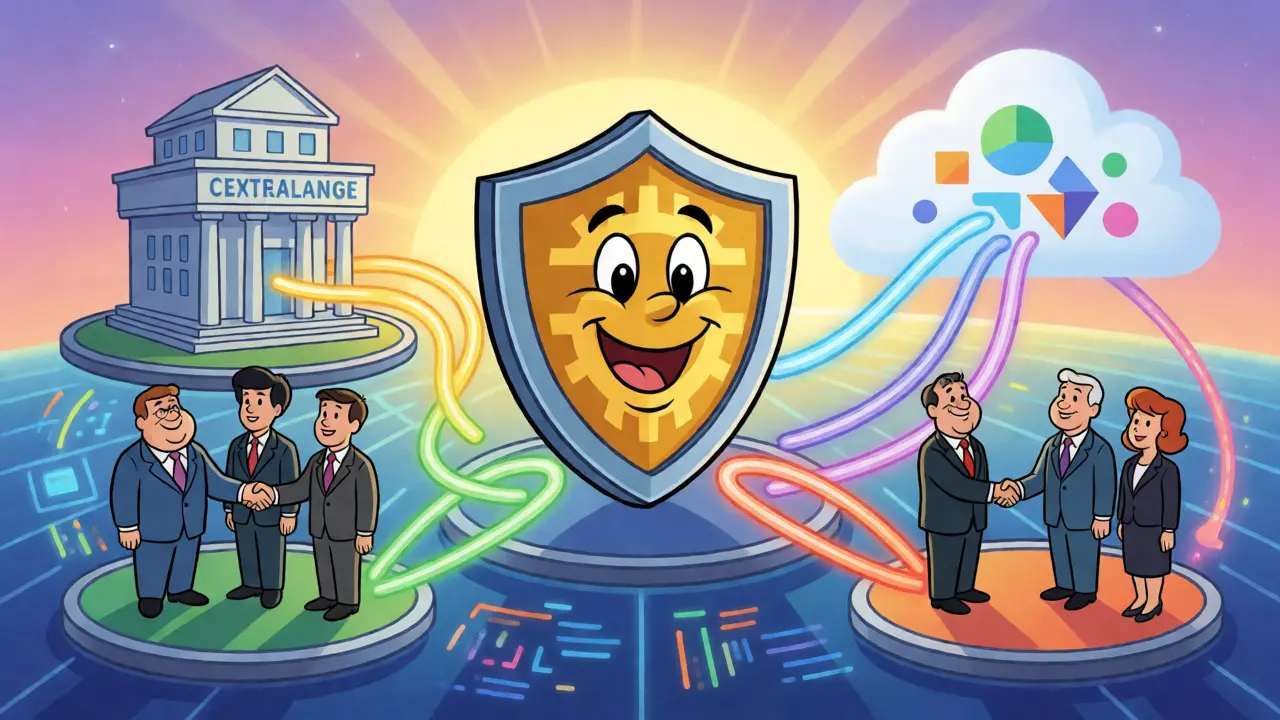
Despite the hurdles, momentum is building. The U.S. House passed the FIT21 Act in May 2024, which encourages industry-led self-regulatory organizations. Meanwhile, the EU’s MiCA regulation, effective June 2024, requires providers to join adequate oversight, which analysts predict will spur SRO formation across Europe. Guidehouse analysis suggests a 75% probability that at least one major crypto SRO will achieve FINRA-like status by 2030. The key to success lies in balancing flexibility with rigor. They must avoid becoming cartels that stifle innovation while providing enough certainty to attract institutional capital. For now, SROs represent the most pragmatic middle ground between total chaos and heavy-handed government control.
Key Takeaways
- Bridging the Gap: SROs fill the void left by slow government regulation, offering faster adaptation to technological changes.
- Technical Solutions: Tools like TRISA prove that automated compliance for rules like the Travel Rule is feasible and scalable.
- Voluntary vs. Mandatory: Success depends on adoption. Mandatory models (like Switzerland's) work better than voluntary ones (like the current U.S. approach).
- DeFi Blind Spot: Current SRO frameworks struggle to regulate decentralized protocols where no central entity exists.
- Institutional Demand: Big money wants certainty. SROs provide the legitimacy needed for broader market participation.
What is the main difference between an SRO and a government regulator?
A government regulator, like the SEC, derives its power from law and can impose criminal penalties. An SRO is an industry-created body that enforces rules through contractual agreements among members. While an SRO cannot send someone to jail, it can expel members from the industry, which often means losing access to critical banking partners and institutional clients.
Do all crypto exchanges have to join an SRO?
Not yet. In the United States, joining is currently voluntary. However, in Switzerland, membership in a recognized SRO is mandatory for regulated crypto businesses. As regulations tighten globally, particularly under frameworks like the EU's MiCA, joining an SRO may become a de facto requirement for doing business with institutions.
How do SROs handle DeFi protocols?
This is the hardest part. Most current SRO proposals focus on centralized exchanges (CEXs). Regulating DeFi is difficult because protocols are code, not companies. Some approaches involve regulating the front-end interfaces or the developers, but there is no consensus yet. Until legal wrappers are developed for DAOs and protocols, DeFi largely falls outside traditional SRO scope.
Who pays for the operations of a crypto SRO?
Members pay fees. Similar to how FINRA charges brokerage firms, crypto SROs charge annual membership dues and transaction-based fees. Critics argue this favors large exchanges that can absorb these costs, potentially squeezing out smaller startups. Transparent fee structures are crucial to prevent the SRO from becoming a tool for big incumbents to block competition.
Can an SRO replace the SEC in crypto?
Unlikely in the near term. The SEC handles securities classification, which determines whether a token is a security or a commodity. SROs typically manage operational conduct, AML, and market integrity. They work best in tandem with government agencies, handling the day-to-day compliance so regulators can focus on high-level policy and enforcement against fraud.
Paige Ray
September 4, 2026 AT 00:05It’s genuinely heartbreaking to see how much stress this uncertainty causes for small projects that just want to build something good. The idea of self-regulation feels like a necessary shield for them, not just big institutions.
Kathy Siew
September 4, 2026 AT 21:35Sure, let's pretend the industry can police itself without turning into a massive cartel where only the whales get to play 🙄. Because we all know crypto exchanges are known for their altruism and lack of greed... right? 😂
Harish Ramaiah
September 5, 2026 AT 04:33I mean... it is so frustrating!! 😩 Why do we always wait until things explode before fixing them?? It makes me feel so anxious thinking about DeFi being left out!!! 😭 We need rules NOW, not in 2030!!! 💀💀💀
Jennifer Brosnan
September 6, 2026 AT 14:20Wake up sheeple! This isn't about regulation, it's about control. The SEC wants to crush innovation, but these SROs are just private banks wearing a different hat. They aren't protecting you; they're protecting their own portfolios from the chaos they created. Don't fall for the 'self-regulation' narrative-it's a trap set by the same elites who crashed 2008.
Finlay Samms
September 6, 2026 AT 19:54I think there is merit in both sides here. Switzerland's model seems robust because of the mandate, whereas the US voluntary approach lacks teeth. It might be worth looking at hybrid models where certain high-risk activities require membership while others remain optional. :) That way we protect consumers without stifling early-stage startups entirely.
Rachel Leet
September 8, 2026 AT 02:55You people miss the philosophical point entirely. Regulation implies a hierarchy of power, which is antithetical to the decentralized ethos of blockchain. By creating an SRO, you are merely recreating the centralization you claimed to escape. You are building a digital feudalism where the lords (SRO members) dictate terms to the serfs (users). It is intellectually lazy to assume that mimicking FINRA solves the fundamental problem of trustless systems.
adam veikkanen
September 8, 2026 AT 09:54Who pays for the audits?
Rishi Mehta
September 8, 2026 AT 13:09This is absolutely scandalous. The fact that 62% of small exchanges fear bankruptcy over compliance costs proves that this system is rigged against the little guy. We are watching the death of decentralization in real time and nobody cares enough to scream loud enough. It breaks my heart every single day.
Michael Rubin
September 10, 2026 AT 08:51I appreciate the balanced view on the technical backbone. TRISA seems promising as a practical step forward rather than just theoretical debate.
Emerson Droguet
September 12, 2026 AT 08:41I would respectfully suggest that the comparison to FINRA is somewhat reductive given the unique technological infrastructure of distributed ledgers. While the operational parallels are valid, one must consider whether the speed of blockchain settlement fundamentally alters the nature of market integrity monitoring. It may be prudent to explore if existing regulatory frameworks can be adapted via smart contract logic rather than relying solely on traditional organizational structures.
Eugene McGrath
September 14, 2026 AT 08:29US needs to stop copying Europe's slow-moving bureaucratic nonsense. We built the internet, we should lead the governance standards. If our SROs are weaker than FINRA because of voluntary participation, then fix the statute. Make them join or lose banking access. Simple as that. Stop apologizing for American dominance.
Maegan Rust
September 16, 2026 AT 02:27I love how everyone is coming together to discuss this! 🌟 It really highlights that we need inclusive mentorship within these new bodies. Maybe smaller exchanges could pool resources to share the compliance burden? Collaboration over competition might save us all some tears and cash! 💖
Sheryl Nelsen Hutton
September 16, 2026 AT 11:26While I agree with the sentiment regarding inclusivity, we must acknowledge that the current trajectory of SRO formation heavily favors entities with established liquidity pools and robust capital reserves, thereby inadvertently creating a barrier to entry for nascent protocols that lack the financial runway to absorb the substantial overhead costs associated with mandatory AML/KYC integrations and periodic examinations mandated by such self-regulatory frameworks.
Brittany Ross
September 17, 2026 AT 13:14Exactly! 🎯 And if they don't help the little guys, it's just another club for rich people. 😤 We need emojis in the regulations too! 📉🚫😢