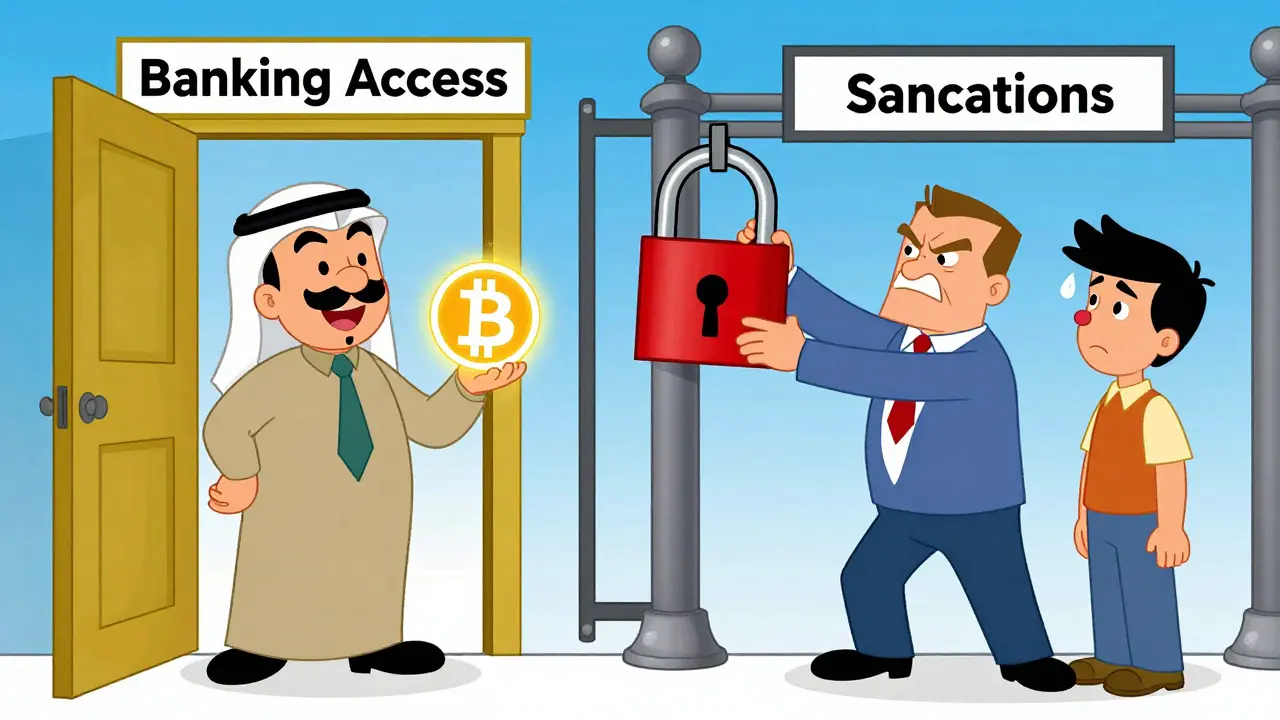
Imagine trying to send money to a friend across the ocean, only to have your bank freeze the transaction because of a political decision made thousands of miles away. For years, that was the daily reality for anyone doing business with Syria or Cuba. But as we move through 2026, the ground beneath our feet has shifted dramatically. The regulatory landscape for these two nations is no longer a static wall; it is a moving target, swinging wildly between open doors and locked gates depending on which country you are looking at.
If you are navigating international finance, trade, or cryptocurrency operations today, understanding this divergence is not just helpful-it is critical. While Syria has seen a historic lifting of broad U.S. sanctions, Cuba faces a renewed hardline approach. This split creates a complex web of opportunities and risks that businesses and individuals must navigate carefully.
The Great Unblocking: Syria’s Sanctions Relief
For over two decades, Syria existed in a financial vacuum relative to the United States. That changed abruptly in mid-2025. On June 30, 2025, President Trump signed Executive Order 14312, effectively hitting the reset button on U.S.-Syria relations regarding economic isolation. Effective July 1, 2025, this order revoked six previous executive orders that had imposed comprehensive sanctions since 2004.
What does this actually mean for you? It means the broad embargo prohibiting exporting services to Syria, making new investments, or conducting business involving the Syrian government has been terminated. The Office of Foreign Assets Control (OFAC) removed all Syrian financial institutions from the Specially Designated Nationals (SDN) List. This includes the Central Bank of Syria. Suddenly, U.S. banks could establish correspondent banking relationships with Syrian banks again. The door was unlocked.
However, "unlocked" doesn't mean "wide open." The administration maintained targeted sanctions. If you are dealing with members of the Assad family, former regime officials, or individuals involved in the illicit captagon drug trade, those restrictions remain firmly in place. Human rights abusers and threats to regional stability are still off-limits. So, while the general population and legitimate businesses gained access, specific bad actors remained sanctioned.
Crypto in Syria: Navigating the Gray Zone
With traditional banking channels reopening, what happens to cryptocurrency? This is where things get interesting-and tricky. As of 2026, Syria has no specific laws that explicitly permit or forbid the use of cryptocurrency. It exists in a legal gray area. There is no central bank regulation saying "Bitcoin is legal," but there is also no law saying "Bitcoin is illegal."
This ambiguity creates a unique environment. Following the lifting of U.S. sanctions in July 2025, trading became more accessible on major exchanges like Binance. Users reported smoother transactions and increased liquidity. However, the lack of clear local legislation means that any crypto operation must still comply with Syria's existing Anti-Money Laundering and Combating the Financing of Terrorism (AML/CFT) framework.
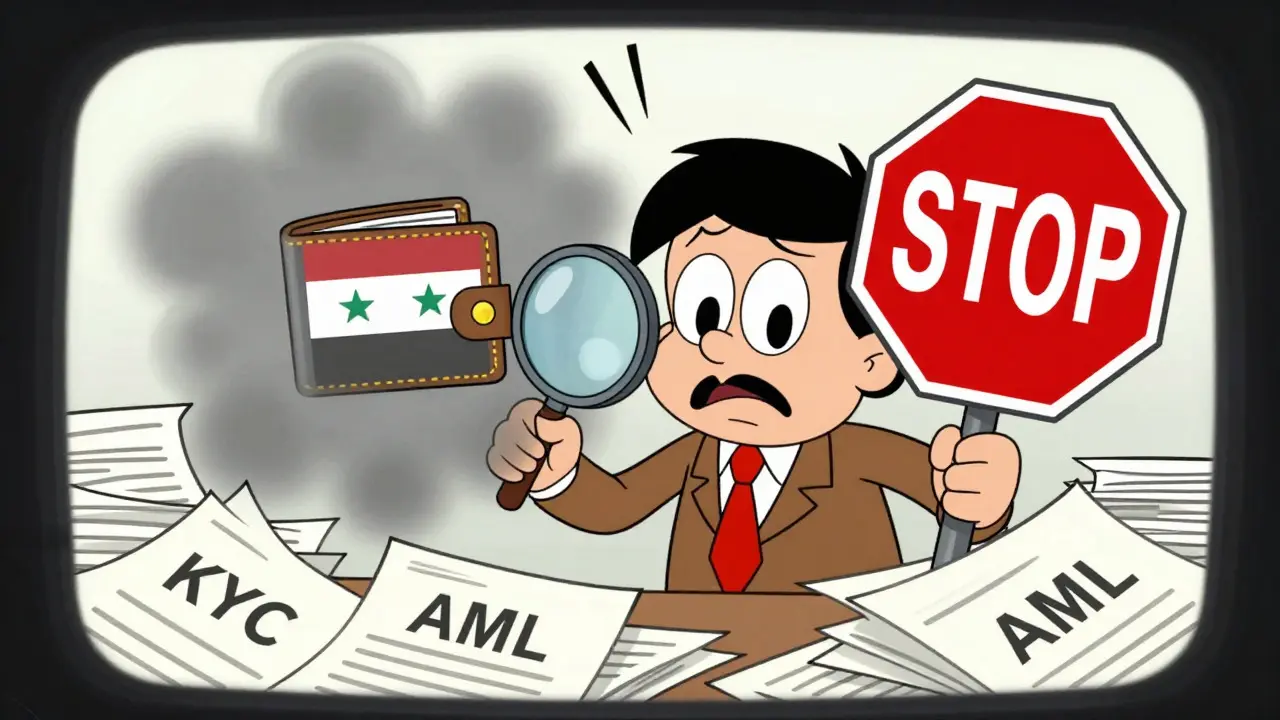
For businesses, this translates to enhanced due diligence. You aren't just checking if someone is on a sanctions list anymore; you are proving that their crypto activity isn't funding terrorism or money laundering. International banks, cautious by nature, may still delay or reject payments if they perceive high risk. This friction impacts trade flows. Even though the U.S. sanctions are gone, the fear of secondary sanctions or reputational damage keeps many global players hesitant.
Cuba: The Return of Hardline Restrictions
While Syria opened up, Cuba closed down. In a stark contrast, the Trump administration strengthened sanctions against Cuba through National Security Presidential Memorandum 5 (NSPM-5). This memo reversed actions taken by the previous Biden administration near the end of his term, reasserting a tough stance reminiscent of Trump's first presidency.
The Cuba Assets Control Regime (CACR) remains fully intact and is being enforced with renewed vigor. A recent case highlights the severity. In July 2025, Key Holding, LLC, a Delaware-based logistics company, paid a settlement of $608,825 to OFAC. Why? Because a subsidiary managed logistics for 36 freight shipments from Colombia to Cuba. These weren't weapons or nuclear materials; they were commercial goods. Yet, the penalty was steep.
Crucially, the CACR applies to non-U.S. subsidiaries of U.S. persons. This is a broader compliance obligation than many other sanctions regimes. If you are an American citizen living abroad, or a U.S. company with a foreign branch, you are still bound by Cuban sanctions. This makes doing business with Cuba significantly harder than before, especially in the digital asset space where borders are less defined.
Comparing the Two Approaches
| Feature | Syria | Cuba |
|---|---|---|
| General Sanctions Status | Lifted (Broad Embargo Removed) | Strengthened (Hardline Approach) |
| Key Legal Instrument | Executive Order 14312 | NSPM-5 / CACR |
| Banking Access | Restored (SDN List Removal) | Restricted (Aggressive Enforcement) |
| Crypto Legal Status | Undefined (Gray Area) | Highly Restricted (Strict Compliance) |
| Targeted Exceptions | Assad Family, Drug Traffickers | Government Entities, Broad Scope |
| Recent Enforcement Example | Relief Granted | $608k Penalty for Logistics Violation |
Practical Implications for Crypto Users and Businesses
So, how do you operate in this new world? If you are looking at Syria, the opportunity is real but requires caution. The absence of specific crypto laws means you are relying on general financial regulations. Financial technology companies like Lightspark have stepped in with solutions like Grid Switch. This infrastructure allows regulated institutions to facilitate cross-border fiat transfers using the Lightning Network as a settlement layer. This minimizes direct crypto exposure while leveraging blockchain efficiency. It’s a smart workaround for the regulatory ambiguity.
For Cuba, the message is clear: tread lightly. The enforcement environment is aggressive. OFAC is pursuing violations vigorously, even for non-egregious errors. If you are a U.S. person or entity, assume that any interaction with Cuban entities-especially via crypto-is prohibited unless explicitly authorized. The risk of hefty fines, like the one faced by Key Holding, outweighs most potential benefits for small-scale operators.
Compliance professionals emphasize that enhanced due diligence is no longer optional. You need robust programs to screen counterparties. Just because Syria is off the SDN list doesn't mean every Syrian entity is safe. You must verify that your partners are not connected to the remaining targeted sanctions (like the Assad family or human rights violators). Similarly, for Cuba, ensure your supply chain and digital transactions do not inadvertently involve U.S. persons or assets subject to CACR.
The Broader Geopolitical Context
These changes in Syria and Cuba do not exist in a vacuum. They reflect a broader shift in U.S. foreign policy priorities under the current administration. While Syria sees relief, other regions face maximum pressure. Iran continues to face strict sanctions under NSPM-2, particularly after announcing it would no longer cooperate with the International Atomic Energy Agency (IAEA). In July 2025, OFAC sanctioned entities involved in smuggling Iranian oil disguised as Iraqi oil.
This selective approach suggests that U.S. sanctions are becoming more tool-specific rather than blanket policies. Diplomacy and strategic interests drive the decisions. For crypto, this means the regulatory environment will continue to evolve rapidly. What is true today might change tomorrow. Staying informed is part of the job.
Next Steps for Navigating the Landscape
If you are planning to engage with markets in Syria or Cuba, here is your checklist:
- Verify Current Lists: Regularly check the OFAC SDN List. For Syria, ensure your counterparts are not among the targeted exceptions (Assad family, etc.). For Cuba, confirm no U.S. nexus exists.
- Consult Legal Experts: Given the gray areas in Syria's crypto laws and the strictness of Cuba's regime, professional legal advice is invaluable. Don't rely on forum posts alone.
- Implement Robust KYC/AML: Use technology to automate screening. Enhanced due diligence is key to avoiding payment delays or rejections from cautious banks.
- Monitor Policy Changes: Follow updates from OFAC and relevant news sources. The situation can change quickly, as seen with the rapid implementation of EO 14312.
- Consider Infrastructure Solutions: Explore platforms like Lightspark that offer compliant cross-border payment solutions using blockchain technology without direct regulatory pitfalls.
The era of static sanctions is over. We are now in an age of dynamic, targeted, and often contradictory policies. By understanding the nuances between Syria's opening and Cuba's closing, you can make smarter, safer decisions in the global digital economy.
Are U.S. sanctions completely lifted for Syria?
Broad economic sanctions were lifted via Executive Order 14312 in July 2025, allowing banking and investment. However, targeted sanctions remain on specific individuals and entities, including the Assad family, former officials, and those involved in drug trafficking or human rights abuses.
Is cryptocurrency legal in Syria?
As of 2026, Syria has no specific laws permitting or forbidding cryptocurrency. It exists in a legal gray area. Transactions must comply with existing Anti-Money Laundering (AML) and Combating the Financing of Terrorism (CFT) frameworks.
How have U.S. sanctions on Cuba changed recently?
Sanctions on Cuba have been strengthened through National Security Presidential Memorandum 5 (NSPM-5). The administration has reverted to a hardline approach, enforcing the Cuba Assets Control Regime (CACR) strictly, with significant penalties for violations, even by non-U.S. subsidiaries of U.S. persons.
Can I use Binance to trade with Syria now?
Yes, following the lifting of U.S. sanctions in July 2025, trading on major exchanges like Binance has become more accessible for Syrian users. However, users should still exercise caution and ensure they are not interacting with sanctioned individuals or entities.
What is the risk of doing business with Cuba via crypto?
The risk is very high. The U.S. enforces strict sanctions on Cuba, and violations can result in substantial fines. Since crypto borders are porous, ensuring complete separation from U.S. persons or assets is difficult. Most experts advise extreme caution or avoidance unless explicitly authorized.
Who is still sanctioned in Syria after the 2025 changes?
Specific categories remain sanctioned, including members of the Assad family, former government officials of the Assad regime, individuals involved in the illicit captagon trade, and persons responsible for serious human rights abuses or threats to regional stability.
Does the Cuba Assets Control Regime apply to foreign subsidiaries?
Yes, the CACR notably applies to non-U.S. subsidiaries of U.S. persons. This creates broader compliance obligations than many other sanctions regimes, meaning even foreign branches of U.S. companies must adhere to Cuban sanctions.