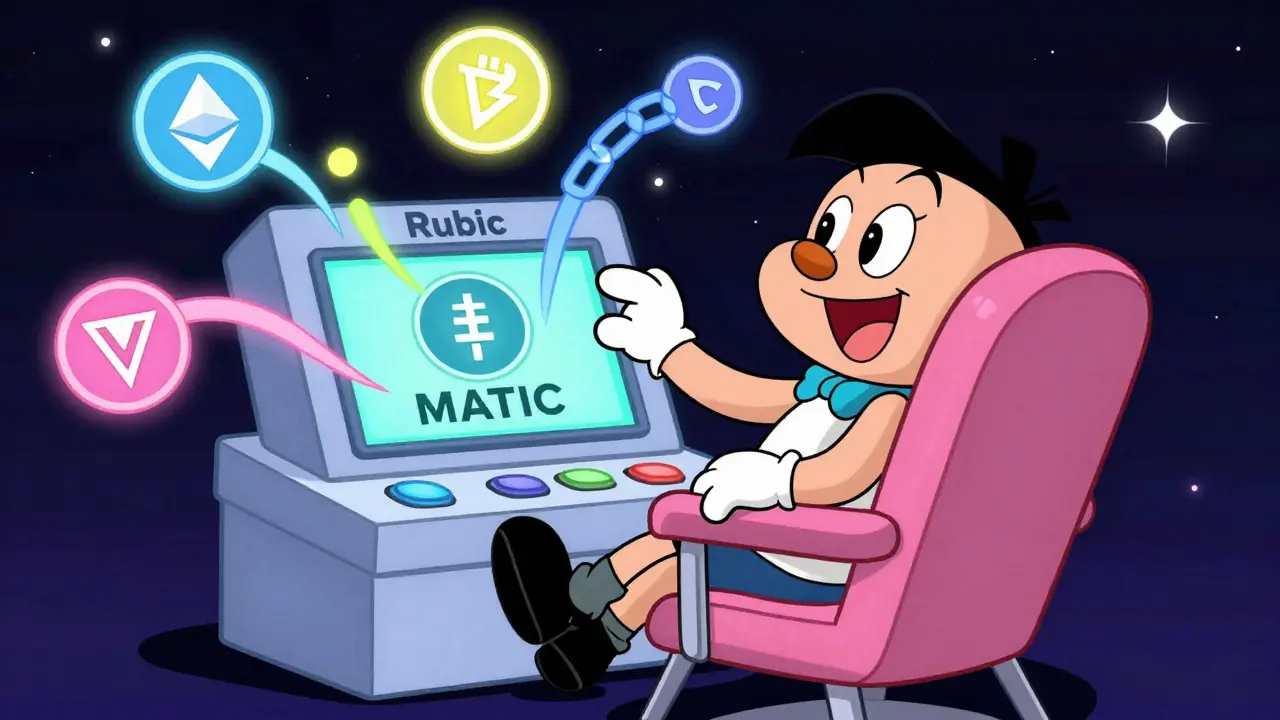
If you’re tired of juggling multiple wallets, bridging tokens between chains, and dealing with high slippage on every swap, Rubic might be the tool you’ve been waiting for. Unlike traditional exchanges that lock you into one blockchain, Rubic lets you swap tokens across Bitcoin, Ethereum, Arbitrum, Polygon, and more-all in one click. No more switching platforms. No more waiting hours for bridges to confirm. Just pick what you want to trade and what you want to receive, and let Rubic handle the rest.
How Rubic Works: No KYC, No Complex Steps
Rubic doesn’t ask for your ID, passport, or selfie. That’s not a bug-it’s a feature. The platform operates as a fully decentralized exchange aggregator, meaning you keep control of your funds at all times. There’s no central server holding your crypto. Instead, Rubic connects directly to your wallet-MetaMask, Phantom, Coinbase Wallet, or others-and executes swaps using smart contracts on each chain. The magic happens through three core systems: an RPC node that talks to different blockchains, a cross-chain manager that coordinates everything, and a network of external API providers that pull real-time prices from major DEXs like 1inch, OpenOcean, ODOS, and XY Finance. When you swap ETH for MATIC, Rubic doesn’t just check one exchange. It scans dozens, splits your order across multiple pools, and finds the best rate with the least slippage-even for large amounts. This isn’t just convenience. It’s efficiency. In early 2022, Rubic processed nearly $210 million in total transaction volume, according to Coin Bureau. That’s not Coinbase-level traffic, but for a platform focused on cross-chain swaps, it’s a strong signal of real usage.What Chains and Tokens Does Rubic Support?
Rubic supports over 20 blockchains, including the big ones:- Ethereum
- Bitcoin (via wrapped tokens)
- Polygon (MATIC)
- Arbitrum
- BNB Chain
- Avalanche
- Optimism
- Base
Security: Audited Contracts and No Central Points of Failure
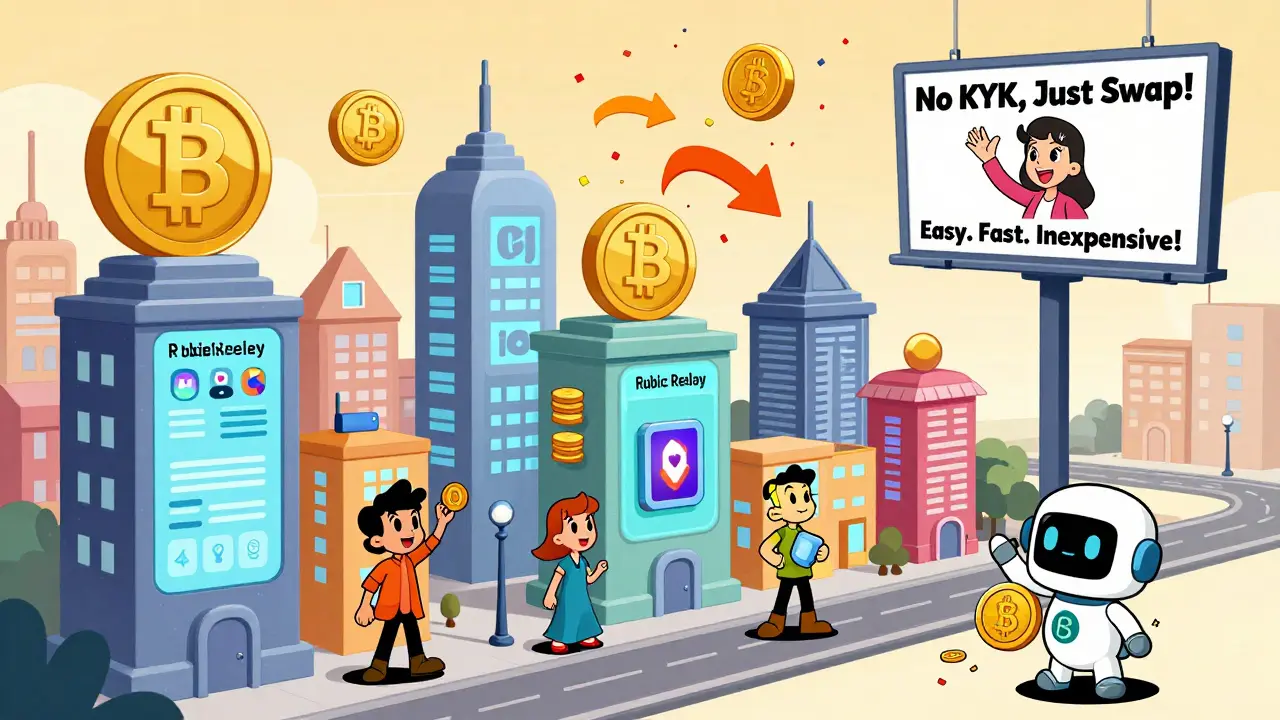
One of the biggest concerns with DeFi platforms is security. Many projects launch with unverified contracts and vanish when things go wrong. Rubic doesn’t take that risk. Both their main swap contracts and staking contracts have been fully audited by third-party firms. Coin Bureau specifically noted that this level of audit coverage “cannot necessarily be said for all operators in the space.” There’s no central database to hack. No company holding user funds. All transactions are peer-to-peer via smart contracts. Even if Rubic’s team disappeared tomorrow, the platform would keep running. That’s the power of true decentralization. The Rubic Relay widget also lets other projects integrate Rubic’s swap engine into their own websites. That means you might see it on a DeFi dashboard, a NFT marketplace, or a yield aggregator-and still be trading through the same secure, audited system.
The RBC Token: Utility and Price Outlook
Rubic’s native token, RBC, isn’t just a speculative asset. It’s used for:- Reducing swap fees
- Staking for rewards
- Voting on governance proposals
- TradingBeast forecasts $0.0215 by end of 2025
- WalletInvestor predicts $0.0114
- CoinLore’s algorithm suggests $0.0454
Who Is Rubic For? And Who Should Skip It?
Rubic shines if you:- Trade across multiple chains regularly
- Want to avoid KYC
- Prefer one-click swaps over manual bridging
- Use MetaMask, Phantom, or Coinbase Wallet
- Only trade on Ethereum and want the absolute lowest fees (Uniswap might be better)
- Need to swap obscure tokens with low liquidity
- Expect instant, 24/7 customer support (there’s none-just community channels)
Community and Future Outlook
Rubic’s community grew steadily even during the 2022 crypto winter-a rare sign of resilience. It’s covered by top YouTube channels like Altcoin Daily and Crypto Banter. Active Discord and Telegram groups help users troubleshoot issues. The team, led by co-founder Alexandra Korneva, has been consistent in messaging: DeFi should be “very easy and very fast and very inexpensive.” The biggest challenge? Awareness. Most crypto users still think of exchanges like Binance or Coinbase. Rubic operates under the radar. But as cross-chain activity grows, platforms like this will become essential. If Rubic can attract more developers to use its Relay widget, or partner with wallet apps to embed its swap engine, adoption could spike.Final Verdict: A Solid Tool for Cross-Chain Traders
Rubic isn’t the biggest DeFi platform. It doesn’t have the brand name of Uniswap or the liquidity of Curve. But it solves a real, painful problem: the fragmentation of blockchain ecosystems. If you’re swapping between Ethereum, Polygon, and Arbitrum every week, Rubic saves you time, gas, and headaches. The platform is secure, non-KYC, and built on audited contracts. The RBC token has utility and potential, even if its price is shaky. The interface is simple enough for beginners, yet powerful enough for active traders. For anyone serious about navigating the multichain future of crypto, Rubic isn’t just an option-it’s becoming a necessity.Is Rubic exchange safe to use?
Yes, Rubic is safe for users who understand DeFi risks. All smart contracts for swaps and staking have been audited by third parties. No KYC means you control your keys, and funds never leave your wallet. However, like all DeFi platforms, you’re responsible for your own actions. Always double-check token addresses and never share your private key.
Do I need to do KYC on Rubic?
No, Rubic does not require KYC for any transactions. This is one of its main advantages over centralized exchanges. You connect your wallet, sign the transaction, and swap-no forms, no ID checks. This makes it ideal for privacy-focused users and those in regions with restricted access to crypto services.
Can I buy crypto with fiat on Rubic?
Yes, through the Crypto Tap feature, you can buy MATIC or BNB directly using fiat currency (credit/debit card). This is useful if you’re starting out and don’t have any crypto yet. You can then use those tokens to swap for other assets across chains on the platform.
What wallets work with Rubic?
Rubic supports MetaMask, Phantom, Coinbase Wallet, Trust Wallet, and other major EVM and Solana-compatible wallets. You can connect multiple wallets across different chains, and Rubic will automatically detect which chains you have assets on. There’s no need to switch wallets manually.
Why is RBC token price dropping?
RBC’s price has been under pressure due to broader market conditions, low trading volume compared to top tokens, and bearish sentiment in DeFi. While the platform’s usage is growing, token demand hasn’t kept pace. Short-term traders are exiting, and long-term holders are waiting for adoption milestones. Historical data shows July is typically the best month for RBC performance, while April is the worst.
How does Rubic compare to 1inch or Uniswap?
1inch and Uniswap are excellent for single-chain swaps-especially on Ethereum. Rubic is built for cross-chain swaps. If you’re only trading ETH for DAI on Ethereum, Uniswap is fine. But if you’re swapping SOL for USDT on Arbitrum, Rubic does it in one step. It’s not a replacement-it’s a complement. Think of Rubic as the bridge between all the major DEXs.
Can I stake RBC tokens on Rubic?
Yes, Rubic offers staking for RBC tokens. You can lock your RBC to earn rewards, often in the form of additional RBC or a share of swap fees. The staking contracts are audited and separate from the swap contracts, so your staked tokens are secure. Rewards vary based on the staking pool and duration.
surendra meena
December 30, 2025 AT 23:35Kevin Gilchrist
January 1, 2026 AT 07:15Khaitlynn Ashworth
January 2, 2026 AT 10:47NIKHIL CHHOKAR
January 4, 2026 AT 06:07Mike Pontillo
January 4, 2026 AT 10:30Joydeep Malati Das
January 4, 2026 AT 15:14Elisabeth Rigo Andrews
January 6, 2026 AT 02:39Johnny Delirious
January 6, 2026 AT 13:01alvin mislang
January 6, 2026 AT 16:16Kenneth Mclaren
January 7, 2026 AT 19:26Jack and Christine Smith
January 9, 2026 AT 10:52Jackson Storm
January 10, 2026 AT 11:15Raja Oleholeh
January 10, 2026 AT 21:19Rick Hengehold
January 11, 2026 AT 06:07prashant choudhari
January 12, 2026 AT 10:54