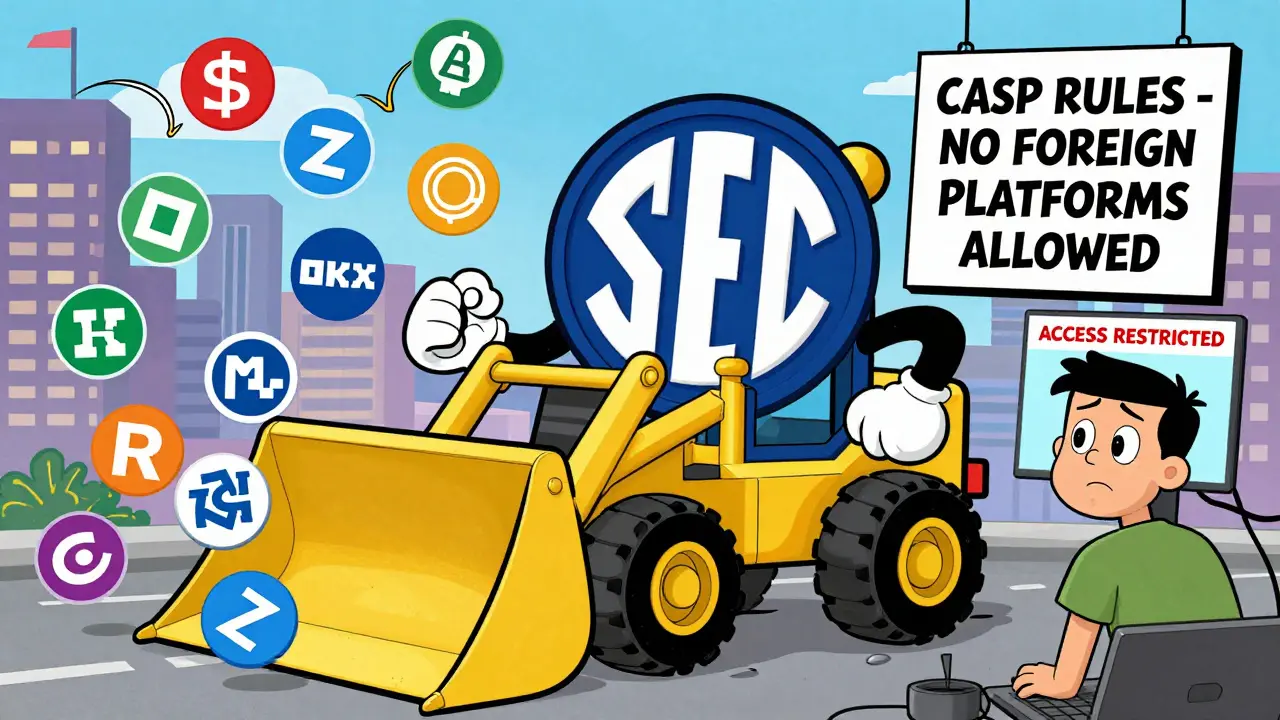
On August 1, 2025, the Philippines Securities and Exchange Commission (SEC) dropped a bombshell: a public advisory naming 15 cryptocurrency exchanges operating illegally in the country. Bybit, OKX, KuCoin, Kraken, MEXC, Bitget, CoinEx, Phemex, BitMart, Poloniex - all were on the list. By August 25, five more joined: Blofin, CoinW, DigiFinex, LBank, and Pionex. No warnings. No grace period. Just a hard block.
This wasn’t a random crackdown. It was the result of two new rules that took effect on July 5, 2025: SEC Memorandum Circular No. 4 and No. 5. Together, they created the Philippines’ first-ever Crypto Asset Service Provider (CASP) framework requiring all digital asset platforms serving Filipino users to register as local businesses. The message was clear: if you want to operate here, you play by our rules.
What the Rules Actually Require
The CASP framework isn’t just about paperwork. It’s a full-on operational overhaul. Here’s what any crypto exchange must do to stay legal in the Philippines:
- Register as a domestic corporation - no foreign entities allowed to operate directly.
- Minimum capital of ₱100 million (about $1.8 million USD) - a massive barrier for small platforms.
- Physical office in the Philippines - you can’t just have a server and a website. You need bricks, mortar, and local staff.
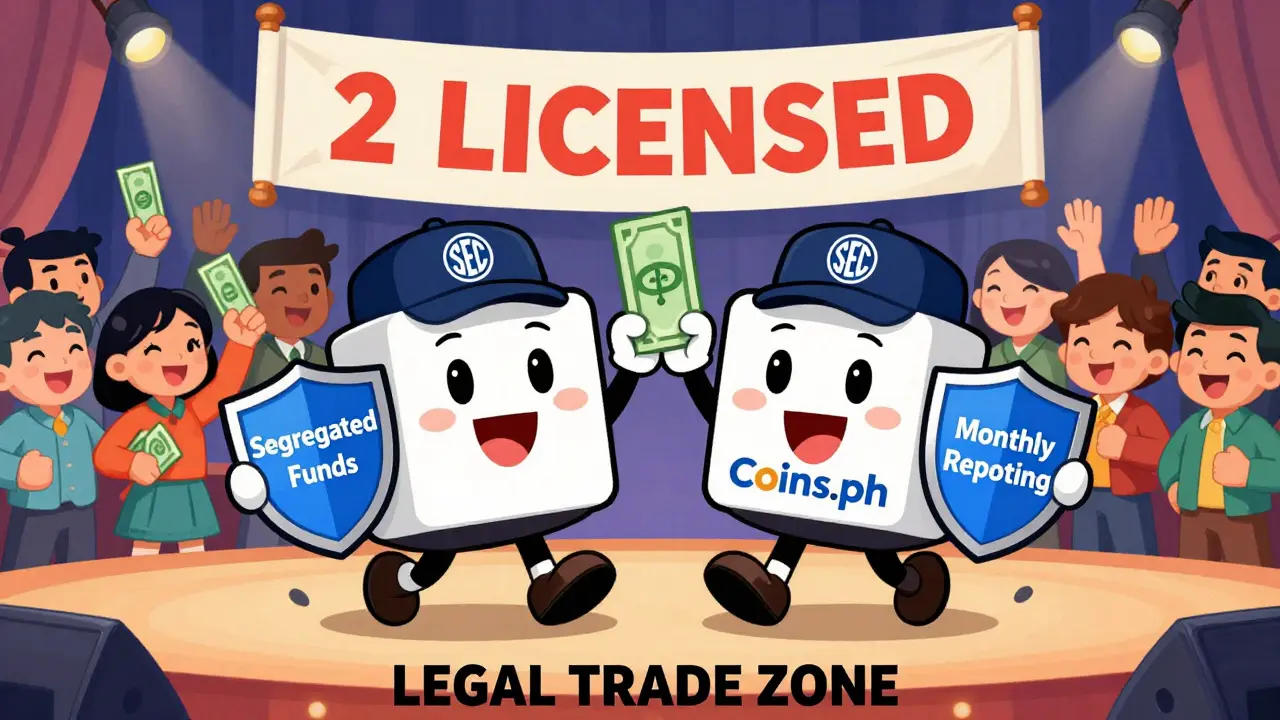
- Monthly financial reporting - every single transaction, deposit, withdrawal, and profit must be reported to the SEC.
- Segregated customer funds - user money can’t touch company accounts. This is meant to prevent another FTX-style collapse.
Violate any of these? Fines start at ₱50,000 and can hit ₱10 million per violation. Plus, an extra ₱10,000 per day for every day you keep breaking the rules. The SEC didn’t just write regulations - they built teeth.
How the Blockade Works
Here’s where it gets real: the Philippines didn’t just issue warnings. They cut off access.
By August 7, 2025, major ISPs like PLDT and Globe Telecom began blocking websites for the listed exchanges. Try to open OKX or Bybit from a Philippine IP? You’ll see a hard wall - a page that says: “Access to this website is restricted under Philippine law.” No error messages. No redirects. Just a block.
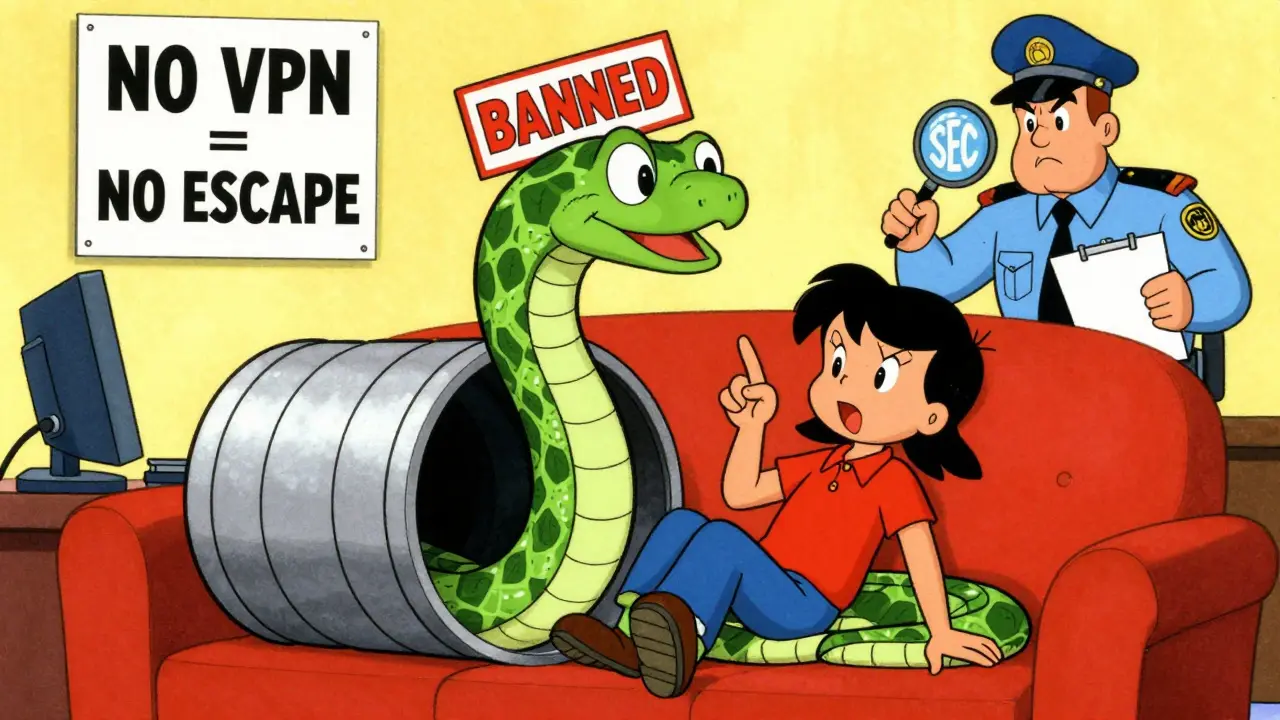
That forced users into a tough spot. Many turned to VPNs to bypass the restrictions. But that’s not a fix - it’s a workaround. The SEC has made it clear: using a VPN doesn’t make you legal. It just makes you harder to track.
And it’s working. According to local crypto analytics firms, daily trading volume on the blacklisted platforms dropped by over 60% within two weeks of the block. User sign-ups for those platforms from Philippine IP addresses fell by 89%.
Why These Exchanges Got Targeted
It’s not about size. It’s about behavior.
OKX, Bybit, KuCoin - these are among the top 10 crypto exchanges globally. Kraken has been around since 2011 and is known for compliance in the U.S. and Europe. But none of that mattered. Why? Because they all had one thing in common: they were serving Filipino users without registering.
The SEC didn’t care if you had a fancy logo, a big marketing budget, or a “compliant” license in another country. If you were actively marketing to Filipinos, accepting pesos, or allowing local bank deposits - you were in violation.
Even exchanges with low-profile operations got caught. CoinEx and Phemex might not be household names, but they had thousands of active users in the Philippines. The SEC didn’t pick favorites. They picked violators.
What’s Still Legal - And What’s Not
Let’s clear up a big misunderstanding: this is not a ban on cryptocurrency.
The SEC has said it repeatedly: Filipinos can still buy, sell, and hold Bitcoin, Ethereum, and other digital assets. The ban is only on unlicensed platforms that offer trading services. You can still trade - just not on the blacklisted exchanges.
There are still legal options. As of early 2026, only two platforms have fully registered under the CASP framework:
- PDAX the Philippines’ first licensed digital asset exchange, operating since 2021 with full SEC registration
- Coins.ph a mobile wallet and remittance platform that expanded into trading after securing CASP status in January 2026
That’s it. Two options. And both have strict KYC, limited altcoin offerings, and slower trading speeds compared to global giants.
So if you’re used to trading hundreds of tokens on Bybit or using leverage on OKX - you’re out of luck. The Philippines has chosen safety over choice.
Regional Ripple Effects
The Philippines isn’t alone. Thailand banned Bybit and OKX in May 2025. Indonesia raised its tax on offshore crypto trades from 0.2% to 1%. Singapore tightened licensing rules. All of these moves happened within a six-month window.
This isn’t coincidence. It’s coordination. Southeast Asian regulators are learning from each other. They see how unregulated exchanges prey on young, inexperienced investors. They see the headlines: FTX, Celsius, Voyager - all collapsed, leaving millions in losses.
China’s ban on crypto trading in 2021 created a vacuum. Many exchanges moved to Southeast Asia. Now, those same countries are slamming the door shut. The region is saying: we don’t want to be the Wild West.
Who’s Winning? Who’s Losing?
The winners are clear: PDAX and Coins.ph. Both have seen user growth surge since the crackdown. PDAX reported a 300% increase in new accounts between August and December 2025. Coins.ph added over 500,000 new users in Q4 alone.
But the losers? Millions of Filipinos who used global exchanges. Many were young, tech-savvy, and used crypto as a way to hedge against peso volatility or send money abroad cheaply. Now they’re stuck with limited options, slower trades, and higher fees.
Some traders adapted. They moved to PDAX. Others turned to peer-to-peer (P2P) platforms like Paxful or LocalBitcoins - but those come with their own risks: scams, chargebacks, no buyer protection.
And then there are the exchanges themselves. Kraken and OKX are still fighting. Both have filed appeals with the Philippine Supreme Court, arguing the CASP rules violate international trade norms. But the court hasn’t ruled yet. In the meantime, the blocks stay.
What This Means for the Future
The Philippines has set a new standard. It’s not about stopping crypto. It’s about controlling it. The SEC is saying: if you want to serve our people, you become part of our system. No exceptions.
Other countries are watching. India, Brazil, and Nigeria are considering similar frameworks. The model is simple: register, pay, report, and stay local. If you don’t, you’re blocked.
For users, it means less freedom - but more protection. No more sudden exchange collapses. No more fake trading volumes. No more disappearing funds.
For the industry, it means higher costs and fewer players. Only giants with deep pockets can survive. Smaller exchanges? They’re out.
And for the Philippines? It’s a gamble. They’re betting that investor protection is worth the trade-off of slower innovation and fewer choices. Time will tell if that bet pays off.
Can I still trade cryptocurrency in the Philippines?
Yes, you can still buy, sell, and hold cryptocurrencies. The SEC hasn’t banned crypto itself - only unlicensed exchanges. You can trade on the two registered platforms: PDAX and Coins.ph. You can also use peer-to-peer (P2P) platforms, but those carry higher risks like scams and no buyer protection.
Why did the SEC block exchanges like Kraken and OKX?
Kraken and OKX were blocked because they were serving Filipino users without registering as a Crypto Asset Service Provider (CASP). Even though they’re compliant in other countries, Philippine law requires any platform targeting local users to have a local office, minimum capital, and monthly reporting. They didn’t meet those requirements - so they were blocked.
Is using a VPN to access blocked exchanges legal?
Using a VPN to access blocked exchanges isn’t technically illegal, but it violates the spirit of the CASP rules. The SEC has warned that doing so doesn’t exempt you from the law. If you’re caught using a banned platform, even via VPN, you could face scrutiny or future penalties. It’s a gray area - but not a safe one.
Are there any new exchanges getting licensed in 2026?
As of February 2026, only PDAX and Coins.ph have fully registered under the CASP framework. Several other platforms, including local fintech firms and regional exchanges, have submitted applications. But the approval process is slow - it takes 4 to 8 months for the SEC to review documentation, conduct audits, and verify physical office locations. No new licenses have been granted since January 2026.
What happens if I lose money on a blacklisted exchange?
If you lost money on a blacklisted exchange like Bybit or KuCoin, you have no legal recourse under Philippine law. The SEC explicitly states that users who trade on unregistered platforms do so at their own risk. There is no investor protection fund, no compensation program, and no way to recover funds. That’s why the SEC says: only use licensed platforms.
Will more exchanges be added to the blacklist?
Yes. The SEC has said the list is not final. They’ve warned that "other platforms with similar features designed to onboard Philippine users without registration shall likewise be considered in violation." That means any exchange that’s quietly targeting Filipinos - even if it’s not on the current list - could be added next. The SEC monitors traffic, payment processors, and advertising campaigns to identify new violators.
How does this affect crypto taxes in the Philippines?
Crypto trading is still taxable. The Bureau of Internal Revenue (BIR) requires all Filipinos to report capital gains from crypto transactions, regardless of which platform they use. The SEC’s blacklist doesn’t change tax rules - it just limits where you can trade. If you trade on PDAX or Coins.ph, they report to the BIR. If you use a blocked exchange, you’re still legally required to declare profits - and you’re doing it without official records.
What’s Next?
If you’re a Filipino crypto user, your path is simple: either stick with PDAX or Coins.ph - or accept the risks of using a VPN and unregulated platforms. There’s no third option.
If you’re a crypto platform, the message is clear: to serve the Philippines, you need a local presence. No shortcuts. No loopholes. No exceptions.
The Philippines didn’t just ban exchanges. They rebuilt the rules. And for better or worse, the game has changed.
monique mannino
February 10, 2026 AT 19:47John Doyle
February 12, 2026 AT 01:25Will Lum
February 12, 2026 AT 02:42Tammy Chew
February 13, 2026 AT 05:44Lindsey Elliott
February 13, 2026 AT 18:51Santosh kumar
February 14, 2026 AT 08:55Claire Sannen
February 14, 2026 AT 17:51Christopher Wardle
February 16, 2026 AT 10:33blake blackner
February 18, 2026 AT 05:07Benjamin Andrew
February 19, 2026 AT 18:20Holly Perkins
February 21, 2026 AT 12:01Desiree Foo
February 21, 2026 AT 19:13Kaz Selbie
February 23, 2026 AT 11:53Robbi Hess
February 25, 2026 AT 10:50Keturah Hudson
February 25, 2026 AT 16:39Ace Crystal
February 27, 2026 AT 09:54