
When you think about trading Bitcoin or Ethereum, you probably imagine a global market where rules vary by country. But in Morocco, the rules aren’t just different-they’re strict, enforced, and changing fast. As of 2026, the penalties for crypto trading in Morocco are still active, even as the government prepares to legalize and regulate digital assets. This isn’t a story of outright bans anymore. It’s a story of enforcement, fines, and a slow but clear shift from prohibition to control.
What’s Illegal Right Now?
In November 2017, Morocco’s Ministry of Economy and Finance declared all cryptocurrency transactions illegal under the country’s foreign exchange laws. That meant no buying, selling, trading, or using Bitcoin, Ethereum, or any other crypto as payment. It wasn’t just discouraged-it was banned. The reasoning was simple: Morocco tightly controls its currency, the Moroccan Dirham (MAD), and wants to prevent capital flight and money laundering. Crypto, with its anonymity and borderless nature, was seen as a threat to that control. Even today, if you’re a Moroccan citizen using crypto to buy property, send money abroad, or pay for services, you’re breaking the law. Authorities have been actively targeting these activities. In February 2025, they launched investigations into people using Bitcoin and Tether to purchase real estate, bypassing official currency controls. That’s not a rumor-it’s documented enforcement.How Much Can You Get Fined?
The penalties aren’t vague. They’re written into law. If you’re caught trading crypto without authorization, you’re looking at:- Individuals: Fines between MAD 20,000 and MAD 100,000 (roughly $2,000 to $10,000 USD)
- Businesses: Fines up to MAD 500,000 (about $50,000 USD)
Why Are People Still Trading?
Despite the risks, crypto use in Morocco is growing. According to U.S. State Department reports, Bitcoin trading in Morocco is among the highest in North Africa. Why? Because the system is broken. Many Moroccans can’t access international banking easily. Remittances are expensive. The Dirham isn’t freely convertible. Crypto fills that gap. The market size? Projected to hit $278.7 million by 2025 and $292.4 million by 2026. That’s real money. Real people. Real demand. And the government knows it. You can’t ban something this big and expect it to disappear. That’s why the rules are changing.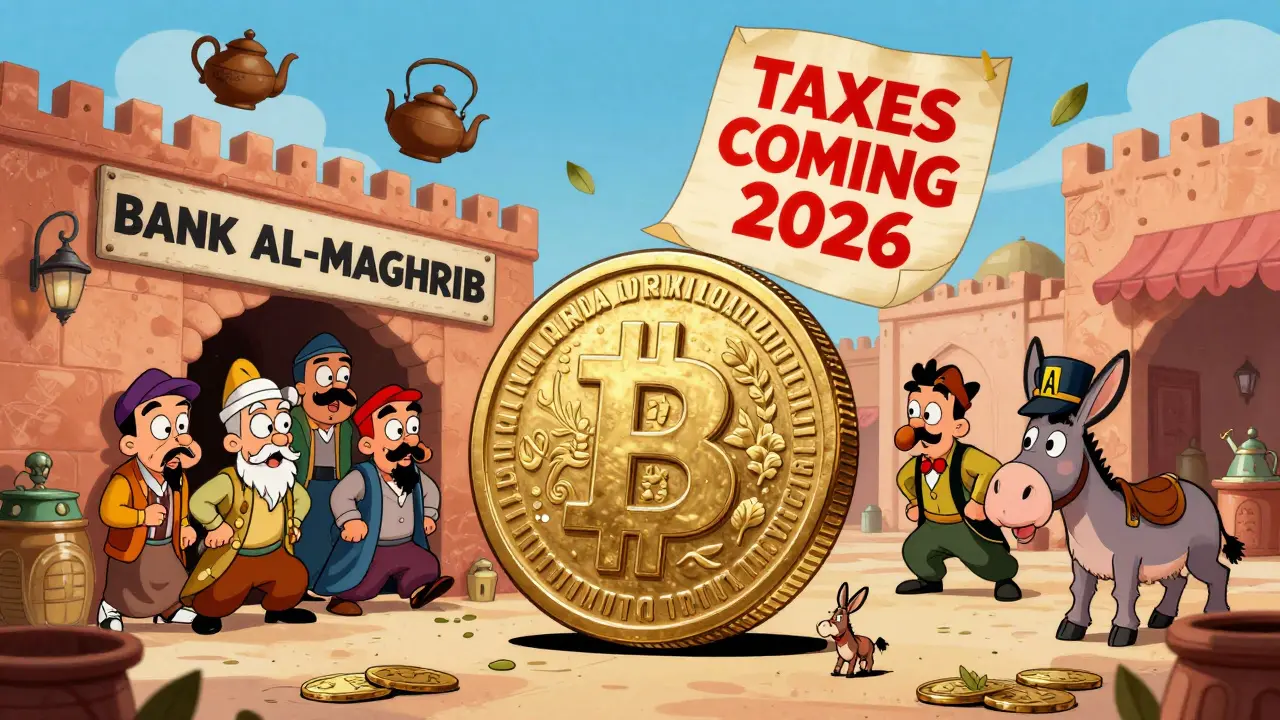
The Big Shift: What’s Coming in 2025-2026
In November 2024, Abdellatif Jouahri, the governor of Bank Al-Maghrib, announced a draft law to legalize and regulate cryptocurrency. This wasn’t a whisper-it was a policy earthquake. The goal? Stop punishing users and start taxing them. Under the new framework, expected to become law in 2025:- All crypto exchanges must get licensed by Bank Al-Maghrib
- Platforms must follow strict Anti-Money Laundering (AML) and Counter-Financing of Terrorism (CFT) rules
- Capital gains from crypto trading will be taxed between 15% and 30%
- Individual income from crypto will be taxed at progressive rates (10% to 38%)
- Corporate crypto income will be taxed between 20% and 31%
What Happens If You Don’t Pay Taxes?
Right now, there’s no official crypto tax penalty outlined yet. But that doesn’t mean you’re safe. Morocco already has strong tax evasion laws. If you earn money from crypto and don’t report it, you’ll be treated like any other tax evader. That means:- Back taxes with interest
- Fines up to 50% of the unpaid amount
- Criminal investigation if the amount is large or repeated
What About Other Crypto Activities?
The new rules don’t just cover trading. They cover everything:- Using crypto to pay for goods or services? Illegal until licensed platforms exist. Businesses that accept crypto for payments are violating foreign exchange rules.
- Running a crypto mining operation? Not explicitly banned, but if you sell the mined coins, you’re trading-so you’re subject to the same penalties.
- Investing in ICOs or tokenized assets? The Moroccan Capital Market Authority (AMMC) requires approval for any token sale. Unapproved ICOs are illegal and can lead to criminal charges.
What’s Next? The CBDC and the Future
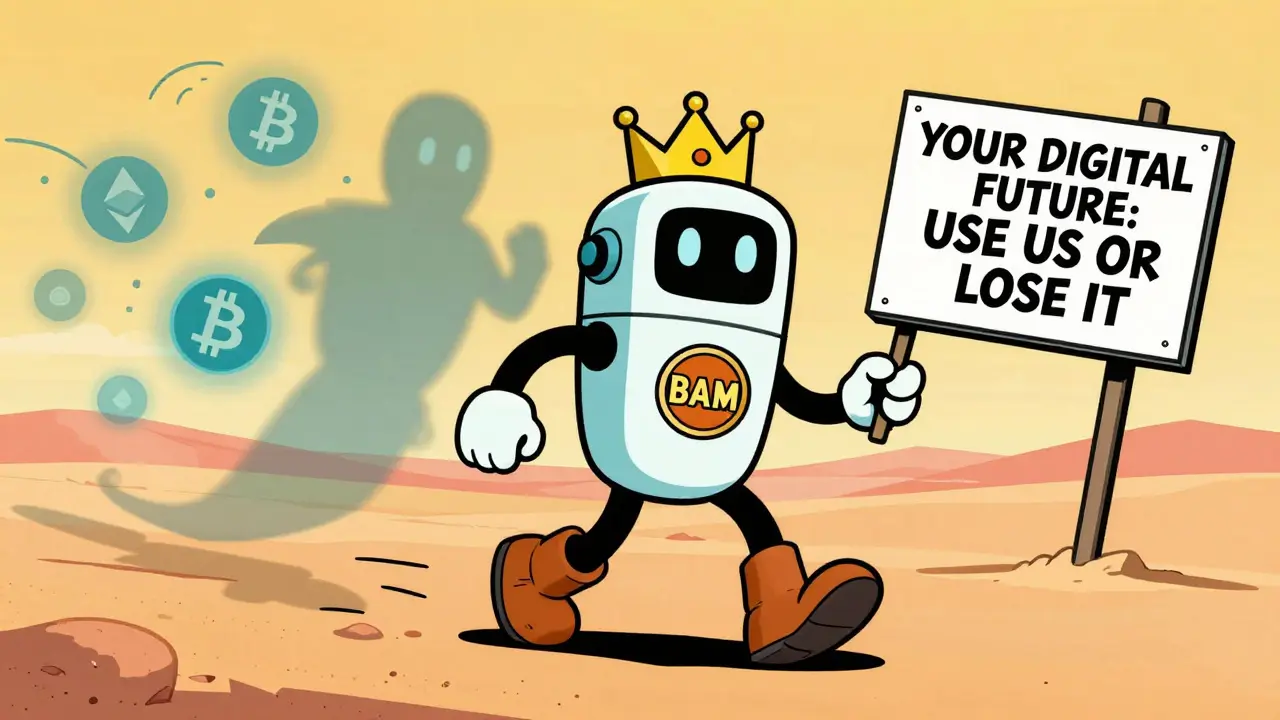
Morocco isn’t just regulating crypto-it’s building its own digital currency. Bank Al-Maghrib has been testing a Central Bank Digital Currency (CBDC) since 2024, with full pilot testing scheduled for 2026-2027. This isn’t a coincidence. The government knows crypto isn’t going away. So they’re preparing to replace it with something they control. When the CBDC launches, it’ll be the only legal digital currency in Morocco. Private crypto will still exist-but it’ll be pushed to the fringes. The message is clear: If you want to use digital money, use ours. Or don’t use it at all.What Should You Do Right Now?
If you’re a Moroccan citizen trading crypto:- Stop using unlicensed platforms. They’re not safe.
- Keep records of every transaction-buy, sell, trade, transfer.
- Start preparing for taxes. Even if the law isn’t final, the IRS-style audits are coming.
- Don’t use crypto to buy property, send money abroad, or pay businesses. That’s the highest-risk activity.
- Don’t accept crypto payments. You’re risking fines up to MAD 500,000.
- Watch for official announcements from Bank Al-Maghrib. Licensing will open soon.
- Prepare your accounting systems for crypto reporting. It’s coming.
Daisy Boliaan
February 26, 2026 AT 21:38maya keta
February 28, 2026 AT 15:16Lilly Markou
March 2, 2026 AT 05:05McKenna Becker
March 3, 2026 AT 02:42precious Ncube
March 3, 2026 AT 18:33Amita Pandey
March 4, 2026 AT 20:39Jan Czuchaj
March 5, 2026 AT 06:01Tracy Peterson
March 5, 2026 AT 10:25George Suggs
March 5, 2026 AT 23:12Dianna Bethea
March 7, 2026 AT 04:08KingDesigners &Co
March 8, 2026 AT 00:37Felicia Eriksson
March 8, 2026 AT 02:36aaron marp
March 8, 2026 AT 13:08Phillip Marson
March 10, 2026 AT 03:16Tracy Whetsel
March 11, 2026 AT 16:49Alyssa Herndon
March 13, 2026 AT 00:42Ifeanyi Uche
March 14, 2026 AT 15:57Jeff French
March 15, 2026 AT 23:43