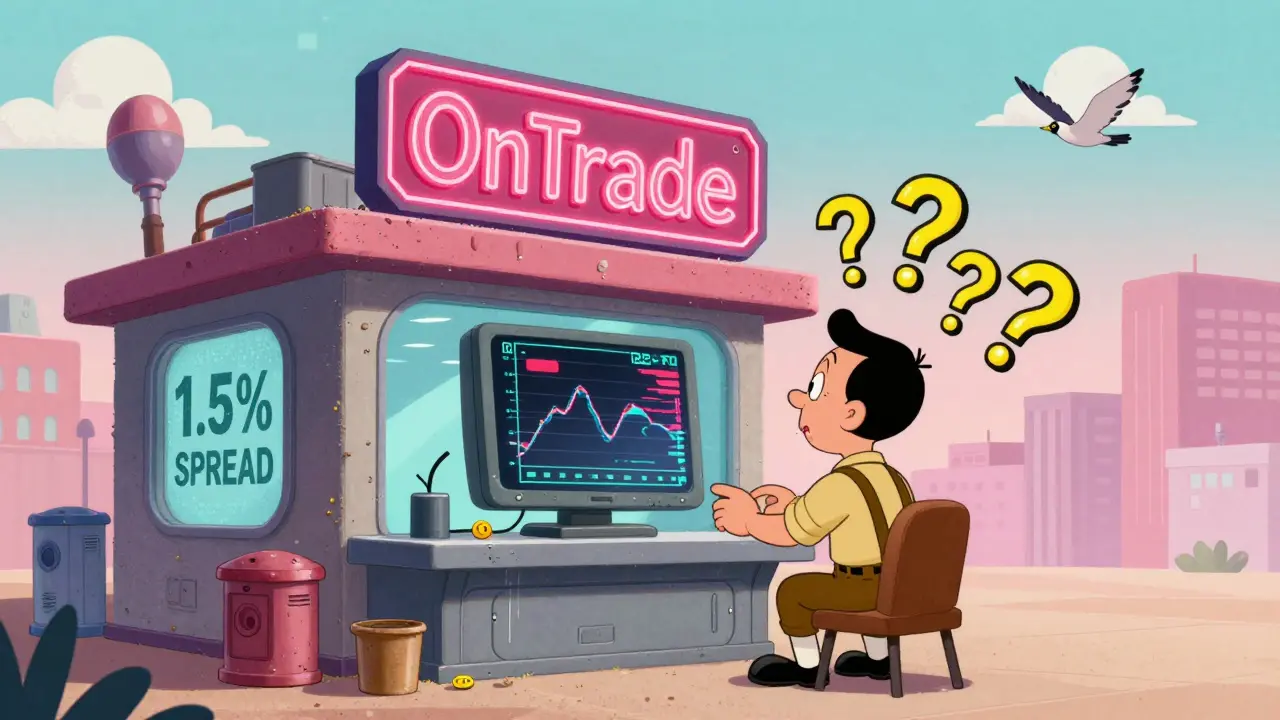
OnTrade has been around since 2009, making it one of the older players in the crypto exchange space. But in a market where platforms rise and fall in months, the fact that OnTrade is still operating doesn’t automatically mean it’s good. So what’s actually going on with OnTrade in 2026? Is it worth your time, or are you better off with something else?
What OnTrade Actually Offers
OnTrade gives you two main ways to trade: spot trading and contract trading. Spot trading means you buy or sell crypto at the current price and own it outright. Contract trading lets you bet on price movements using leverage-think of it like betting on whether Bitcoin will go up or down without actually owning it. This is common on most modern exchanges, but OnTrade doesn’t clearly say what leverage levels it supports. Some exchanges offer up to 100x leverage on perpetual futures. OnTrade? No details.
It claims to support a range of order types: limit, market, and stop-loss. That’s standard. But if you’re used to advanced tools like TWAP (Time-Weighted Average Price) orders or iceberg orders, you won’t find them here. OnTrade doesn’t mention them anywhere. If you’re a serious trader who needs fine control over how your orders execute, this could be a red flag.
Fees: The Silent Killer
Fees are where most exchanges hide the real cost. OnTrade doesn’t publish its fee schedule. Not on its website. Not in its FAQ. Not even in its app. That’s unusual. Even smaller exchanges list their taker and maker fees clearly. OnTrade? Silence.
Here’s what we know from user reports: some say trading fees are around 0.1% for makers and 0.2% for takers. Others say they’ve been hit with hidden spreads-especially on less popular coins-where the price difference between buy and sell is as wide as 1.5%. That’s not a fee. That’s a stealth charge. If you’re trading $1,000 worth of a low-liquidity altcoin, that 1.5% spread could cost you $15 before the trade even fills. No other exchange in the top 50 does this.
Security: No Public Audits, No Transparency
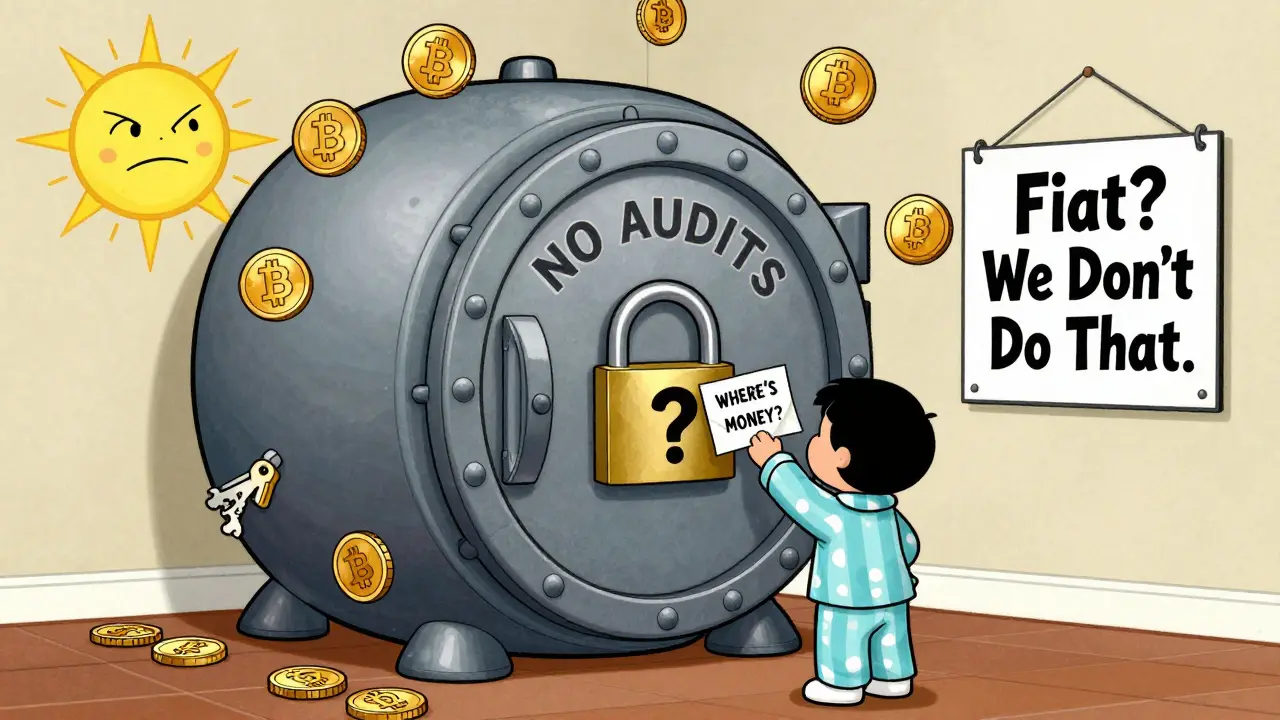
Security isn’t just about two-factor authentication. It’s about proof. Does OnTrade use cold storage? Does it have a proof-of-reserves audit? Has it ever been hacked? The answers? Unknown.
Unlike Binance, Kraken, or Coinbase-which all publish regular third-party audits and reserve reports-OnTrade doesn’t release anything. No transparency reports. No insurance fund disclosures. No details about its custody partners. If you’re storing more than a few hundred dollars on OnTrade, you’re trusting a black box. That’s not a strategy. That’s a gamble.
Supported Cryptocurrencies and Fiat
OnTrade supports over 150 cryptocurrencies, including Bitcoin, Ethereum, Solana, and Dogecoin. That’s fine. But here’s the catch: it doesn’t support direct fiat deposits. No USD, EUR, or GBP on-ramps. You can’t buy crypto with a bank transfer or credit card. You have to first buy crypto on another exchange, send it over, and then trade. That’s a major inconvenience. Most competitors offer at least one fiat gateway. OnTrade? None.
That means if you’re new to crypto, OnTrade is practically useless. You can’t start here. You have to go elsewhere first. And if you’re already holding crypto, why not use an exchange that lets you trade directly from your wallet without moving funds?
User Experience: Clunky and Outdated
Most users describe OnTrade’s interface as outdated. The mobile app is slow. The charting tools are basic. The order book doesn’t refresh in real time on some coins. One trader reported a 12-second delay between the price on the chart and the actual market price-enough time for a trade to slip through your fingers.
Customer support is another issue. Emails take 3-5 business days to get a reply. Live chat? Doesn’t exist. Reddit users say they’ve waited over two weeks for help with a withdrawal. That’s not normal. Even lesser-known exchanges like KuCoin or Gate.io have 24/7 support with response times under 2 hours. OnTrade? It feels like a relic.

Who Is OnTrade Actually For?
There’s one group that might still find OnTrade useful: experienced traders who already have crypto on another exchange and are looking for a quiet place to trade obscure altcoins with low volume. OnTrade’s lack of traffic means less slippage on niche pairs-because there’s no one else trading them. But even then, you’re trading on a platform with no public track record, no transparency, and no support.
For everyone else? It’s not worth the risk. There are dozens of better alternatives with clearer fees, real-time support, fiat on-ramps, and verified security practices. Why settle for mystery?
Alternatives to Consider
If OnTrade feels too vague, here are three solid alternatives:
- Bybit: Offers spot and contract trading with up to 100x leverage, clear fee structure (0.1% maker, 0.06% taker), and a clean app. Supports fiat deposits via bank transfer and Apple Pay.
- Kraken: One of the most secure exchanges. Publishes monthly audits. Supports 200+ coins and 12 fiat currencies. Great for beginners and pros alike.
- Bitget: Strong contract trading features, low fees, and a mobile app that actually works. Also offers copy trading and social trading tools.
All three have public reviews, verified customer support, and clear pricing. None of them make you guess what you’re paying.
The Bottom Line
OnTrade isn’t a scam. It’s just… invisible. It doesn’t publish data. It doesn’t explain fees. It doesn’t answer questions. And in 2026, that’s a dealbreaker. The crypto market has moved past the days of trusting anonymous platforms. If you can’t find clear answers about security, fees, or support, you shouldn’t trust it.
There are hundreds of exchanges that do things right. OnTrade? It’s a ghost in a crowded room.
Is OnTrade a legitimate crypto exchange?
Yes, OnTrade is registered and has been operating since 2009, but legitimacy doesn’t equal reliability. It lacks public audits, transparent fee structures, and customer support standards that are now standard across the industry. While not flagged as fraudulent, its opacity makes it risky for anyone who isn’t already deeply experienced in crypto.
Can I deposit fiat currency on OnTrade?
No. OnTrade does not support direct deposits in USD, EUR, or any other fiat currency. You must first buy crypto on another exchange and transfer it to OnTrade to begin trading. This makes it unsuitable for beginners or anyone looking for a one-stop solution.
What are OnTrade’s trading fees?
OnTrade does not publish its fee schedule. Based on user reports, maker fees are around 0.1% and taker fees are around 0.2%, but many users report hidden costs in the form of wide bid-ask spreads-sometimes as high as 1.5% on low-volume coins. This means you pay more than you think, even if the fee percentage looks low.
Does OnTrade offer margin or leverage trading?
Yes, OnTrade supports contract trading, which includes leveraged positions. However, it does not disclose what leverage levels are available. Major competitors offer up to 100x leverage with clear risk warnings. OnTrade provides no such details, making it impossible to assess whether it’s safe or suitable for your risk tolerance.
Is OnTrade safe for long-term crypto storage?
No. OnTrade does not publish proof-of-reserves audits, insurance coverage, or custody details. Without knowing how your assets are stored or protected, it’s not safe to keep more than small, temporary balances on the platform. Use a hardware wallet for long-term storage.
Why doesn’t OnTrade have a mobile app review on the App Store or Google Play?
OnTrade’s mobile app has very few downloads and almost no reviews on official app stores. Many users report the app crashes frequently, updates are rare, and customer support doesn’t respond to app-related issues. This suggests the platform is not prioritizing mobile experience-a major red flag in 2026, where over 70% of crypto trades happen on mobile.
Kyle Tully
February 17, 2026 AT 09:23kieron reid
February 18, 2026 AT 20:07Avantika Mann
February 18, 2026 AT 23:03yogesh negi
February 19, 2026 AT 18:31Nikki Howard
February 20, 2026 AT 04:48jennifer jean
February 20, 2026 AT 15:06Sasha Wynnters
February 20, 2026 AT 17:32Aileen Rothstein
February 22, 2026 AT 06:19Jennifer Riddalls
February 23, 2026 AT 01:46Chris Thomas
February 23, 2026 AT 03:29Lisa Parker
February 24, 2026 AT 09:38Nicole Stewart
February 25, 2026 AT 12:54Alan Enfield
February 26, 2026 AT 01:42Ian Plunkett
February 27, 2026 AT 09:11Tarun Krishnakumar
February 28, 2026 AT 06:38