
Living in Cyprus and wanting to buy Bitcoin or Ethereum isn't a secret mission anymore. For years, the island sat in a gray area where crypto was technically legal but heavily scrutinized by banks. But as we move through 2026, the landscape has shifted dramatically. Thanks to the full implementation of the Markets in Crypto-Assets (MiCA) regulation, which became fully applicable across the EU in December 2024, accessing cryptocurrency exchanges is now straightforward, safe, and transparent.
If you are a resident of Cyprus, you don't need offshore accounts or complex workarounds. You can use major global platforms like Binance, Coinbase, or Kraken, provided they hold the correct licenses. The key difference today is that your bank won't block your card just because it says "crypto" on the statement. Here is exactly how Cypriots access these services, what rules apply to them, and how to keep their money safe.
The End of the Gray Area: MiCA and Legal Clarity
Before 2025, many Cypriots worried about whether holding crypto was even allowed. The answer was always yes, but the path was muddy. Banks were nervous, and regulators were still figuring out the details. That changed with MiCA. This European Union regulation created a single rulebook for all crypto-asset service providers operating in member states.
For you, this means that any exchange accepting customers from Cyprus must follow strict EU standards. They cannot disappear with your funds without accountability. If an exchange wants to serve you legally, it needs authorization. This brings massive stability. You are no longer gambling on whether a platform will shut down tomorrow; you are dealing with entities subject to rigorous oversight by bodies like the Cyprus Securities and Exchange Commission (CySEC).
CySEC has transitioned from issuing temporary national licenses to enforcing MiCA compliance. While they stopped accepting new applications under old national laws in late 2024, existing licensed firms have adapted. This ensures that the platforms available to you are vetted for financial health and operational integrity.
Which Exchanges Can Cypriots Use?
You have two main options when choosing where to trade: global giants with EU licenses and local Cyprus-based providers.
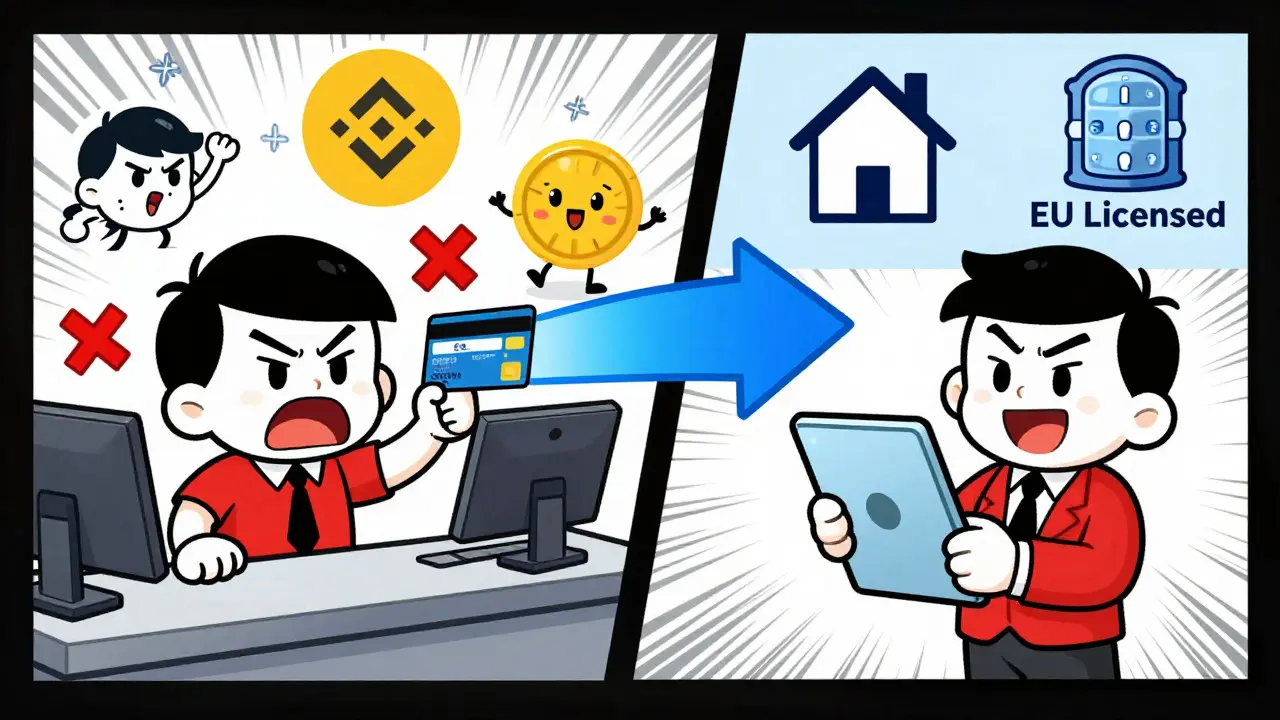
Global Platforms: Major exchanges like Binance, Coinbase, Kraken, and Bitstamp operate specific EU subsidiaries (e.g., Binance Europe) to comply with MiCA. These platforms offer the widest range of coins, high liquidity, and user-friendly apps. As long as they list Cyprus as a supported country-which most do-they are accessible to you. You simply sign up, verify your identity, and deposit euros via SEPA transfer or credit card.
Local CASPs: Cyprus has its own batch of Crypto-Asset Service Providers (CASPs) registered with CySEC. These include companies specializing in digital asset custody, exchange services, and tokenization. Using a local CASP can sometimes mean faster customer support in Greek or English and easier resolution of disputes since they are physically present in Nicosia or Limassol. However, their selection of cryptocurrencies might be smaller than global competitors.
| Feature | Global EU-Licensed Exchanges | Local Cyprus CASPs |
|---|---|---|
| Regulatory Oversight | Home EU Member State + MiCA | CySEC + MiCA |
| Crypto Variety | High (100+ coins) | Medium/Low (Major coins only) |
| Customer Support | Online/Chat (Multilingual) | Local Phone/Email (Greek/English) |
| Fees | Competitive/Variable | Often Higher (Niche market) |
| Dispute Resolution | Complex (Cross-border) | Straightforward (Local jurisdiction) |
Navigating Bank Transfers and Payments
One of the biggest hurdles for Cypriots used to be getting euros into an exchange. Banks would freeze transactions fearing money laundering risks. In 2026, this is largely a thing of the past, thanks to clearer Anti-Money Laundering (AML) guidelines set by the Central Bank of Cyprus (CBC) and the Unit for Combating Money Laundering (MOKAS).
Here is how you should fund your account:
- SEPA Bank Transfer: This is the cheapest and most reliable method. Most EU-compliant exchanges provide IBANs based in Lithuania, Estonia, or Cyprus itself. When sending money, use a reference code if required. Your bank sees this as a standard payment to a regulated financial entity, not a suspicious transfer.
- Credit/Debit Cards: Visa and Mastercard payments are widely accepted. Fees are higher (around 1-3%), but the process is instant. Ensure your card is enabled for online international transactions.
- E-Wallets: Services like Skrill or Neteller are popular in Cyprus. They act as a buffer between your bank and the exchange, though they come with their own withdrawal fees.
Avoid using cash deposits at physical locations unless absolutely necessary, as these lack the digital audit trail that protects you in case of fraud. Always keep screenshots of your transaction confirmations.
Identity Verification: What You Need to Prepare
To comply with KYC (Know Your Customer) rules, every legitimate exchange will ask for proof of identity. Don't try to skip this step; unverified accounts often have low withdrawal limits and higher risk of being frozen.
You will typically need:
- Government ID: A valid passport or Cypriot ID card. Make sure the photo is clear and the document is not expired.
- Proof of Address: A utility bill, bank statement, or tax notice dated within the last three months. It must show your name and residential address in Cyprus. P.O. Boxes are usually rejected.
- Selfie Verification: Many platforms now require a live selfie to match against your ID photo. This prevents identity theft.
Verification usually takes anywhere from a few minutes to 48 hours. If it takes longer, contact support immediately. Under MiCA, providers are pressured to streamline this process to remain competitive.
Tax Implications for Cypriot Crypto Investors
This is where Cyprus shines. Unlike many countries that tax every small trade, Cyprus has a favorable tax regime for individuals. As of 2026, there is no capital gains tax on the sale or exchange of cryptocurrencies held by private individuals.
This means if you buy Bitcoin for €10,000 and sell it for €15,000, the €5,000 profit is generally tax-free. However, there are nuances:
- Income Tax: If you trade professionally-meaning it's your primary source of income and you do it frequently-the profits may be classified as business income and taxed accordingly (up to 35% progressive rate).
- Staking and Mining: Income from staking rewards or mining operations is considered taxable income. You must declare this in your annual tax return.
- VAT: VAT does not apply to the exchange of fiat currency for cryptocurrency, but it may apply to certain crypto-related services depending on interpretation.
Always consult with a local accountant if your trading volume is significant. Keeping detailed records of every transaction (date, amount, value in euros) is crucial for any potential audit by the Department of Customs and Excise.
Safety Tips: Protecting Your Assets
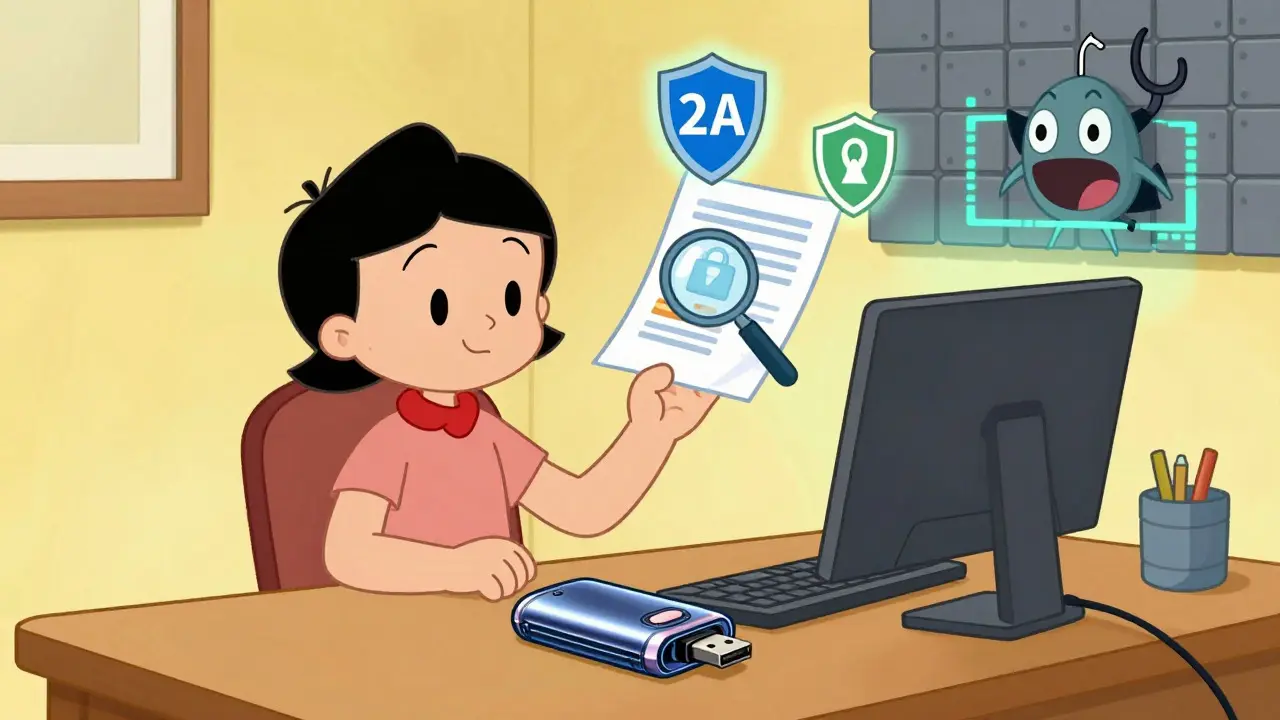
Even with strong regulations, you are responsible for your own security. Exchanges can be hacked, and phishing scams are rampant. Follow these rules to stay safe:
- Enable 2FA: Never rely on SMS alone. Use an authenticator app like Google Authenticator or Authy for Two-Factor Authentication.
- Whitelist Withdrawal Addresses: Most exchanges allow you to whitelist addresses. This means funds can only be sent to pre-approved wallets. If a hacker gets your password, they still can't move your money without waiting for a cool-down period.
- Use Hardware Wallets: For long-term holdings, move your crypto off the exchange to a hardware wallet like Ledger or Trezor. Not your keys, not your coins.
- Beware of Phishing: Always type the exchange URL manually or use a bookmark. Clicking links in emails or SMS messages claiming to be from your exchange is the #1 way people lose funds.
What Happens If Things Go Wrong?
If your exchange goes bankrupt or freezes your account, having a licensed provider matters. Under MiCA, consumer protection mechanisms are stronger. Licensed CASPs must segregate client assets from their own company funds. This means your Bitcoin belongs to you, not the exchange, even if they go insolvent.
In Cyprus, you can file complaints with CySEC if a local provider violates regulations. For EU-wide platforms, you may need to contact the regulator in their home country (e.g., BaFin in Germany or AFM in the Netherlands). Keep all communication records. The Innovation Hub operated by CySEC also provides guidance for investors seeking clarity on regulatory issues.
Is cryptocurrency legal in Cyprus in 2026?
Yes, cryptocurrency is fully legal in Cyprus. It is not considered legal tender (you can't pay taxes with it), but buying, selling, and holding crypto assets is protected under the EU's MiCA regulation and supervised by CySEC.
Do I need to pay tax on crypto profits in Cyprus?
Generally, no. Private individuals do not pay capital gains tax on cryptocurrency sales. However, if you trade as a profession or earn income from mining/staking, those earnings are subject to income tax.
Can my bank block my crypto transactions?
It is rare in 2026. With MiCA implementation, banks recognize licensed crypto exchanges as legitimate financial entities. As long as you use SEPA transfers to known, licensed platforms, blocks are uncommon. Always inform your bank if making large transfers.
Which crypto exchanges accept Cypriot residents?
Major EU-compliant exchanges like Binance, Coinbase, Kraken, and Bitstamp accept Cypriot residents. Additionally, local Cyprus-based CASPs licensed by CySEC offer services tailored to the local market.
What documents do I need to verify my identity?
You typically need a valid passport or ID card, a recent proof of address (utility bill or bank statement), and a selfie for facial recognition verification.
Sarah Hafner
August 14, 2026 AT 15:05Hey there! It is genuinely wonderful to see such a clear, practical guide for our friends in Cyprus. :)
I have been following the MiCA rollout closely, and it really does feel like a breath of fresh air for everyone involved. The part about banks finally stopping the arbitrary card blocks is huge because that was always the most frustrating part of the process. I remember when my cousin tried to buy some ETH back in 2023 and his bank called him three times just to ask if he was sure.
One thing I would add for anyone reading this is to double-check the specific IBAN details provided by the exchange before sending any SEPA transfers. Even though things are smoother now, a small typo can still cause delays. Also, don't forget to keep those screenshots! They might seem unnecessary at the time, but they are lifesavers if customer support ever goes on strike or gets overwhelmed during high volatility periods. Stay safe out there! :)
Susan Kiley
August 14, 2026 AT 20:28Oh, how quaint. Another 'practical guide' pretending that MiCA has solved every single issue under the sun. How utterly charmingly naive. ;)
Let us be perfectly clear: regulation is not magic. It is merely bureaucracy with better branding. While you Cypriots dance around your new 'safety,' the rest of us sophisticated investors know that true security comes from cold storage and zero trust in centralized entities, no matter how many EU stamps they collect. The idea that CySEC provides actual protection is laughable at best and dangerous at worst.
You are trading liquidity for illusion. And honestly, looking at the fees these local CASPs charge, one wonders if the real beneficiaries are the regulators themselves. But do carry on with your little SEPA transfers while we hedge against systemic collapse. Bravo. ;)
Gary Straiton
August 16, 2026 AT 16:30Typical European over-regulation ruining everything! You guys think you are so smart with your MiCA and your CySEC, but you are just building cages for your own money. In America, we let the market decide who lives and who dies, and that is why we win.
This whole post reads like a government pamphlet designed to make you feel safe while they slowly tax you into oblivion. No capital gains tax? Sure, until they change the law next week because they need more money for their endless programs. The only freedom is holding your own keys and ignoring the suits in Brussels.
Cyprus is a nice island, but financially you are living in a playground with strict rules. Wake up! The strong survive without permission slips.
alex fordy
August 17, 2026 AT 12:16The philosophical shift here is quite profound, isn’t it? 🌟
We often view regulation as an antagonist, yet perhaps MiCA represents a necessary maturation of the digital asset class. By integrating crypto into the traditional financial framework, we are essentially acknowledging its permanence. This is not necessarily a loss of liberty, but rather a gain in legitimacy. When an exchange is subject to rigorous oversight, it ceases to be a wild west outpost and becomes a utility, much like a bank or a brokerage firm of old.
Consider the peace of mind that comes with knowing your assets are segregated. It allows the investor to focus on the strategic allocation of wealth rather than the paranoid maintenance of security protocols. Of course, self-custody remains the ultimate expression of sovereignty, but for the average person, the friction of hardware wallets is often too high. So, perhaps this middle ground is where society will settle for the foreseeable future. What do you think? 🤔
Nia Franklin
August 18, 2026 AT 07:06Oh my gosh!! This is SO helpful!!! I literally cannot believe how much easier this sounds compared to what people were saying five years ago!! 😍😍
I love the part about the local CASPs!! Having someone speak Greek or English directly is just *chef's kiss* 👌🏼. Sometimes you just want to call someone and yell into a phone when things go wrong, right?? And yes!! The tax situation is amazing!! No capital gains tax is basically a dream come true for anyone trying to build wealth!! 💸💸
Just please, PLEASE remember to use 2FA!! I saw a friend lose everything because she clicked a link in an email!! It was tragic!! 😭 So bookmark your URLs!! Don't be lazy!! Stay safe everyone!! Love this info!! ❤️❤️
Sonia Gomez Gomez
August 19, 2026 AT 04:23You should all feel ashamed for even considering using these platforms without understanding the moral implications. :(
While you worry about fees and convenience, who is actually benefiting? Is it the little guy? Or is it the same corrupt institutions that destroyed the global economy in 2008? Using a licensed exchange doesn't make you ethical; it just makes you compliant. You are validating a system that prioritizes profit over people.
If you truly cared about financial freedom, you wouldn't rely on CySEC or any government body. You would question why you need permission to trade value in the first place. But no, you'll just sit there with your selfie verification and your whitelisted addresses, feeling safe in your little bubble while the world burns. Think about that. :(
Marco Maldonado
August 20, 2026 AT 18:10Look, i know everything about crypto and cyprus banking. listen to me. the banks arent gonna block u if u use sepa. its simple. stop making it complicated. americans get it done faster anyway but hey europe is catching up i guess.
the key is kyc. do it right. dont try to cheat. if u cheat u get banned. its that simple. also staking income is taxed so dont forget that. most people forget that. im smarter than them obviously. just follow the rules and u will be fine. easy peasy.
Darren Moon
August 21, 2026 AT 16:17A tedious exposition on bureaucratic compliance masquerading as financial advice. One must wonder if the author understands the fundamental disconnect between fiat-backed stability and cryptographic decentralization. The reliance on SEPA transfers inherently ties one's digital assets to the very legacy banking infrastructure that crypto sought to disrupt. It is a half-measure, at best.
Furthermore, the suggestion that local CASPs offer superior dispute resolution is largely theoretical. In practice, navigating the labyrinthine procedures of CySEC is often more exhausting than simply accepting a loss on a decentralized platform. The jargon-heavy nature of this piece obscures the reality: you are still renting your assets from a third party. True autonomy requires exiting the system entirely, not optimizing one's participation within it. A disappointing read.
Quang Thai Tran
August 22, 2026 AT 02:32Do not be fooled by the superficial calm of 2026. The implementation of MiCA is merely the final stage of the Great Reset’s financial control grid. By forcing all exchanges to register and comply, the authorities ensure that every transaction is visible, traceable, and taxable.
They tell you it is for safety, but it is for surveillance. The segregation of assets is a lie told to placate the masses while the central banks prepare to launch their digital currencies. Once they have mapped your wallet addresses through KYC, your anonymity is dead. The 'favorable tax regime' is a carrot dangled before the horse before the whip comes down. Prepare for the inevitable confiscation of unregistered assets. Trust nothing. Verify everything. The end is near.
Dianne Ritter
August 23, 2026 AT 20:50I think this is a balanced view of the current situation. It is good to have options whether you prefer global giants or local providers. Everyone has different risk tolerances after all. Just stick to what feels right for you and keep good records.