
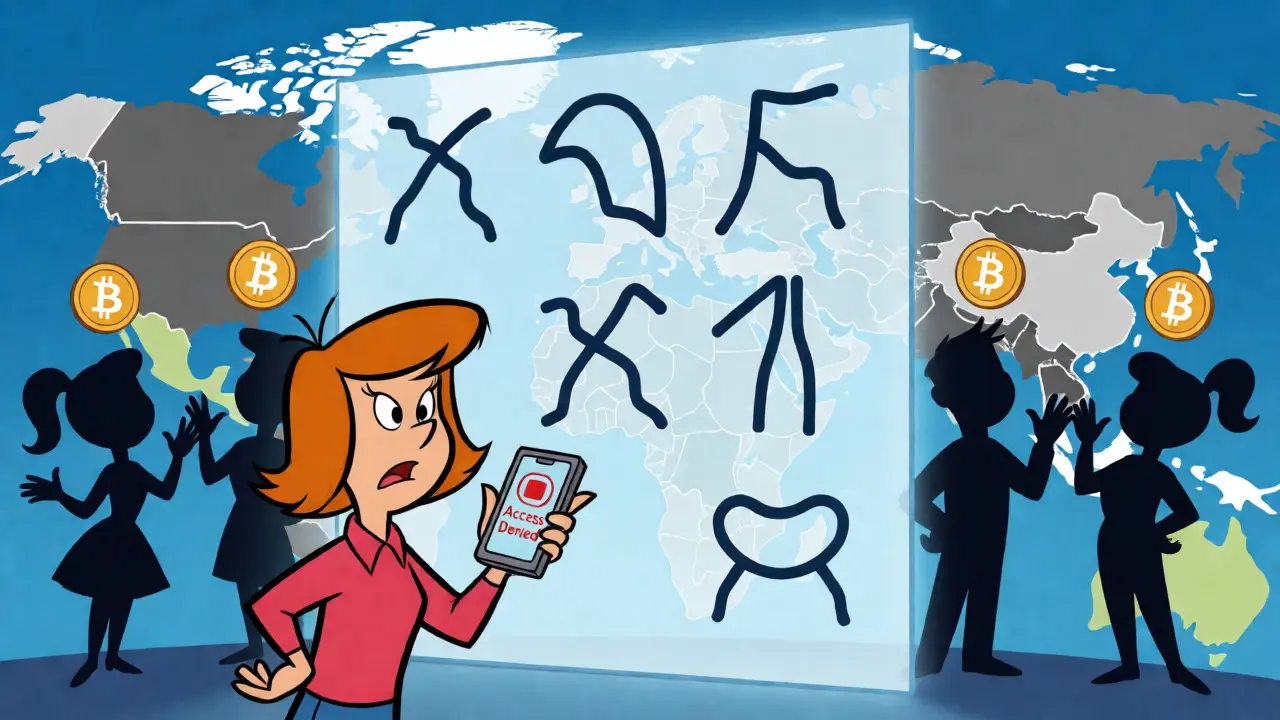
Imagine waking up to find your digital wallet frozen because your government is on a blacklist thousands of miles away. For millions of people in places like Iran, Russia, and North Korea, this isn't a nightmare-it's a Tuesday. As the US Treasury's Office of Foreign Assets Control (OFAC), the agency responsible for enforcing economic and trade sanctions, tightens the leash, the battle between regulators and users has turned into a high-stakes game of digital hide-and-seek.
The reality is that while sanctions aim to isolate regimes, they often push ordinary citizens toward the fringes of the internet. The sanctioned countries crypto landscape is no longer just about using a VPN; it's an entire ecosystem of successor platforms, decentralized networks, and cross-border payment rails designed specifically to stay invisible.
The Digital Cat-and-Mouse Game
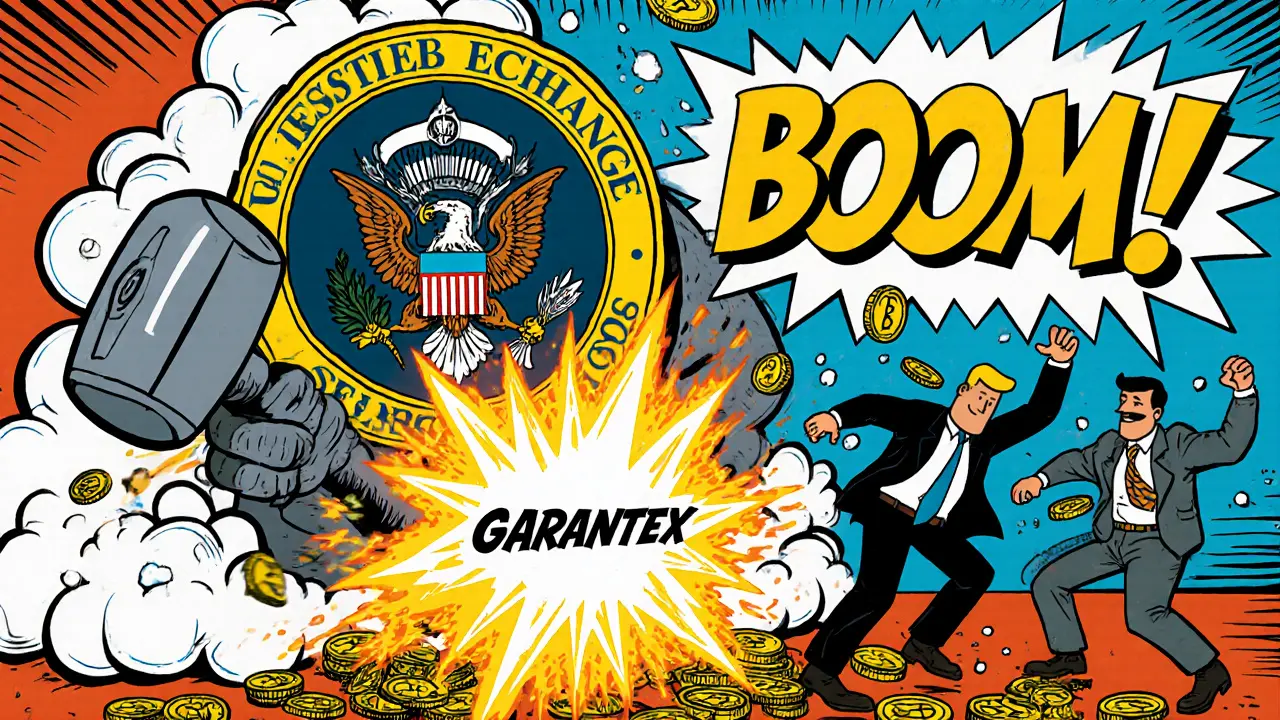
When a major exchange gets hit with sanctions, it doesn't usually disappear. Instead, it morphs. Take the case of Garantex, a Russian exchange that became a primary target for OFAC. After the U.S. Secret Service and European authorities seized its domain and froze millions in March 2025, the platform didn't just shut down. It migrated its entire user base and fund pool to a successor called Grinex.
This pattern of "platform hopping" is common. Users aren't just moving money; they're moving to an entire infrastructure of shadow exchanges. In Dubai, for example, Telegram-based exchanges like MKAN Coin have stepped in to replicate the core functions of banned platforms, providing a bridge for users who can no longer access traditional global gateways. These entities often operate as decentralized money laundering systems, making it incredibly hard for authorities to pin down a single point of failure.
Technical Workarounds and Asset Swapping
It's not just about where you trade, but what you hold. For years, Tether (USDT) was the go-to stablecoin for those in sanctioned zones because of its massive liquidity. However, the risks became clear on July 2, 2025, when Tether froze 42 addresses linked to Iranian users and the exchange Nobitex. This sent a shockwave through the community, proving that centralized stablecoins are essentially "programmable money" that can be turned off at will.
How did users react? They didn't quit crypto; they switched assets. Within days, a coordinated effort by influencers and domestic channels steered users toward DAI, a decentralized stablecoin. By moving their funds via the Polygon network, users could maintain a stable value for their savings without the risk of a central company freezing their account. This shift highlights a critical trend: the move from centralized finance (CeFi) to decentralized finance (DeFi) as a survival mechanism.
| Method | Primary Tool | Risk Level | Resilience |
|---|---|---|---|
| Successor Exchanges | Grinex / MKAN Coin | High (Seizure risk) | Moderate |
| Decentralized Assets | DAI / Polygon Network | Low (No central kill-switch) | High |
| Payment Rails | Exved / Cross-border platforms | Medium (Regulatory heat) | Moderate |
| Privacy Tools | Mixers / Non-KYC Wallets | Very High (OFAC targets) | Low (Increasingly tracked) |
The DeFi Escape Hatch
For a long time, DeFi protocols were seen as a safe haven because there's no "CEO" to subpoena and no office to raid. However, the tide turned in January 2025 when OFAC issued its first-ever sanction against a DeFi protocol, freezing $150 million. This was a wake-up call that the "code is law" mantra doesn't always hold up against the U.S. Treasury.
Despite this, DeFi remains the primary tool for evasion. Users employ mixers-services that scramble transaction histories to hide the origin of funds-to break the link between their identity and their wallet. While services like Tornado Cash have faced massive enforcement, new, smaller, and more fragmented mixing services continue to pop up. The goal is simple: remove the "taint" from the coins so they can be accepted by an exchange in a crypto-friendly jurisdiction.

Finding a Safe Harbor: The Role of Global Hubs
The ability of citizens in sanctioned countries to access crypto often depends on where the "exit ramps" are. They look for jurisdictions with a light regulatory touch or a strong focus on financial privacy. The United Arab Emirates, specifically Dubai through its VARA authority, has become a massive hub for this activity, hosting over 1,000 crypto firms in a tax-free environment. This creates a layer of separation between the user and the sanctioned entity.
Other regions like Singapore and El Salvador also play an indirect role. By legitimizing Bitcoin or offering 0% tax on foreign crypto income, these countries create a global liquidity pool that is much harder to police than the traditional SWIFT banking system. When a user in a sanctioned country can swap their local currency for crypto and then move that crypto to a wallet in a friendly jurisdiction, the sanctions are effectively bypassed.
The Compliance Failure Gap
Much of this access happens because of a simple lack of oversight. Not every exchange is a titan like Binance or Coinbase. Many smaller platforms have practically non-existent compliance programs. The case of ShapeShift is a prime example; the Swiss exchange paid $750,000 to OFAC in 2025 because it essentially ignored the sanctions lists for Cuba, Iran, Sudan, and Syria. For users in these countries, a platform with poor "Know Your Customer" (KYC) checks is a goldmine.
This creates a dangerous loop. OFAC increases penalties-which hit $430 million in 2024-but for every exchange that cleans up its act, three others emerge in offshore havens, offering "no-KYC" accounts to anyone with a connection to the internet. The technical barrier to entry for starting a new exchange is so low that regulators are essentially trying to plug a leaking dam with their fingers.

What the Future Holds: An Arms Race
We are currently witnessing a technological arms race. On one side, the U.S. government is using AI-driven blockchain analysis and partnering with INTERPOL and Europol to track every hop a coin makes. On the other side, users are adopting more sophisticated obfuscation techniques, such as cross-chain bridges and privacy-preserving coins.
Even governments in sanctioned countries are adapting. Iran's August 2025 law on the taxation of speculation and profiteering shows a shift: instead of just banning crypto, the state is trying to co-opt it, treating it like gold or real estate. By taxing the gains, they legitimize the activity while still keeping a thumb on the scale.
Can OFAC really freeze a crypto wallet?
OFAC cannot "freeze" a decentralized wallet (like a hardware wallet) because they don't have the private keys. However, they can blacklist specific addresses. This means that any centralized exchange or service that follows OFAC rules will refuse to accept or send funds to that address, effectively making the coins "toxic" and impossible to sell for cash.
Why do users prefer DAI over USDT in sanctioned zones?
USDT is issued by Tether, a centralized company that can freeze funds upon request from authorities. DAI is decentralized and governed by smart contracts. If you hold DAI in your own wallet, there is no central authority that can hit a "delete" button on your balance.
What is a successor exchange?
A successor exchange is a new platform created to take over the operations of a sanctioned one. For example, when Garantex was shut down, Grinex emerged to absorb its users and funds, allowing the same network of traders to continue operating under a different name and domain.
Do VPNs actually help in accessing these exchanges?
VPNs only hide your IP address. While they might get you past a basic geo-block on a website, they don't help with KYC (Know Your Customer) requirements. To actually trade and withdraw money, users often need fake identification or must use "no-KYC" exchanges that ignore regulatory standards.
Which cryptocurrencies are most used for sanctions evasion?
Bitcoin remains the dominant asset, accounting for about 65% of transactions by sanctioned entities. Ethereum follows at 18%, and stablecoins make up about 12%. Bitcoin is preferred for its liquidity and widespread acceptance, though stablecoins are used for maintaining value.
Next Steps for Understanding the Risk
If you are tracking the flow of funds or working in compliance, the first step is monitoring the SDN List (Specially Designated Nationals). This list is the gold standard for who is banned. For those in affected regions, the focus has shifted toward learning the mechanics of the Polygon network and other Layer-2 solutions that offer lower fees and faster movement of decentralized assets.
The biggest pitfall for users remains the "bridge"-the point where crypto is turned into local currency. This is where most people get caught. Whether it's through P2P (peer-to-peer) markets or underground money changers, the physical exchange of cash is the weakest link in the digital chain.
Sandeep Bhoir
April 20, 2026 AT 07:50Oh sure, because the US government is just so incredibly efficient at stopping a few lines of code from moving money. It's truly a marvel of modern governance.
Ian Chait
April 21, 2026 AT 09:53Wake up sheeple!! This aint just about "sanctions" it's the groundwork for the CBDC panopticon and the Great Reset. They want us all on a leash where they can just flip a switch and erase your existence from the economy. Use Monero or you're basically just inviting the deep state to dine on your bank account. The whole system is rigged by the globalist cabal to ensure no one actually escapes the fiat trap. Just look at how they "seize" domains and it's all just theatre to keep the masses scared. Total control is the end game and these so called "successor exchanges" are just honeypots for the feds to track the desperate. Totaly obvious if you actually read between the lines of the mainstream narrative.
Abhinav Chaubey
April 22, 2026 AT 06:07Typical Western arrogance thinking they can control global finance with a few blacklists. These tools are far more advanced than any bureaucrat in DC understands. The resilience of these networks proves that decentralized tech is the only real way to ensure financial sovereignty. If you think a simple OFAC list can stop the flow of capital in the 21st century, you are delusional. The shift to DAI and Polygon is a logical evolution that renders the old-school banking sanctions completely obsolete. It is a matter of time before the entire legacy system collapses under its own weight while the shadow economy thrives.
siddharth narula
April 22, 2026 AT 19:53One must ponder if the pursuit of financial anonymity is truly a liberation or merely a descent into a lawless void. 🌌 The ethical paradox here is that while citizens seek survival, they often rely on platforms that operate without any moral compass. Is it not a tragedy that the pursuit of freedom leads one to the arms of unregulated shadow exchanges? We must reflect on the spiritual cost of such a fragmented existence. 🙏
Sean Douglas
April 23, 2026 AT 22:35The absolute sheer audacity of Tether to just freeze funds like they own the place is simply breathtaking! It's a complete and utter betrayal of the very essence of what cryptocurrency was supposed to be. I am practically vibrating with indignation just thinking about those 42 addresses being wiped out in an instant. What an apocalyptic disaster for the users involved! It's a flamboyant display of power that makes the entire CeFi world look like a house of cards waiting for a light breeze to knock it over. Absolutely scandalous!
Andrew Southgate
April 25, 2026 AT 07:55It's actually really interesting to see how people adapt in these situations. If you're looking to get into the DeFi side of things to avoid these risks, I'd highly recommend spending some time learning about liquidity pools and how automated market makers work because that's where the real magic happens. It takes a bit of time to get the hang of the interfaces, but once you realize you don't need a middleman to hold your assets, it's a total game changer for anyone living under a restrictive regime. Just be careful with the bridges since they are the most common point of failure for new users who aren't familiar with the technical side.
Shantal Sanjur
April 26, 2026 AT 22:15Sure, just "trust the code" until the US Treasury decides the code is actually a person they can sue. Hilarious how people think they're invisible when the blockchain is a public ledger for literally everyone to see. You're not hiding; you're just leaving a breadcrumb trail for the FBI to follow whenever they get bored. 🙄
Mark Pfeifer
April 28, 2026 AT 12:34The focus on the "bridge" as the weakest link is a critical point. No matter how decentralized your holdings are, you eventually need to pay for bread and rent in local currency. That physical transition is where the anonymity ends and the risk begins.
Prachi Bhadarge
April 30, 2026 AT 02:41Imagine thinking a VPN is a security strategy in 2025. That's cute.
Trudy Morse
April 30, 2026 AT 03:47The move to DAI is just basic game theory. Why use a centralized peg when a decentralized one exists?
Keri Pommerenk
May 1, 2026 AT 08:25it really is a shame that regular people get caught in these political crossfires just trying to save their money
Chintu Parikh
May 3, 2026 AT 01:11It is truly an inspiring testament to human ingenuity that individuals find ways to maintain their financial stability despite such rigorous constraints! I firmly believe that these technological advancements will eventually foster a more inclusive global economy where borders no longer dictate financial access. Let us all embrace the spirit of collaboration and innovation as we move toward a more transparent and equitable future for all citizens, regardless of their nationality!
Adam Mann
May 4, 2026 AT 08:57I just think it's wonderful that there are ways for people to keep their savings safe when their own governments are making things difficult for them. It's like a global community helping each other out through technology, and even if it's a bit complex for some, the fact that a person in a sanctioned country can use the same tools as someone in New York is a beautiful step toward a world without walls, even if it takes a while for the regulators to catch up to the idea of financial freedom for everyone.
Kevin Lư
May 4, 2026 AT 16:57Honestly, some of these a-grade "no-KYC" exchanges are probably just scams waiting to happen, but hey, if you're already sanctioned, what's another rug pull between friends?
Vicky Duffala
May 6, 2026 AT 11:59This is such a wild ride! It's like watching a digital revolution happen in real-time. 🚀 We are literally redefining what money is and who gets to control it. It's not just about the tech, it's about the philosophy of ownership! Stay curious and keep exploring the decentralized web everyone! ✨
Mike Kempenich
May 7, 2026 AT 23:07While the efforts to bypass sanctions are technically impressive, we have to acknowledge that the regulatory framework is trying to prevent actual illicit activity. There's a balance to be struck between individual financial freedom and global security, and we're just not there yet.
nathan jones
May 9, 2026 AT 11:58Pretty wild to see how fast these things pivot.