
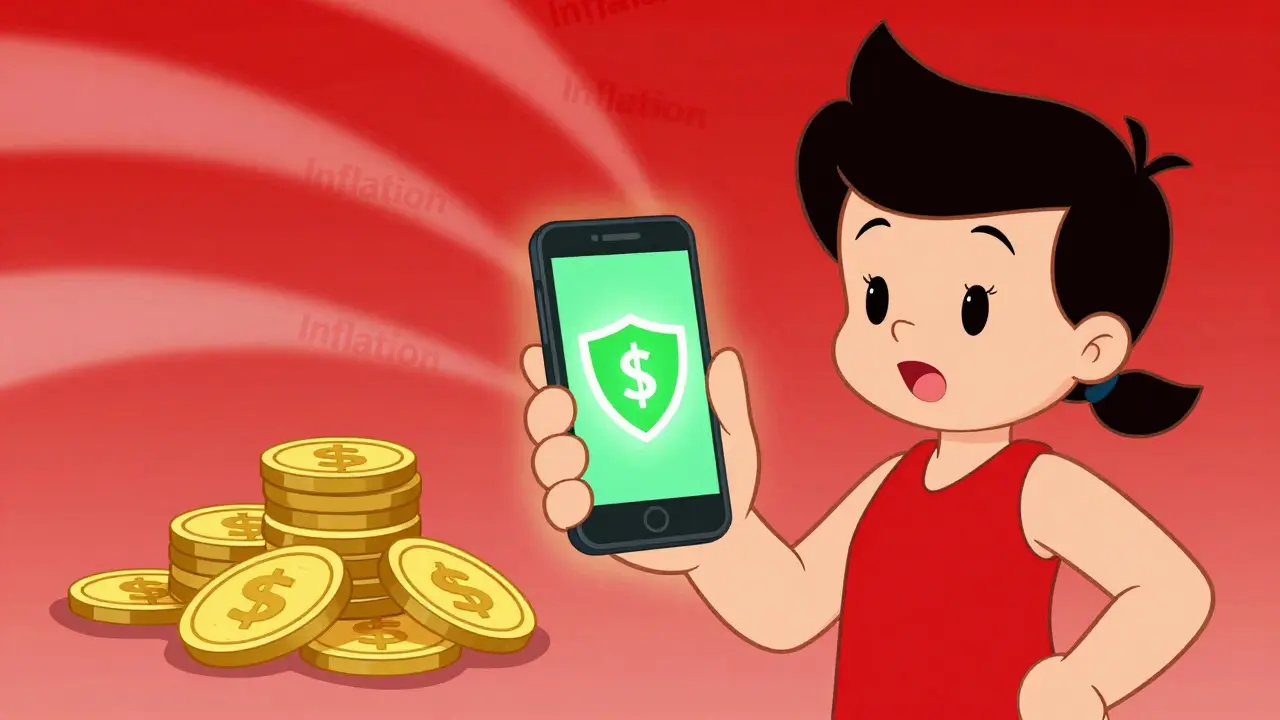
Imagine waking up to find that the money in your bank account is worth significantly less than it was yesterday. For millions of people in Argentina, this isn't a hypothetical scenario or a distant memory from history books; it is daily life. With annual inflation rates hitting 161% in 2023 and moderating to 43.5% by May 2025, holding onto the local currency, the Argentine peso, feels like trying to hold water in a sieve. This relentless erosion of purchasing power has forced citizens to look beyond traditional banking for safety.
The result? Argentina has become a global powerhouse in cryptocurrency adoption, not because everyone is obsessed with tech trends, but out of sheer economic necessity. The country leads Latin America with 19.8% crypto ownership, surpassing neighbors like Brazil and El Salvador. In 2024 alone, the nation received $91.1 billion in cryptocurrency assets. This surge represents a fundamental shift: digital assets are no longer just speculative investments here; they are essential tools for survival and savings against hyperinflation.
Why Stablecoins Are the Real Solution
When you hear about crypto in Argentina, don't immediately think of volatile Bitcoin charts going up and down wildly. While Bitcoin remains a popular long-term store of value for many, the real workhorse for daily savings is the stablecoin. These are cryptocurrencies pegged to stable assets, usually the US dollar.
The most widely used stablecoins in Argentina are Tether (USDT), USD Coin (USDC), and DAI. Why these three? Because they offer the stability of the US dollar without the restrictions of the traditional banking system. Carlos Torres, lead partner of the Payments Practice at consulting firm EY, explains that adoption is driven mainly by "inflation, economic instability and currency volatility, where cryptocurrency was seen as a refuge in the national context."
Here is how it works in practice:
- Tether (USDT): Often the first choice due to its massive liquidity and widespread acceptance on exchanges.
- USD Coin (USDC): Gaining traction for its transparency and regulatory compliance, making it attractive for platforms integrating with fiat systems.
- DAI: Popular among users who prefer decentralized finance (DeFi) principles. Its value stability is maintained through collateral regularly published on the Ethereum blockchain, offering a trustless alternative to centralized stablecoins.
By converting their pesos into these digital dollars, Argentines protect their savings from the daily devaluation of the local currency. It’s a simple swap: lose exposure to the peso, gain exposure to the dollar.
Bypassing Capital Controls with Digital Dollars
The core problem in Argentina isn't just inflation; it's access. Government capital controls strictly limit how much foreign currency citizens can buy and hold in traditional banks. Opening a standard US dollar bank account is nearly impossible for the average person without significant bureaucratic hurdles or illicit market connections.
This is where stablecoins shine. As Francisco Diaz, director of the business school at Universidad Mayor in Chile, notes, "restrictions on the foreign exchange and international capital markets pushed Argentines to seek creative solutions for using foreign currency." Stablecoins act as a "digital dollar that people can hold without needing a dollar bank account."
You don't need permission from the central bank to own USDC. You just need a smartphone and an internet connection. This democratization of dollar access has been revolutionary. Users purchase DAI or USDT using pesos via local exchanges and instantly hold an asset that maintains its value relative to the US economy. It effectively bypasses the ceiling placed on dollar holdings, allowing individuals to save whatever amount they can afford, regardless of government quotas.
The Role of Platforms Like Lemon and Binance
Technology bridges the gap between complex blockchain mechanics and everyday shopping. Two key players dominate this space: Binance and local innovators like Lemon.
Binance serves as the gateway for many. It allows users to buy crypto with pesos easily and offers a wide range of assets. However, spending crypto directly at a grocery store isn't seamless on global exchanges. That’s where localized solutions step in.
Lemon exemplifies the practical integration of crypto into daily life. Here is the typical user journey with Lemon:
- A user receives their paycheck in Argentine pesos.
- They use the Lemon app to convert those pesos directly into USDC.
- The USDC sits in their digital wallet, protected from inflation.
- When they need to spend, they use a prepaid Visa debit card linked to the app.
- At the point of sale, the USDC is automatically converted back to pesos to pay the merchant.
This system solves the critical friction point: you save in dollars but spend in pesos. It addresses the reality that while merchants accept pesos, consumers want to hold dollars. The learning curve is minimized because the interface looks like any other banking app, hiding the underlying blockchain complexity.
| Method | Primary Asset | Best For | Key Advantage |
|---|---|---|---|
| Global Exchanges (e.g., Binance) | USDT, BTC | Large savings, trading | High liquidity, wide asset selection |
| Local Fintech (e.g., Lemon) | USDC | Daily spending, salary conversion | Visa integration, ease of use |
| Decentralized Finance (DeFi) | DAI | Tech-savvy users, yield farming | No central authority, transparent collateral |
Remittances: Sending Money Home Efficiently
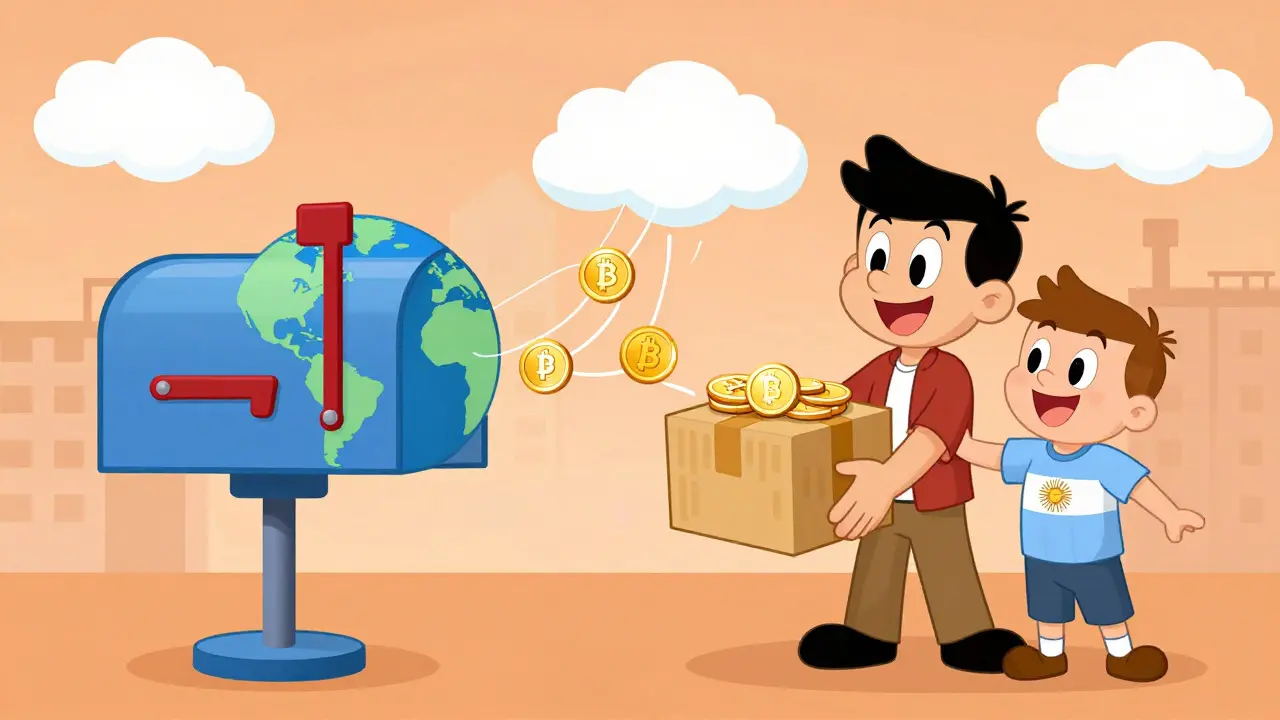
Crypto isn't just for locals saving their salaries; it's also vital for the diaspora. Many Argentines have moved abroad seeking better economic opportunities, sending money back to family members. Traditional remittance services often charge steep fees and take days to process.
In 2021, remittances to Argentina increased by 25%, followed by another 11% rise in 2022, reaching approximately $156 billion by 2023. Stablecoins have transformed this flow. Instead of paying high wire transfer fees, families send USDT or USDC. The transaction settles in minutes, not days, and costs a fraction of the price.
For the recipient in Argentina, receiving crypto means they can immediately hold the funds in a stable asset rather than being forced to convert them to depreciating pesos instantly. It provides a buffer, allowing them to choose when to spend based on market conditions or personal needs. This efficiency makes stablecoins a "practical hedge against instability of the banking system" for cross-border transactions.
Regulatory Clarity Under President Milei
Until recently, operating in crypto gray areas carried risks. However, the political landscape has shifted dramatically. President Javier Milei has expressed strong pro-cryptocurrency sentiments, viewing digital assets as a tool for financial freedom and economic modernization.
A landmark moment occurred in March 2025 when the National Securities Commission (CNV) announced Resolution 1058/2025. This resolution established new rules for cryptocurrency players in Argentina, with the CNV stepping in as the official regulator. This move provided legal certainty that had been missing for years.
Carlos Torres believes Argentina "has all the conditions to expand the use of crypto, especially now that it has the regulatory framework launched in 2024." Clear regulations encourage more companies to enter the market, improving infrastructure and consumer protection. Buenos Aires is increasingly positioning itself as a leading cryptocurrency city in the region, fueled by this supportive policy environment.
Practical Steps for Getting Started
If you are looking to understand or participate in this ecosystem, the barrier to entry is lower than you might think. You do not need to be a programmer or a financial expert.
- Choose a Platform: For simplicity and spending, apps like Lemon are ideal. For broader investment options, Binance is a robust choice.
- Verify Identity: Most reputable platforms require KYC (Know Your Customer) verification to comply with regulations. Have your ID ready.
- Fund Your Account: Link your local bank account or use a local payment method to deposit Argentine pesos.
- Buy Stablecoins: Purchase USDT, USDC, or DAI. Avoid buying volatile coins if your goal is purely savings protection.
- Secure Your Assets: If holding large amounts, consider moving funds to a self-custody wallet. For daily use, keeping funds on regulated exchanges is generally safe and convenient.
The key is consistency. Converting a portion of your income into stablecoins regularly helps mitigate the impact of inflation over time. It turns a chaotic economic environment into a manageable personal finance strategy.
Is it safe to keep my savings in crypto exchanges?
While major exchanges like Binance and local platforms like Lemon have strong security measures, no platform is 100% immune to risk. For small amounts needed for daily spending, keeping funds on the exchange is convenient. For larger long-term savings, experts recommend using a hardware wallet or a non-custodial software wallet where you control the private keys. Always enable two-factor authentication (2FA) on any account you use.
What happens if the stablecoin loses its peg to the dollar?
This is known as "depegging" and is a rare but possible event. USDT and USDC are backed by reserves of cash and short-term government bonds, making them relatively stable. DAI is overcollateralized with crypto assets. To minimize risk, diversify across different stablecoins and monitor news regarding their reserve audits. Historically, major stablecoins have recovered quickly from minor deviations.
Do I need to pay taxes on crypto profits in Argentina?
Tax laws are evolving. As of 2025, the regulatory framework under CNV Resolution 1058/2025 aims to clarify reporting requirements. Generally, capital gains from crypto may be subject to income tax. It is crucial to consult with a local tax advisor familiar with the latest regulations to ensure compliance, especially if you are trading frequently or receiving large remittances.
Can I use crypto to pay for utilities and groceries?
Directly, not yet at most stores. However, platforms like Lemon allow you to hold stablecoins and spend them via a Visa debit card. When you swipe the card, the system converts your crypto to pesos in real-time. This indirect method allows you to benefit from dollar stability while paying for everyday items in the local currency.
Why not just buy physical US dollars?
Physical dollars are hard to come by due to strict government caps on purchases. There is also a significant price difference between the official exchange rate and the parallel "blue dollar" rate. Crypto stablecoins often trade closer to the official or slightly above, offering a cheaper way to gain dollar exposure. Additionally, storing large amounts of cash carries theft risk, whereas crypto is stored digitally.